You added a little more water this time because everyone online swears higher hydration gives you that dreamy open crumb. Now your dough is a shiny, slack puddle that’s welded itself to your fingers, smeared across the bench, and taken your patience with it. You’re one flour-caked hand away from swearing off wet dough forever.
Don’t. High-hydration dough isn’t harder to bake – it’s harder to hold, and that’s a technique problem, not a you problem. Wet dough rewards a completely different set of hands than stiff dough, and once you learn the moves, the mess mostly disappears. Let’s sort it out.
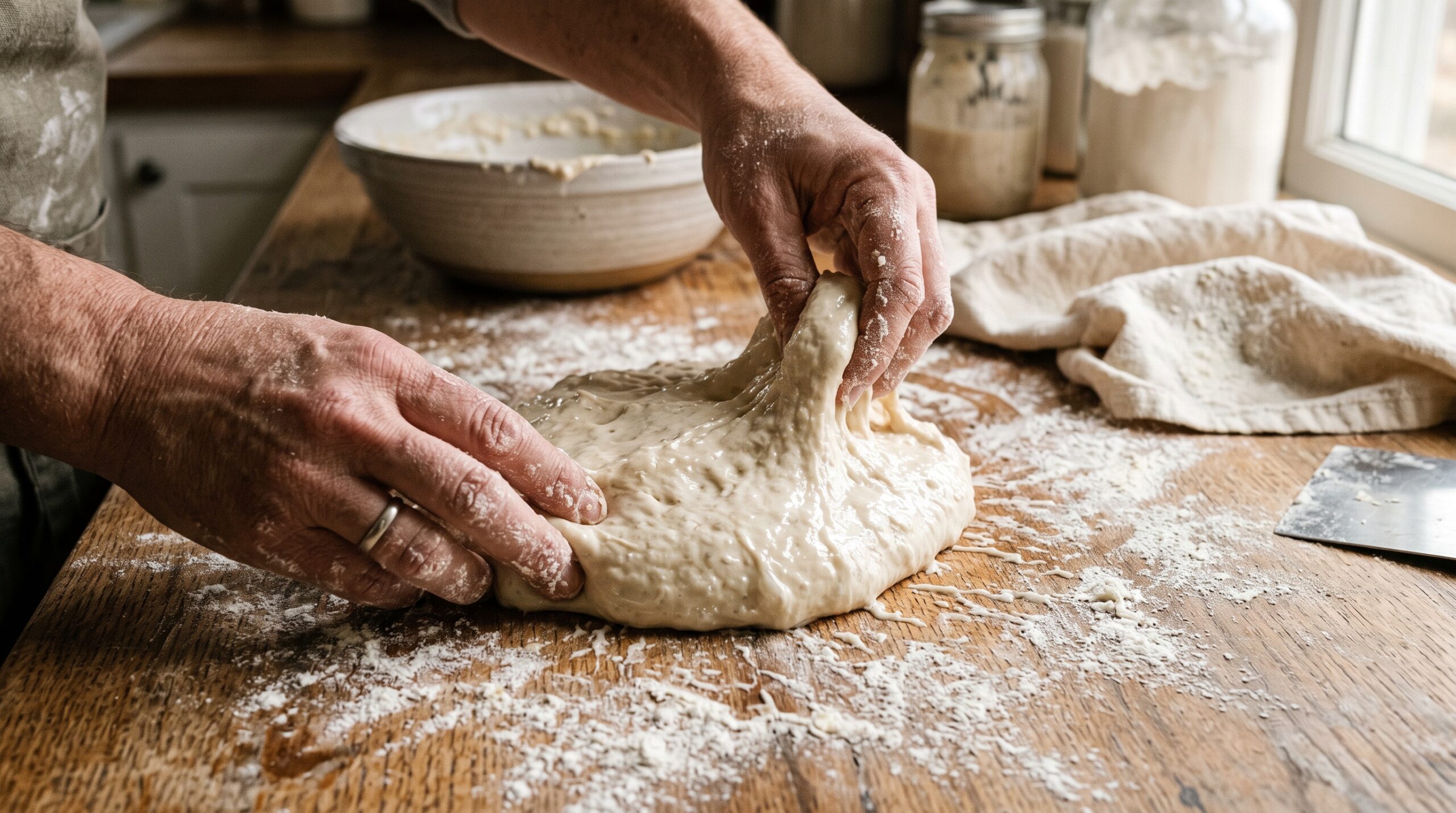
First, is it sticky or just tacky?
These feel the same in the moment but mean opposite things, and telling them apart is the whole game.
- Tacky dough kisses your hand and releases cleanly. It might feel slightly clingy, but it lets go without pulling or tearing. This is exactly what well-developed, properly hydrated dough should feel like. Tacky is good.
- Sticky dough grabs, stretches your skin, and tears away leaving goo behind. That’s usually a sign the gluten hasn’t developed enough yet, or the dough is under-fermented – not that there’s too much water.
So before you panic and dump flour everywhere, ask which one you’ve actually got. Most “my dough is too wet” problems are really “my dough isn’t strong yet” problems – and those get fixed with time and folds, not with more flour.
Wet hands beat floured hands
The instinct with sticky dough is to reach for more flour. Resist it. Dry flour on wet dough turns to paste and glues everything together worse – and every handful you knead in quietly lowers your hydration, undoing the open crumb you were chasing.
The real trick is almost too simple: wet your hands. Dough sticks to dry skin and slides right off damp skin. Keep a small bowl of water next to you, dip your fingers whenever the dough starts to grab, and it becomes shockingly manageable. Same idea for your work surface during folds – a lightly damp bench beats a heavily floured one for wet dough.
Build strength with folds, not muscle
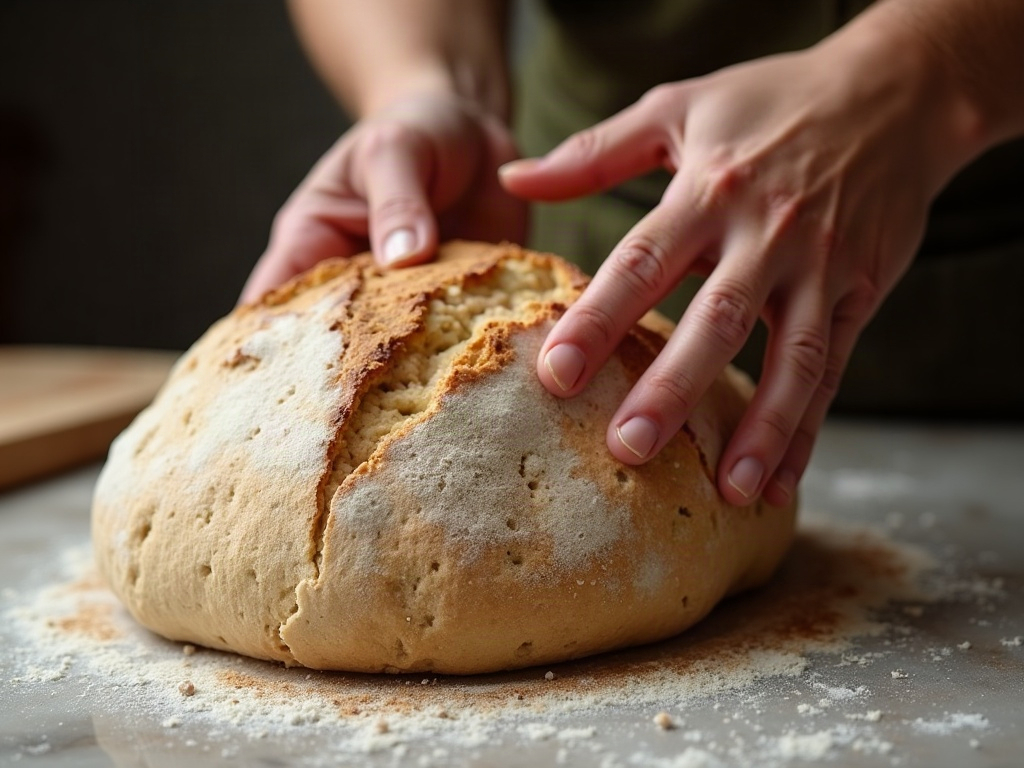
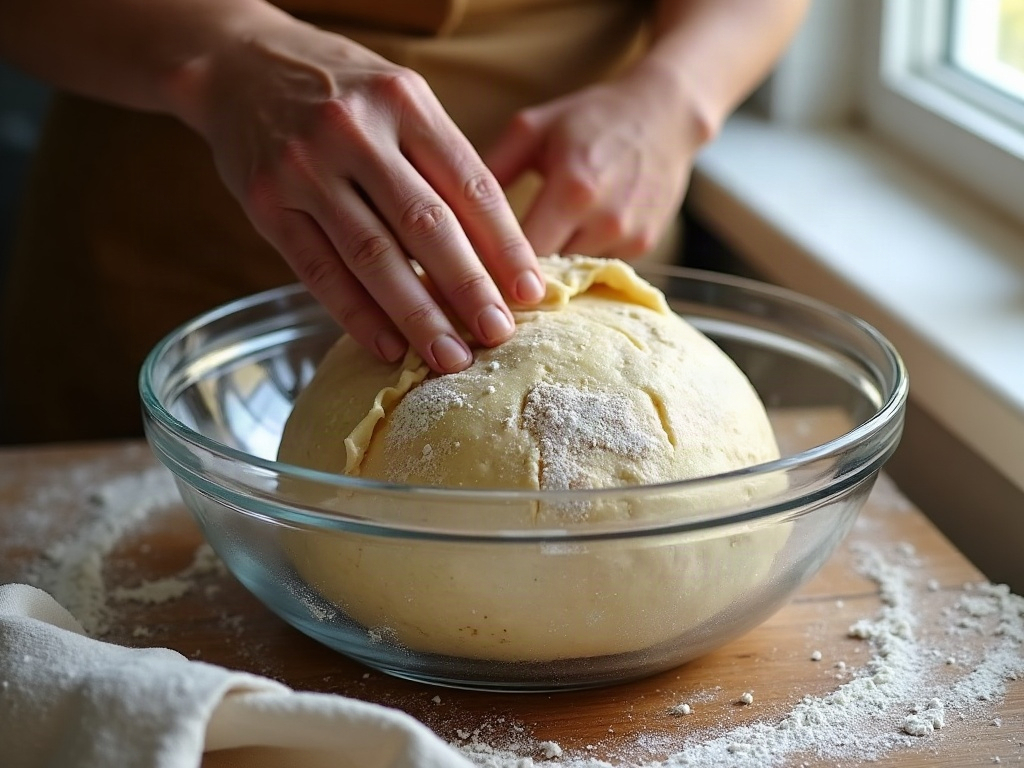
You can’t knead a very wet dough on the counter the classic way – it’s too loose. Instead you build strength in the bowl with stretch-and-folds: wet one hand, grab an edge of the dough, stretch it up and over to the other side, rotate the bowl, repeat. Four folds is one set. Do a few sets spaced 30-45 minutes apart during the first couple hours.
Something small and magical happens across those sets. The soupy, unmanageable blob transforms into a smooth, cohesive dough that holds together, jiggles like set jelly, and stops fighting you. You didn’t remove water – you organized the gluten so the dough can finally hold the water it has. Strong, well-folded dough is also what gives you those big holes in the first place, which is the whole point we cover in how to get an open crumb.
Shape with a scraper, not a death grip
When it’s time to shape, your bench scraper is the hero. Wet dough will stick to your hands if you grab and squeeze, so don’t. Use the scraper to lift, fold, and drag the dough across the bench, letting the slight friction between dough and surface build surface tension for you. Quick, confident movements win; slow, hesitant pawing is what turns into a smear.
A light dusting of flour on the bench (not worked into the dough) helps here, and so does working fast. The longer wet dough sits pressed against your skin, the more it bonds. Touch it decisively, then let go. If it’s still spreading out flat instead of holding a round after shaping, that’s a separate signal worth reading – our guide to loaves that spread instead of rising walks through why.
Give the fridge a job
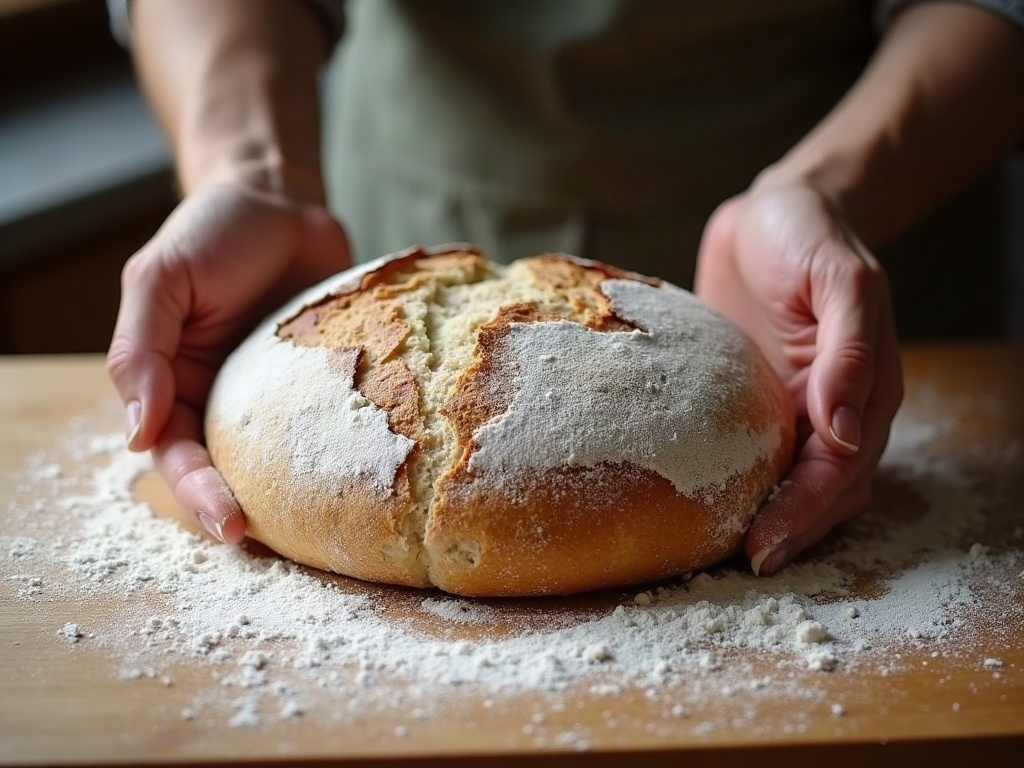
Here’s the move that quietly saves the most frustration: cold dough is firm dough. After shaping, a long, cold proof in the fridge – a few hours or overnight – firms the dough up dramatically. When you tip it out to score in the morning, it’s tight, cooperative, and holds its shape instead of oozing.
Cold retarding also flours and scores far more cleanly, and it deepens flavor as a bonus. If wet dough is beating you at the shaping-and-scoring stage, moving to a cold overnight proof is often the single biggest fix. And it helps at the last step too: a well-chilled, well-floured dough is far less likely to weld itself to the basket, which is its own headache we tackle in why dough sticks to the banneton.
And if it’s genuinely too wet?
Sometimes it really is – especially with a fresh bag of a thirstier or a weaker flour that just can’t drink as much. The fix isn’t to fight this batch; it’s to adjust the next one. Drop your hydration by 3-5% and see how it handles. There is no medal for baking at 80% hydration if 72% gives you a loaf you can actually shape. Great bread lives at whatever hydration you can handle confidently, and that number climbs on its own as your hands learn.
The takeaway
High-hydration dough feels like a punishment until you swap the tools: wet hands instead of flour, stretch-and-folds instead of kneading, a bench scraper instead of a grip, and a cold fridge instead of raw hope. Do that and the puddle becomes a strong, jiggly, cooperative dough – and the open, custardy crumb you wanted stops being a gamble.
Sticky dough is one of those things that’s ten times clearer to watch than to read – the wet-hand fold and the scraper shape especially. Those are up on the LoafLovers YouTube channel, and if you want the calm, step-by-step version you can keep beside the mixing bowl, grab the free sourdough troubleshooting guide. Wet your hands, trust the folds, and let the dough come together.
Leave a Reply