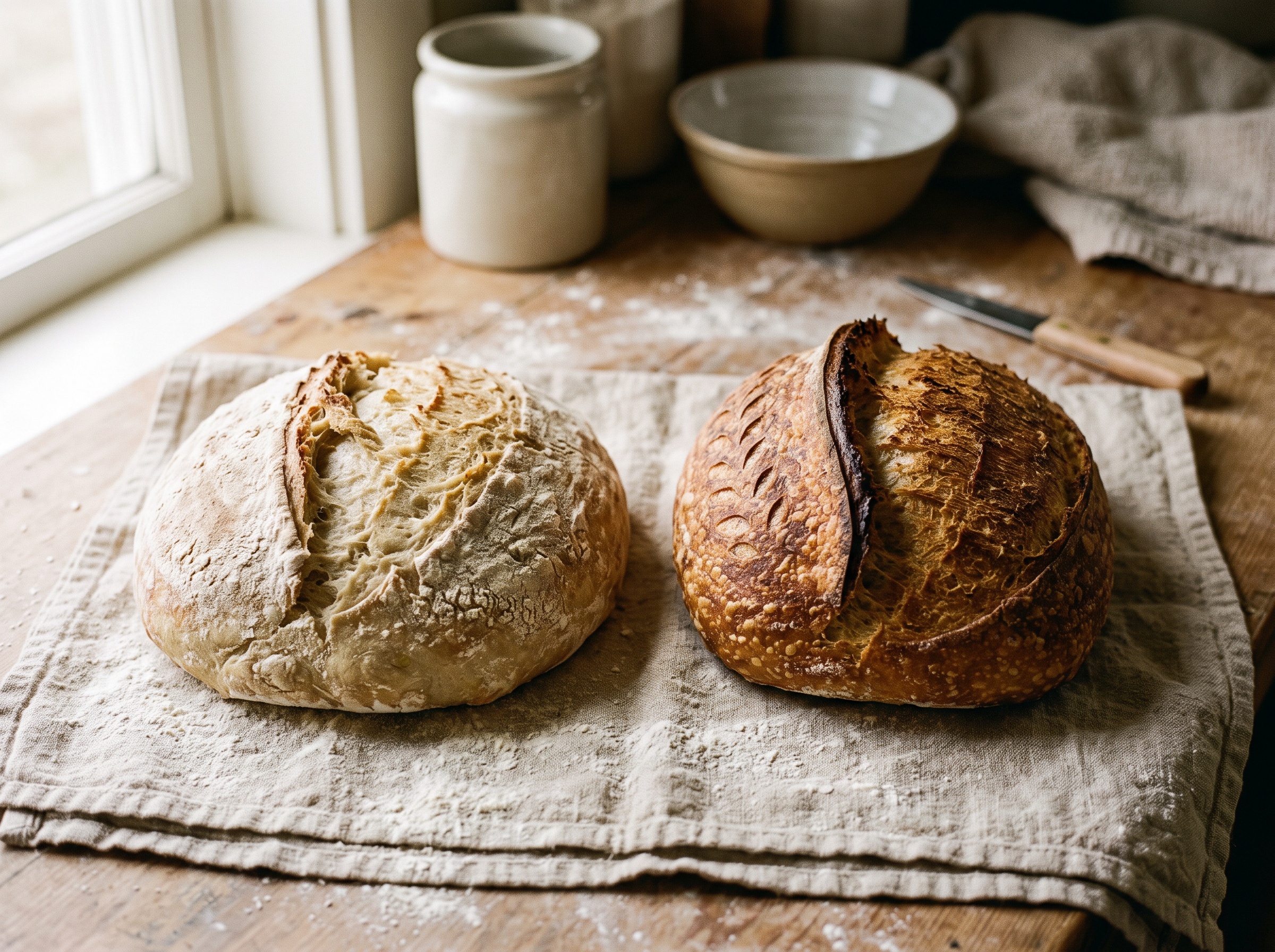
You did everything right. The dough passed the poke test, you tipped it out of the banneton and it held a proud dome, and this was going to be the one. Then you picked up your lame, drew it across the top — and instead of a clean slice, the blade snagged, dragged a wrinkle of skin along with it, and left a ragged, stretched tear where you wanted a crisp line. Your stomach drops, the clock is running, and the oven is already screaming hot. What just happened, and can you still save this bake?
Short answer: yes, this loaf will almost certainly still be delicious, and the problem is fixable in a way that has nothing to do with talent or a steadier hand. A blade that drags instead of cuts is almost always telling you one of three specific things — about your blade, your dough, or your stroke. Once you know which, the fix takes seconds.
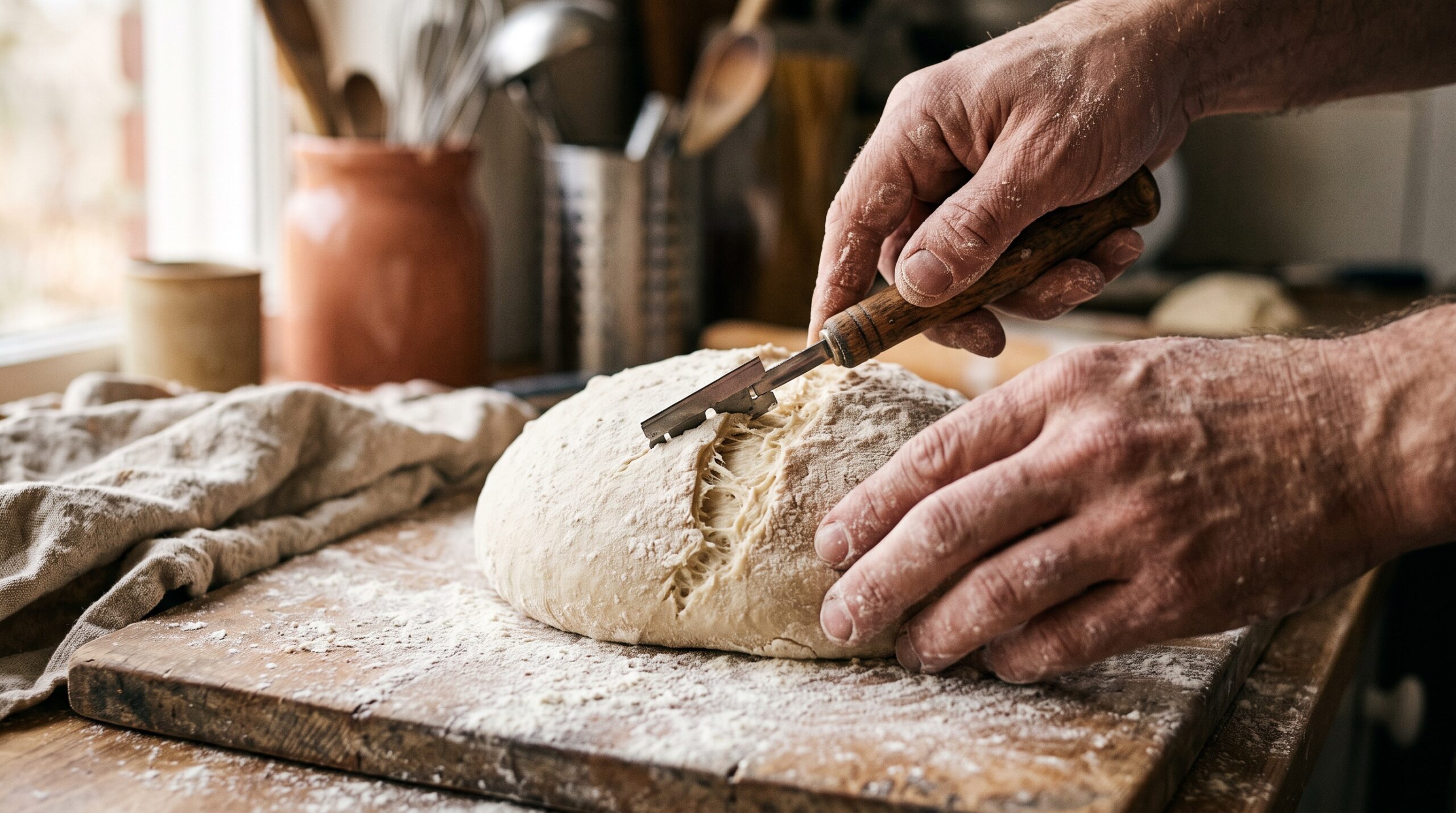
What’s actually happening when the blade drags
Scoring works because a sharp edge severs the taut outer skin of the dough cleanly, opening a weak seam that the loaf then bursts through as it springs in the oven. When it goes well, the cut is almost silent and the dough barely moves. When it drags, the blade isn’t slicing the skin — it’s pushing it. Instead of parting, the surface stretches, bunches, and finally rips, which is why you get that wrinkled, torn look rather than a crisp line.
That difference matters for more than appearance. A clean score is a controlled release valve: it tells the loaf exactly where to expand, so it blooms upward into an ear instead of forcing its way out somewhere random. A dragged, half-torn cut often seals itself back over under oven heat, which is one of the quiet reasons a loaf can burst along a weak point at the base or side instead. If you’ve ever had a loaf split somewhere you didn’t cut, our breakdown of why loaves blow out the side instead of the score is the other half of this same story.
Cause 1: A dull, dirty, or wrong blade
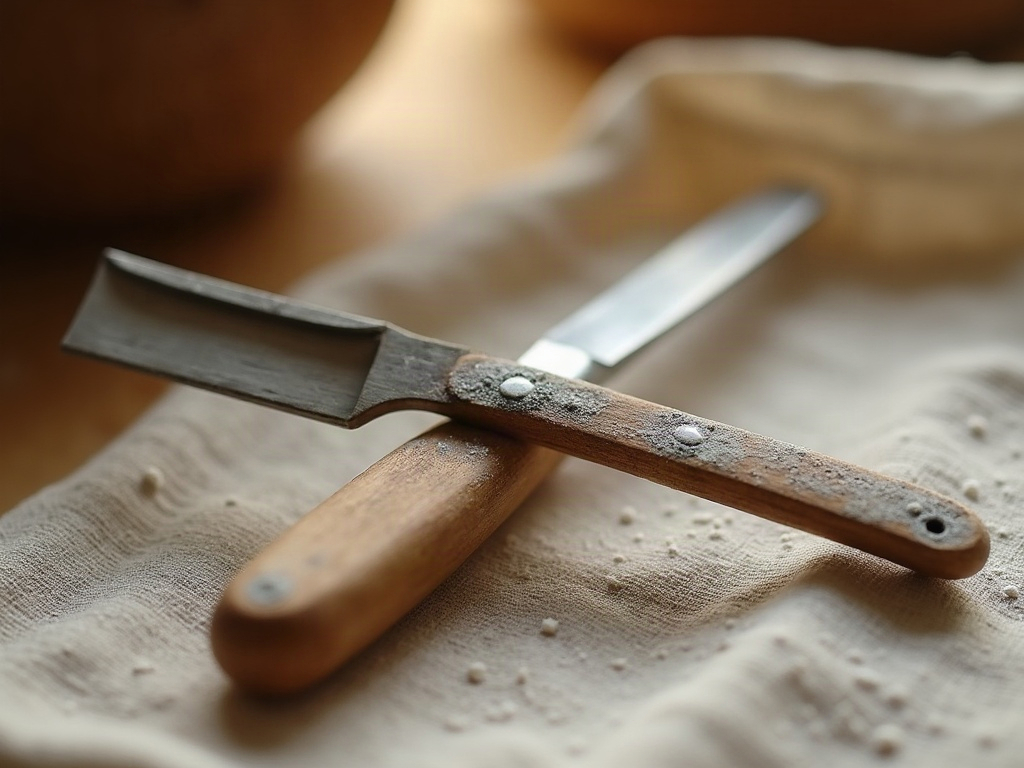
This is the first thing to check because it’s the most common and the easiest to fix. Scoring dough demands a genuinely sharp edge — far sharper than most kitchen knives. A paring knife, a bread knife, or a blade you’ve already used for a dozen bakes simply doesn’t have the keenness to part a wet, elastic skin, so it mushes and drags instead.
The gold standard is a thin double-edged razor blade, used bare or mounted on a lame handle. These are razor-sharp by design, cheap, and meant to be swapped out often. If your scores have slowly gotten worse over weeks, your blade is almost certainly worn — replace it and the problem frequently vanishes on the spot. A blade gummed up with dried dough from a previous bake will drag too, so keep it clean.
One more trick that solves dragging instantly on sticky, high-hydration dough: wet the blade. A quick dip in water, or a light coat of neutral oil, lets the edge glide through the skin instead of grabbing it. It’s the single fastest fix in this whole article, so try it before you change anything else.
Cause 2: The dough is too warm, slack, or sticky
Even a brand-new razor will drag through the wrong dough. A blade can only cut a surface that offers some resistance, and warm, slack, over-hydrated dough has almost none — it’s soft and tacky, so the edge sinks and smears rather than slicing. This is why professional-looking scores almost always start with cold dough.
The fix most bakers are missing is a cold proof. Instead of scoring at room temperature, retard your shaped loaf in the fridge, ideally overnight but even for an hour or two, and score it straight from the cold. Chilled dough is firmer, its skin is tauter and slightly drier, and a sharp blade passes through it like it was made for the job. If you bake same-day, at least chill the shaped loaf in the freezer for 20 to 30 minutes before scoring.
Hydration plays a role too. A very wet, sticky dough is harder to score cleanly at any temperature, and if yours feels more like a batter than a dough, the issue may start earlier in the process. Our guide to handling sticky, high-hydration dough without fighting it covers how to get that surface to a state a blade can actually cut — and why a light dusting of flour on top right before you score gives the edge something to bite.
Cause 3: Your technique — angle, speed, and hesitation
If the blade is sharp and the dough is cold and the cut still drags, look at how you’re moving. Three things go wrong here, and all three are habits rather than flaws.
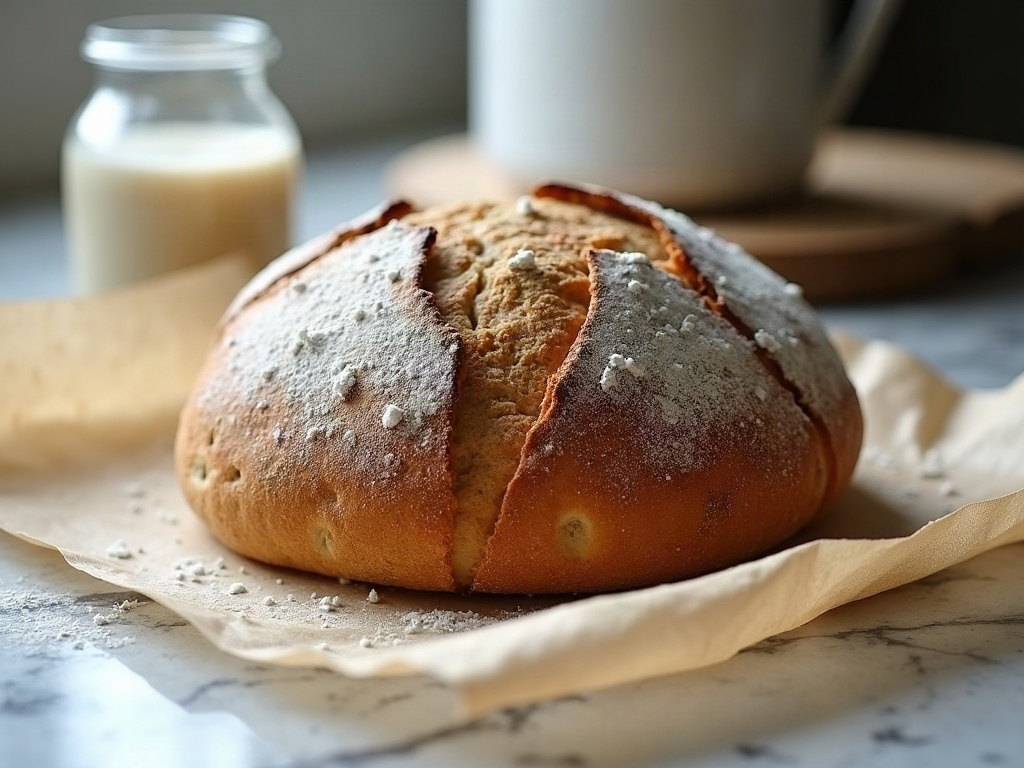
The first is angle. For a classic ear, you want the blade shallow — close to flat against the surface, around a 20 to 30 degree angle — so it undercuts a flap of skin that can lift and curl. Holding the blade straight up and down and pressing in tends to push and tear rather than slice, especially on anything but a razor edge. The second is speed and commitment. Scoring rewards one fast, decisive stroke. A slow, tentative drag gives the skin time to stretch and bunch ahead of the blade, which is exactly the tearing you’re trying to avoid. Move like you mean it.
The third is hesitation and pressure. Pressing too hard, sawing back and forth, or stopping halfway all deform the dough instead of cutting it — and leaning on a proofed loaf can deflate it, which is its own problem. If your loaves also tend to sag or collapse the moment you touch them with the blade, that points to proofing and handling rather than scoring, and our piece on why dough collapses when you turn it out or score it walks through that specific case.
The clean-cut checklist: exactly how to score without dragging
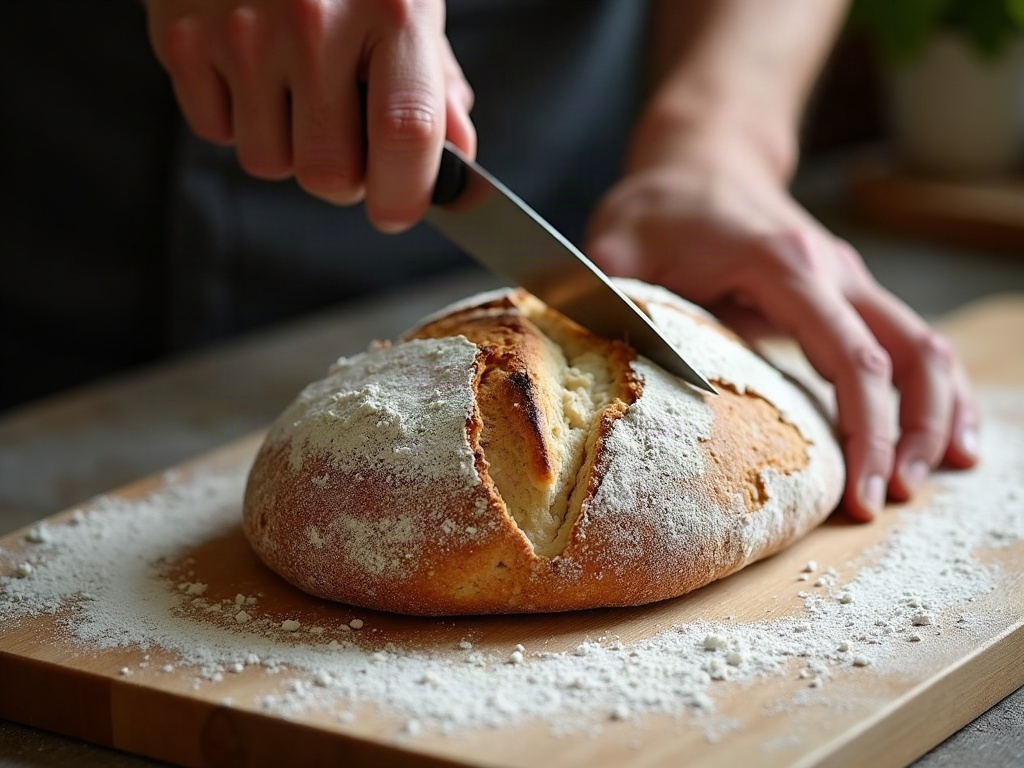
Put the three causes together and you get a short routine that works almost every time. Run through it in order the next time you bake:
1. Use a fresh, sharp blade. A new double-edged razor or a lame with a clean blade. If scores have been getting worse, swap it before anything else. 2. Score cold. Straight from the fridge after an overnight retard, or after 20 to 30 minutes in the freezer for a same-day bake. 3. Dust and, if needed, wet. A light dusting of flour on the loaf top gives the edge grip; a wet or lightly oiled blade glides through sticky dough. 4. Shallow angle for an ear, steep for a flat decorative cut. Around 20 to 30 degrees to lift an ear. 5. One fast, confident stroke. Commit to a single motion — no sawing, no second-guessing, no leaning in. 6. Score last, bake immediately. Cut right before the loaf goes into the hot oven so the fresh opening springs rather than relaxing shut.
If you only change two things today, make them a fresh blade and a cold loaf. Those two alone fix the large majority of dragging-and-tearing scores.
Stacking the odds: dough strength and surface tension
There’s a quieter factor underneath all of this: a loaf that was shaped with good tension and built with enough strength simply scores better. A dough with a taut, well-developed skin resists the blade just enough to be cut cleanly, while a weak, under-developed dough slumps and smears no matter how sharp your razor is. Building that strength happens long before the blade comes out — our walkthrough of using stretch and folds to strengthen dough without kneading is where a cleaner score actually begins.
So if you’ve nailed the blade, the temperature, and the stroke and your cuts still feel soft, zoom out to shaping and gluten development. A firm, tight loaf is a joy to score; a slack one fights you the whole way. Fix the dough upstream and scoring stops being the scary step and becomes the satisfying one.
And if this loaf already has a ragged cut? Bake it anyway. A torn score affects looks far more than taste, and plenty of delicious bread has an ugly top. The fix is for next time, not a reason to lose this bake.
We show the dragging-versus-slicing difference in close-up — blade angle, cold dough, and that one confident stroke — on the LoafLovers YouTube channel, where it’s far easier to copy a motion than to read it. Our free sourdough troubleshooting guide keeps this clean-cut checklist alongside our other fixes, so the next time you’re standing over a cold loaf with a razor in hand, you’ll know exactly what to do. Drop your email and we’ll send it over, and your scores will start opening the way you pictured.
Leave a Reply