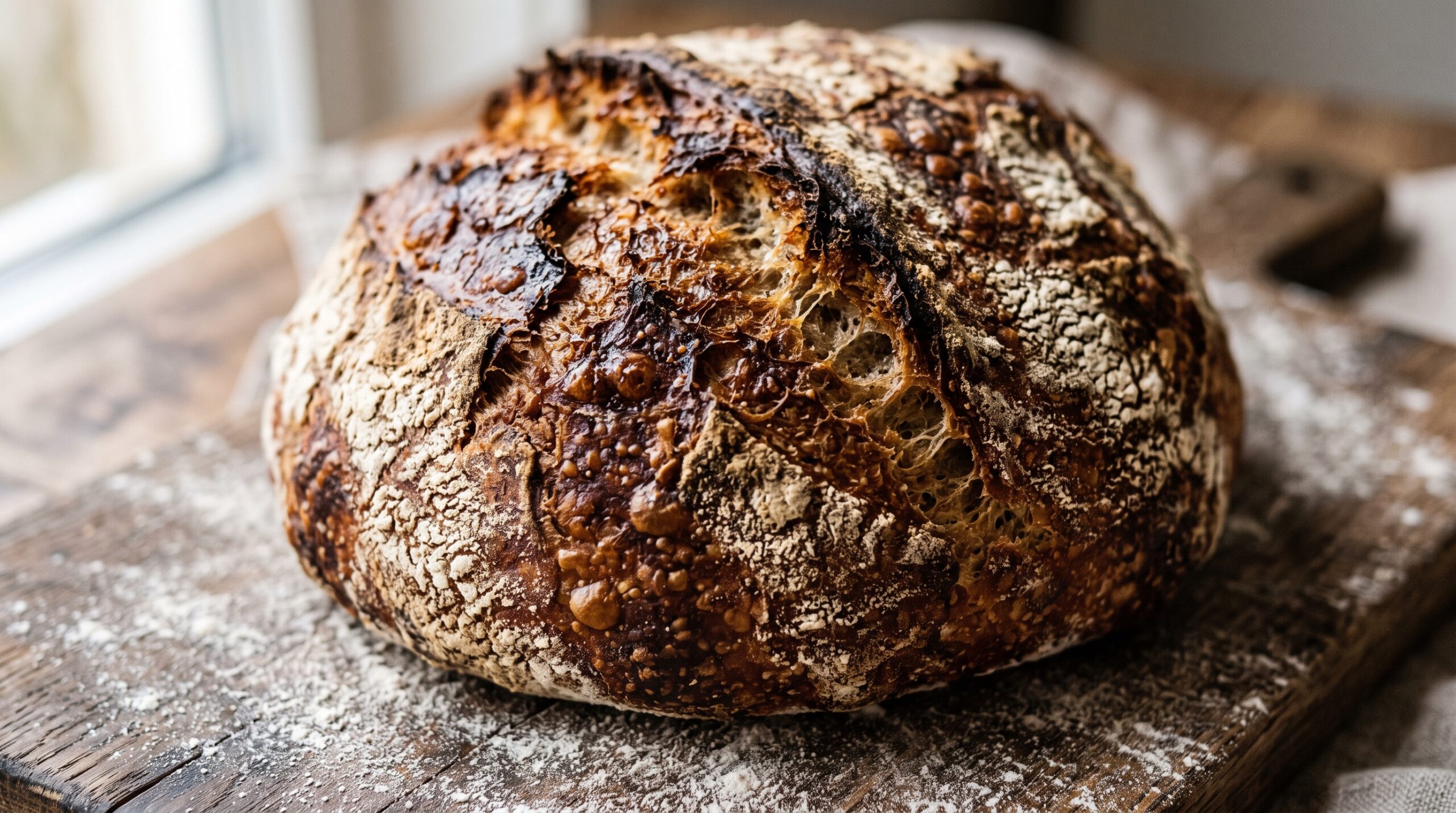
You pull a gorgeous, deeply browned loaf out of the oven. It smells incredible, the crust crackles as it cools — and then you try to slice it and nearly bend the knife. Worse, biting a piece feels like a dental risk, and shards of crust scatter across the counter. Great flavor, punishing crust. What went wrong?
Here’s the reassuring part: a hard crust is one of the more fixable sourdough problems, because it’s almost always about the bake and the cool-down, not the days of fermentation before it. A crisp, thin, bite-through crust and a tooth-chipping one can come from the exact same dough — the difference is time, heat, steam, and how you treat the loaf after it comes out. Let’s find your culprit.
First: crisp is good, concrete is not
Don’t over-correct into a pale, soft loaf. A proper sourdough crust should be firm, crackly, and deeply colored — that’s where a huge amount of the flavor lives. The goal isn’t to eliminate the crust; it’s a crust that shatters and yields when you bite, with a tender crumb right beneath it. “Hard” becomes a problem when it’s thick and armored, leathery and chewy, or so brittle-tough that slicing crushes the loaf. Keep that target in mind as you adjust, so you don’t trade a great crust for a sad one.
Cause #1: You baked it too long or too hot
This is the most common reason, and the easiest to fix. Every extra minute in a hot, dry oven drives more moisture out of the crust and thickens it. Bake long enough and even a well-made loaf turns into a helmet.
Two levers: total time and the uncovered phase. Most home Dutch-oven bakes run around 20 minutes covered, then 20–25 minutes uncovered — if yours is going 30+ minutes uncovered or your loaf is very dark and heavy, pull it sooner next time. Trust internal temperature over color: a fully baked sourdough reads about 205–210°F / 96–99°C in the center. If you’re checking doneness by feel and often overshoot, our guide on a gummy, underbaked crumb covers the other end of the same dial — you want to land between gummy and armored. And if your oven runs hot, an oven thermometer is worth its few dollars; many home ovens are off by 25°F or more.
Cause #2: Your steam is out of balance
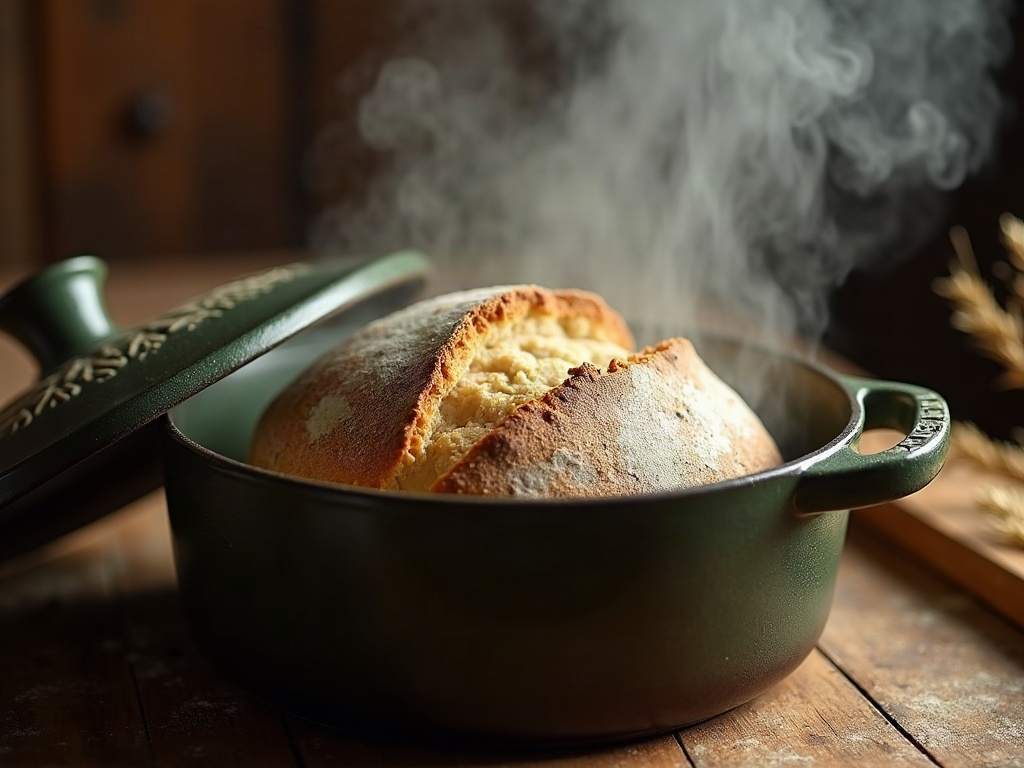
Steam is the single biggest crust-texture lever, and it works in two phases. Early in the bake you want plenty of steam: it keeps the surface moist and elastic so the loaf can expand, and it delays the crust from setting — a crust that sets too early bakes thick and hard. Late in the bake you want a dry oven so the crust can crisp and color without becoming leathery.
A preheated Dutch oven does this almost automatically: the lid traps the dough’s own steam for the first phase, then you remove it to dry out and crisp. If you bake this way and still get a brutal crust, you’re likely leaving the lid off too long or baking too hot after uncovering. If you bake on a stone or sheet without enough early steam, the crust sets fast and thick — add steam with a pan of boiling water or ice cubes for the first 15–20 minutes. The same steam mechanics that give you a good ear and strong oven spring also govern how thick and hard the crust turns out.
Cause #3: Lean, high-protein flour and low hydration
Ingredients matter here too. A very high-protein bread flour and a low-hydration dough both push toward a thicker, chewier, harder crust. Whole grains and a leaner dough (no fat, no milk, no sugar) crisp up hard by nature — that’s classic rustic sourdough, and some people love it. If you want it gentler, nudge your hydration up a few percent; a wetter dough tends to bake a thinner, crisper crust rather than a thick one.
If you specifically want a softer, more sandwich-friendly crust, that’s a recipe choice, not a fault: a little olive oil, butter, milk, or honey in the dough, or brushing the loaf with butter right out of the oven, all soften the crust considerably. Just know you’re moving away from the bakery-style rustic crust toward a softer everyday loaf — both are valid, they’re just different breads.
Cause #4: You cut into it too soon
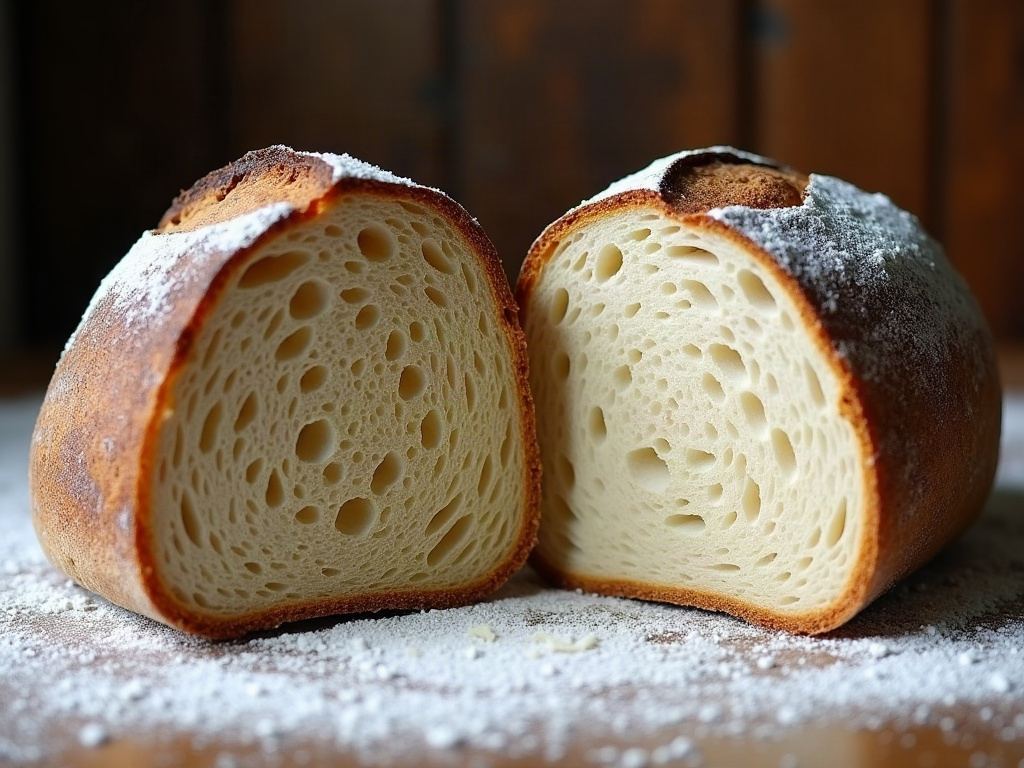
This one quietly ruins good loaves. A sourdough is still finishing inside as it cools; the crumb is setting and moisture is redistributing outward. Slice it hot and you release steam that would have softened the crust from within — and the exposed crust hardens fast as it cools. Cutting early also gives you a gummy center and a crust that seems to toughen by the minute.
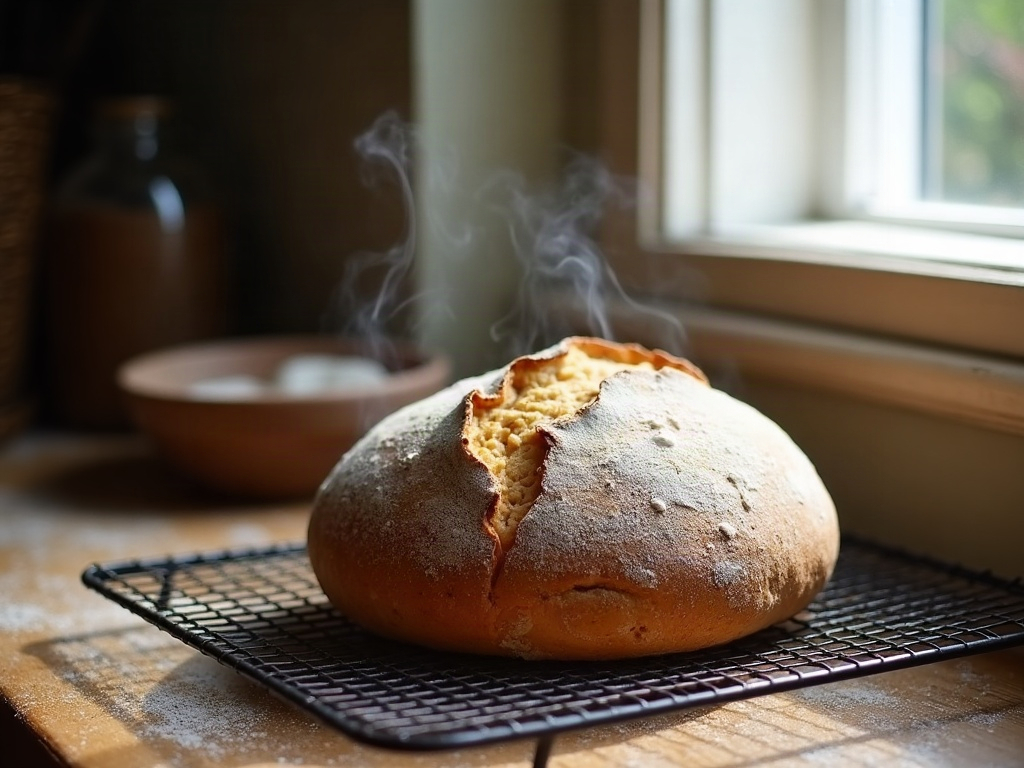
Let the loaf cool completely on a wire rack — ideally a couple of hours for a standard boule — before you cut. A rack matters: resting on a solid surface traps steam underneath and can make the bottom crust soggy-then-tough. I know the warm-bread temptation is real. Fight it; the crust you get after a full cool is a different, friendlier thing.
Cause #5: Storage is turning it to concrete overnight
Sometimes the fresh crust is fine and it’s day two that’s the problem — the loaf has gone rock-hard sitting out. That’s staling plus a crust that keeps drying. Never refrigerate bread (the fridge stales it fastest), and don’t leave a cut loaf open to the air.
Store a cut sourdough cut-side-down on a board or in a linen/paper bag for a crackly crust that lasts a day or two; a sealed bag or beeswax wrap softens the crust but keeps the crumb moist longer — pick based on which you care about. For anything beyond two or three days, slice and freeze it, then toast from frozen. A stale, hard loaf can also be revived: mist the crust with water and warm it in a 350°F / 175°C oven for 8–10 minutes to bring back much of the crackle.
Cause #6: A too-thick or too-dark bake from scoring and shaping
Minor, but real: a loaf that didn’t spring well bakes denser and can read as “hard” all over, crust included. Weak, timid scoring seals the loaf so it can’t open, forcing a thick, tight crust; a confident score gives the loaf a place to bloom and keeps the crust thinner where it opens. If your loaves consistently bake dense and heavy with a thick shell, weak oven spring may be the upstream cause — and steam, heat, and a good score all feed into it.
The quick hard-crust checklist
- Very dark, heavy, thick shell? Shorten the bake and check internal temp (205–210°F); your oven may run hot.
- Crust sets thick and armored? More steam early, dry heat late — a lidded Dutch oven does both.
- Chewy, leathery crust? Too long uncovered or too hot at the end; pull sooner.
- Want a softer everyday crust? Raise hydration, add a little fat, or butter the top out of the oven.
- Hardens as it cools / gummy center? You cut it too early — cool fully on a rack.
- Fine fresh, brutal next day? Store cut-side-down or bagged; revive with a water mist and a short warm oven.
Change one thing per bake
As with most sourdough fixes, resist the urge to overhaul everything at once. Nine times out of ten a hard crust is simply baked a little too long and cut a little too soon — fix those two and most loaves land right in the crisp-but-bite-through zone. If you’re baking without a Dutch oven and fighting crust texture, our walkthrough on getting a crackly crust without a Dutch oven lines up the steam tricks that make the biggest difference.
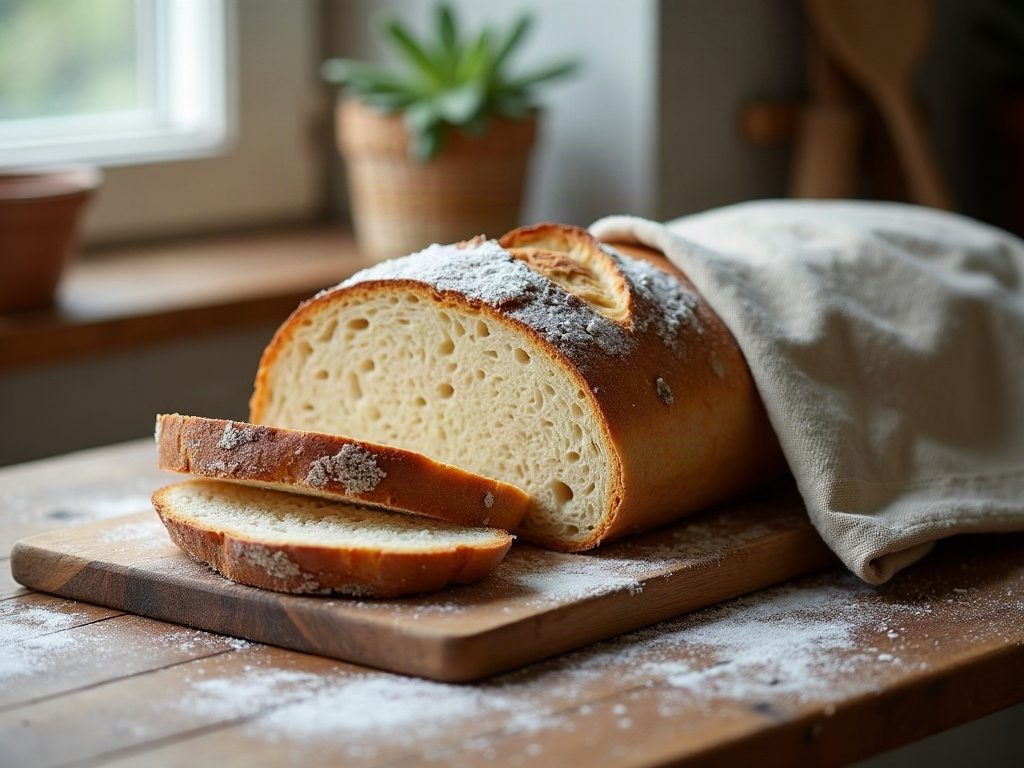
A hard crust isn’t a sign you’ve failed — it usually means you’ve nailed the browning and just need to ease off the bake or the wait. Dial back the time, balance your steam, cool it fully, and store it kindly, and that beautiful deep crust turns into one you can actually enjoy.
Want to see the covered-then-uncovered bake and a proper cool-down in real time? The full method lives on the LoafLovers YouTube channel, and our free sourdough troubleshooting guide puts the bake, steam, and crust fixes side by side — grab it and bake a loaf with a crust you’ll want to bite into.
Sources & further reading: