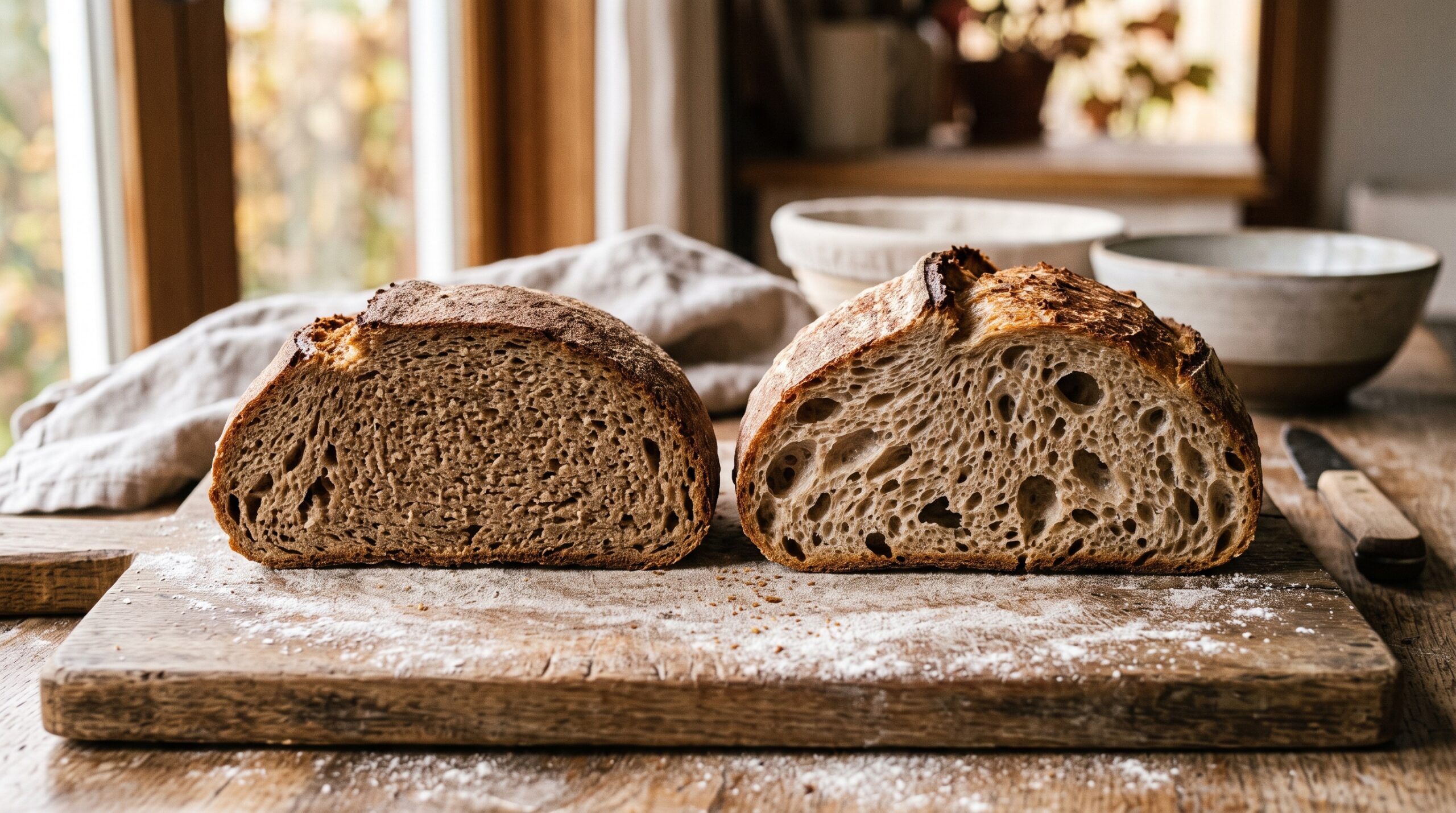
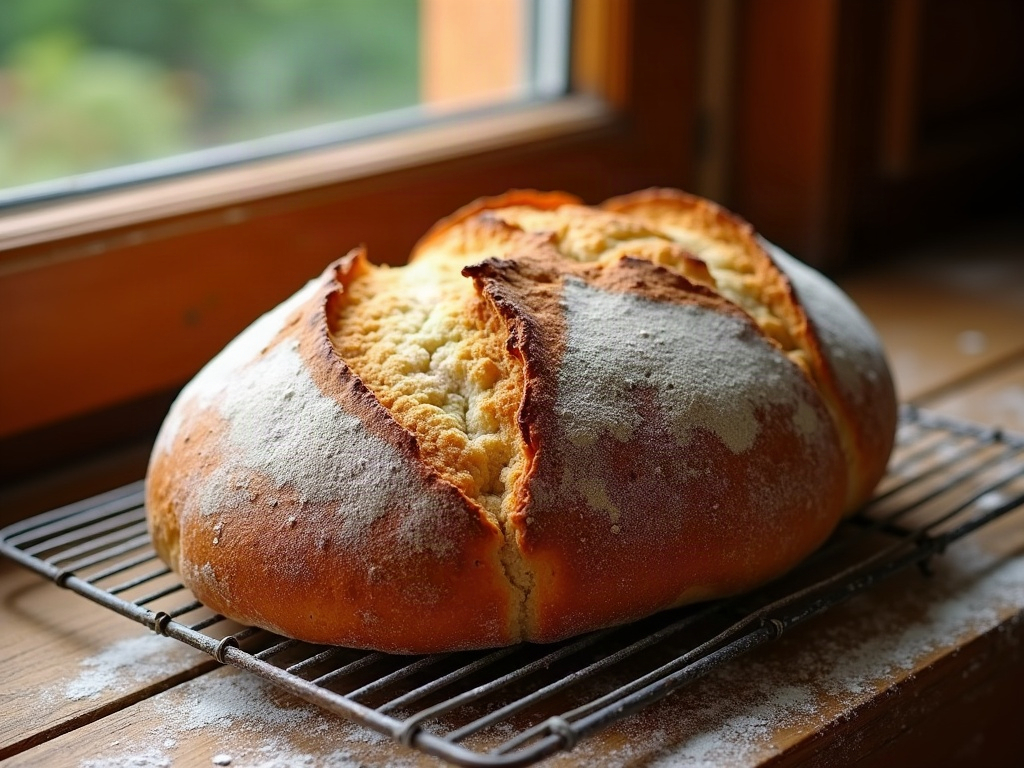
You’ve done everything right by the starter. You feed it on schedule, it doubles like clockwork, it’s crowned with bubbles, it passes the float test, it smells like tangy yogurt and ripe fruit. By every measure, your starter is thriving. And then you bake, slice in, and find a tight, heavy, barely-risen loaf staring back at you — the kind that thuds on the counter instead of singing.
It feels like a betrayal, and it sends most bakers straight back to fussing over the starter. But here’s the thing: if your starter reliably doubles, your starter is almost never the problem. The leavening power is clearly there. Something between the mixing bowl and the oven is failing to capture it. Let’s find the disconnect.
First, confirm the starter really is ready
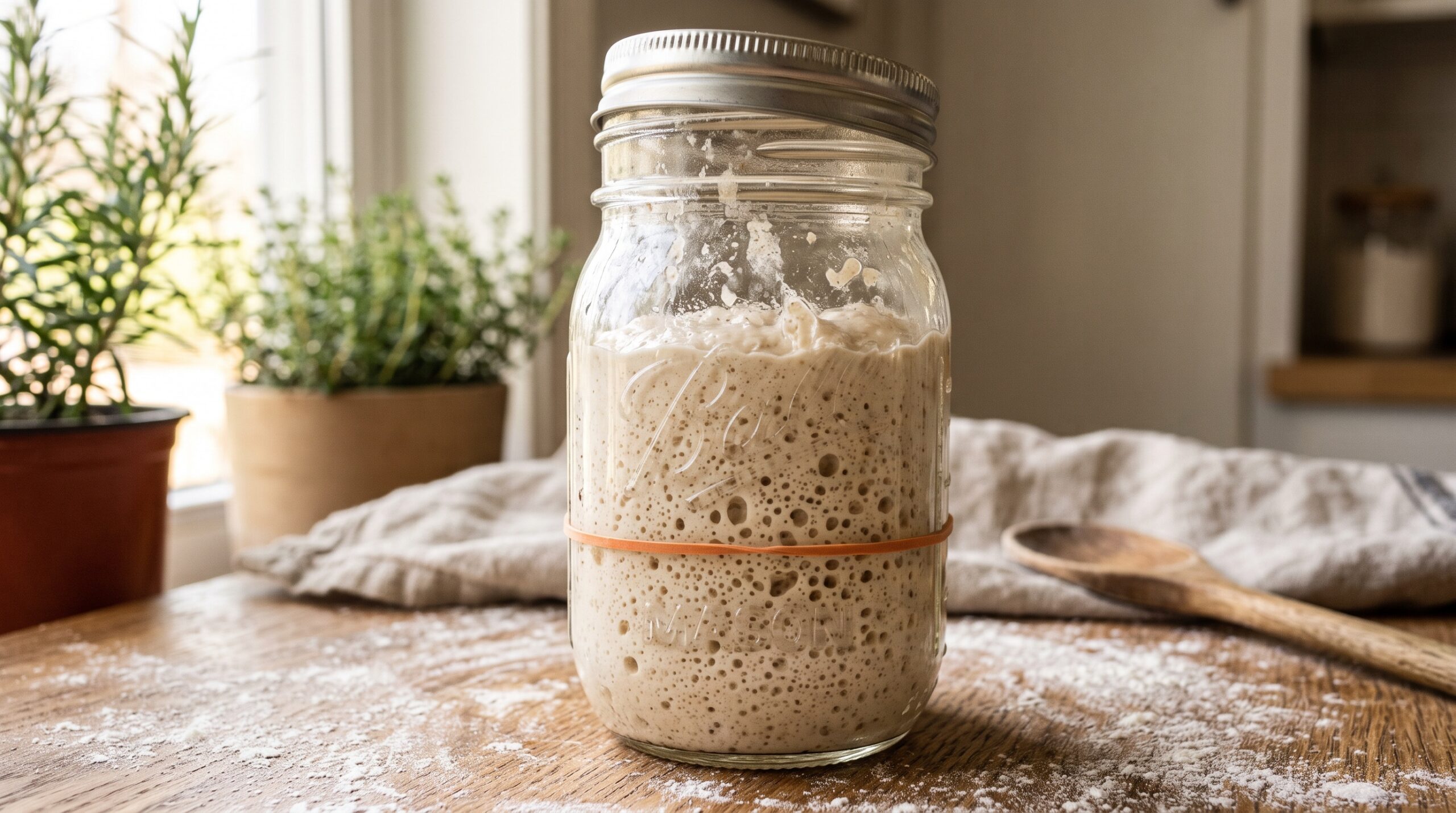
Quick gut-check before we move on, because “doubles” can hide a timing trap. A starter is at its leavening peak when it has just reached its highest point — domed, full of bubbles, not yet sinking. If you use it after it has peaked and started to deflate, it has already spent much of its gas and burned through its food. It’ll still technically have doubled at some point, but by the time it hit your dough it was tired.
So the first fix is simple: use your starter at or just before peak, not hours later when it’s collapsed back down. Mark the jar with a band at feeding time and watch for the dome. If your starter peaks at, say, five hours and you’re mixing at eight, that alone can explain a sluggish dough. But if your timing is good and the bread is still dense, the real culprits are downstream.
Culprit 1: You’re not using enough starter
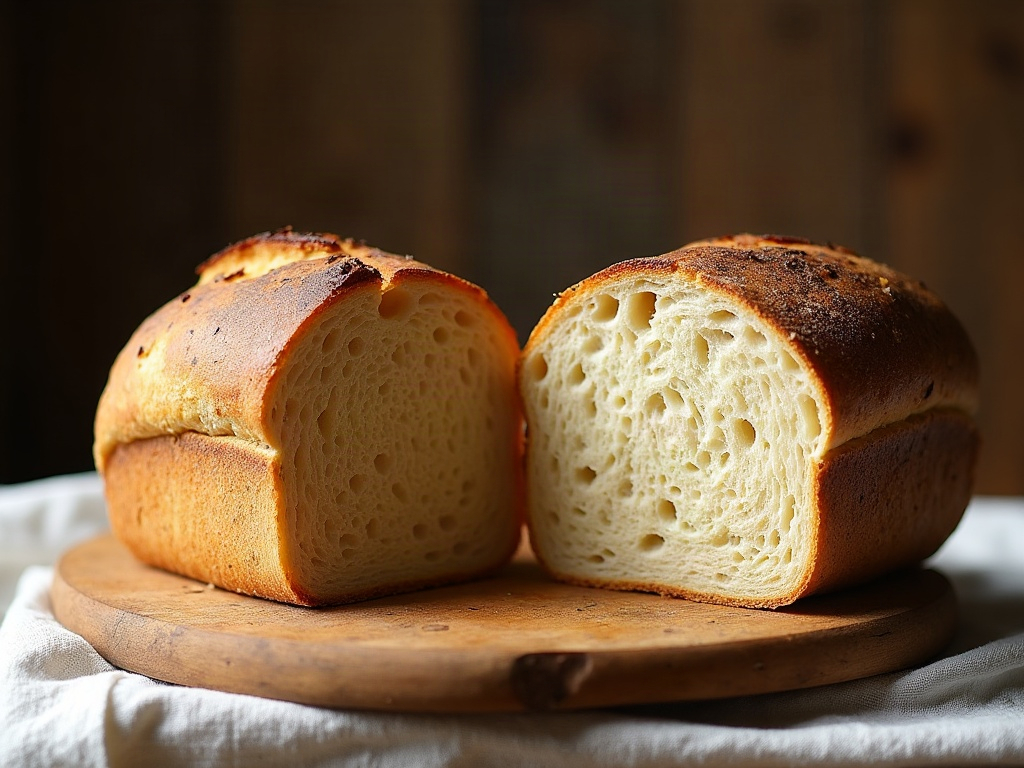
A healthy starter can only do so much if there’s too little of it. This is inoculation percentage — how much starter you add relative to flour. If a recipe calls for a generous amount of starter and you’re scaling it down, or you’re working from a formula built for a warm kitchen while yours is cool, the small amount of starter has to colonize a huge amount of dough before it can raise it. In a cold kitchen it may simply run out of time before you lose patience and bake.
The fix: bump your inoculation. If your loaves are chronically dense and slow, use more starter next time, or give the dough dramatically more time (more on that below). More starter means a faster, more reliable rise — just know it also ferments faster, so you’ll shorten your bulk accordingly.
Culprit 2: Underproofed bulk fermentation (the big one)
This is the single most common reason an active starter still yields a brick. Bulk fermentation — the first long rise after mixing — is where the dough actually fills with gas and builds the structure to hold it. If you cut bulk short, the dough goes into the oven under-inflated, and no amount of oven spring rescues it. You get that tight, tacky, slightly gummy crumb that screams “not enough time.”
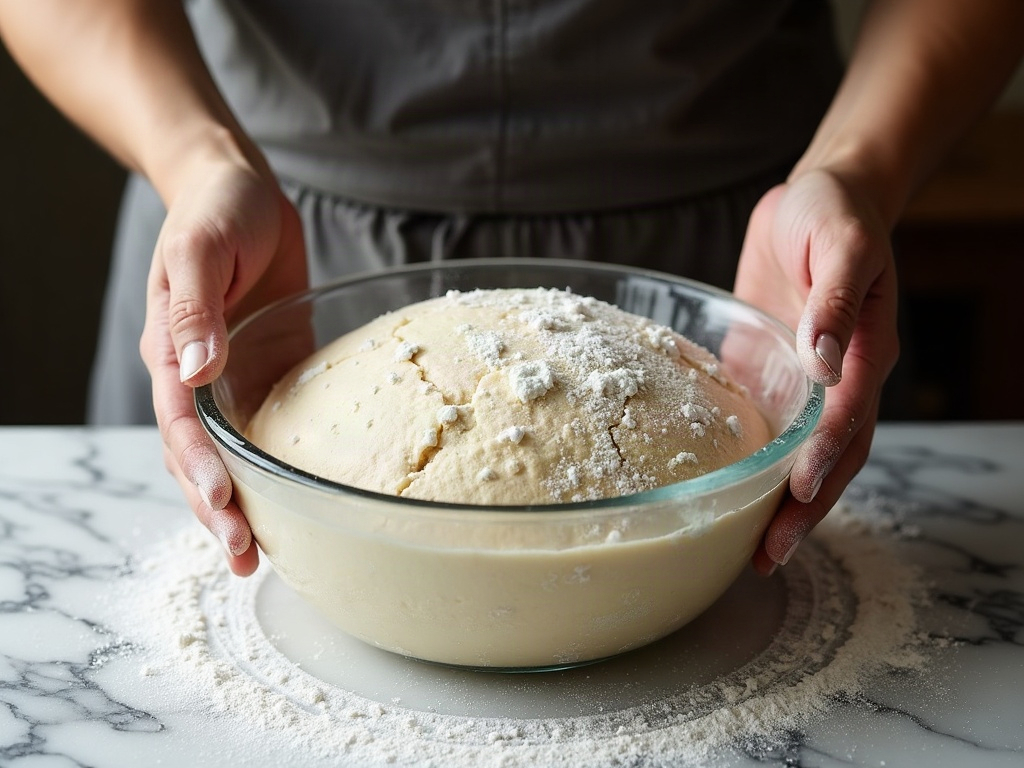
The trap is following the clock instead of the dough. “Bulk for four hours” means nothing if your kitchen is 65°F instead of the 78°F the recipe assumed. Fermentation is driven by temperature, and a cold kitchen can easily double the time your dough needs. Judge bulk by the dough: it should grow noticeably — roughly 30 to 50 percent larger — look domed and jiggly, show bubbles at the surface and edges, and feel alive and airy rather than dense and slack. If it hasn’t done that, it is not done, no matter what the timer says.
Culprit 3: A kitchen that’s quietly too cold
Temperature deserves its own mention because it sabotages so many bakers, especially in fall and winter. Your starter might live somewhere warm and cozy on the counter, but your big bowl of dough sitting on a cold stone countertop can be several degrees colder than you think. Cold dough ferments in slow motion.
If your bread is dense in cooler months, find a warmer spot: inside the oven with just the light on, near (not on) a warm appliance, or in a turned-off microwave with a mug of hot water. Even nudging your dough from 66°F to 76°F can turn a stubborn, sluggish rise into a lively one. Warm the dough, and the same healthy starter suddenly looks like a hero.
Culprit 4: Weak dough that can’t hold the gas
Sometimes the gas is being produced and even generated on time — but the dough has no structure to trap it, so it leaks out and the loaf stays flat and dense. This is a gluten-development problem. If you skimp on your stretch-and-folds or your dough never builds any strength, it behaves more like batter than bread, and bubbles just escape.
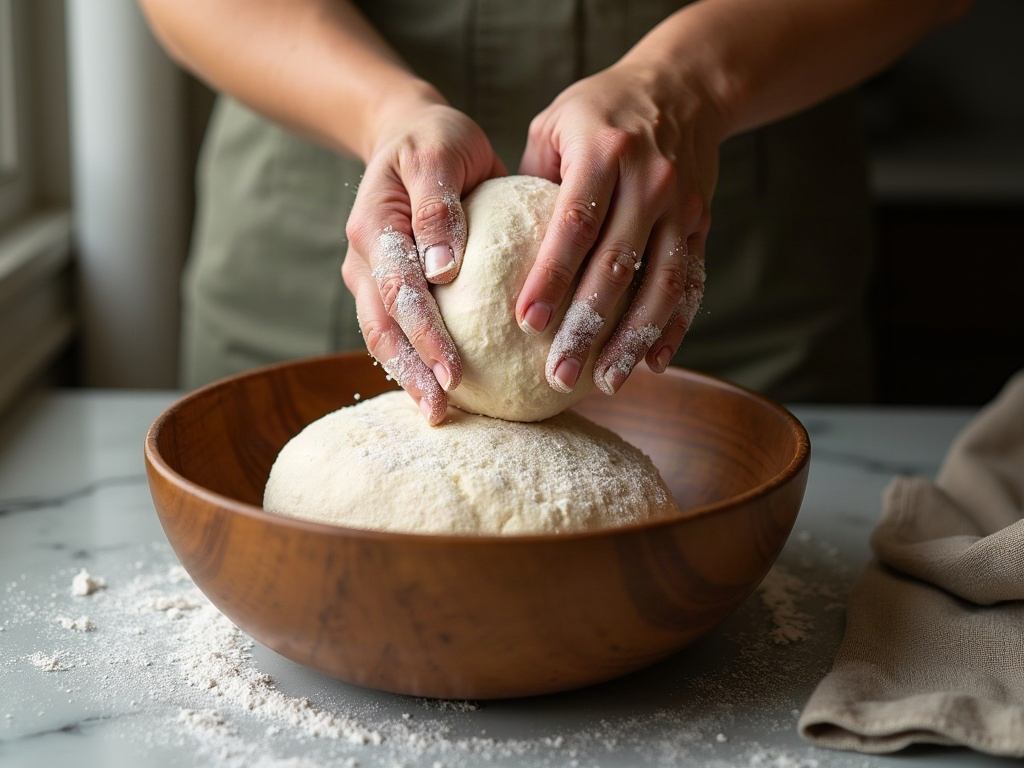
The fix is in your handling. Give the dough a proper set of stretch-and-folds or coil folds across the first couple hours of bulk, spaced out, until it firms up, holds its shape, and feels smooth and elastic rather than soupy. Higher-hydration doughs especially need this strength-building or they’ll spread and sink. A dough with good structure is a dough that holds onto every bubble your lively starter worked to make.
Culprit 5: Slack shaping and a rushed final proof
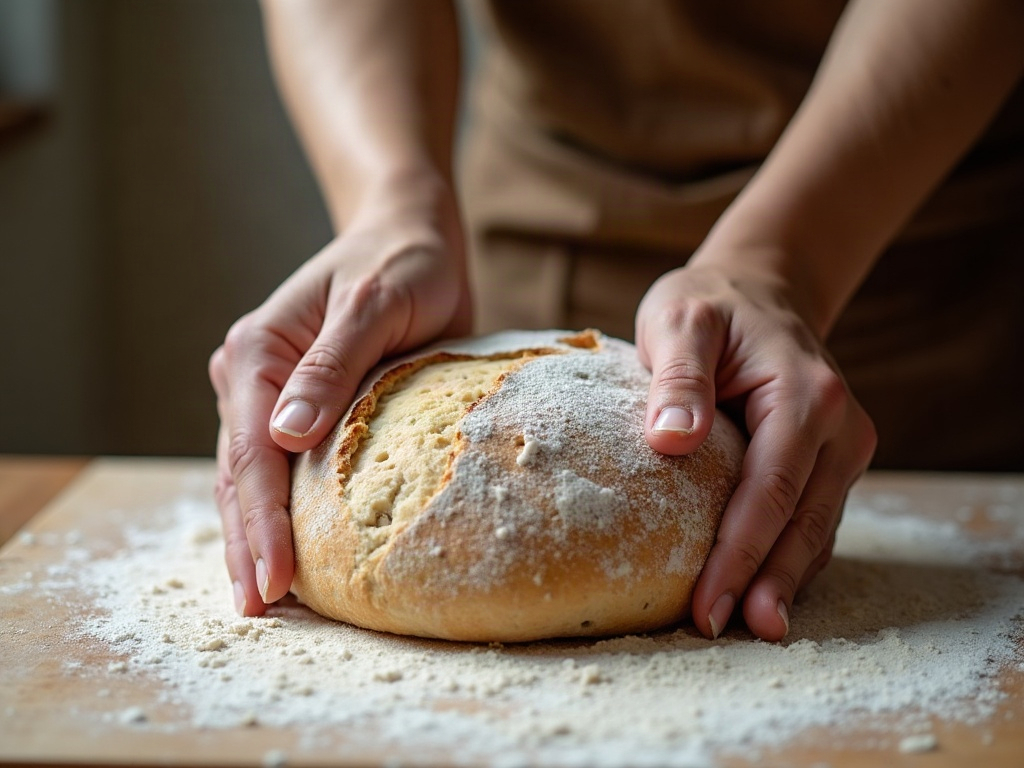
You can nail every earlier step and still lose it at the end. Loose shaping fails to build the taut outer skin that holds gas during the final proof and the first minutes of baking — so the dough relaxes outward and bakes down into something tight. Pre-shape, let it rest, then shape with real tension so the surface is smooth and the ball holds its form.
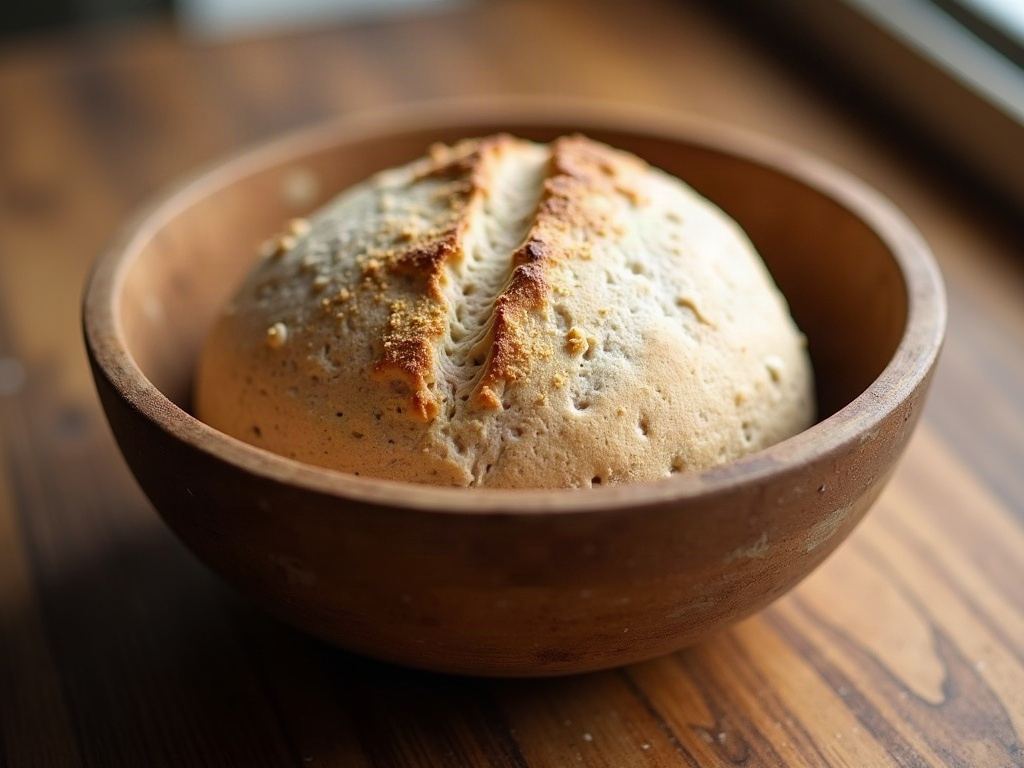
Then give the final proof its due. A shaped loaf still needs to puff before baking — it should look visibly relaxed and slightly expanded, and spring back slowly when poked, leaving a small indent that fills in lazily. Bake it straight from the fridge while it’s still tight and dense and you’ve wasted all that good fermentation. Let it finish proofing, and all the gas your starter generated finally gets to show up in the crumb.
Putting it together: a simple diagnosis
Next time your great starter meets a disappointing loaf, walk the chain from mixing to oven:
Used at peak? Mix when the starter is domed, not collapsed.
Enough starter? Low inoculation plus a cold room equals a slow, dense loaf — use more, or allow far more time.
Bulk fully done? Go by 30 to 50 percent growth, dome, and bubbles — not the clock. This is the fix for most dense loaves.
Warm enough? Find a 75–78°F spot, especially in winter.
Strong enough? Build structure with folds so the dough holds gas.
Shaped and proofed? Tight shaping, patient final proof, poke test before baking.
Notice that not one of those fixes is “get a better starter.” Yours is already doing its job — the leavening is there, waiting. Your task is to catch it, hold it, and give it time, and a reliably doubling starter will reward you with an open, lofty crumb instead of a doorstop.
If you want to see what a properly bulked, well-shaped dough looks and feels like in real time, the full hands-on walkthrough lives on the LoafLovers YouTube channel, and our free sourdough troubleshooting guide covers the rest of the dense-loaf gremlins. Your starter’s ready. Now the dough can be too.