At some point every home baker gets the same idea: the holidays are coming, the table will be full, and one modest loaf is not going to cut it. So you reach for your trusty recipe, multiply every number by two (or three), and assume the dough will simply do what it always does, just more of it. Then the batch comes out flat, slack, and oddly sour, or the single enormous loaf is gummy in the middle — and you’re left wondering what went wrong with a recipe you’ve nailed a dozen times.
Here’s the thing: scaling up sourdough is genuinely doable, and it’s one of the most satisfying bakes of the year. But a double batch is not just a single batch with bigger numbers. A few things change in ways that quietly sabotage the rise if you don’t plan for them. Once you know what those are, feeding a crowd becomes a matter of logistics, not luck. Let’s walk through exactly what shifts when you scale up, and how to keep every loaf tall and open.
Scale loaves, not one giant dough
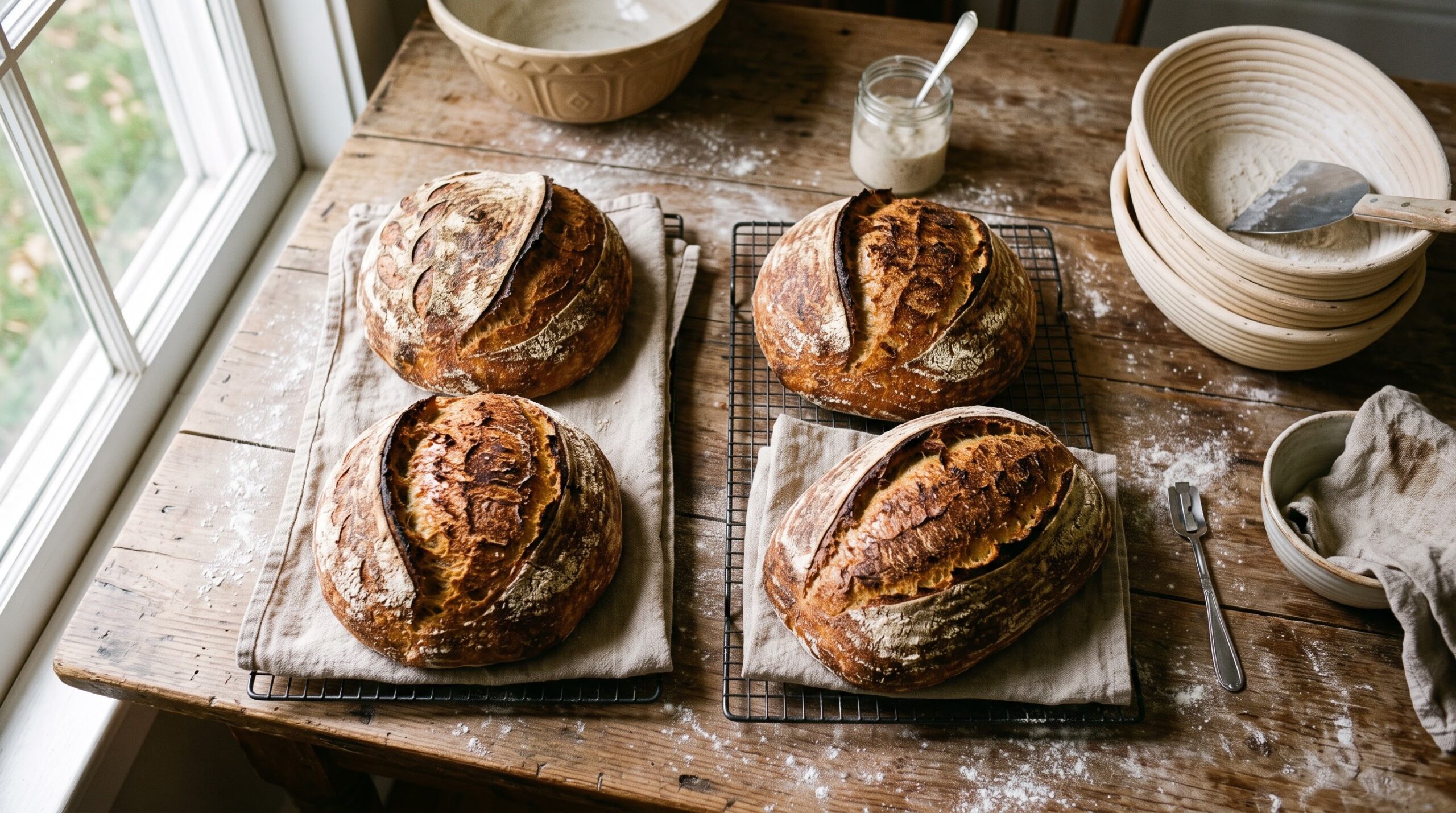
The single most important decision happens before you mix anything: are you making more loaves or one bigger loaf? Almost always, you want more loaves. A giant dough baked as one massive boule has a real problem — the outside sets long before the heat reaches the center, so you get a thick, over-dark crust wrapped around a dense, under-baked, gummy middle. Bread bakes from the outside in, and there’s a practical limit to how big a single loaf can get before the center can’t cook through.
So think in units. If your standard recipe makes one 900-gram loaf, a double batch makes two 900-gram loaves, a triple makes three. You multiply the ingredients, yes, but then you divide the finished bulk dough back into normal-sized portions and shape, proof, and bake each one like you always have. This is the same logic that makes baking two loaves at once work — and it’s the exact opposite instinct from small-batch sourdough, where you shrink everything down to one tidy loaf. Scaling up is small-batch’s mirror image: keep the per-loaf size constant, change the count.
Build enough starter — this is the step people skip
If you double the flour and water but keep the same small amount of starter, you’ve effectively halved the starter’s strength relative to the dough. That’s a recipe for a sluggish, under-powered fermentation and a flat, overly sour loaf, because a small colony of yeast now has twice the territory to conquer and takes far too long to do it.
The fix: scale your levain up along with everything else. If your recipe calls for 100 grams of active starter per loaf, a double batch needs roughly 200 grams, a triple needs 300. Plan this a day ahead, because building more starter means an extra feeding (or a bigger one) to get the volume you need at peak activity. Feed it generously the night before and the morning of, and make sure it’s genuinely ripe — bubbly, domed, and passing the float test — before it goes into a big dough. A tired starter struggles with a normal loaf; it will flat-out fail a double batch. If yours doubles in the jar but still can’t seem to lift the bread, that disconnect is worth fixing first, and we cover it in why a starter that doubles still won’t raise your dough.
A bigger dough ferments faster, not slower
This is the counterintuitive one that catches almost everyone. You’d think a larger mass of dough would be slower and more forgiving. In fact it’s the reverse: a big dough ferments faster. A larger mass retains its own metabolic heat instead of shedding it to the cool room, so the center stays warmer, the yeast and bacteria work harder, and the whole thing races ahead of its usual timeline. A dough that normally takes five hours to bulk-ferment might be ready in four — or less in a warm kitchen.
The fix: ignore your old clock times and read the dough instead. Watch for the real signs the bulk ferment is done — the dough has grown noticeably (30–50%), feels alive and jiggly, shows bubbles at the edges and surface, and holds the shape of a fold. Check it early and check it often, because the penalty for missing the window is steep: an overproofed big batch turns slack, sticky, and structureless, and once it’s gone too far there’s no fully undoing it. If you do blow past the window, the triage steps in rescuing overproofed sourdough dough can salvage dinner, but the goal is to catch it in time.
Mixing and folding a heavy, wet dough
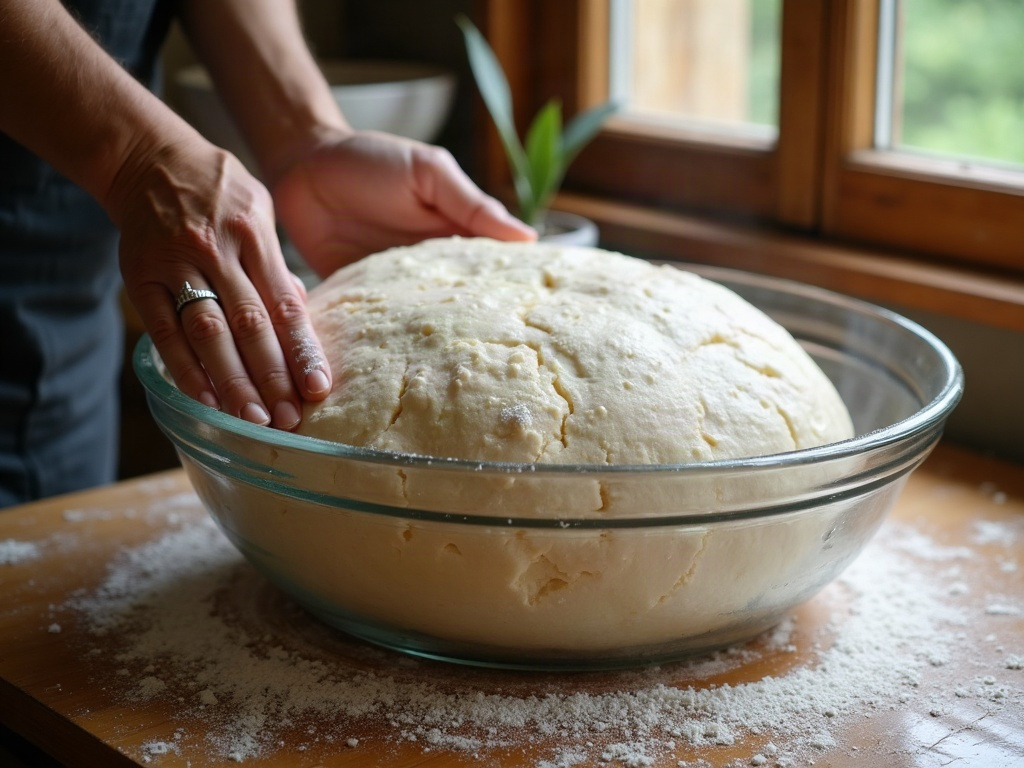
A double or triple batch is a lot of dough, and it’s heavier and more awkward than you expect. Trying to knead it or lift the whole mass at once is a fight you’ll lose — and manhandling a big wet dough tears the gluten you’re trying to build. Your mixing bowl also needs to be much bigger than usual; the dough will nearly double again as it ferments, so give it headroom.
The fix: build strength with stretch-and-folds rather than kneading. With a big dough, work in sections: wet your hand, grab one edge, stretch it up, fold it to the center, rotate the bowl, and repeat all the way around. A few sets in the first hour or two develop plenty of structure without wrestling the whole mass. Keep your hand and your bench scraper wet to stop the dough grabbing, and resist the urge to add flour to tame the stickiness — a wet dough is what gives you an open crumb, and the folds, not extra flour, are what give it strength.
Divide by weight, then shape as usual
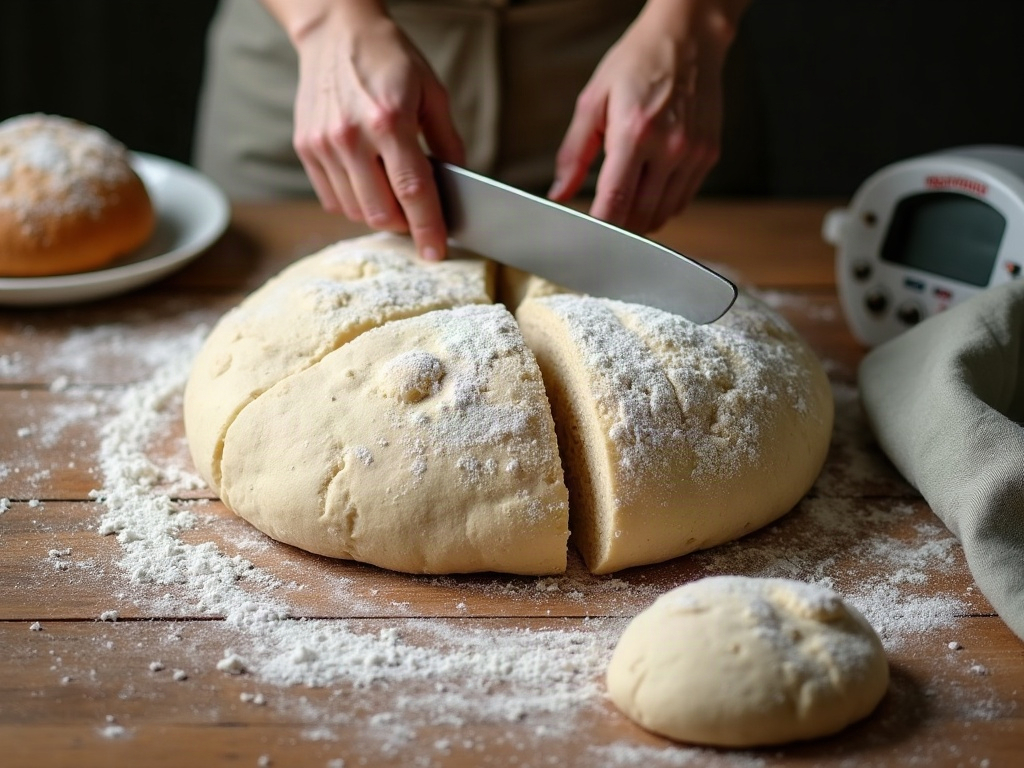
Once the bulk ferment is done, turn the whole dough out onto a lightly floured counter and divide it by weight with a bench scraper and a kitchen scale. Eyeballing it gives you one runt and one giant that proof and bake at different rates; weighing each piece to the same number keeps the whole batch even. Pre-shape each portion into a loose round, let them rest 15–30 minutes under a cloth to relax, then do your final shape into boules or batards exactly as you would for a single loaf.
You’ll also need enough proofing baskets — one banneton per loaf. If you’re short, improvise: a bowl lined with a floured tea towel works fine for the second and third loaves. Nothing about the shaping technique changes when you scale up; you’re just doing it two or three times in a row. If your shaped dough tends to tear or go slack when you handle it, the gentler technique in why dough tears instead of stretching applies to every loaf in the batch.
Use the fridge to stagger the bake
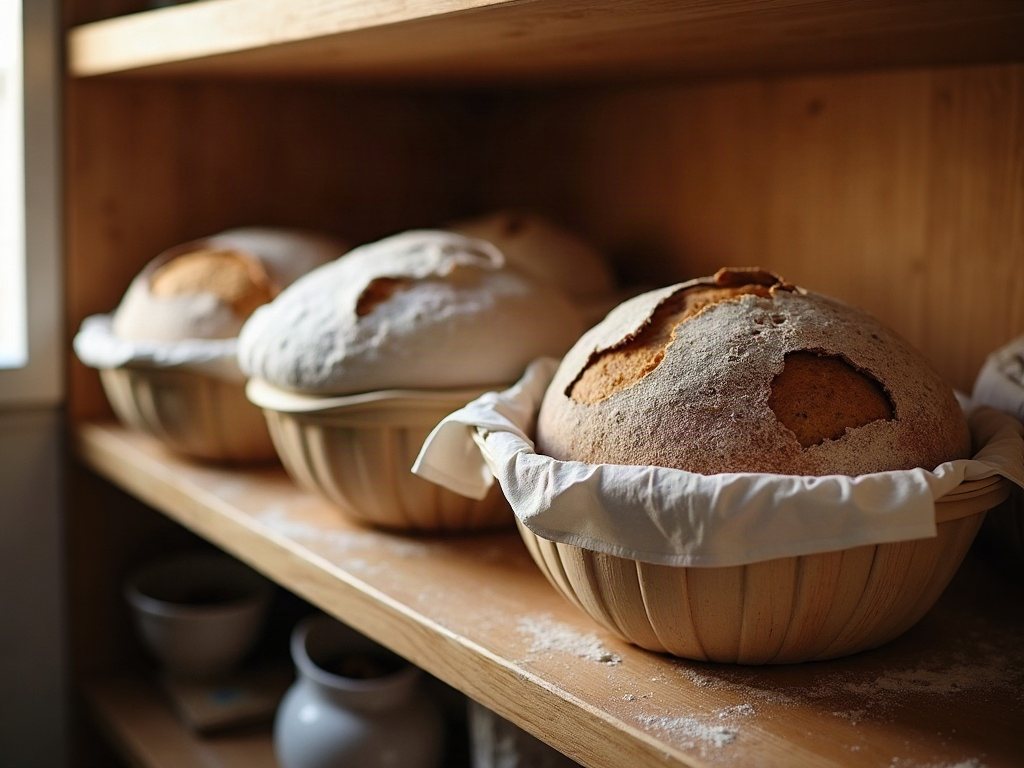
Here’s the logistical wall most people hit: you’ve got three beautifully shaped loaves ready to go, and an oven that fits exactly one Dutch oven at a time. If all three finish their final proof together, two of them overproof on the counter while the first one bakes. The elegant solution is the cold retard — move your shaped loaves, in their baskets, straight into the fridge.
Cold dramatically slows fermentation, so loaves can wait in the fridge for hours (even overnight) with little change. That lets you bake them in sequence: pull the first one, score it, bake it; while it’s in the oven, the others hold safely in the cold; then bake the next, and the next. The fridge becomes a pause button that turns an impossible all-at-once scramble into a calm, staggered schedule. This same cold-retard trick is the backbone of baking ahead for a holiday, which we lay out hour by hour in our make-ahead sourdough timing schedule for the holiday table. Bake straight from the cold fridge — cold dough scores more cleanly and springs beautifully, and there’s no need to let it warm up first.
Bake in sequence, and don’t crowd the oven
Each loaf still wants the full treatment: a screaming-hot oven, trapped steam for the first part of the bake, and room to spring. The temptation when you’re feeding a crowd is to cram two loaves in together to save time, but a crowded oven means uneven heat, poor steam, and pale, under-sprung results. Unless you have a large oven and a setup built for it, bake one loaf at a time for the best crust and rise.
The fix: keep the oven and your Dutch oven preheated between loaves — roughly 15–20 minutes back up to full heat is usually enough — and bake each loaf through its normal lidded-then-uncovered cycle. If you don’t have a Dutch oven for every loaf, you only need one: bake sequentially and reuse it, or use the steam-pan methods in getting real oven spring without a Dutch oven. Cool each loaf fully on a rack before slicing — cutting into warm bread gives you a gummy crumb, and with a crowd waiting that’s a tempting mistake to make.
A simple scale-up game plan
Put it all together and feeding a crowd looks like this:
- Decide the loaf count — multiply ingredients, but keep each finished loaf a normal size.
- Build extra starter a day ahead so your levain scales with the flour.
- Watch the bulk ferment closely — a big dough is faster, so read the dough, not the clock.
- Fold, don’t knead, and use a bowl with real headroom.
- Divide by weight, pre-shape, rest, and final-shape each loaf.
- Cold-retard in the fridge so the loaves wait their turn.
- Bake one at a time, hot and steamy, cooling each fully before slicing.
Do that and the crowd-sized bake stops being a gamble. You get a lineup of tall, open, golden loaves instead of one anxious giant — and a calm morning instead of a last-minute panic.
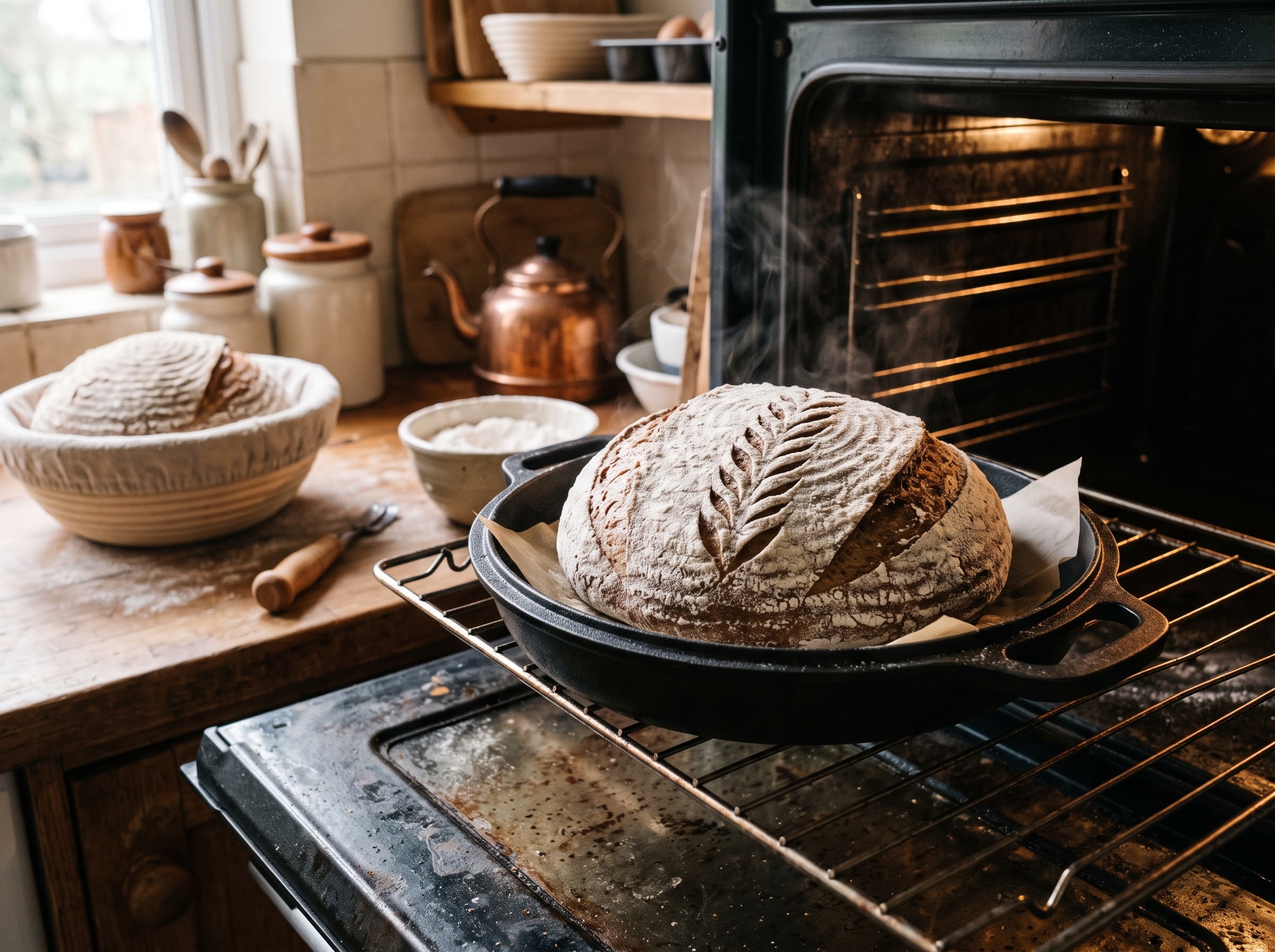
Scaling up is really a project you watch rather than one you time: the slightly-faster bulk ferment, the heavier dough under your hands, the loaves lined up in the fridge waiting their turn. The full crowd-sized sourdough workflow — building the bigger levain, dividing the dough, and running a staggered bake — is walked through step by step on the LoafLovers YouTube channel, and our free sourdough troubleshooting guide includes a make-ahead timing worksheet so your loaves are ready exactly when the table is. Build the starter, read the dough, stagger the bake, and go feed everyone.