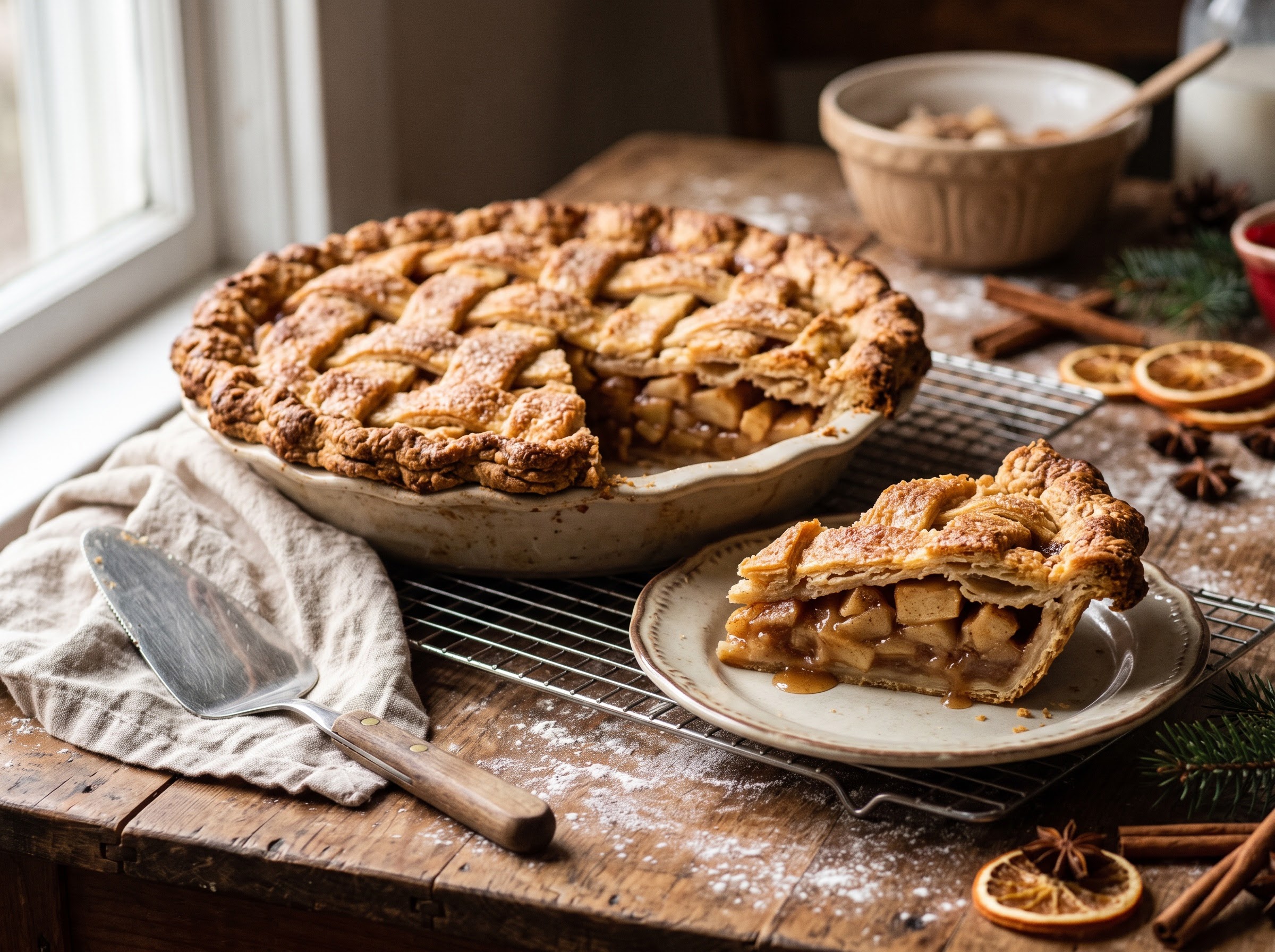
Somewhere in your fridge right now there is a jar of sourdough discard, quietly accumulating and quietly inducing guilt. With the holidays here and pies on everyone’s mind, that jar is about to earn its keep. Sourdough discard makes a genuinely excellent pie crust — flakier, more flavorful, and more forgiving than a standard one — and it is one of the smartest ways to use up discard in bulk right when you need the most baking done.
If you have been pouring discard down the drain, stop. A holiday dessert table is the perfect excuse to put it to work. Here is why discard and pastry are such a natural match, the one rule you cannot break, and a reliable all-butter crust you can mix today and bake later.
Why discard belongs in pie crust
Pie crust wants three things: flakiness, tenderness, and flavor. Sourdough discard quietly helps with all three. Discard is essentially flour and water that has fermented, which means it brings a mild acidity to the dough. That gentle acid does something butter and ice water can’t: it relaxes and slightly weakens the gluten, so your crust stays tender instead of turning tough and leathery. It is the same reason bakers have long added a splash of vinegar or vodka to pastry — discard does it naturally, and adds flavor while it’s at it.
That flavor is the real secret. Plain pie crust is mostly a vehicle; a discard crust tastes faintly tangy and complex, the kind of subtle savory-sour note that makes people ask what’s different. It plays beautifully against sweet fillings like pumpkin, apple, and pecan, and it is outright transformative in savory bakes like quiche and pot pie. And because discard is already a soft, hydrated flour paste, it also acts as part of your liquid — you’ll use less ice water than a standard recipe. If you want the full map of what else that jar can do, our guide to using up sourdough discard instead of throwing it away is a good companion to this one.
The one rule: keep everything cold
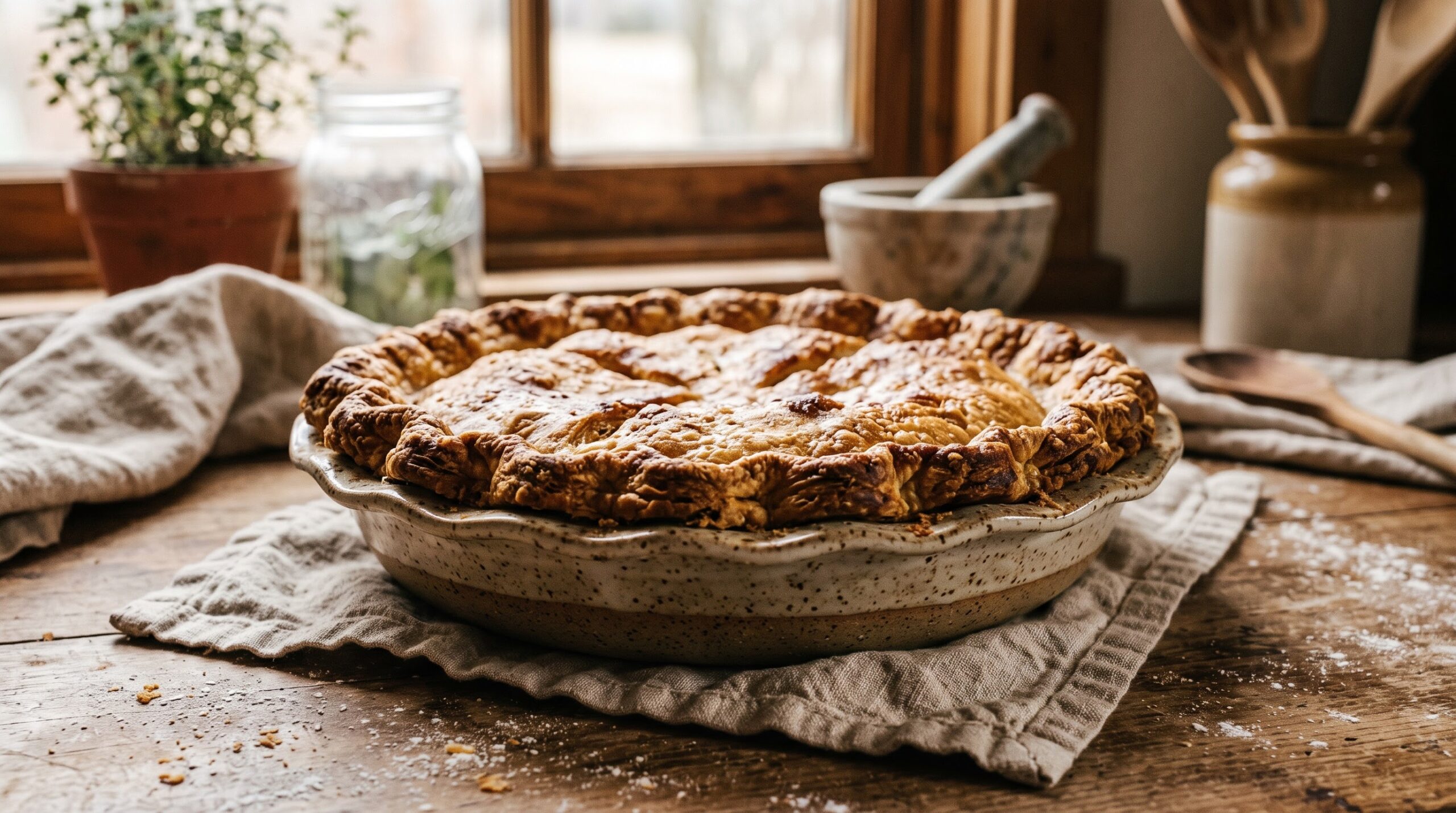
If you take away a single thing from this article, take this: flaky pie crust is built on cold fat. This is true of any pastry, but it bears repeating because it is the difference between a crust that shatters into golden layers and one that bakes up dense and greasy.
The mechanism is simple. When cold, solid flakes of butter hit the oven’s heat, the water in that butter flashes to steam and pries the dough apart into thin, crisp layers. If the butter has softened and smeared into the flour before baking, there are no distinct flakes left to steam open — and you get a flat, tough, oily crust instead. So:
- Use the butter straight from the fridge, cut into cubes, and keep it in visible pea-to-almond-sized pieces. Don’t blend it to a paste.
- Use cold discard straight from the fridge, not a warm, freshly fed starter. (This is a great use for the sluggish, unfed discard you’d otherwise toss.)
- Add ice water, a tablespoon at a time, only until the dough just holds together when squeezed.
- Chill the shaped disc before rolling, and again after it’s in the pan. If the dough ever feels soft or sticky, stop and refrigerate it for 20 minutes. Warm pastry is unworkable pastry.
Work quickly, handle it as little as possible, and when in doubt, put it back in the cold.
A reliable all-butter discard pie crust
This makes enough for a single-crust 9-inch pie. Double everything for a double-crust pie or a lattice top.
- 1¼ cups (160g) all-purpose flour
- ½ teaspoon salt
- 1 teaspoon sugar (omit for savory pies)
- ½ cup (115g) cold unsalted butter, cubed
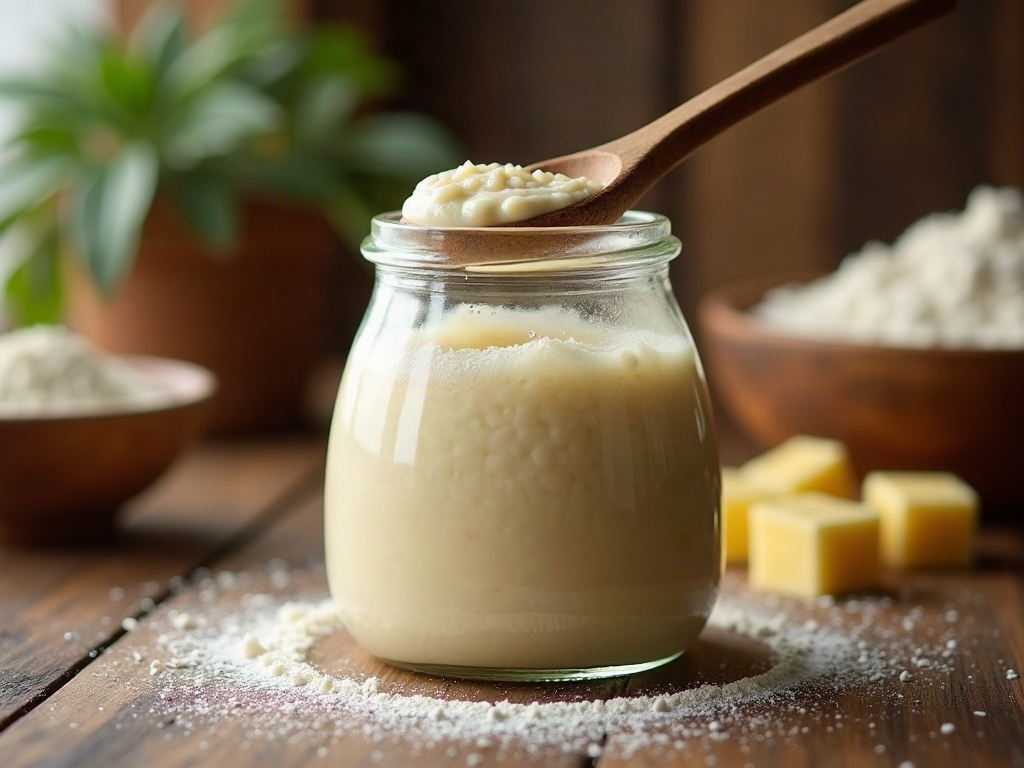
- ¼ cup (60g) cold sourdough discard
- 1–3 tablespoons ice water, as needed
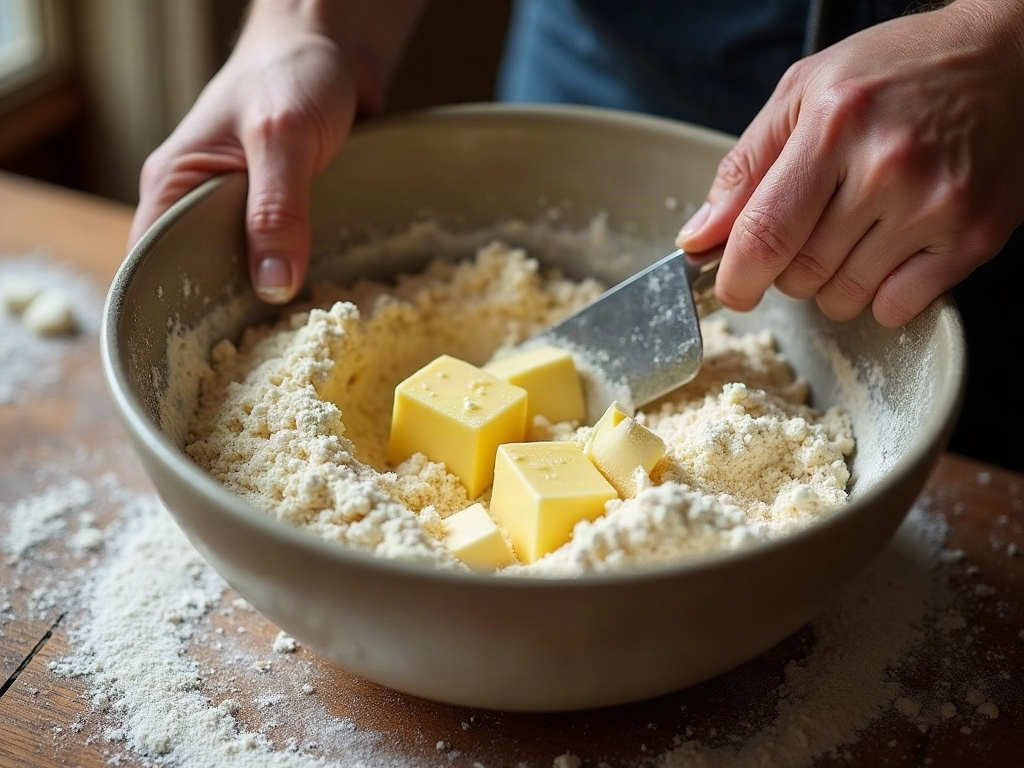
1. Cut in the butter. Whisk the flour, salt, and sugar together. Add the cold cubed butter and cut it in with a pastry blender or your fingertips until the butter is in flat, flaky, pea-to-almond-sized pieces coated in flour. Stop while you can still see distinct butter — this is the flakiness, don’t erase it.
2. Add the discard. Dollop the cold discard over the mixture and toss it through with a fork so it distributes in streaks. It won’t look uniform, and that’s correct.
3. Bring it together. Sprinkle in ice water one tablespoon at a time, tossing after each, until the dough just holds together when you squeeze a handful. It should look shaggy, not smooth or wet. Discard is already quite hydrated, so you may need very little water.
4. Chill — mandatory. Press the dough into a flat disc (don’t knead it), wrap it, and refrigerate at least one hour, or overnight. This rests the flour, firms the butter, and lets the discard’s acidity gently relax the gluten.
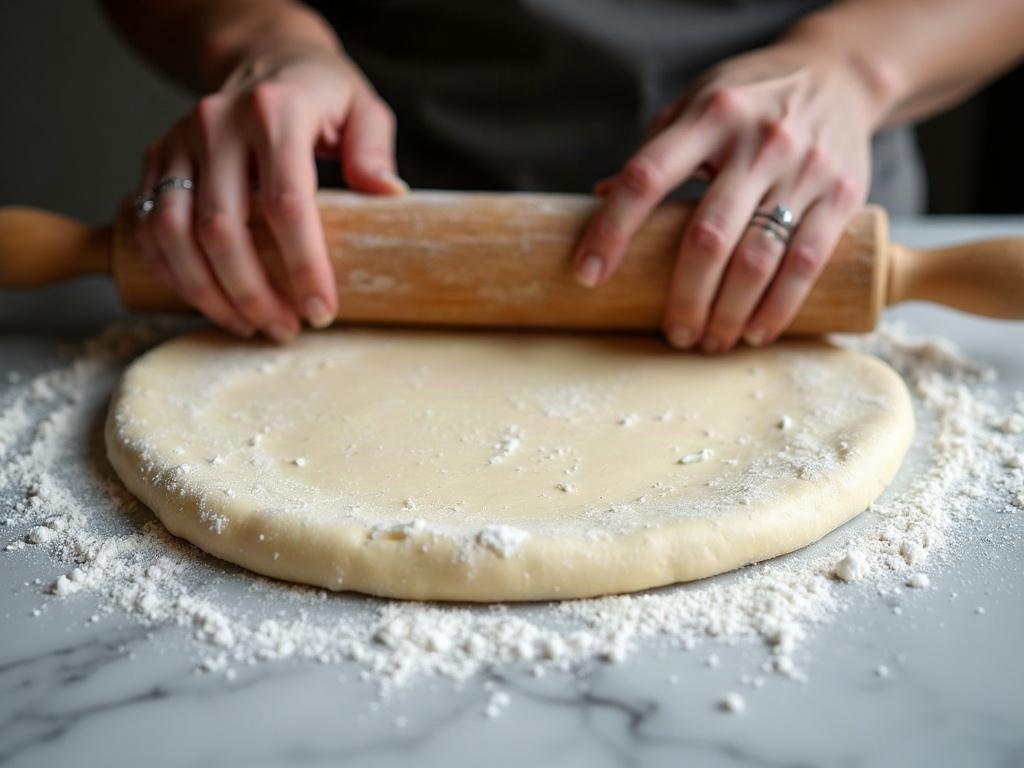
5. Roll and fit. On a floured surface, roll the chilled disc from the center outward into a round about 2 inches wider than your pan. Faint marbled streaks of butter are a sign you did it right. Ease it into the dish without stretching, trim, and crimp the edge. Chill the lined pan another 20–30 minutes before filling or baking.
Beating the soggy bottom
The classic holiday-pie heartbreak is a crisp rim over a pale, soggy base. For custard pies like pumpkin, or any wet filling, blind-bake (par-bake) the crust first: line the chilled shell with parchment, fill it with pie weights or dried beans, and bake at 400°F (200°C) for about 15 minutes, then remove the weights and bake a few minutes more until the base looks dry and set. A thin brush of egg wash on the par-baked base, returned to the oven for a minute, forms a seal that keeps filling from soaking in.
Baking the pie on a preheated baking sheet on a lower rack also helps — that burst of bottom heat sets the base fast. The same principle is at work when a loaf scorches underneath; if you’re curious why direct bottom heat behaves the way it does, we dig into it in why the base of your sourdough scorches.
Make it ahead — because it’s the holidays
This is where a discard crust really shines during a hectic baking week: it is built for making ahead. The wrapped dough disc keeps in the fridge for up to three days, so you can mix it whenever you have ten quiet minutes and roll it out on the day. It also freezes beautifully — wrap the disc well and it will keep for a couple of months; thaw it overnight in the fridge before rolling. You can even roll it, fit it into the pan, and freeze the whole lined dish ready to fill. The make-ahead mindset is the same one that keeps holiday baking calm rather than frantic, which is exactly the thinking behind our make-ahead Thanksgiving sourdough schedule.
A few things that go wrong (and the fix)
- Tough, hard crust. Almost always overworking the dough or adding too much water. Handle it less, and remember the discard is doing part of the hydrating — go light on the ice water.
- Butter leaking out during baking. The dough got too warm before it went in the oven. Chill the lined, filled pan while the oven preheats so it starts baking cold.
- Crust shrinks down the sides. The gluten was stretched when you fitted it, or it wasn’t rested. Ease the dough into the pan without pulling, and don’t skip the post-shaping chill.
- Too tangy? Use less discard, or reach for older, milder discard rather than a freshly fed one. For most palates, a quarter cup reads as pleasant depth, not sourness.
Put that jar to work
A discard pie crust is one of those small kitchen wins that feels almost like cheating: you take something you were going to throw away, and it makes your holiday pies better — flakier, tastier, and sturdier — than they would have been otherwise. It costs you nothing extra, it clears out the discard jar, and it gives every pie on the table a little bit of your starter’s character. If you’ve got discard to burn and a crowd to feed, this is where to start, and a spiced sourdough discard gingerbread loaf makes a fine second stop for whatever’s left in the jar.
Pastry is one of those things that clicks the moment you see it done — the size of the butter flakes, how shaggy the dough should look, the way it rolls out from a cold disc. The full step-by-step sourdough discard pie crust, including the blind-bake and the crimp, lives on the LoafLovers YouTube channel, and our free sourdough troubleshooting guide has a printable discard-uses cheat sheet so that jar never goes to waste again. Keep it cold, handle it gently, and go make the flakiest pie on the table.