Here’s a small confession that should make you feel better: a lot of the sourdough that intimidates you — the tight shaping, the surgical scoring, the banneton that leaves a perfect spiral, the agonizing over oven spring — none of it is required to make genuinely great bread. It’s required to make a specific kind of bread: the round, crusty artisan boule. If that loaf keeps beating you, focaccia is the off-ramp. It’s the same wild-yeast magic, the same open, flavorful crumb, but it skips almost every step that trips beginners up. No shaping. No banneton. No scoring. No turning a wet loaf out and praying. You mix a loose dough, let time do the work, pour it into an oiled pan, poke it full of holes, and bake. That’s it.
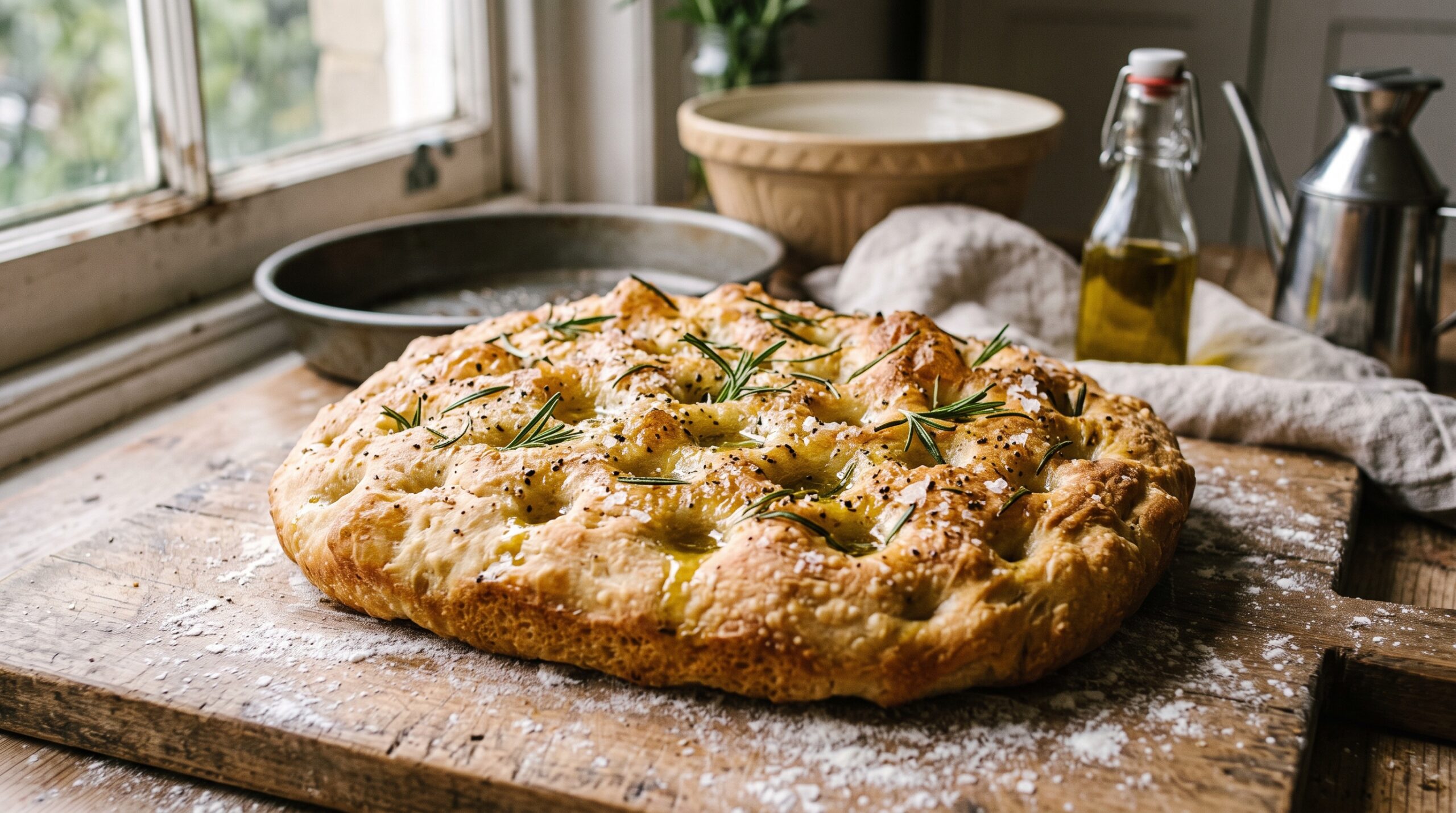
Focaccia is the bake I send every frustrated, mid-panic baker to first, because it’s nearly impossible to fail in a way that isn’t still delicious. The dough is deliberately wet, which means the very thing that scares beginners — a slack, sticky dough — is the point rather than the problem. You’re not fighting it into a taut ball; you’re letting it sprawl into a pan. Let’s walk through it calmly.
Why focaccia is the most forgiving bake in sourdough
Every hard part of a classic loaf exists to build and preserve structure so a freestanding round holds its shape and opens up in the oven. Focaccia sidesteps all of that by baking in a pan. The pan holds the shape, so you never have to. That single fact removes shaping, scoring, and most of the anxiety in one move. The high hydration that would make a boule hard to handle instead gives focaccia its signature airy, custardy crumb — wet dough wants to be focaccia.
It’s also gentle about timing. A boule punishes you for over- or under-proofing with a flat, dense result. Focaccia has a much wider margin: a little over, a little under, and you still get a good pan of bread. And because it’s rich with olive oil and baked in a pan, even a slightly dense batch tastes wonderful. The stakes are low, which is exactly what a nervous beginner needs — a win, not another lesson.
What you need (and what you don’t)
You need a bowl, a pan (a metal cake pan, a small sheet pan, or even a well-oiled baking dish), flour, water, salt, olive oil, and sourdough. You do not need a banneton, a lame, a Dutch oven, or a bench knife. You can use active, bubbly starter for the airiest result, but focaccia is also a fantastic home for discard if your starter is a little sluggish — you’ll just lean on a longer rise and possibly a pinch more time. A rough, beginner-friendly ratio to start from: around 500g flour, about 375–400g water (that’s the high hydration doing the work), 100g of active starter, and 10g of salt, plus plenty of olive oil for the pan and top. Treat those as a starting point, not a law.
The method: mix, fold, wait, dimple, bake
Mix your flour, water, starter, and salt in the bowl until there’s no dry flour left. It’ll be shaggy, wet, and unpromising. That’s correct — don’t add flour to “fix” it. Cover it and let it rest.
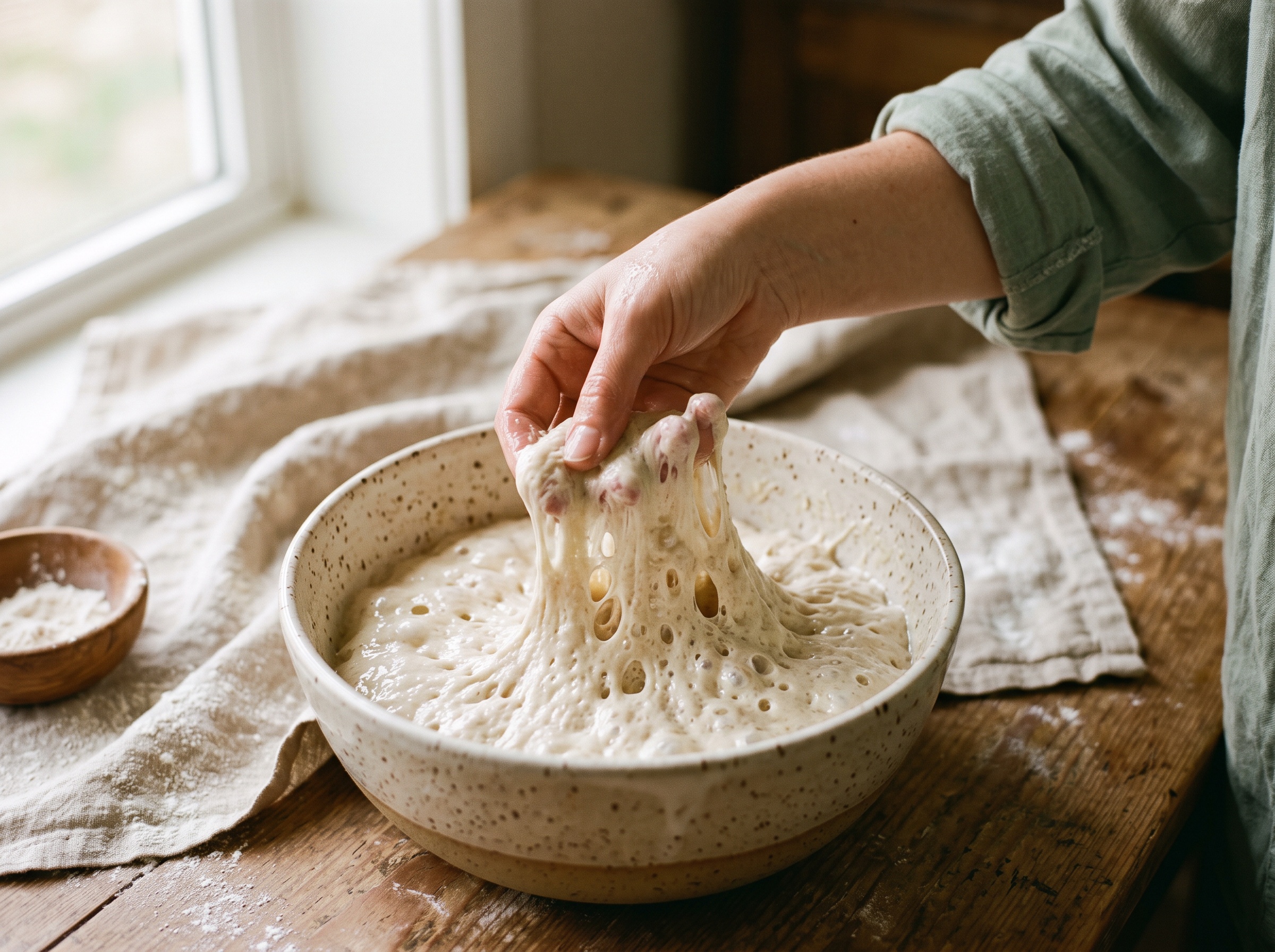
Over the next couple of hours, give it three or four gentle stretch-and-folds, spaced maybe 30–45 minutes apart. With wet hands, reach under one side of the dough, stretch it up, and fold it over the middle; turn the bowl and repeat a few times. This is the only “handling” focaccia asks for, and it’s forgiving — you’re just building a little strength, not chasing a perfect windowpane. If you miss a fold or two because life happened, the dough will survive.
Then comes the part that makes focaccia so easy: a long, slow rise, ideally overnight in the fridge. Letting it ferment cold overnight develops flavor and, crucially, means you bake on your schedule instead of the dough’s. In the morning (or whenever the dough looks puffy and bubbly), generously oil your pan, tip the dough in, and turn it once to coat it in oil. Let it come to room temperature and relax into the pan — an hour or two — until it’s pillowy.
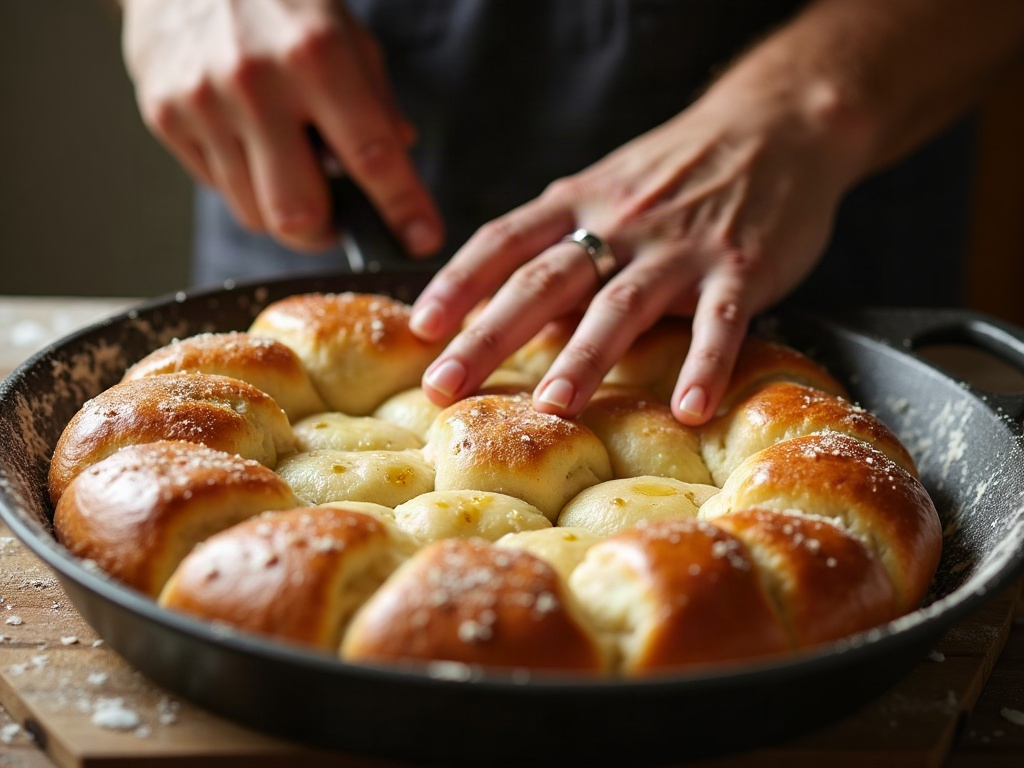
Now the genuinely fun part: dimple it. Oil your fingertips and press straight down through the dough to the bottom of the pan, all over, like you’re playing a piano with all ten fingers. Don’t be shy — those deep dimples are what give focaccia its craggy top and little pools of golden oil. Drizzle more olive oil over the top, scatter flaky salt, and add whatever you like: rosemary, cherry tomatoes, thin onion, olives. Then bake hot — around 220°C / 425°F — until the top is deep golden and the bottom is crisp, usually 20 to 30 minutes depending on your pan and oven.
If it comes out wrong: quick fixes
Focaccia rarely fails outright, but here are the two things beginners hit. Dense and gummy? It was almost certainly underproofed — the dough went into the oven before the wild yeast had built enough gas. Next time, give it more time at room temperature before baking, and make sure your starter was lively going in. A cold kitchen slows everything down, so be patient rather than clock-watching. Pale and soft on top instead of crisp and golden? Your oven likely wasn’t hot enough, or you pulled it early. Bake it longer and hotter, and make sure there’s enough oil on top and in the pan — the oil is what fries the crust to that crisp, golden finish.
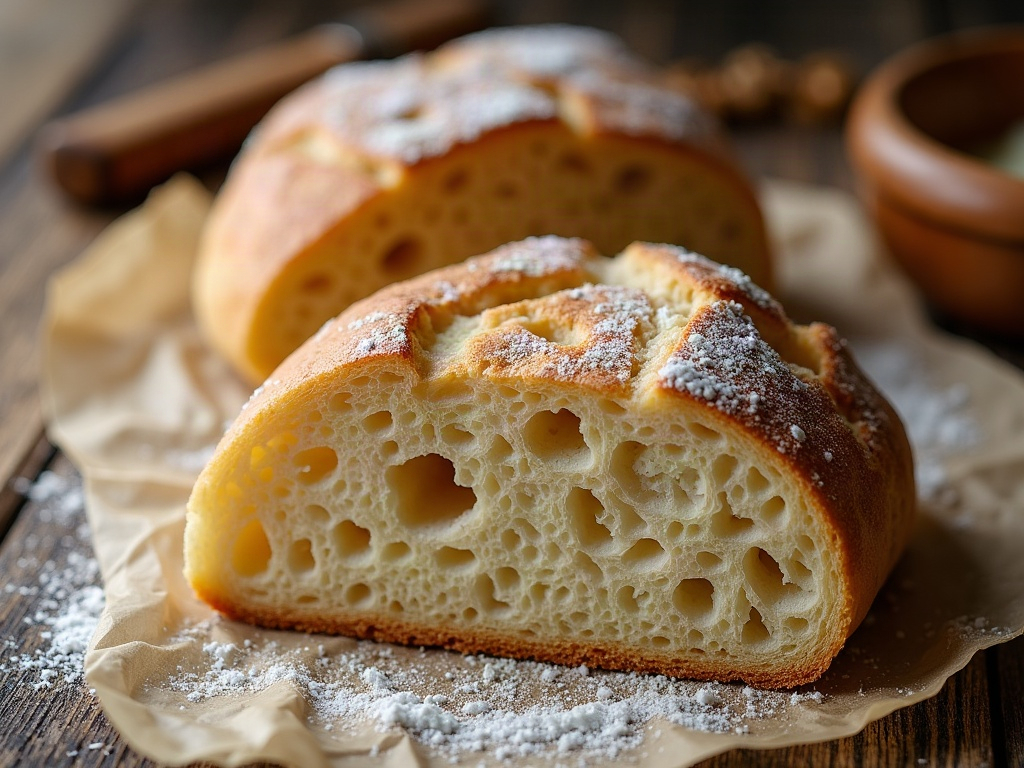
The beauty is that both of those “failures” are still perfectly good eating. A slightly dense focaccia is a fantastic sandwich base; a paler one is a soft dinner bread. You genuinely cannot lose badly here, which is why it’s the perfect place to rebuild your confidence if round loaves have been grinding you down.
Bake this once and something clicks: sourdough stops feeling like a test you keep failing and starts feeling like something you can just do. Get comfortable with the wet dough and the rhythm of folds and a long rise here, on the bake that forgives everything, and the skills carry straight back to that boule when you’re ready to face it again. Start easy, win early, and let the confidence rise with the dough.
Want to see the wet dough, the folds, and the dimpling in real time — the parts that are hard to picture from words alone? The full step-by-step is on the LoafLovers YouTube channel, and our free sourdough troubleshooting guide walks through the fixes for whatever your first pan throws at you.