We need to talk about the jar in the back of your fridge. You know the one. It was a bubbling, happy starter once, and then life happened – a busy month, a holiday, a stretch where baking bread was the last thing on your mind. Now it is a sullen grey mass under a layer of dark liquid, and every time you open the fridge it stares at you with quiet reproach.
Here is the good news, and it is genuinely good: you almost certainly have not killed it. Sourdough starters are far tougher than the internet’s fussy feeding schedules make them sound. A neglected starter is not dead – it is dormant and hungry. Unless something has gone truly wrong (and we will cover how to tell), a few days of patient feeding will bring it roaring back. Do not throw it out yet.

First, the smell test – and what nail polish means
Pull the jar out and take a breath. If it smells sharp and boozy, or specifically like nail polish remover – that acetone tang – do not panic. That is one of the most common and most misread signs of a neglected starter, and it means exactly one thing: your starter is starving. The yeast and bacteria have eaten all the available flour and, in their hunger, produced alcohol and acetone-like compounds as byproducts. It is not a death smell. It is a “feed me” smell.
A sharp, sour, vinegary, or beery smell is all in the normal range for a hungry starter. What you are listening for as a warning is a genuinely rotten, putrid, or off smell paired with visible mold – but we will get to the true red lines below. For now, if it just smells strong and boozy, breathe easy: this one comes back.
Deal with the hooch
That dark liquid on top has a name: hooch. It is alcohol the starter produced when it ran out of food, and its color – from pale grey to nearly black – is normal and harmless. Hooch is simply another sign your starter has been hungry for a while.
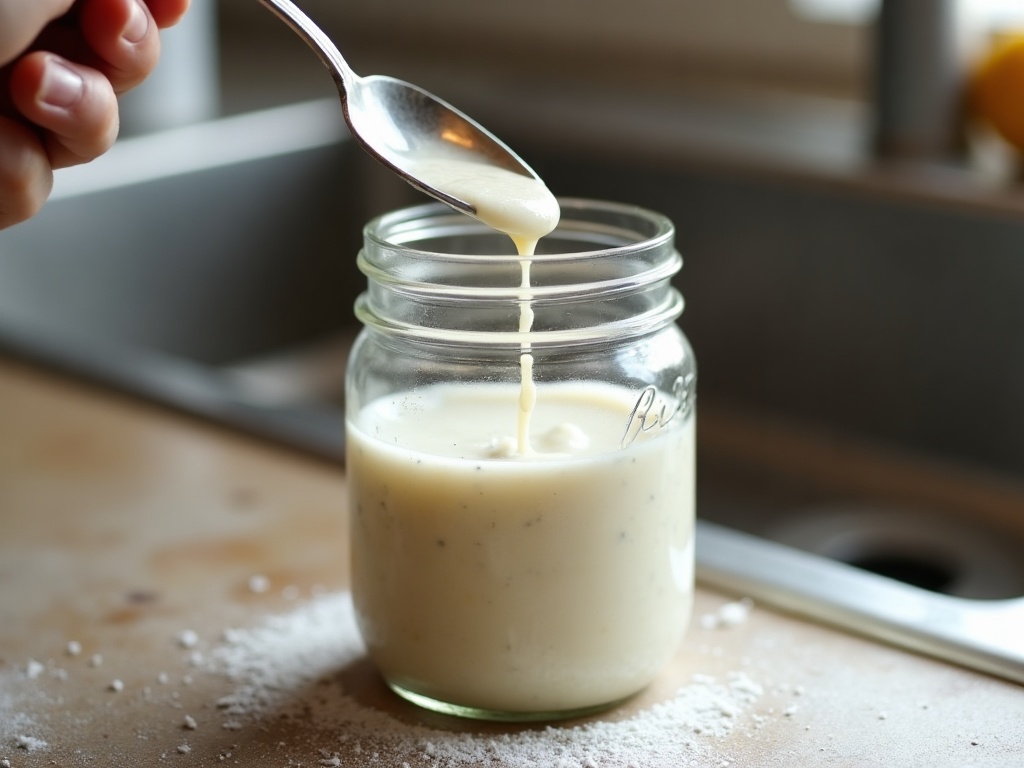
You have two choices. You can pour it off for a slightly milder, less sour result, or stir it back in for a tangier one. When you are reviving a neglected starter, pouring it off is usually the cleaner move – it takes some of the accumulated sharpness with it. Tip off the liquid, then look at what is underneath. A grey, unappetizing paste is completely expected. Scrape off any hardened, dried crust around the rim and get down to the softer starter beneath.
The revival: small, frequent feedings
Reviving a starter is not about one dramatic rescue feeding – it is about consistency. Here is the routine that works on almost any dormant starter:
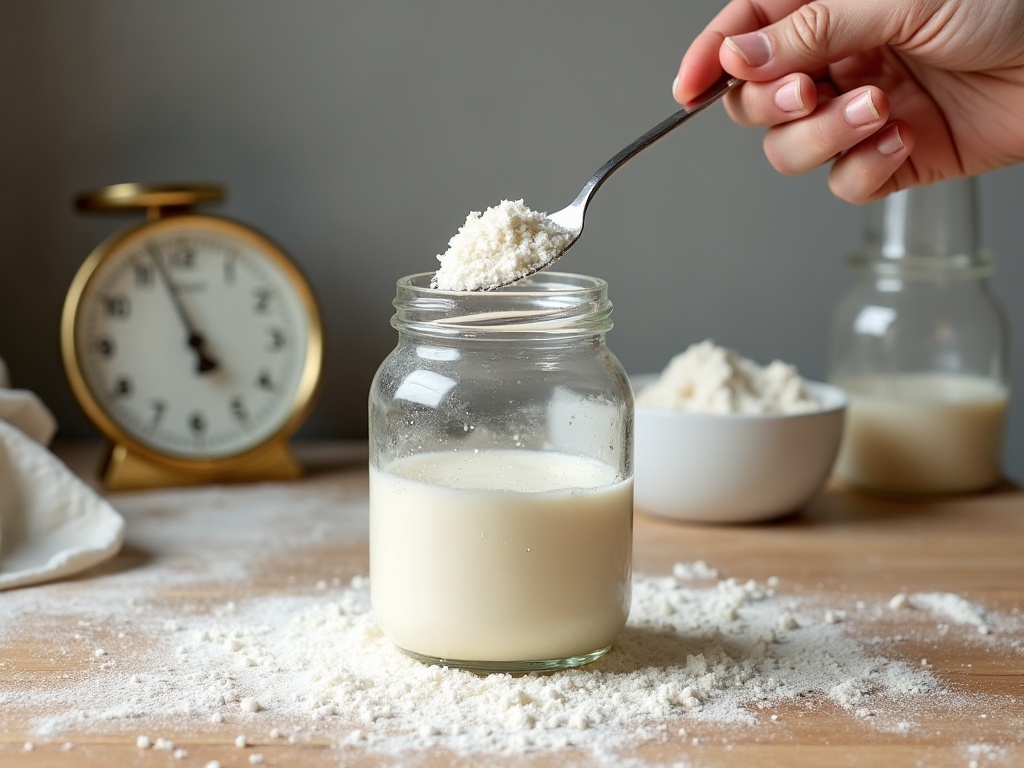
- Take only a little. Scoop a small spoonful – about a tablespoon – of the old starter into a clean jar. Discard the rest. This matters: a small amount of tired starter fed with a lot of fresh flour recovers far faster than trying to resuscitate the whole sad mass at once. You are diluting the acidity and giving the surviving microbes a fresh, uncrowded buffet.
- Feed it generously. Add equal weights of fresh flour and lukewarm water – a common ratio is 1 part starter to 5 parts each of flour and water by weight for a neglected jar. Stir to a thick-batter consistency. Cover loosely and leave it somewhere warm, ideally around room temperature or a little warmer.
- Feed it twice a day. Roughly every 12 hours, repeat: keep a small amount, discard the rest, feed with fresh flour and water. Warmth and regular meals are the whole secret.
For the first day or two you may see almost nothing – maybe a few shy bubbles. Do not lose faith. Somewhere around day two or three, you will notice it start to dome, bubble, and smell less like acetone and more like pleasant, yeasty bread. That is the turn. Keep feeding.
How to know it is truly back
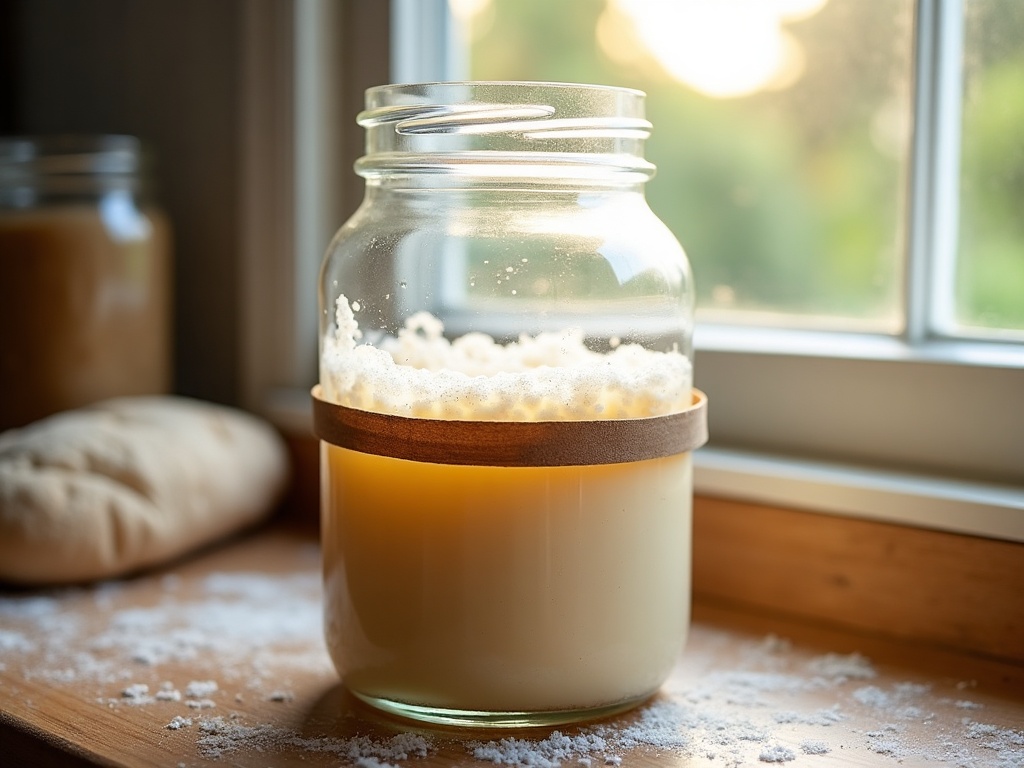
A revived starter is ready to bake with when it does one thing reliably: it doubles in size within about 4 to 8 hours of a feeding, and does it again the next day. Bubbly and risen, then predictably risen again – that consistency is the real test, not a single lucky rise.
A quick confidence check is the float test: drop a small spoonful of active starter into water. If it floats, it is full of gas and ready to leaven a loaf. If it sinks, give it another feeding or two – it is close, just not quite there.
When to actually let it go
Almost every neglected starter comes back. There is really only one situation where you should give up on it: visible mold. Fuzzy spots – pink, orange, black, or green fuzz – or streaks of pink or orange on the surface mean it is time to throw the whole thing out, jar and all, and start fresh. That is not hunger; that is contamination, and no amount of feeding fixes it safely.
Hooch, grey color, a boozy or acetone smell, a hard dried crust, weeks of neglect – none of those are death sentences. Only genuine mold is. If in doubt between “strong smell” and “rotten,” trust that a starving starter smells sharp but not foul.

So go rescue the jar in the back of your fridge. Pour off the hooch, take a spoonful, feed it small and often, and give it a warm spot and a few days of patience. Sourdough has survived world wars, migrations, and countless forgetful bakers – yours can survive a busy month. Before long it will be bubbling over the rim again, and you will be back to the far happier problem of what to do with all that discard.