You pull the loaf out, and the flavor is there, the crumb is fine – but the top is flat and closed, the score has healed over into a faint scar, and there is no ear. Just a rounded, sealed dome where you wanted that proud, curling ridge. It is one of the most disheartening finishes in sourdough, because the loaf looks like it gave up right at the finish line.
Here is the reassuring part: the ear is not luck, and it is not a fancy technique reserved for professionals. It is the visible result of a short chain of things going right. When there is no ear, one link in that chain broke – and every link is something you can control. Let us walk the chain from the symptom back to the cause.
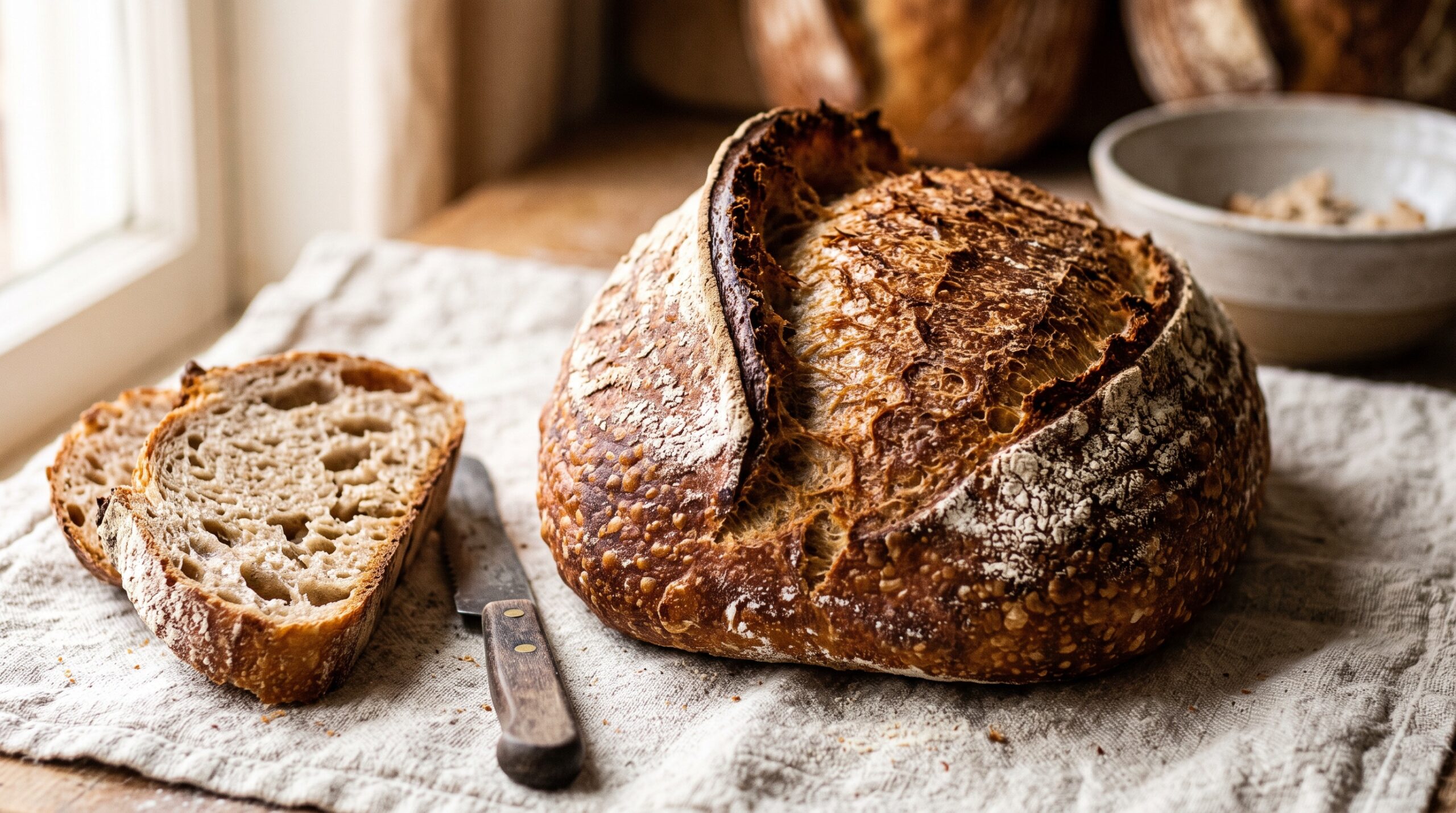
What an Ear Actually Is – and Why It Matters
An ear is the raised, curled flap of crust that lifts up along your scoring line as the loaf expands in the oven. It forms because you gave the bread one deliberate weak point in an otherwise tight skin. As the dough surges upward in the first minutes of the bake – what bakers call oven spring – all that expansion escapes through the cut, peeling the crust back and setting it crisp before it can fall.
So an ear is really a report card. It tells you that your dough had gas left to give, that the surface was tight enough to force the expansion in one direction, and that your score and your steam let it happen. No ear means one of those was missing. Let us find which.
The Real Reasons Your Loaf Won’t Open Up
Four things create an ear, and any one of them failing will flatten it: the dough still has to be springy and not overproofed, the surface has to be under tension, the score has to be cut correctly, and the oven has to be hot and steamy. Chase them in that order, because a perfect score cannot rescue dough that has nothing left to give.
Cause 1: Your Dough Is Overproofed
This is the number one ear-killer, and it is the cruelest, because an overproofed loaf feels so promising in the bowl – puffy, alive, full. But if the dough has fermented too long, the yeast has already spent most of its gas and the gluten has gone slack and tired. There is simply no stored energy left for a violent rise in the oven, so the loaf just spreads and seals over instead of bursting upward.
The fix is to catch the dough earlier. Aim for the point where it has risen by roughly half to three-quarters, feels airy but still domed, and springs back slowly when poked – leaving a shallow dent that fills in gradually. If your finger leaves a dent that stays put and the dough sighs flat, you have gone too far. When in doubt, bake a touch early: a slightly underproofed loaf will still throw a dramatic ear, while an overproofed one never will.
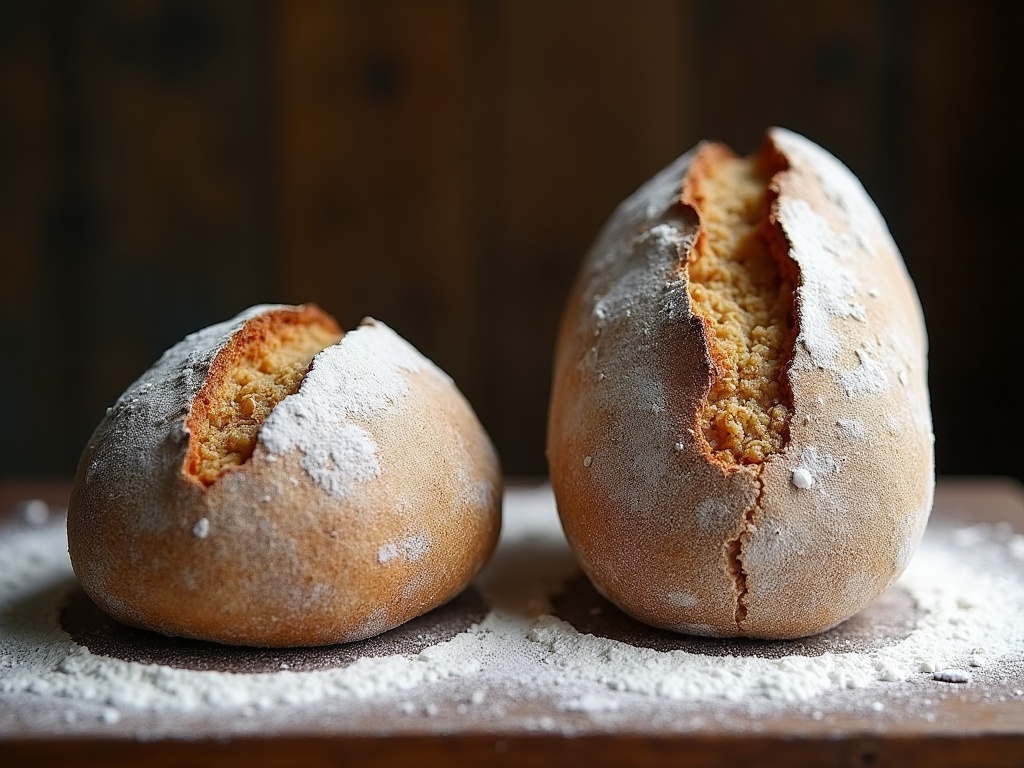
Cause 2: Weak Dough With No Surface Tension
Even perfectly proofed dough will not open cleanly if its skin is loose. The ear needs a taut outer surface to push against – a drum, not a puddle. If your shaping leaves the dough slack and shapeless, the expansion has nowhere to concentrate and simply flows outward.
Two fixes work together here. First, build real strength during bulk fermentation with a few sets of stretch-and-folds so the dough holds its shape. Second, shape with intention: create tension across the surface by dragging the shaped round against the counter to tighten the skin, then proof it seam-side up in a banneton so that taut face becomes the top you score. A cold dough helps enormously too – which brings us to a trick that fixes several problems at once.
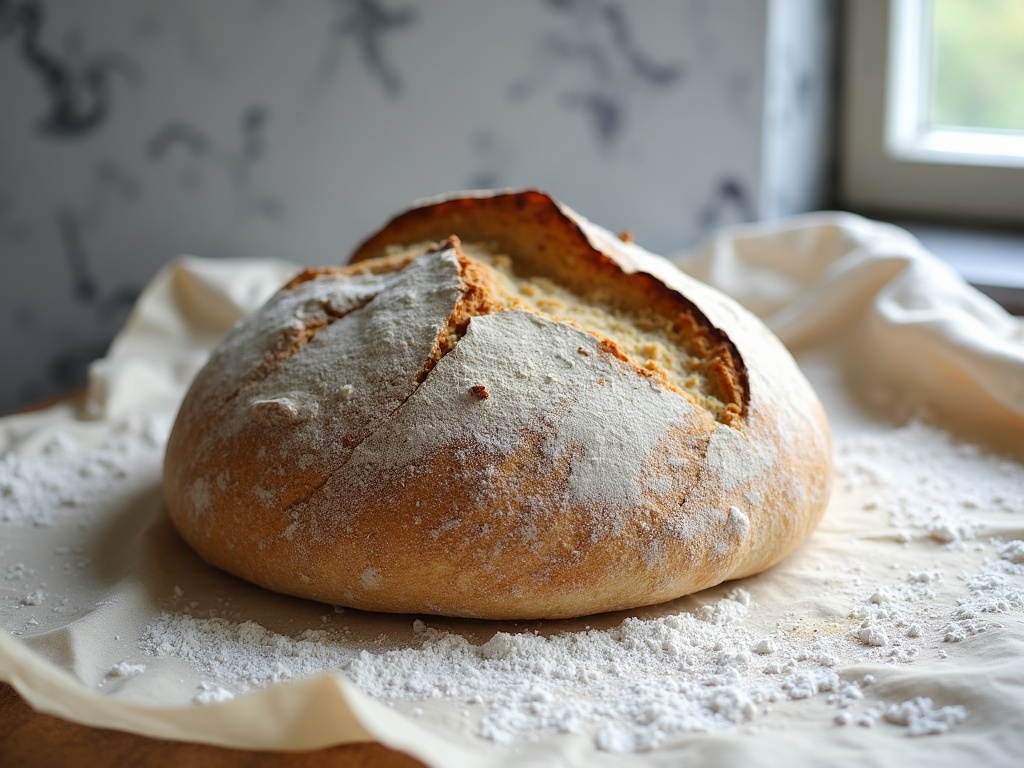
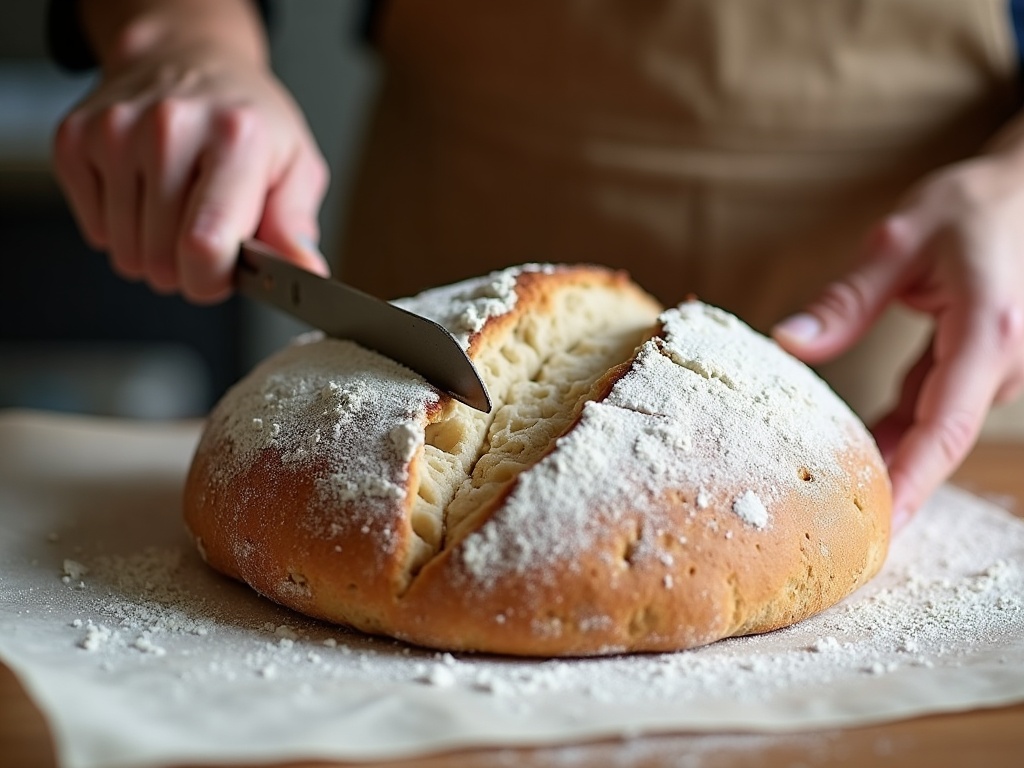
Cause 3: You Are Scoring It Wrong
This is where most bakers actually lose the ear, and it usually comes down to three habits.
The first is the angle. A vertical, straight-down cut opens into a valley, not an ear. To get a lifting flap you want a shallow angle – hold the blade at roughly 30 degrees to the surface and slice almost sideways, cutting under a thin lip of skin. That lip is what peels back and curls into the ear.
The second is depth and confidence. A timid, shallow scratch heals shut; a hesitant sawing motion drags and tears. You want one smooth, committed stroke about a quarter to half an inch deep, in a single pass. Use a genuinely sharp blade – a lame or a fresh razor, never a butter knife – so it glides instead of dragging the surface.
The third is temperature. Cold dough scores like a dream and warm, slack dough smears and sticks. Proof your shaped loaf in the fridge overnight and score it straight from the cold – the firm surface takes a clean, crisp cut and holds the shape of your lip until the oven sets it.
Cause 4: No Steam, or an Oven That Isn’t Hot Enough
You can do everything above perfectly and still lose the ear in a dry oven. Steam keeps the crust soft and flexible for the first crucial minutes, buying time for the loaf to expand and the ear to peel up before the surface hardens. Without it, the crust sets almost instantly – locking the loaf shut like glue and choking off the spring.
The simplest reliable fix is a preheated Dutch oven: it traps the loaf’s own moisture into a private steam chamber. Preheat it hard, get the dough in fast, and keep the lid on for the first 20 minutes or so, then remove it to color the crust. And genuinely preheat – a fully hot oven (usually around 230 to 250C, 450 to 480F) delivers the initial blast of heat that drives oven spring. A lukewarm oven gives a lazy, ear-less rise.
A Repeatable Routine That Gets an Ear
Put the chain together and it becomes a checklist you can trust. Build dough strength with stretch-and-folds. Catch the proof a little early rather than late. Shape tight for a taut skin, then cold-proof overnight. Score the cold loaf in one confident stroke, blade held low at about 30 degrees. Bake in a ripping-hot, preheated Dutch oven with the lid on to trap steam. Miss the ear? Walk back through those five steps in order and one of them will be the culprit – almost always the proof or the scoring angle.

An ear is not the point of good bread – a tender, open crumb and honest flavor matter far more. But it is one of the clearest signals that your whole process came together, and chasing it will quietly make you a better baker at every step. If you want to see the scoring angle and the confident single stroke in motion – because this really is easier to watch than to read – the full technique lives on the LoafLovers YouTube channel, and you can grab our free sourdough troubleshooting guide to keep the whole chain on hand for your next bake. Cut with confidence, and let that loaf open up.