You stir the jar, screw the lid down loose, and set it on the counter with real hope this time. Hours later it looks exactly the same: flat, dense, maybe a few sad bubbles clinging to the glass. No dome. No doubling. Just a pale paste that refuses to do the one thing sourdough starters are supposed to do. Before you tip it down the drain and mutter that you are simply not a bread person, take a breath. A starter that will not rise is almost never dead. It is sluggish, and sluggish has causes you can fix, usually within a day or two. Here are the seven real reasons your starter is stalling, and exactly what to do about each one.
First, though: your starter is almost certainly not dead. Wild yeast and the lactic bacteria that make sourdough work are astonishingly hardy. They survive weeks of neglect, cold fridges, and being ignored under a layer of grey liquid. What looks like death is nearly always dormancy – the organisms are there, they just do not have the warmth, the food, or the time to show off. This is also where the famous float test leads people astray. Dropping a spoonful in water and hoping it floats is a rough gas check, not a life-or-death verdict; a healthy starter past its peak will sink, and a gassy but weak one can float. Ignore it as a pass-fail exam. The real signal of a thriving starter is simpler: it reliably doubles in volume and smells pleasantly tangy within a set window after feeding. If it is not doing that yet, work through the reasons below rather than starting over.
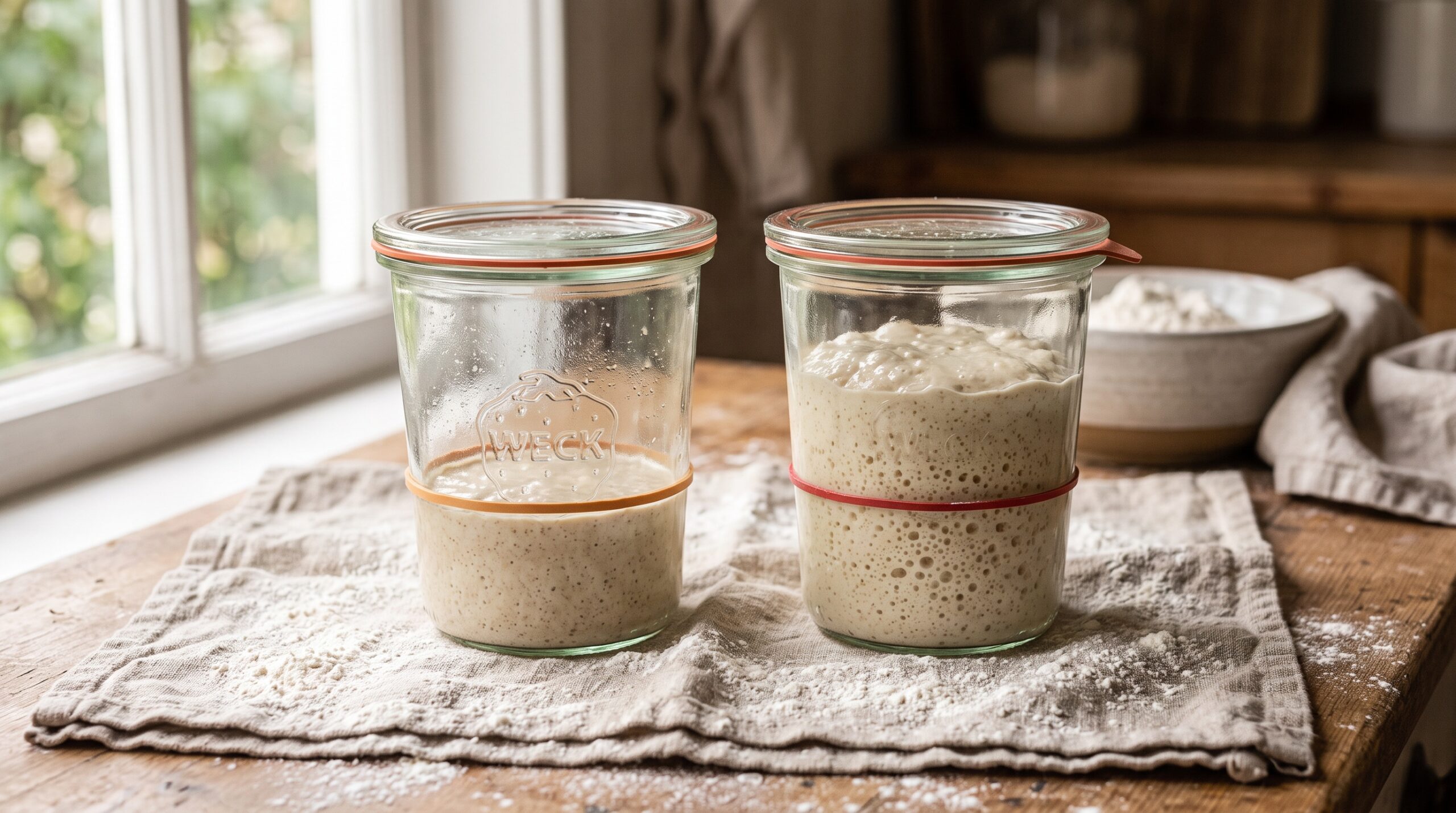
Reason 1: Your kitchen is too cold
This is the single most common culprit, and the most overlooked. Wild yeast is temperature-driven. In a 65F (18C) kitchen a starter might crawl to a rise over 12 hours; at 78F (25-26C) the same starter can double in four to six. If your loaves stall in a cold season, your starter stalls first.
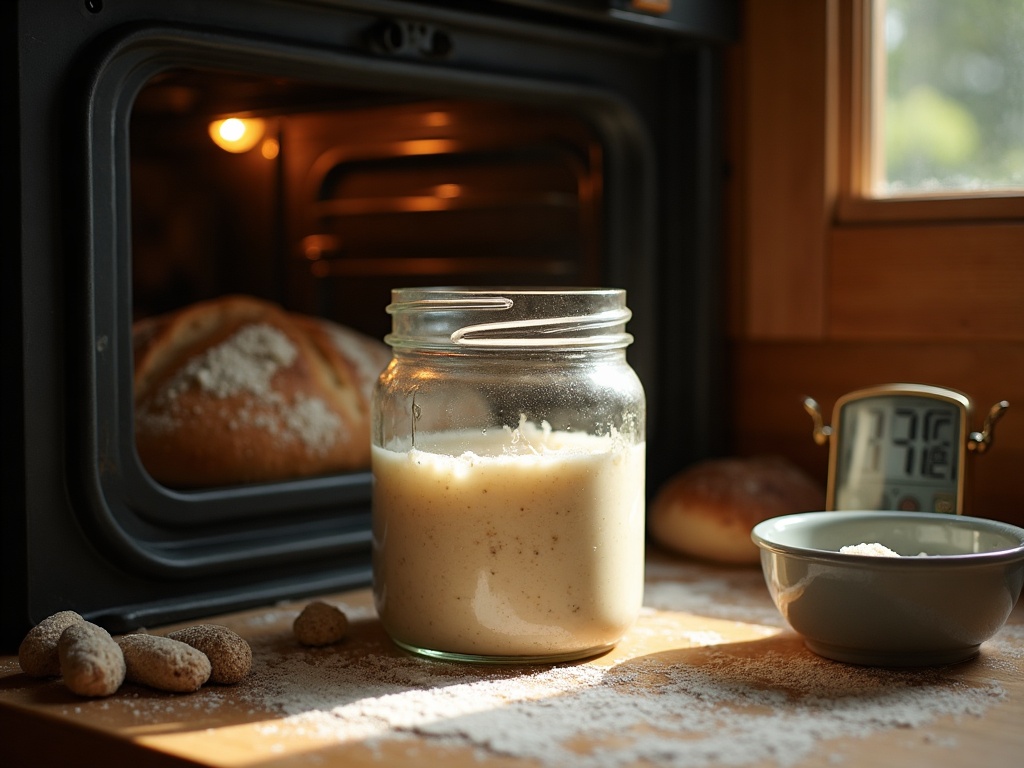
The fix is to find a warm nook. A turned-off oven with only the interior light on often holds a gentle 75 to 80F. So does the top of the fridge, a shelf near a warm appliance, or a cupboard with a mug of just-boiled water tucked beside the jar. A cheap probe thermometer takes the guessing out of it. Do not cook the starter, though; anything above about 90F starts to stress the culture. You are aiming for cozy, not hot.
Reason 2: You are not feeding it enough
A starter is a colony that eats flour. If you feed a big jar of mature starter a tiny pinch of fresh flour, the population burns through it in an hour and then sits hungry and acidic for the rest of the day, going nowhere. People often mistake this for weakness when it is really starvation.
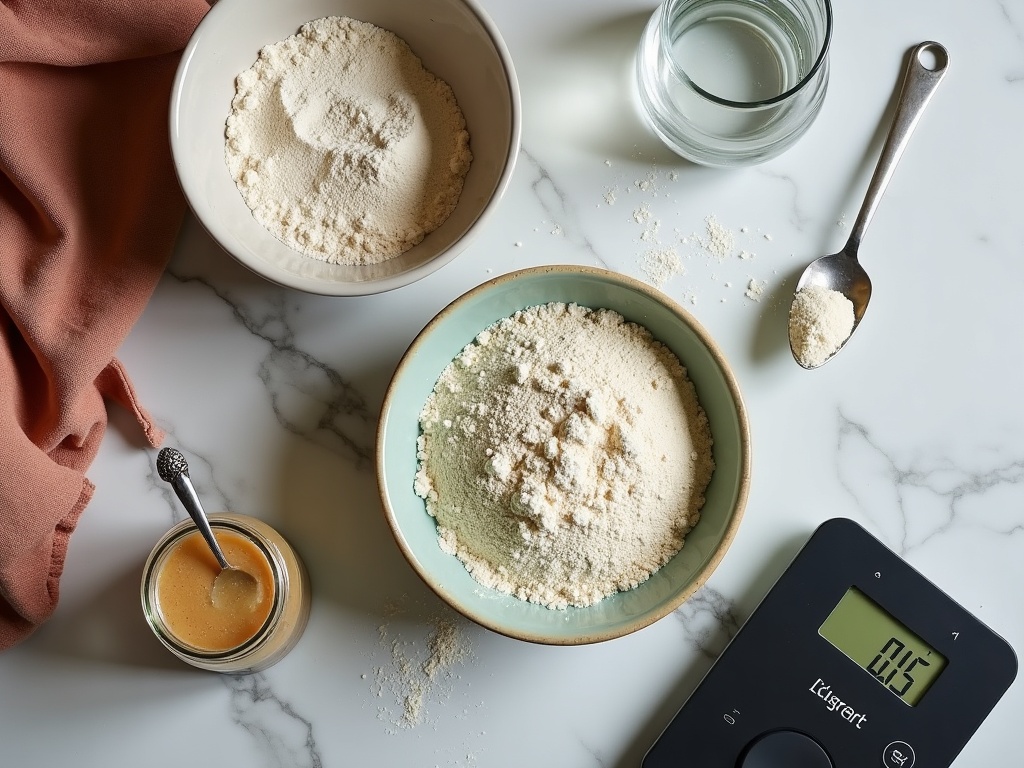
Feed by weight, and give it more food than you think. A reliable ratio for waking a slow starter is 1:5:5 – one part starter to five parts flour to five parts water. In practice, keep a small amount, say 20 grams, and feed it 100 grams of flour and 100 grams of water. Discarding down to that small amount is not waste; it is the whole point. A little starter with a lot of fresh food rises higher, faster, and more predictably than a big jar you keep topping up.
Reason 3: Your flour and water are working against you
Two ingredients quietly sabotage more starters than any technique problem. The first is water. Heavily chlorinated tap water can suppress the very microbes you are trying to grow. If your tap is strongly chlorinated, leave the water out uncovered overnight so the chlorine dissipates, or use filtered water. It is a small change that sometimes flips a stubborn starter overnight.
The second is the flour itself. Plain bleached white flour is clean and low in the wild yeast and minerals a young culture craves. Whole grain flours – whole wheat, and especially rye – are packed with them. If your starter is dragging, swap in 25 to 50 percent whole wheat or rye at the next feeding. Rye in particular is rocket fuel for a tired starter; many bakers keep a bag purely as a revival tool. Once it is lively again you can taper back to mostly white flour if you prefer a milder loaf.
Reason 4: You are judging it on the wrong timeline
Two timing mistakes masquerade as a dead starter. The first is impatience with a young culture. Building a starter from scratch takes time, and days three through five are notoriously flat – often the culture surges early on the wrong bacteria, then goes quiet and seemingly lifeless before the real yeast establishes. If your starter is under two weeks old and stalling mid-week, that is normal. Keep feeding on schedule and wait it out; the rise usually returns around day seven to ten.
The second mistake is checking at the wrong moment. A mature starter might peak four hours after feeding in a warm kitchen, then quietly deflate back down. If you only ever look 12 hours later, you will swear it never rose at all – you simply missed the party. Mark the jar’s start level with a rubber band or a dry-erase line, then check every hour or two through the first several hours after a feed. You may find it is doubling beautifully and you were just late to the show.

Reason 5: Hooch, sour smells, and over-acidity
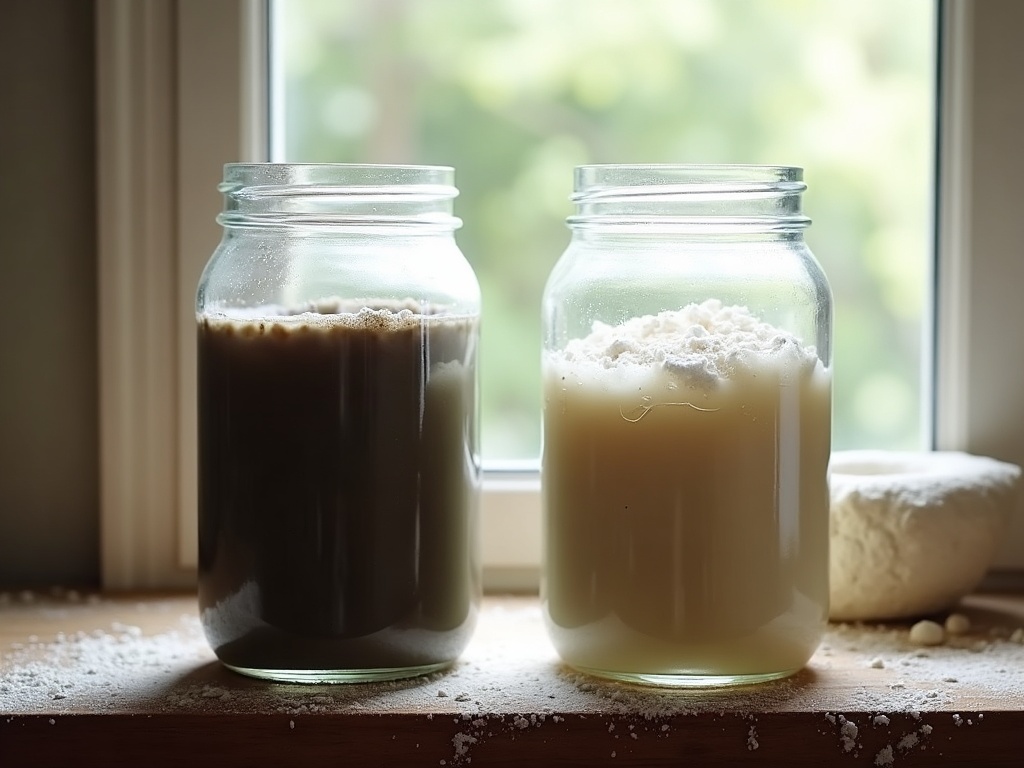
Sometimes the starter is not underfed but over-fermented. A dark or grey liquid on top – hooch – is alcohol the yeast produced when it ran out of food. A sharp acetone, nail-polish, or vinegary smell tells the same story: the culture has gone too acidic, and high acidity slows the yeast down until it can barely lift the batter.
The fix is to reset the balance with fresh food and less waiting. Pour off or stir in the hooch (pouring off gives a milder starter), discard most of what is in the jar, and feed the small remainder generously with that 1:5:5 ratio. Then feed more often – every 12 hours, or even every 8 in a warm kitchen – so the yeast never sits starving in its own acid long enough to sour. Within a couple of days the smell mellows to something tangy and clean, and the rise comes back.
Reason 6: It has been neglected – and the 3-day reset
If your starter has languished in the fridge for weeks or months, it is not dead; it is deeply asleep and probably very acidic. The revival routine is the same in spirit as above, just with patience baked in. Pour off any hooch, then run three days of consistent care. Take a small spoonful into a clean jar, feed it 1:5:5 with warm filtered water and a whole-grain boost, and keep it in a warm spot. Repeat every 12 hours. Discard down to a spoonful each time – this is what dilutes the built-up acidity and concentrates the fresh food.
Expect little on day one, small bubbles by day two, and a genuine rise by day three. If a stubborn culture is still lagging after that, keep going; some just need a fourth or fifth day of the same rhythm. Consistency and warmth do the work. When it reliably doubles within four to eight hours of a feeding, smells pleasantly tangy, and looks domed and bubbly, it is ready to bake with again.
Reason 7: You are asking too much of a small, young starter
Last, a mindset fix. A brand-new or freshly revived starter is not yet strong enough to raise a big, heavy loaf, and when the bread flops, people blame the starter and start feeding it frantically. Give a young culture a week or two of steady doubling before you build a full levain, and when you do bake, use it at its peak – domed, bubbly, at its high point – not on the way down. A starter that doubles on the counter but seems to fail in bread is often just being used too early or past its window, not a starter that cannot rise.
Work through these one at a time – warmth first, then a bigger feed, then better flour and water, then timing – and the vast majority of stalled starters come roaring back to life. The full step-by-step revival, with the daily photos of what a recovering starter should look like, lives over on the LoafLovers YouTube channel, and you can grab our free sourdough troubleshooting guide to keep the whole diagnostic checklist by your jar. Your starter is not broken. It is just waiting for the right conditions – and now you know how to give them.
Sources & further reading: