You lift the lid, and there it is: a thin layer of grayish liquid sitting on top of your starter, sometimes with a smell somewhere between beer and nail polish. It looks like something has gone wrong. Your first instinct is to panic and assume the starter is dead or spoiled.
It almost certainly is not. That liquid is called hooch, and it is one of the most common things a starter does. The good news: it is not a crisis, it is a message. Once you can read what it is telling you, you know exactly what to do – and how to stop it happening in the first place.
What Hooch Actually Is
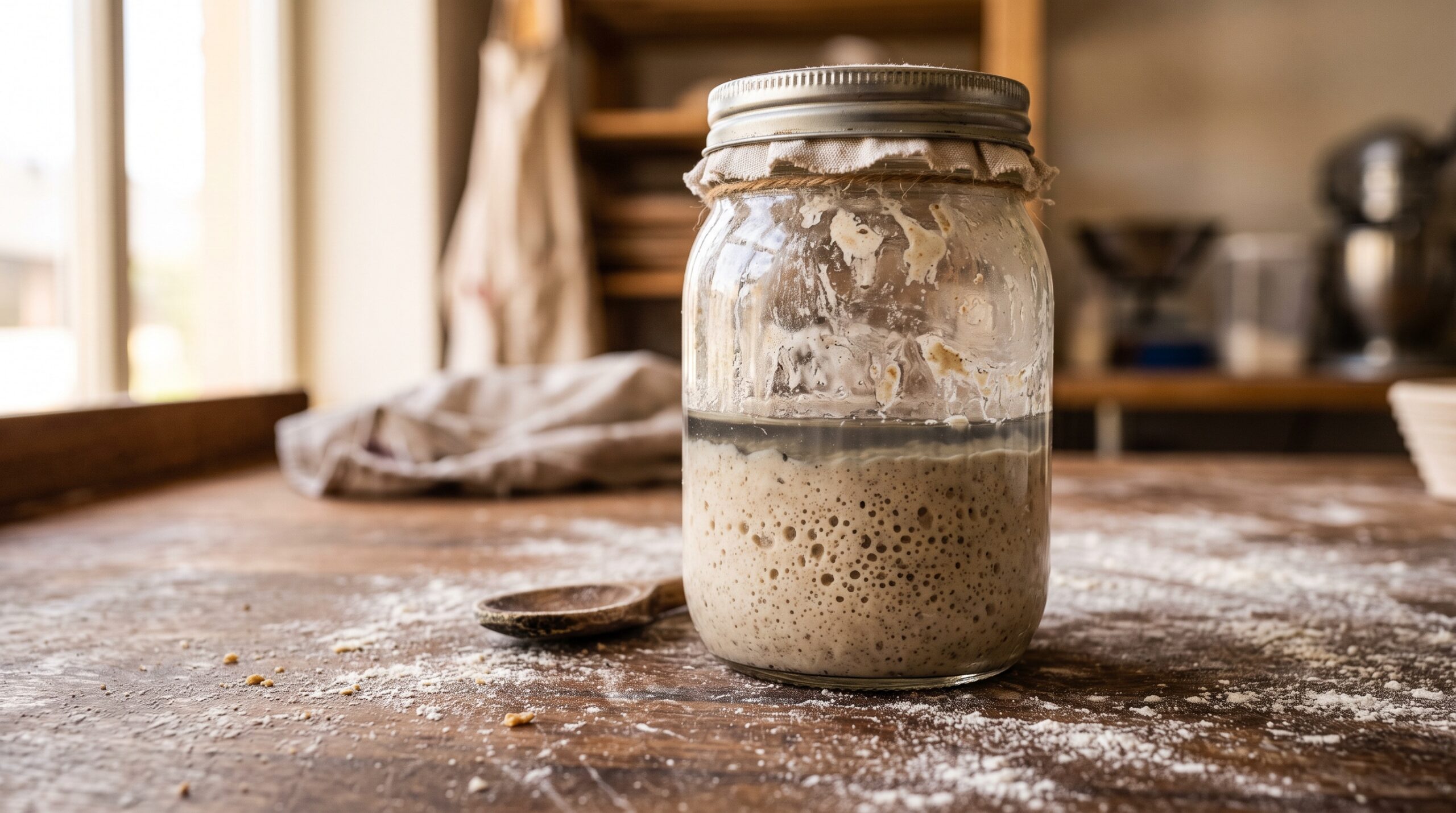
Hooch is a layer of liquid that separates out and rises to the top of a starter (occasionally it sinks or pools in the middle instead). It is mostly water, along with a small amount of alcohol and acids produced by the yeast and bacteria in your starter as they ferment.
Here is the plain-language version of what happened: your starter ran out of food. The wild yeast and bacteria ate through the available flour, kept fermenting, and as a byproduct released alcohol and acid. That is the sharp, boozy, sometimes acetone-like smell. The liquid is simply the visible sign that fermentation went long and hard without a fresh meal.
So hooch is not mold. It is not rot. It is not a sign you did something unforgivable. It is a hungry starter telling you it is overdue.
The One Thing Hooch Almost Always Means
Ninety percent of the time, hooch means the same thing: your starter is underfed relative to how warm it is and how often you feed it.
That can happen for a few reasons, and they usually overlap:
- Too long between feedings. You fed it, life happened, and it sat for a day or three past its window.
- It is warm. Heat speeds fermentation. A starter that is fine on a 68 degree counter can burn through its food and throw hooch in half the time during a hot week.
- The feeding ratio is too small. If you feed a big jar of starter a tiny amount of flour, it eats through it fast and gets hungry again quickly.
A starter kept in the fridge will also form hooch over a week or two – that is completely normal and expected. Cold slows the microbes down, but it does not stop them, so a fridge starter that has been resting for a while will often have a liquid layer when you pull it out. That is not neglect, that is just storage.

Read the Hooch Before You Act
Before you decide what to do, look at two things: the color of the liquid and the smell. They tell you how hungry the starter got.
Thin, light, and slightly tangy or beery. This is a mildly hungry starter. It is in good shape and just wants feeding. The hooch is often clear to pale.
Darker – gray, brown, or almost black – with a sharp alcohol or acetone smell. This is a very hungry starter that has been left much too long. The starter is still almost always fine and revivable, but the flavor has gone extremely acidic and boozy, and you do not want all of that back in your dough.
The color is a fuel gauge, not a spoilage alarm. Darker just means hungrier and more acidic. As long as you see no fuzzy mold (pink, orange, or green fuzz) and no truly foul, rotting smell, the starter itself is healthy underneath.
Pour It Off, or Stir It In?
This is the question everyone actually wants answered, and the honest answer is: it depends on the hooch you just read.
Stir it in when the hooch is thin, light-colored, and smells normally tangy. It is mostly water plus a little acid and alcohol, and stirring it back adds a touch of extra sourness and hydration. Many bakers who like a tangier loaf do this on purpose.
Pour it off when the hooch is dark and smells sharply of alcohol or acetone. In that case you do not want to fold all that harsh acidity back into the culture – pour off the liquid, then feed. You will lose a little sourness and gain a cleaner, more balanced starter.
Either way, the pour-off-or-stir-in decision changes flavor at the margins. It does not save or kill the starter. The feeding that comes next is what actually matters.
The Fix: Feed It Back to Health
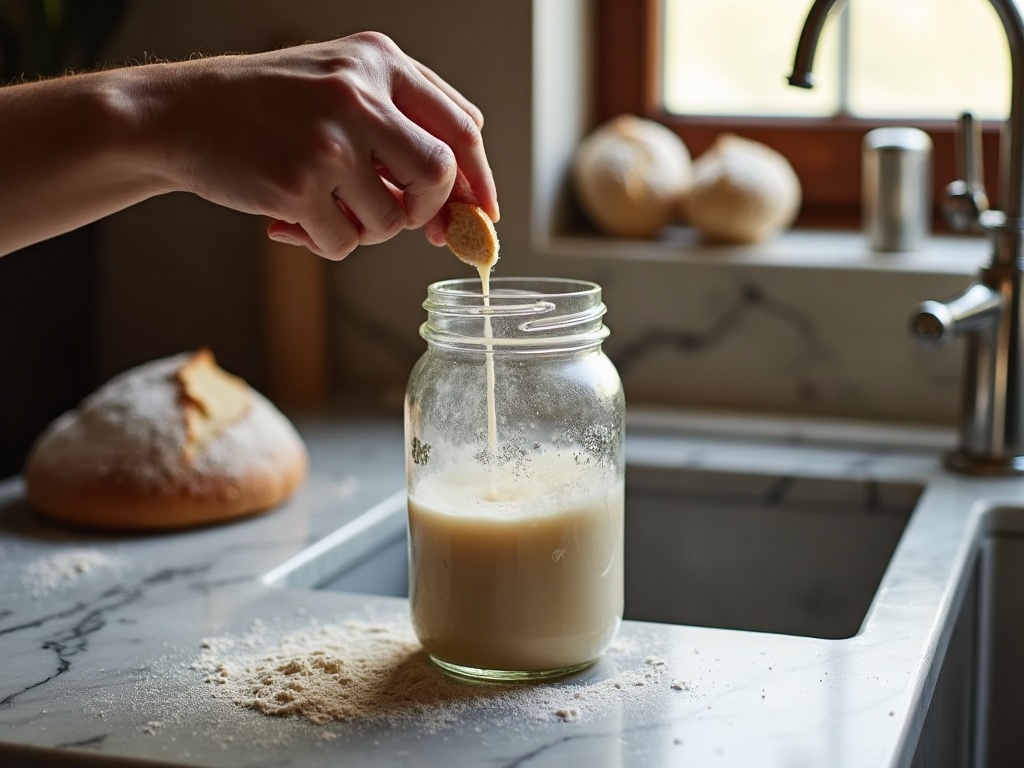
Whether you stirred or poured, the recovery is the same simple sequence. If the starter has been badly neglected, you may need to repeat it once or twice.
- Discard down to a small amount. Keep only a spoonful or two (roughly 20 to 50 grams). Feeding a smaller amount with a generous ratio is what pulls a hungry starter back fast.
- Feed it a strong ratio. A 1:5:5 feeding – one part starter to five parts flour to five parts water by weight – gives it plenty of fresh food. For a very hungry, dark-hooch starter, this generous ratio is exactly what it needs.
- Keep it warm. Somewhere around 75 to 80 degrees helps it wake up and rise predictably.
- Watch for the rise, then feed again. Once it roughly doubles and looks bubbly and domed, feed it again. Two or three feedings on this rhythm will bring even a sad, hooch-covered starter back to a healthy, reliable rise.

How to Stop Hooch Coming Back
Hooch is not something you fix once – it is something you prevent with a rhythm. A few small habits and it stops showing up uninvited:
- Feed on a schedule that matches your temperature. On a warm counter, that may mean twice a day; cooler, once a day. If you are not baking often, keep the starter in the fridge and feed it roughly once a week.
- Feed a bigger ratio if you keep forgetting. A 1:5:5 feeding buys the starter far more time before it gets hungry than a 1:1:1 does.
- Store it cold when you are not baking. The fridge dramatically slows fermentation, so a well-fed starter can rest for a week or two with only mild hooch.
- Mark the level. A rubber band around the jar at feeding height tells you at a glance whether it rose and fell – so you learn your starter’s real timing instead of guessing.
Do that, and a liquid layer becomes a rare, no-big-deal event rather than a recurring scare.
When Hooch Is Not the Whole Story
Hooch itself is harmless. The only time to actually worry is if you see something else alongside it: fuzzy mold in pink, orange, or green, or a pink or orange streaky slime. Real mold means it is time to throw that starter out and begin again (or fall back to a dried backup).
Plain hooch, even dark and stinky hooch, is not that. It is a hungry starter with a story to tell, and now you can read it: pour off or stir in based on the smell, feed it strong and warm, and set a rhythm so it does not happen again.
Because this is genuinely easier to see than to read, the full feeding-and-reviving routine lives on the LoafLovers YouTube channel – and you can grab our free sourdough troubleshooting guide to keep the whole starter-rescue checklist on hand for the next time you lift the lid to a surprise. Feed it, and let it come back to life.