You pulled off a beautiful loaf – good rise, crackly crust, an open crumb you are quietly proud of – and then you took a bite and your whole face scrunched up. Sharp. Vinegary. Almost like it fought back. If your sourdough tastes far more sour than the mellow, pleasantly tangy bakery loaf you were picturing, you are not doing anything catastrophically wrong. Your bread is simply over-acidified, and that is one of the most fixable problems in all of sourdough.
The good news is that sourness is not random. It is the direct result of a few specific choices – how you feed your starter, how warm your dough gets, and how long it sits – and every one of those levers is fully in your control. Once you understand where the tang comes from, you can turn it down as precisely as a dial. Here is exactly what makes a loaf too sour, and how to bake a gentler one starting with your very next batch.
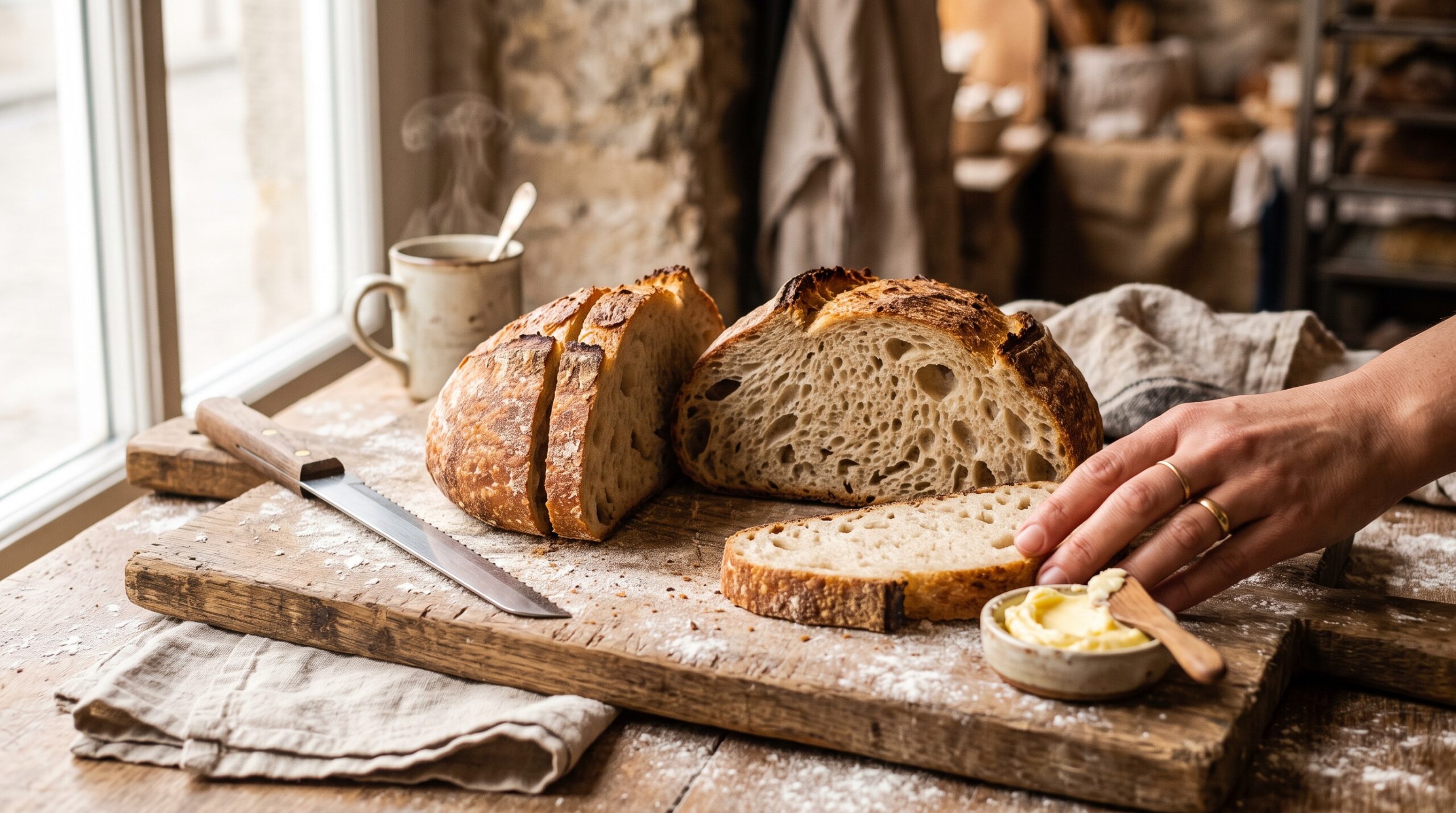
First, Is It Actually Too Sour – or Just Sour to You?
Before you change anything, it is worth a quick gut check, because sourdough is supposed to taste sour. That is the whole point of the wild fermentation. A faint, wine-like tang is a sign of a healthy, well-developed loaf, and some people simply prefer a milder bread than others.
So the real question is not whether your bread is sour, but whether it is unpleasant. If the tang is bright and balanced and disappears under butter, you may have a perfectly good loaf and just a preference for something gentler. If instead the sourness is sharp enough to sting the back of your throat, tastes distinctly of vinegar or acetone, or overwhelms the wheaty, nutty flavors underneath, then yes – it has tipped too far, and the fixes below will pull it back into balance.
Where the Sourness Comes From: A Tale of Two Acids
Sourdough gets its flavor from two different acids produced by the microbes in your starter, and knowing the difference is the key to controlling it.
Lactic acid is the mellow one. It tastes soft, creamy, and yogurt-like – think of the gentle tang in buttermilk. It is produced most readily in warm, wet, well-fed conditions.
Acetic acid is the sharp one. It is literally the acid in vinegar, and it delivers that eye-watering, pungent bite. Acetic acid production ramps up in the conditions many home bakers accidentally create: cooler temperatures, stiffer (less hydrated) dough, and a hungry, under-fed starter that has been sitting too long.
Almost every too-sour loaf is really an excess acetic acid loaf. So the entire strategy for a milder bread comes down to one idea: favor lactic acid, and give acetic acid fewer chances to build up. Every fix that follows is just a practical way of doing exactly that.

Fix #1: Feed Your Starter More Often – and Feed It More
This is the single biggest lever, and it is where most too-sour loaves are born. A starter that sits for a long time between feedings runs out of food, and as it starves, the acids – especially acetic acid – pile up. Bake with that sharp, hungry starter and you are baking that sharpness straight into the loaf. If yours has a layer of dark liquid on top, that is a starving starter waving a flag; our guide to what hooch means and what to do about it walks through it in detail.
Two changes make an immediate difference:
- Feed on a schedule, and use it near its peak. Build your levain and use it when it is bubbly, domed, and roughly doubled – not hours later when it has collapsed and turned acidic. A young, freshly-risen starter is a milder starter.
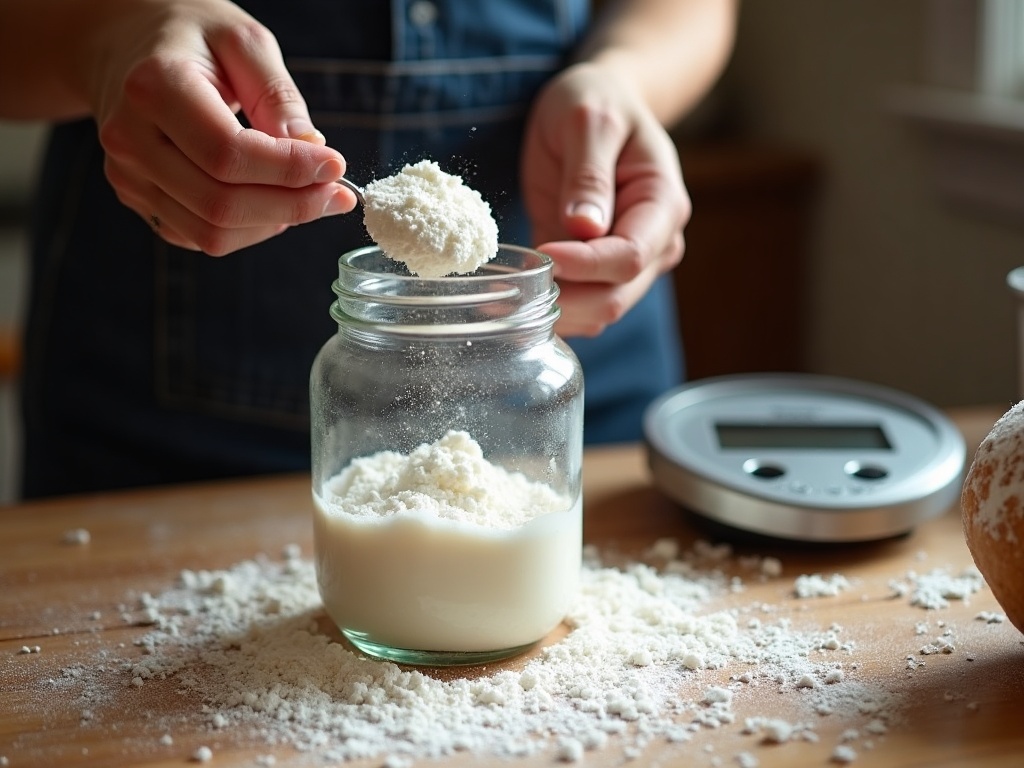
- Use a bigger feeding ratio. Instead of feeding 1:1:1 (equal parts starter, flour, water), try 1:5:5 or even 1:10:10. Feeding a small seed of old starter with a large amount of fresh flour dilutes the accumulated acid and keeps the culture young and sweet. This one change alone tames a lot of loaves.
If your starter has been neglected for a while, a couple of days of frequent, generous feedings will noticeably calm the flavor before you even bake. A tired starter can be brought back to mildness the same way you would revive a neglected starter – consistent feeding is the reset button.
Fix #2: Ferment Warm and Fast, Not Slow and Cool
Time and temperature are the other half of the equation. The longer your dough ferments, the more acid it accumulates – and cool, slow fermentation specifically favors the sharp acetic acid you are trying to avoid.
To push flavor toward the mellow side, aim for a warmer, quicker bulk fermentation. A dough that ferments at a cozy 78 to 82 degrees Fahrenheit will rise faster and develop that soft, lactic tang, while the same dough creeping along in a 65-degree kitchen for many extra hours will drift sharp and acidic.
Practical ways to warm things up:
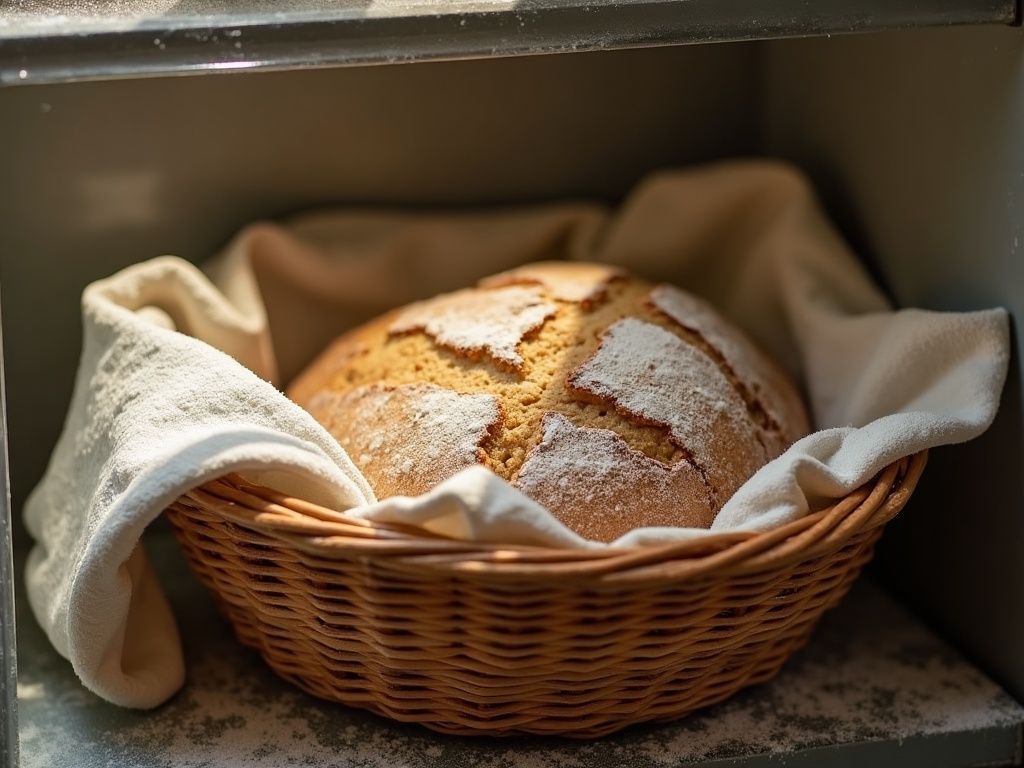
- Proof in the oven with just the light on, or inside a turned-off microwave next to a mug of hot water.
- Use slightly warmer water when you mix so the dough starts closer to its target temperature.
- Watch the dough, not the clock. End bulk fermentation when it has risen 50 to 75 percent and looks jiggly and alive – not hours after it has already peaked and started to deflate.
Over-fermenting does not just make bread sour; it also weakens the gluten and can leave you with a dense, gummy result. If your too-sour loaves are also heavy or sticky inside, it is worth reading our breakdown of why sourdough turns out gummy, because the two problems often share the same root cause.
Fix #3: Rethink the Cold Retard – Your Fridge May Be the Culprit
The long overnight rest in the fridge, called a cold retard, is a wonderful tool. It builds flavor, makes scoring easier, and lets you bake on your own schedule. But it is also one of the most common reasons a loaf turns aggressively sour – because cold, slow conditions are exactly what acetic acid loves.
If your bread is too sour and you have been retarding your dough for two or three days, that is almost certainly your answer. Try these adjustments:
- Shorten the retard. Drop from 48 hours to a single overnight rest of 12 to 16 hours. You will keep most of the flavor benefit with far less of the sharp edge.
- Retard the shaped loaf, not the bulk dough. Cold-proofing after shaping tends to build less sourness than a long cold bulk ferment.
- Skip the fridge entirely for a milder loaf. A straight same-day bake, fermented warm from start to finish, produces the gentlest flavor of all. You lose a little complexity, but you gain a soft, approachable tang.
Fix #4: Small Tweaks to Flour, Hydration, and Salt
Once your feeding and fermentation are dialed in, a few recipe details fine-tune the flavor the rest of the way.
Ease up on whole grains. Whole wheat and rye are packed with the minerals and wild microbes that supercharge fermentation – which is fantastic for activity but tends to produce a more sour, robust loaf. If your bread is too tangy, shift the balance toward white bread flour and use whole grains as a smaller accent, maybe 10 to 20 percent, rather than the bulk of the mix.
Bake at higher hydration. Wetter doughs favor mellow lactic acid, while stiff, dry doughs encourage sharp acetic acid. Nudging your hydration up can gently soften the flavor (just work up gradually, since wetter dough is trickier to handle).
Do not skimp on salt. Salt slows fermentation and reins in the microbes. A properly salted dough – around 2 percent of the flour weight – ferments in a more controlled way and tastes better balanced. Under-salting can let acidity run away from you.
When You Actually Want More Sour, Do the Opposite
It helps to see the whole picture, because plenty of bakers have the reverse problem and wish their bread were tangier. Everything above runs in both directions, which is proof that sourness really is a dial you control rather than a mystery you endure.
Want a bolder, more sour loaf? Feed your starter less often and use it a little past its peak, ferment cooler and longer, lean into a multi-day cold retard, add more whole grain and rye, and work with a stiffer dough. Want the mild, sandwich-friendly loaf this article is about? Do the opposite of each: young starter, warm and fast fermentation, short or no retard, mostly white flour, higher hydration. Same craft, opposite ends of the same slider.
Putting It All Together
If you only change one thing this week, change how you handle your starter: feed it more often, feed it with a bigger ratio of fresh flour, and use it young and bubbly rather than collapsed and hungry. That single habit resolves the majority of too-sour loaves on its own. From there, ferment a touch warmer, shorten your fridge time, and lean on white flour, and you will watch that harsh vinegary bite soften into the balanced, wine-like tang that makes sourdough so good in the first place.
Flavor tuning is one of those things that clicks far faster when you can see and taste each step, so the full walk-through – what a young starter looks like at its peak, how a warm bulk ferment behaves, and a side-by-side taste of a sharp loaf versus a mellow one – lives on the LoafLovers YouTube channel. Grab our free sourdough troubleshooting guide too, and keep it handy the next time a loaf comes out sharper than you hoped. Your milder loaf is only a few small adjustments away.
Leave a Reply