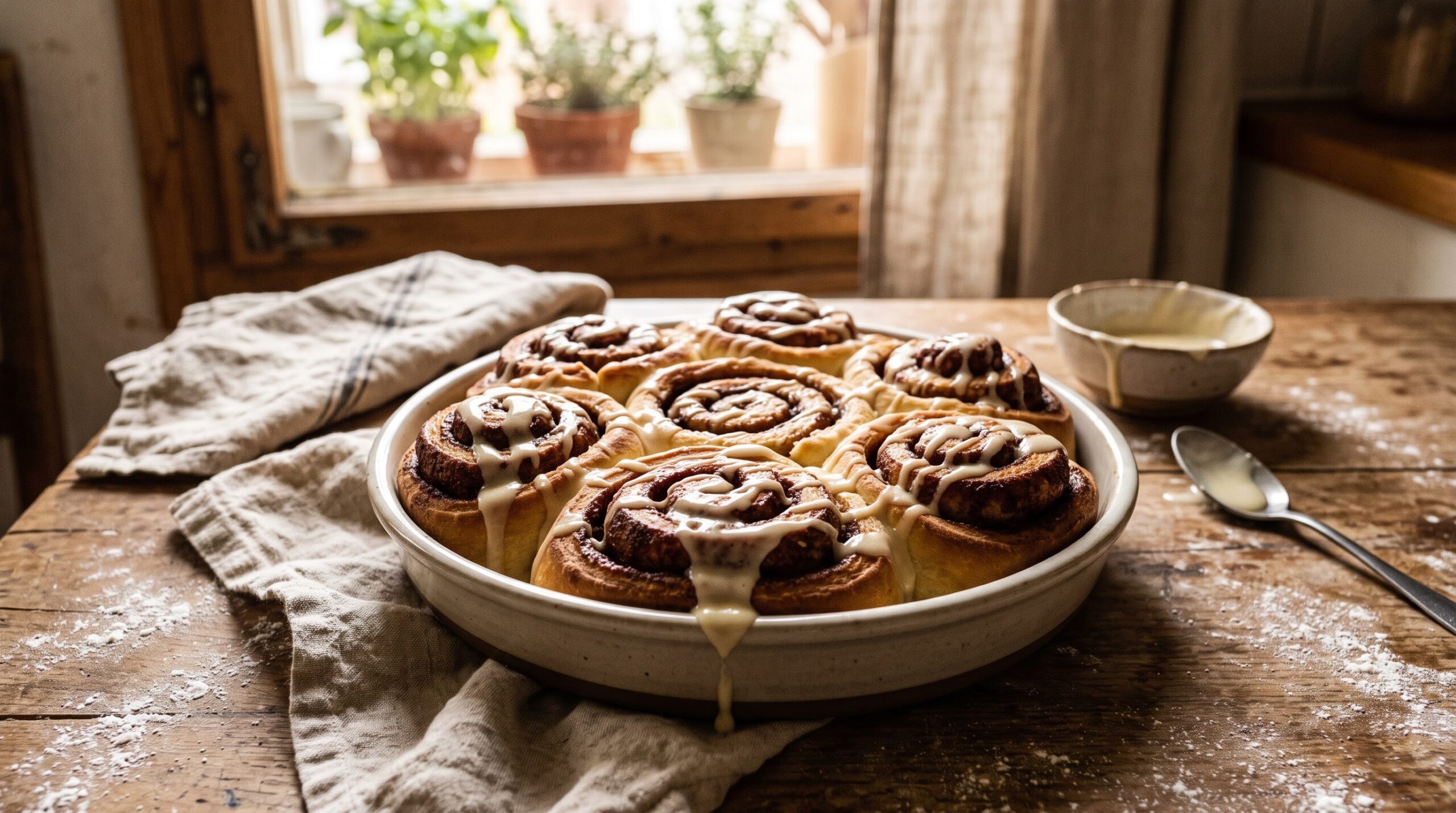
There’s a jar of sourdough discard in your fridge right now, and this is the week it finally pays you back. Cinnamon rolls are the one holiday-morning bake almost everyone wants and almost nobody plans far enough ahead for — and sourdough discard turns out to be the secret to the softest, most tender ones you’ll make. The tang balances all that sugar, the fermented flour keeps the crumb pillowy, and that guilt-inducing jar gets emptied in the most delicious way possible.
These are not the week-long, all-natural-leaven cinnamon rolls that ask you to plan your whole weekend around them. This is the fast, forgiving version: discard for flavor and tenderness, a little instant yeast for a reliable lift, and a choice between a same-day bake and an overnight one so warm rolls can be the first thing you do on a holiday morning. Here’s how to get them soft and gooey, and how to fix them if they aren’t.
Why discard makes better cinnamon rolls
A cinnamon roll lives or dies on texture. You want soft, tender, slightly stretchy dough that pulls apart in sheets — not a dense bread roll with cinnamon in it. Sourdough discard quietly helps on every front.
First, flavor. Discard is fermented flour and water, which means it brings a gentle acidity and a faint savory-sour depth. In a cinnamon roll that is pure advantage: the tang cuts through the sweetness so the rolls taste rich instead of cloying, the way a good buttermilk or cream-cheese note does. Second, texture. That same mild acid relaxes the gluten as the dough rests, so the crumb stays tender rather than tightening into something chewy. And because discard is already a soft, hydrated flour paste, it folds moisture right into the dough — part of why these stay soft the next day instead of going stale by lunch.
The best part is that this is a job for the discard you’d otherwise throw away: cold, unfed, straight from the jar. No feeding, no waiting for it to peak. If you want the bigger picture of everything that jar can do, our guide to using up sourdough discard instead of throwing it away is the companion piece to this one.
Discard plus a little yeast: the honest shortcut
Let’s be clear about what this recipe is. A pure sourdough cinnamon roll, leavened only by an active starter, is a wonderful but slow project — it needs an energetic starter and the better part of a day of proofing. That’s a different article. Most people reaching for cinnamon rolls during a busy holiday week want them to work, on a schedule, without gambling the whole batch on a sluggish winter starter.
So this version uses discard for flavor and tenderness and a small amount of instant yeast for a dependable, timely rise. There’s nothing dishonest about it — it’s the same logic behind plenty of enriched sourdough bakes, where the fat, sugar, milk, and egg change the game and a reliable lift matters more than a dramatic one. If you’re curious how richness reshapes a dough, we go deep on that in how butter, milk, and egg change everything about an enriched bake.
The dough
This makes about 9 to 12 rolls in a 9×13-inch dish.
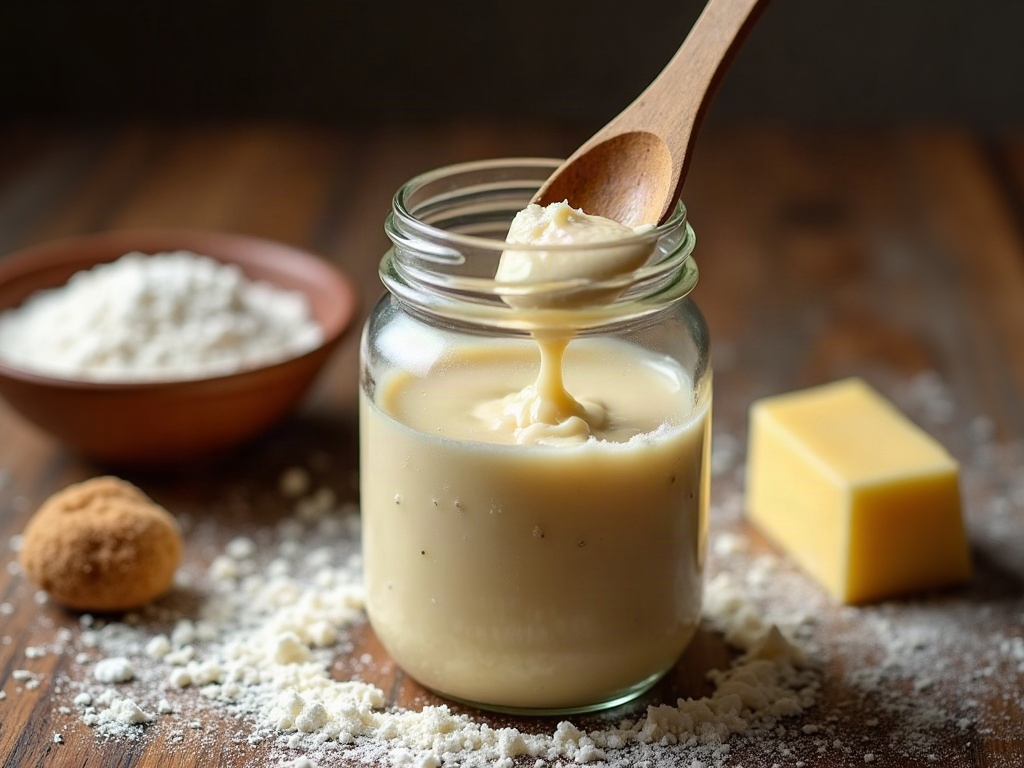
- 1 cup (240g) sourdough discard, cold from the fridge
- ¾ cup (180g) warm milk
- 1 large egg, room temperature
- ¼ cup (50g) sugar
- 4 tablespoons (55g) butter, melted and slightly cooled
- 2¼ teaspoons (1 packet) instant yeast
- 1 teaspoon salt
- 3½ to 4 cups (420–480g) all-purpose flour
For the filling: 4 tablespoons (55g) soft butter, ¾ cup (160g) packed brown sugar, 2 tablespoons ground cinnamon.
For the glaze: 4 oz (115g) softened cream cheese, 2 tablespoons soft butter, 1 cup (120g) powdered sugar, a splash of milk, a pinch of salt.
Making them, step by step
1. Mix the dough. Whisk the discard, warm milk, egg, sugar, melted butter, and yeast together until smooth. Add the salt and most of the flour, and mix to a shaggy dough. Knead (by hand 8–10 minutes, or in a mixer 5–6) until smooth and elastic, adding flour a little at a time only until it clears the bowl. Enriched dough should feel soft and slightly tacky — resist the urge to dry it out with extra flour, or the rolls bake up tough.
2. First rise. Cover and let it rise in a warm spot until roughly doubled, about 1 to 2 hours. In a cold winter kitchen this is the step that stalls; an oven with just the light on, or a warm corner, makes all the difference. (The same cold-kitchen slowdown that drags out a loaf applies here — it’s worth knowing how to find a warm spot for enriched dough too.)
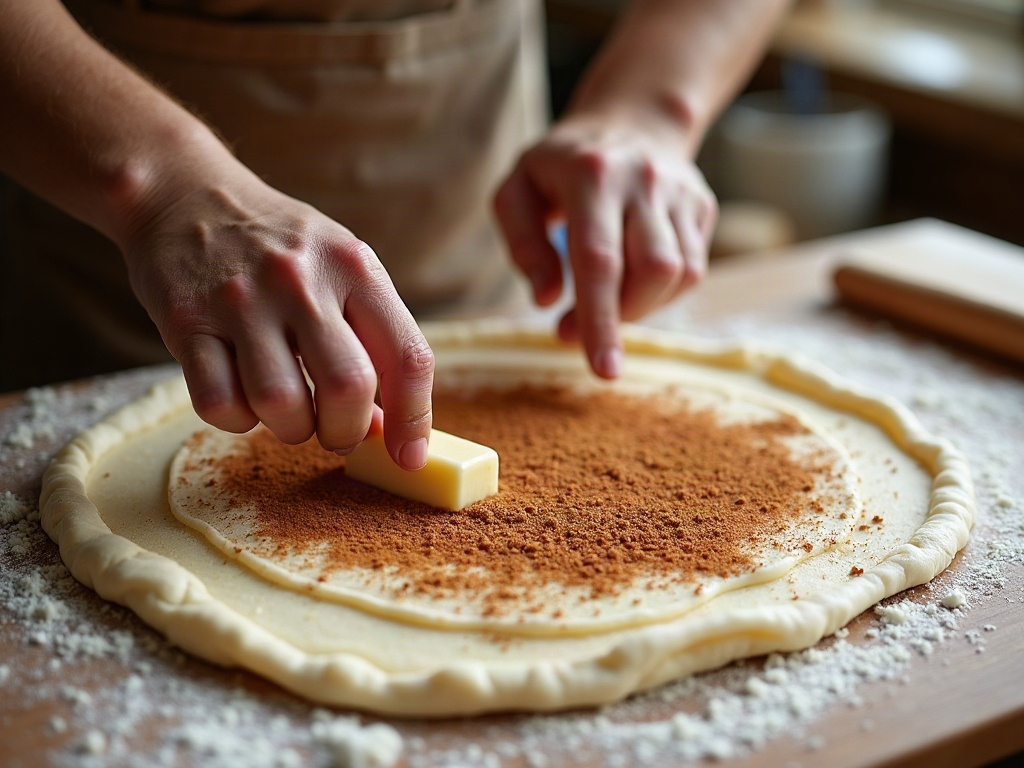
3. Roll and fill. Punch down and roll the dough on a floured surface into a large rectangle, roughly 16×12 inches. Spread the soft butter edge to edge, then sprinkle the brown sugar and cinnamon evenly over the whole surface. Starting from a long edge, roll it up snugly into a tight log — a loose roll makes a loose spiral.
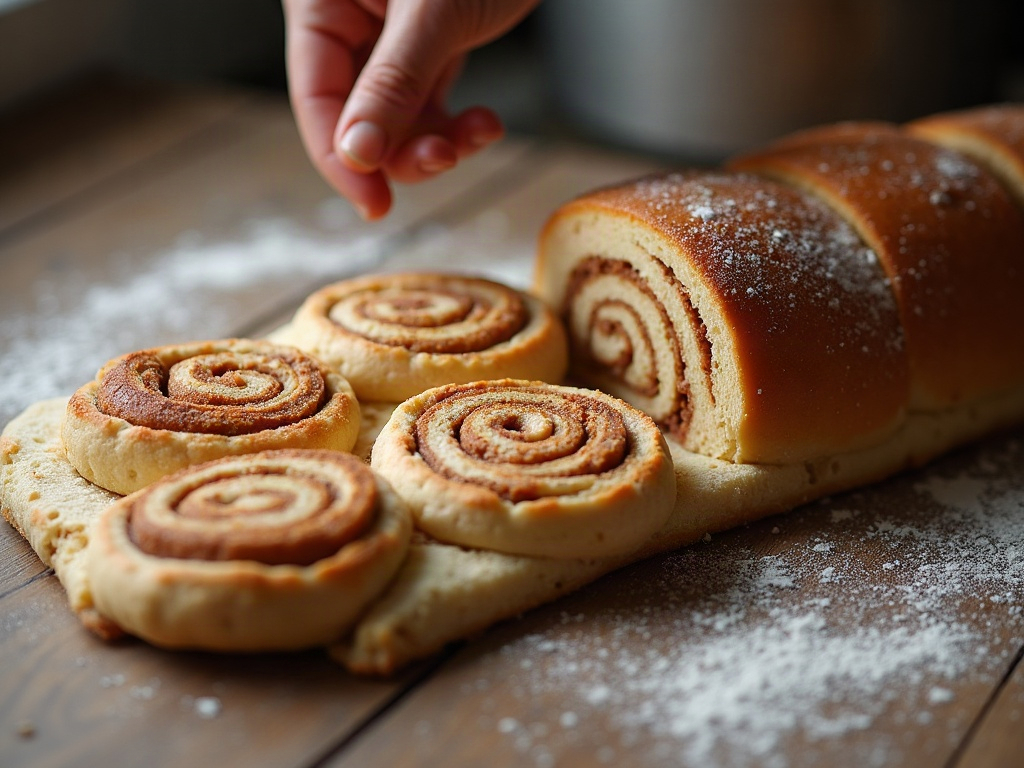
4. Slice and arrange. Cut the log into 9 to 12 even pieces. A length of plain thread or unflavored dental floss slipped under the log and crossed over the top gives the cleanest cut without squashing the spiral; a very sharp knife works too. Arrange the rolls cut-side up in a buttered baking dish, leaving a little room to expand.
5. Second rise. Cover and let the rolls puff until pressed together and visibly swollen, about 45 minutes to an hour. They should look soft and inflated, not firm. This is the proof that decides whether they’re light or dense, so don’t rush it.
6. Bake. Bake at 350°F (175°C) for 22 to 28 minutes, until golden and cooked through in the center. If the tops brown before the middles set, tent loosely with foil. Let them cool 10 minutes before glazing.
7. Glaze. Beat the cream cheese and butter smooth, then beat in the powdered sugar, salt, and enough milk to make it spreadable. Slather it over the warm (not hot) rolls so it melts into every crevice.
The overnight version (for a calm holiday morning)
This is the whole reason to make cinnamon rolls with a fermented dough: it takes beautifully to the fridge. Assemble the rolls through the slicing step, cover the dish tightly, and refrigerate overnight — up to about 16 hours. The cold slows the yeast to a crawl while the discard keeps developing flavor. In the morning, pull the dish out, let it sit on the counter until the rolls look puffy and come to room temperature (45 minutes to a bit over an hour, longer in a cold kitchen), then bake as above. Warm, gooey cinnamon rolls with no 6 a.m. dough-wrangling — which is exactly the make-ahead thinking behind our make-ahead holiday sourdough schedule. You can also freeze the baked, unglazed rolls and warm them later.
When they don’t come out right
- Dense, heavy rolls. Underproofed, almost always. If the rolls weren’t visibly puffy and pressed together before baking, they needed more time — especially in a cold kitchen. Give the second rise longer and find a warmer spot.
- Dry or bready. Too much flour in the dough, or overbaked. Keep the dough soft and slightly tacky, and pull the rolls the moment the centers are set — an extra five minutes dries them out.
- Gummy, doughy centers. Underbaked, or the rolls were packed too tightly so the middles couldn’t cook. Give them a little space in the dish and bake until the center roll is done, not just the edges.
- Filling leaked out into a puddle. Normal and delicious — that’s the gooey caramel bonus. But a too-loose roll or too-wet filling makes it worse; roll snugly and don’t overdo the butter.
- Flat spirals that unravel. The log was rolled too loosely or the dough was overfloured and wouldn’t stick to itself. Roll tight, and keep the dough tacky enough to grip.
Empty the jar, feed the table
Discard cinnamon rolls are the kind of bake that makes the whole discard habit feel worth it: you take something you were about to pour down the drain and turn it into the warm, gooey centerpiece of a holiday morning. They’re soft, they’re tangy-sweet, and they reward a little patience on the proof with a crumb that stays tender into the next day. If the jar isn’t empty yet, a spiced sourdough discard gingerbread loaf is a natural next bake, and soft sourdough dinner rolls round out the table on the savory side.
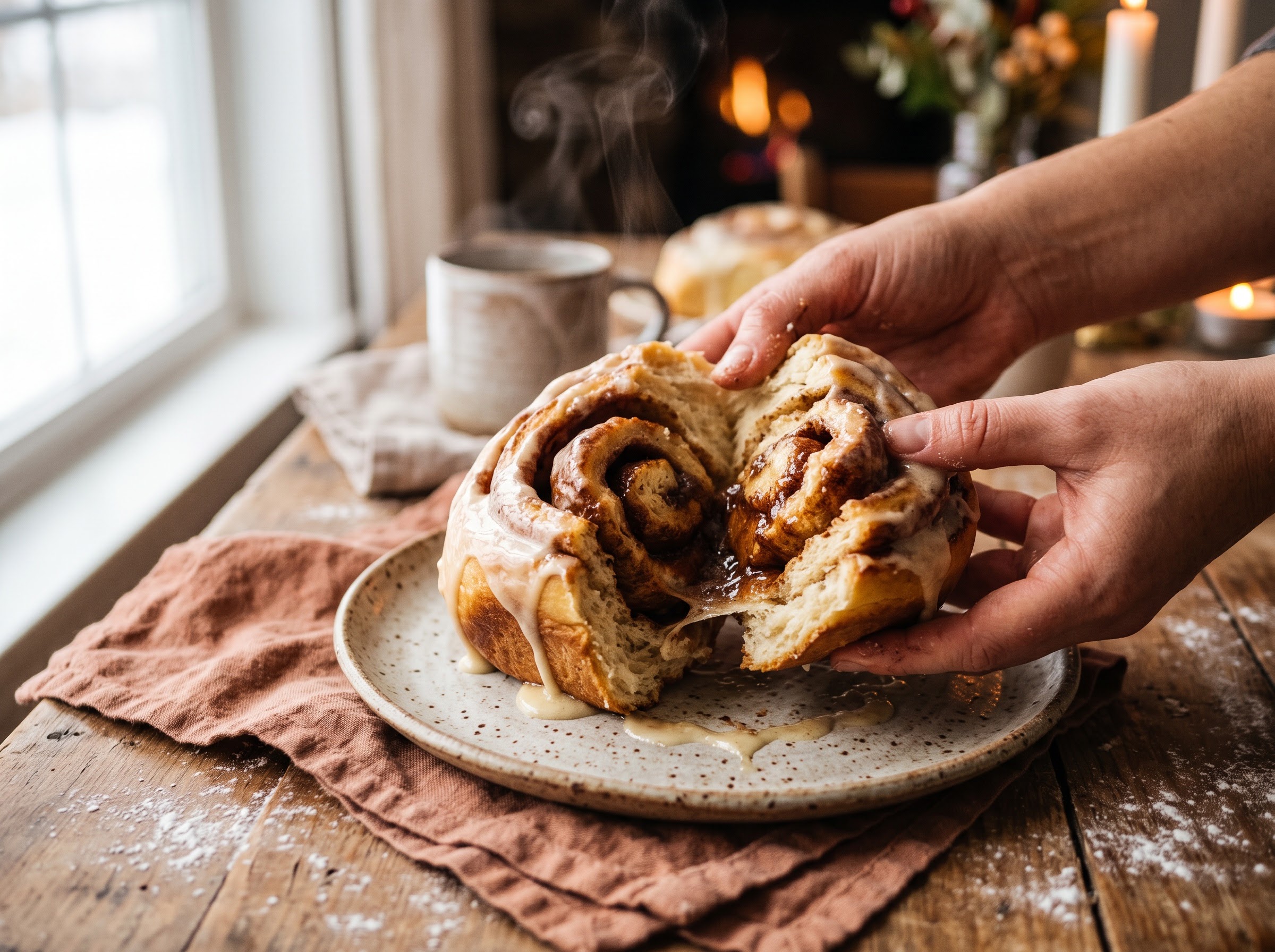
Enriched, rolled doughs are one of those things that click the moment you watch one come together — how tacky the dough should feel, how tight to roll the log, how puffy the rolls should look before they go in. The full step-by-step sourdough discard cinnamon rolls, including the overnight method and the cream-cheese glaze, lives on the LoafLovers YouTube channel, and our free sourdough troubleshooting guide has a printable discard-uses cheat sheet so that jar never goes to waste again. Keep the dough soft, let them proof, and go make the softest rolls on the table.