You know the sound. The loaf comes out of the oven and the crust is singing, that faint crackle bakers call the crust “talking” as it cools. You feel like you finally nailed it. Then you come back an hour later, tap the crust, and it’s gone soft. Leathery, even. The crackle is a memory.
This is one of the most common and most frustrating sourdough letdowns, because the loaf looked perfect. The good news: a crust that goes soft after cooling is almost always a fixable problem, not a flop. Let’s walk through why it happens, from most likely to least, and exactly what to change.
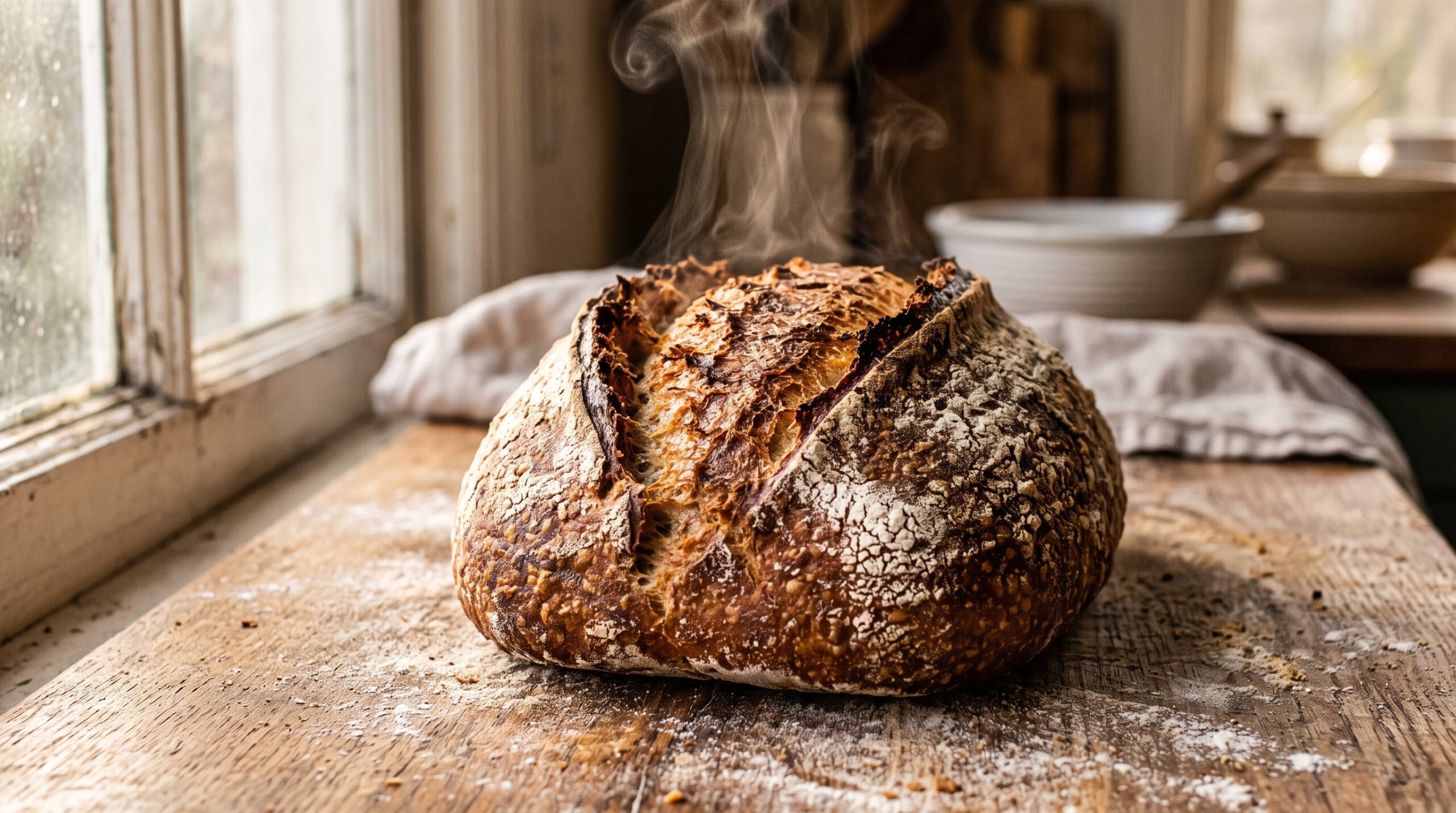
First, understand what’s actually happening
A crisp crust is crisp because it’s dry. During baking, the surface of the loaf loses moisture and hardens into that thin, glassy shell. But your loaf is not done moving water around just because it left the oven.
The crumb inside is still full of moisture, and as the loaf cools, that moisture migrates outward and escapes as steam, or softens the crust from the inside. The crust, being the driest part, happily reabsorbs it. Add the humidity in your kitchen air, and a thin crust can go from crackling to chewy in under an hour. So the real question isn’t “why did my crust soften?” It’s “why did it soften so much, so fast?” Usually one of the following.
Cause one: the loaf is slightly underbaked
This is the number one culprit. If the inside of your loaf still holds a lot of moisture, there’s simply more water to push out into the crust as it cools. An underbaked loaf is a soft-crust factory.

The fix is to bake longer and hotter than feels comfortable. Most home bakers pull their loaf too early because it “looks done.” Take it to a deep, genuinely dark golden-brown, not pale tan. If you use a thermometer, aim for an internal temperature around 205 to 210 degrees Fahrenheit (96 to 99 Celsius). And crucially, extend the final uncovered portion of the bake. Which brings us to steam.
Cause two: too much steam, for too long
Steam early in the bake is your friend. It keeps the surface flexible so the loaf can expand, and it helps develop color and blistering. But steam is the enemy of a crisp crust in the second half of the bake. If you leave the lid on your Dutch oven the whole time, or keep steaming a loaf throughout, the crust never gets the chance to dry out and set hard.
The fix is a two-phase bake. Keep it covered or steamed for roughly the first 20 minutes, then remove the lid (or vent the steam) and bake uncovered for another 20 to 25 minutes. That dry, hot finish is what forges a crust that lasts. If your crust is consistently soft, lengthen that uncovered phase by five or ten minutes before you change anything else.
Cause three: you wrapped or bagged it while warm
A warm loaf is still releasing steam. Seal it in a plastic bag, a container, or even a tea towel too soon, and that steam has nowhere to go but back into the crust. You’ll trap it into sogginess.

Always cool your loaf completely, on a wire rack, in open air, before storing it. The rack matters: set a hot loaf flat on a cutting board and the bottom crust steams itself soft against the surface. Let air circulate all the way around, and give it a full couple of hours. Patience here protects everything the oven just did.
Cause four: humidity and storage are working against you
Sometimes the bake is fine and the enemy is the environment. A humid kitchen will soften any crust over time, and improper storage finishes the job. Plastic bags and sealed containers keep the crumb soft but turn the crust leathery, trapping moisture against it.
For a crust-first loaf, store it cut-side down on a board, or in a paper bag or a bread box that lets a little air move. Yes, the crumb will dry out a bit faster this way, which is the trade-off: airtight storage saves the crumb and sacrifices the crust, while breathable storage does the reverse. Choose based on what you care about most, and eat crusty bread within a day or two.
The rescue: how to recrisp a soft crust
Already got a loaf with a sad, soft crust? You can bring it back. Pop the whole loaf (or thick slices) into a hot oven, around 400 degrees Fahrenheit (200 Celsius), for 8 to 12 minutes. The heat drives the surface moisture back out and re-dries the crust. It’ll crackle again as it cools, just like the first time.

This trick works beautifully for day-old bread too, so a slightly stale crusty loaf is never a lost cause. For a single serving, even a quick stint in a dry, hot pan or a toaster oven does the job.
Putting it all together
A crust that goes soft after cooling is your loaf telling you one of a few things: it needed a longer, hotter, drier finish in the oven, or it got trapped with its own steam before it could cool, or it’s simply fighting a humid kitchen. Bake it darker, give it a proper uncovered phase, cool it fully on a rack in open air, and store it breathing rather than sealed. Do that, and the crackle you heard coming out of the oven will still be there when you slice in.
Want to see the two-phase bake and the recrisp trick in action? The full walkthrough lives on the LoafLovers YouTube channel, and our free sourdough troubleshooting guide covers the other crust problems, pale, too hard, no blisters, in the same symptom-to-fix format. Your crust isn’t broken. It just needed a little more heat and a little more air.