You lift the lid on your sourdough starter and something looks off. A patch of fuzz. A strange skin across the top. A pool of dark liquid. Your stomach drops, because you’ve read enough kitchen horror stories to wonder whether the whole jar is now dangerous, or whether you just wasted weeks of feeding on something you have to pour down the drain.
Take a breath, because most of the time what people panic about isn’t mold at all. Starters routinely grow harmless films and liquids that look alarming and are completely safe. But real mold does happen, and when it does the only correct move is to toss the jar. The whole skill is learning to tell the difference on sight and smell, and once you can, this stops being scary. Let’s diagnose exactly what you’re looking at.
First, don’t panic, but do look closely
Before you decide anything, get the jar into good light and really study the surface. Three very different things get lumped together under the word “mold,” and only one of them means the starter is done. What you’re trying to sort out is whether you’re seeing genuine mold (fuzzy, raised, colored spots), kahm yeast (a thin flat film), or plain hooch (a layer of liquid). Each looks distinct once you know the tells, and each has a completely different fix.
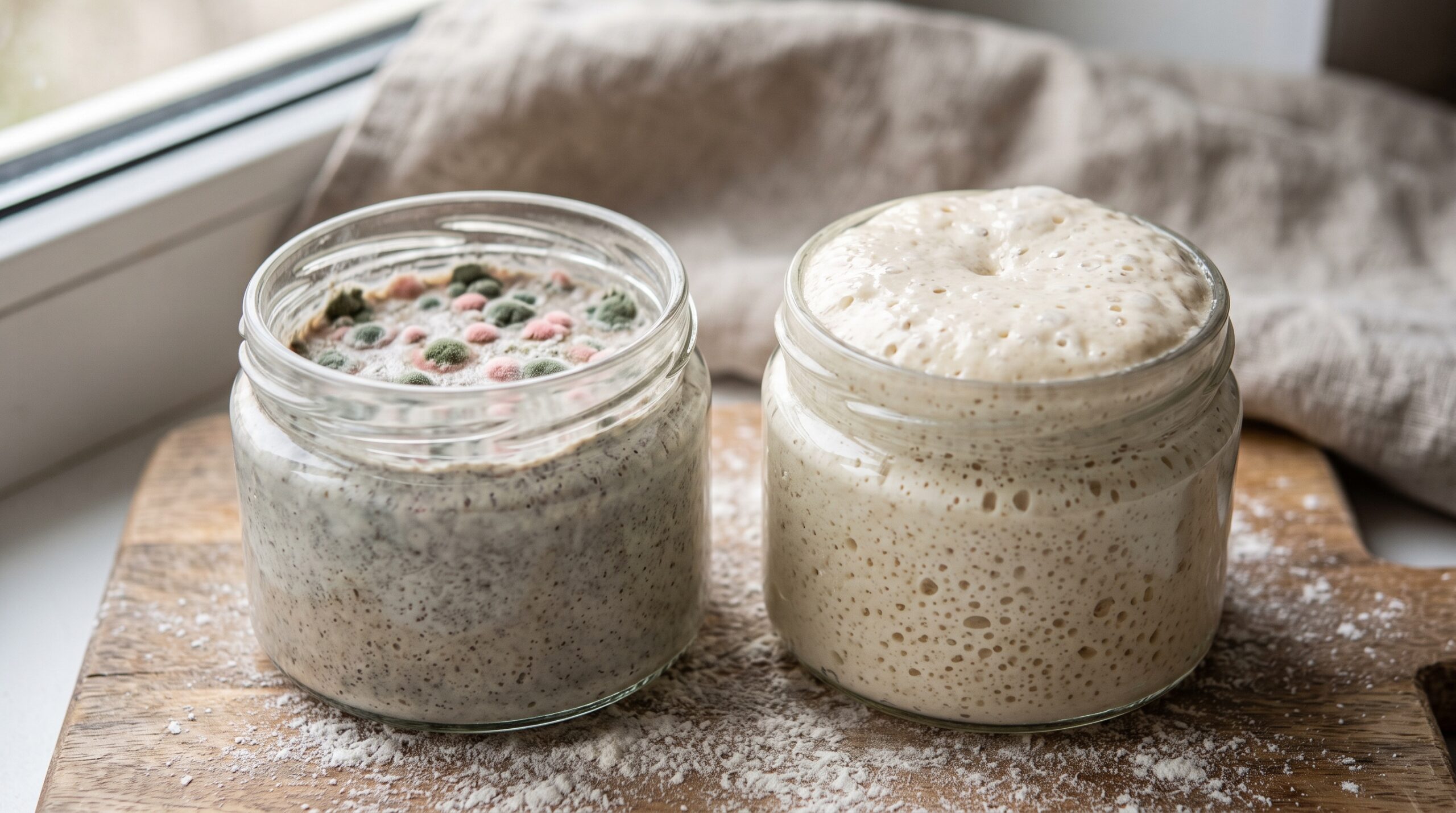
The single most useful question to ask is: is it flat, or is it fuzzy? Mold is three-dimensional. It grows up and out in fluffy, defined circles. The harmless look-alikes lie flat against the surface. That one distinction resolves the majority of panicked starter jars, so start there and then confirm with color and smell.
What sourdough starter mold actually looks like
Real mold is unmistakable once you’ve seen it clearly. It appears as fuzzy, raised colonies, usually in small round spots that spread outward, and it almost always carries color: shades of green, blue, black, or the especially unwelcome pink and orange. Those spots sit up off the surface like tiny bits of lint or cotton, and if you look closely you can often see the fuzzy texture that flat films never have.
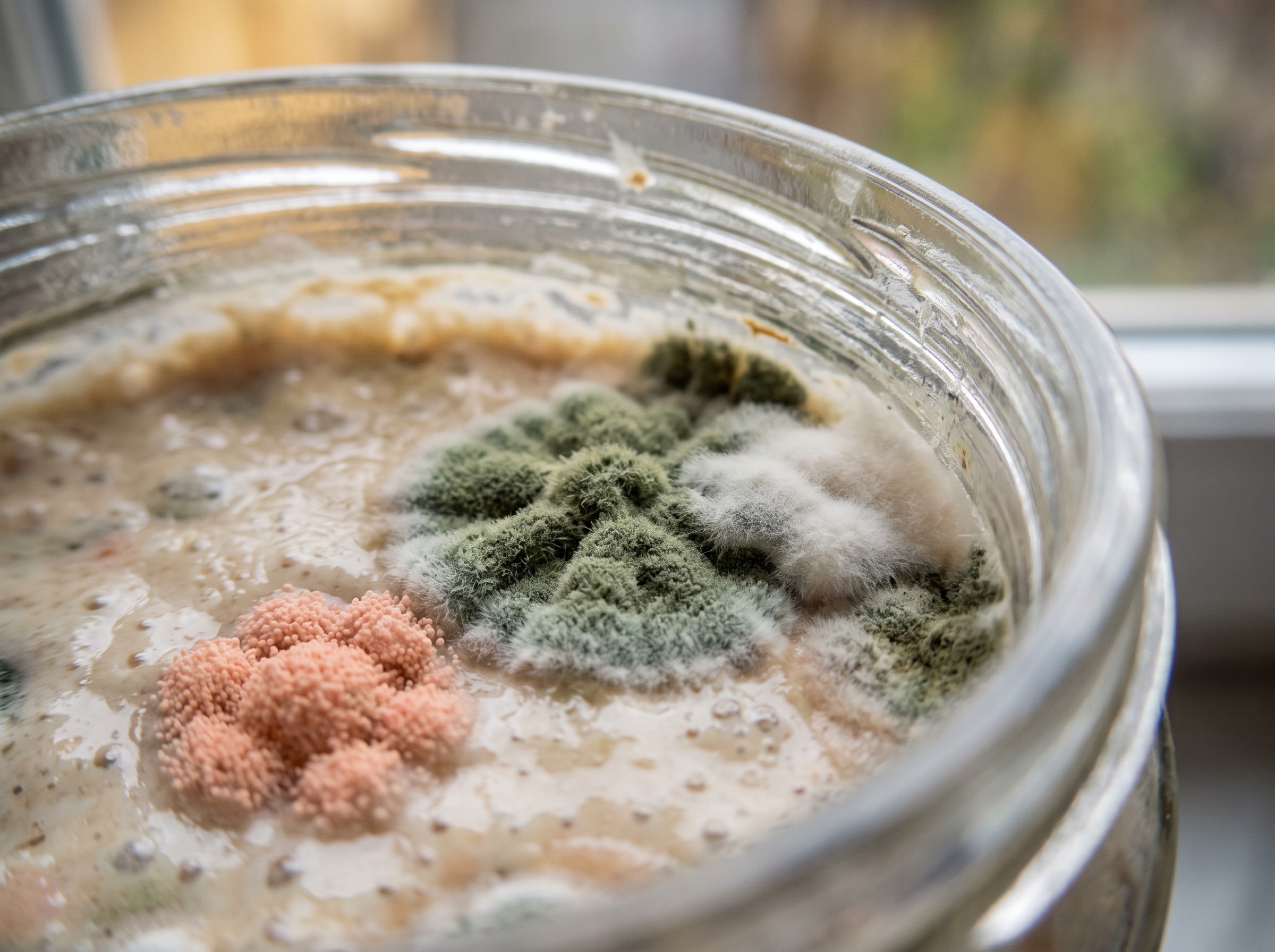
Mold typically takes hold on a starter that has been neglected, left too warm, exposed to open air for a long time, or contaminated by a dirty spoon or splashes of flour stuck high on the dry jar walls. Pink and orange growth in particular is a bacterial or mold contamination that is a hard stop. There is no scraping it off and carrying on. When you see fuzzy, colored, raised spots, the starter is compromised all the way through, even the paste that looks clean, because mold sends threads down into food you can’t see. That jar gets thrown out, which we’ll cover below.
Kahm yeast: the harmless look-alike everyone fears
Here is the growth that scares people the most and hurts them the least. Kahm yeast forms a thin, flat, wrinkly film across the surface, usually grayish-white or off-cream, sometimes with a faintly powdery or skin-like look. Crucially, it is flat. It does not fuzz up, it does not grow in raised circular colonies, and it does not show green, pink, or black color. It’s a wild yeast that thrives when a starter is a bit sluggish, sitting too warm, or going too long between feeds.
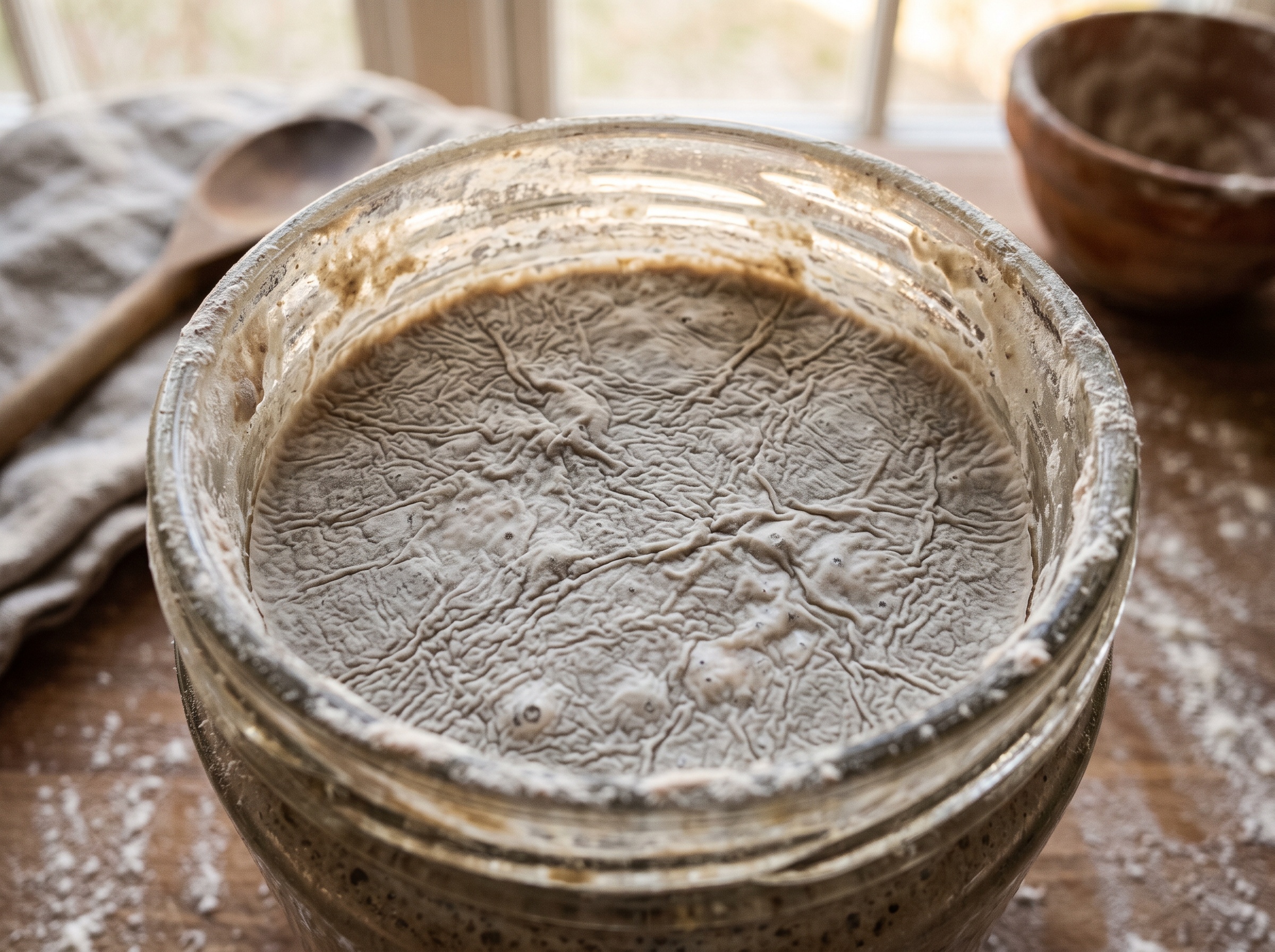
Kahm is unpleasant and can throw a slightly funky, sometimes cheesy or nail-polish-adjacent smell, but it is not dangerous. You have two reasonable options. If the film is light, you can carefully skim it off the top, discard a generous portion of the starter beneath it, and begin feeding more frequently to outcompete it. If it keeps coming back, it’s usually a sign your starter is underfed or too warm, the same root cause behind a sluggish starter that won’t rise. Tightening up your feeding routine almost always clears it.
Hooch and discoloration: usually just hunger
The third thing people mistake for mold isn’t even solid. A layer of thin liquid pooling on top, clear, gray, amber, or occasionally darker, is hooch: alcohol and byproducts your starter produces when it has eaten through its food and gone hungry. It looks dramatic but it’s completely harmless. You simply stir it back in for a tangier result or pour it off for a milder one, then feed. We walk through exactly what the color of that liquid tells you in our guide to the hooch layer on your starter.
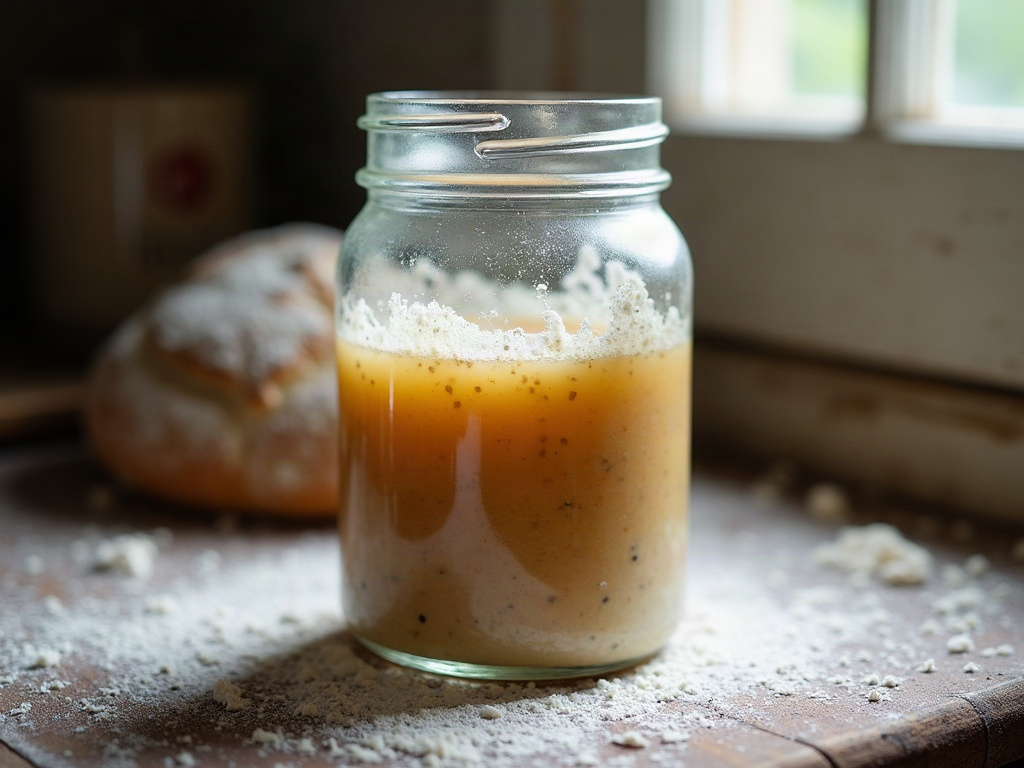
Discoloration on its own can also be benign. Hooch can tint the top of a starter gray or even brownish, and that darker paste underneath is usually fine once stirred. What you’re watching for is not a uniform color shift but those raised, fuzzy, spotty growths. A flat surface that’s simply gone a shade darker is a hungry starter, not a moldy one. When in doubt, this is where the nose earns its keep.
The smell test, and when to just toss it
Your nose is a genuinely reliable backup instrument. A healthy starter smells sharp, tangy, yeasty, sometimes beery or faintly like ripe fruit or vinegar. All of that is normal and good. What should stop you is a smell that reads as genuinely rotten, putrid, or foul in a garbage-y way, rather than sour. That kind of stench, especially paired with any pink or orange tint, means the jar has gone off. Trust it.
So here’s the clean decision rule. Toss the entire starter and start over if you see any fuzzy raised mold, any green, black, pink, or orange growth, or if it smells truly rotten rather than sour. Don’t try to scoop mold off and save the rest; the contamination runs deeper than the visible spots, and a starter is cheap to rebuild while a foodborne illness is not. You can save it if what you have is flat kahm yeast, a layer of hooch, or simple discoloration on a starter that still smells sour. In those cases, discard down to a small amount of the cleanest paste, move it to a clean jar, and feed on a tight schedule. A neglected but mold-free starter is remarkably resilient, and our walkthrough on reviving a neglected starter covers exactly how to nurse a sad one back to strength.
How to stop mold coming back
Prevention is mostly hygiene and rhythm. Always feed with a clean spoon and wipe the inside walls of the jar so stray dried flour and paste up high can’t grow anything. Move your starter to a fresh, clean jar every week or so rather than letting crust build up around the rim. Keep the lid resting on or loosely closed, not screwed down airtight, so gases escape without inviting a long open-air exposure.
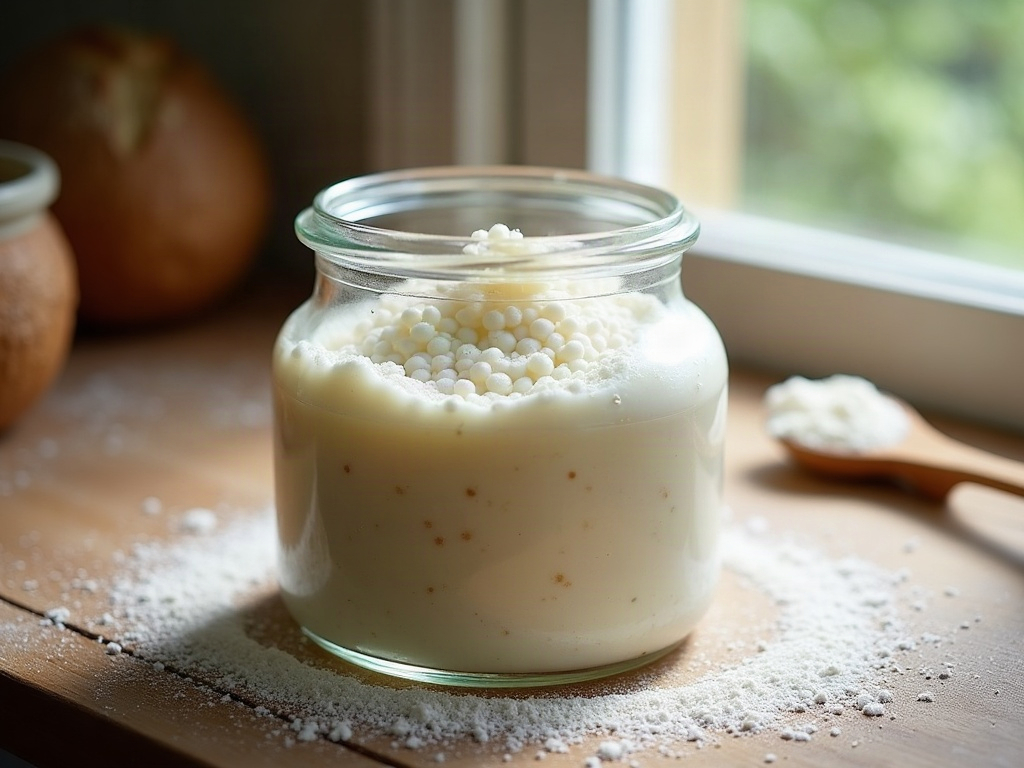
Feed on a consistent schedule and don’t let the jar sit hungry and warm for days, which is exactly the condition kahm and mold love. If you’re going to be away or baking less often, the safest home for a starter is the fridge, where the cold dramatically slows everything down; our guide to storing your starter through breaks and vacations lays out how to park it safely and wake it back up. A well-fed starter kept clean and cool is a genuinely difficult place for mold to gain a foothold.
The reassuring truth is that a fuzzy, colored, foul jar is rare, and nearly everything else you’ll see, films, liquids, funky sour smells, is normal starter behavior you can fix in a feed or two. Learn the flat-versus-fuzzy tell and you’ll never lose a good starter to a false alarm again.
Want to see a moldy jar next to kahm yeast and hooch side by side so you’ll always recognize them? The full visual walkthrough lives on the LoafLovers YouTube channel, and our free sourdough troubleshooting guide covers the rest of the starter rescues for when you’re staring at a jar and need the answer right now. No hard sell, just the fix.