Salt is the ingredient nobody worries about — until the day everything goes wrong. You mix your usual dough, and somehow it’s slack and soupy by early afternoon, tearing instead of stretching, racing through fermentation like it’s on fire. Or the opposite: the loaf comes out pale, tight, and strangely flat, and you can’t figure out why. Both of those are very often a salt problem, and salt is the one variable most bakers eyeball, guess at, or forget entirely.
Here’s the good news. Salt is also the easiest thing in the whole process to get exactly right, once you understand what it’s actually doing in there. Let’s fix it for good.

The short answer: 2%
The reliable target for sourdough is 2% salt, measured against the weight of your flour — what bakers call baker’s percentage. If your recipe uses 500 grams of flour, that’s 10 grams of salt. For 1,000 grams of flour, 20 grams. Simple.
Most people are happy somewhere between 1.8% and 2.2%. Drop much below about 1.5% and the dough starts misbehaving; push much above 2.5% and fermentation drags and the bread tastes noticeably salty. But 2% is the number to memorize. It’s forgiving, it’s balanced, and it works across almost every flour and schedule.
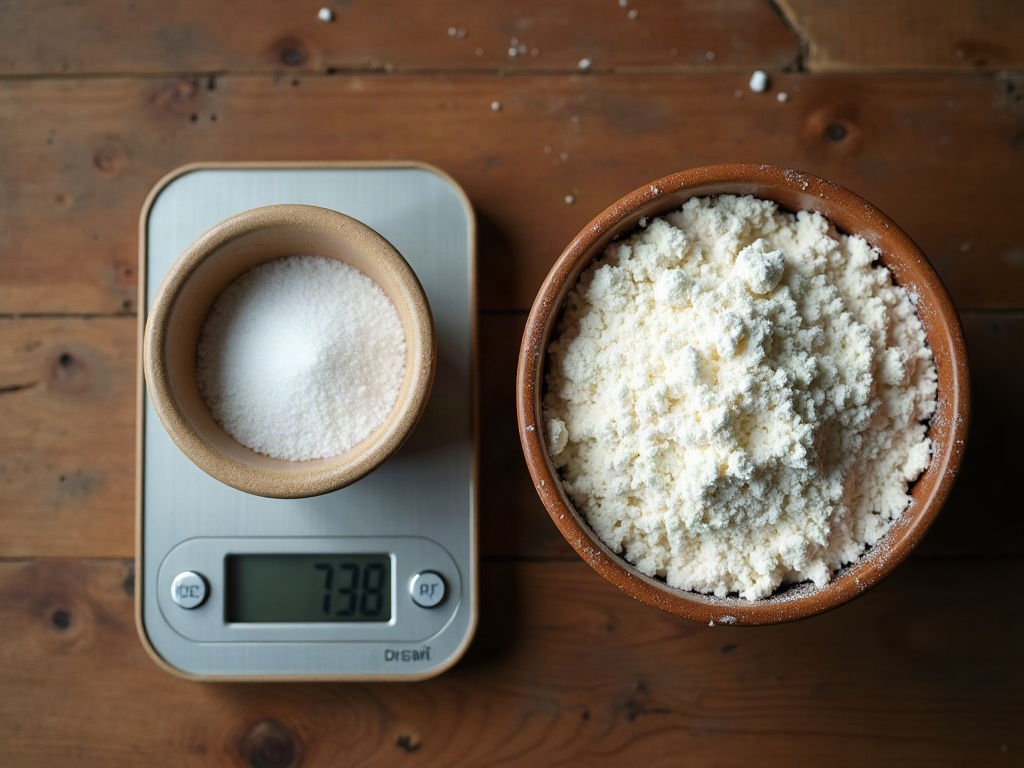
One crucial note: measure salt by weight, not by volume. A teaspoon of fine table salt and a teaspoon of flaky sea salt weigh very different amounts, because the flakes pack so much more loosely. This is the single most common way home bakers accidentally under- or over-salt — they measure a “teaspoon” of a salt that’s much lighter or heavier than the one the recipe writer used. A cheap digital scale ends the guesswork.
What salt is actually doing in your dough
Salt isn’t just for flavor. It’s quietly running three jobs at once, and that’s why getting it wrong throws so much off.
1. It controls the pace of fermentation
Salt slows down your wild yeast and bacteria. That sounds like a downside, but it’s exactly what you want — a controlled, steady rise instead of a frantic one. Salt is a brake pedal. With the right amount, your dough ferments at a manageable speed and gives you a workable window to shape and bake. Take the salt away and you’ve cut the brake line: the yeast goes into overdrive, the dough over-ferments fast, and it turns slack and sticky long before you’re ready. Salt sits right alongside temperature and how much starter you use as one of the main dials that set how fast your dough moves.
2. It tightens and strengthens the gluten
Salt makes the gluten network firmer and more elastic. A properly salted dough feels strong and stretchy; it holds its shape, traps gas well, and gives you that lovely tension when you shape it. An under-salted dough feels the opposite — loose, weak, extra sticky, and unwilling to hold structure. If your dough has suddenly gone slack and formless for no obvious reason, salt (or the lack of it) is a prime suspect.
3. It builds and sharpens flavor
This is the obvious one, but it goes deeper than “salty.” The right amount of salt makes the wheat taste more like wheat and keeps the sourness in balance, so the tang reads as pleasant rather than sharp. Under-salted sourdough doesn’t just taste “less salty” — it tastes flat, dull, and weirdly sour, because there’s nothing rounding out the acidity. Salt is what makes a good loaf taste finished.
What happens when you use too little
Under-salting (or forgetting salt completely) is the more dramatic failure, and now you know why. All three jobs collapse at once:
- Fermentation runs away. With the brake off, the dough over-proofs quickly — sometimes hours faster than your usual timeline.
- The dough goes slack and sticky. Weak gluten plus over-fermentation means a loose, soupy mess that won’t hold a shape.
- The flavor falls flat. Dull, bland, and often oddly sour, with none of the roundness good bread has.
- The crust can look oddly pale or, confusingly, over-dark as the sugar balance shifts — either way it looks off.
What happens when you use too much
Over-salting is subtler and easier to miss, because the dough doesn’t fall apart — it just underperforms:
- Fermentation drags. Too much salt over-brakes the yeast, so the rise is sluggish and your normal timeline leaves the loaf under-proofed.
- The crumb comes out tight and dense. The bread never got the airy, open rise it should have, because the yeast was held back too hard.
- The loaf bakes up pale. Slow fermentation leaves things looking under-colored even when the inside is done.
- It simply tastes too salty — the flavor tips from balanced to harsh.
If your loaves are chronically dense and pale and taking forever to rise, and you’ve ruled out a weak starter, weigh your salt. An over-heavy hand is easy to develop without noticing, especially if you switched salts.

“I think I forgot the salt” — can you rescue it?
It happens to everyone eventually. The fix depends on when you catch it:
- Right after mixing. No problem at all. Sprinkle the salt over the dough, add a splash of water to help it dissolve, and work it in with a few stretches and folds. It’ll fully incorporate over the next hour. This is basically how bakers who autolyse add salt anyway — deliberately, a bit later than everything else.
- Partway through bulk. Still salvageable, though harder. Dissolve the salt in a little warm water and squeeze and fold it through as evenly as you can. It won’t be perfect, but it beats a saltless loaf.
- After it’s shaped or proofed. Now you’re stuck — there’s no working salt in at this point. Bake it anyway and treat it as a lesson. A saltless loaf is edible (toast it, use it for something with a salty topping), just noticeably flat.
The bigger takeaway: because a saltless dough ferments so fast, watch the clock closely if you added the salt late. It may still be ahead of your normal schedule.
A few practical habits that prevent salt mistakes
Salt errors are almost always process errors, so tighten the process:
- Weigh it every time. 2% of your flour weight, on a scale. Don’t switch to spoons.
- Add salt at a consistent point. Whether you mix it in at the start or add it after a rest, do it the same way every bake so it never gets skipped.
- Keep salt and starter separate until mixing. Undissolved salt sitting directly on your starter can stun the yeast at the contact point. Dissolving salt in the dough water first sidesteps this entirely.
- Pick one salt and stick with it. Any non-iodized salt works — fine sea salt, kosher salt — but weighing means it barely matters which, as long as you’re consistent.

The bottom line
Salt is tiny in quantity and enormous in effect. Two percent of your flour weight, measured on a scale, added the same way every time — that’s the whole rule. Get it right and salt quietly does its three jobs: pacing your fermentation, strengthening your dough, and rounding out the flavor. Get it wrong and it sabotages all three at once, leaving you with a slack, racing, flat loaf or a dense, pale, sluggish one.
So the next time a bake goes mysteriously sideways — too fast, too slack, too dull, or too dense — before you blame your starter or your schedule, weigh your salt. More often than you’d think, that ten or twenty grams is the difference between a frustrating loaf and a great one.
