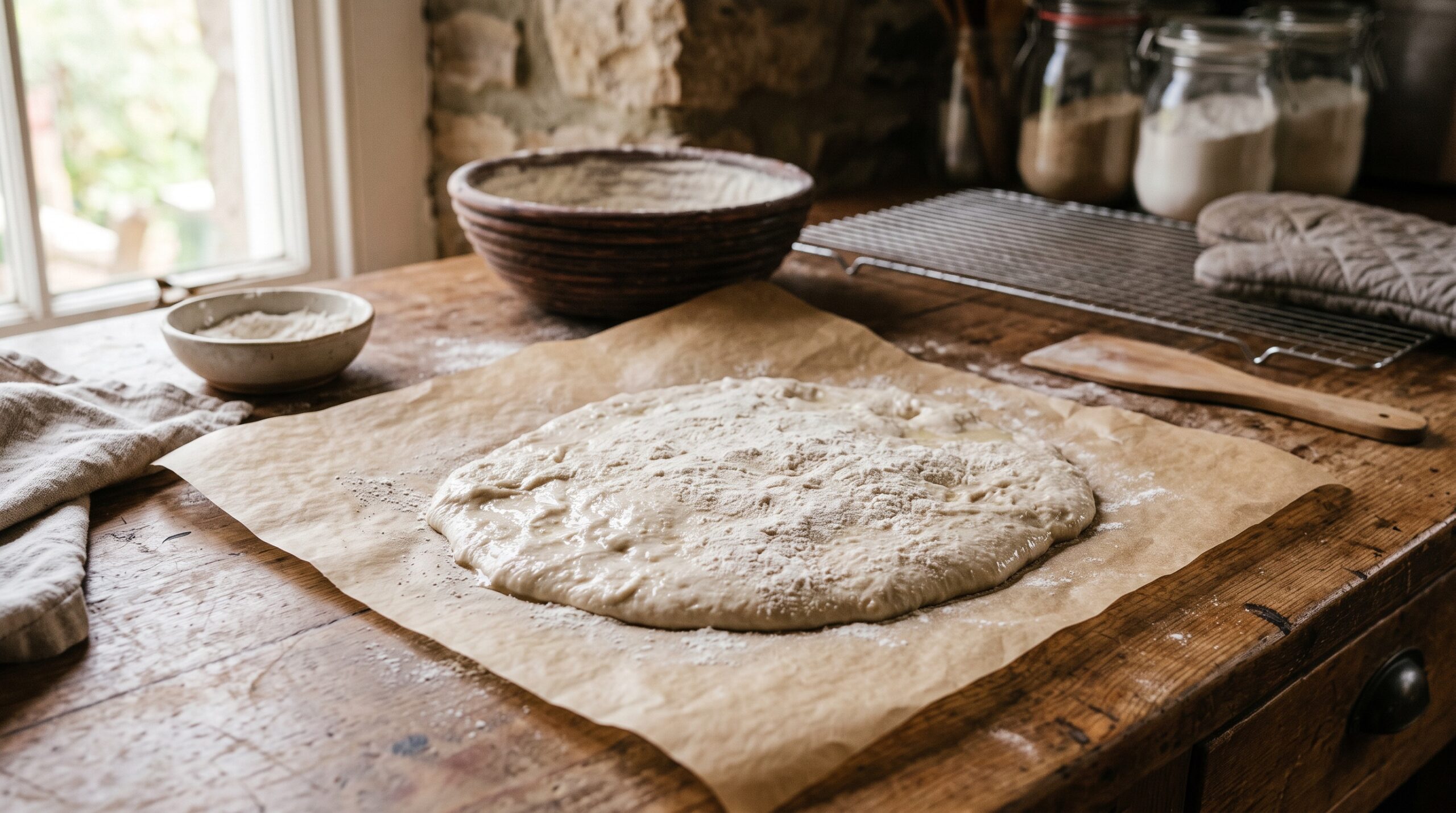
There are few more deflating moments in home baking — literally — than this one. You’ve babied the dough for the better part of a day. It looked plump and promising in the banneton. Then you tip it out, and it slowly spreads into a sad, flat puddle before your eyes. Or worse: it holds its shape right up until your blade touches the surface, and then the whole loaf sighs and sinks like a punctured tire. All that gas, gone in a second.
Take a breath. Deflation feels like a mystery, but it almost never is. It traces back to a short list of causes, and every one of them is fixable once you can spot which is yours. Let’s diagnose it and make sure the next loaf stays standing.
First, what deflation actually is
Your dough is a balloon — a network of gluten holding thousands of tiny gas bubbles the yeast and bacteria have produced. A loaf that deflates has lost the ability to hold that gas. Either the balloon’s walls have gotten too weak to contain the pressure, or you’ve physically punctured them. So every cause of deflation is really an answer to one of two questions: was the structure too fragile, or did something pop it? Keep that frame in mind and the fixes organize themselves.
Cause #1: The dough was overproofed (the most common culprit)
This is the number one reason dough collapses on contact. When dough proofs for too long, the yeast and bacteria keep working — producing acid and gas — until the gluten network is stretched past its limit and starts to break down. It becomes slack, delicate, and unable to support itself. An overproofed loaf can look gorgeously puffy in the banneton precisely because it’s maxed out; there’s no strength left in reserve. So the moment you turn it out or nick it with a blade, it has nothing to fall back on and it collapses.
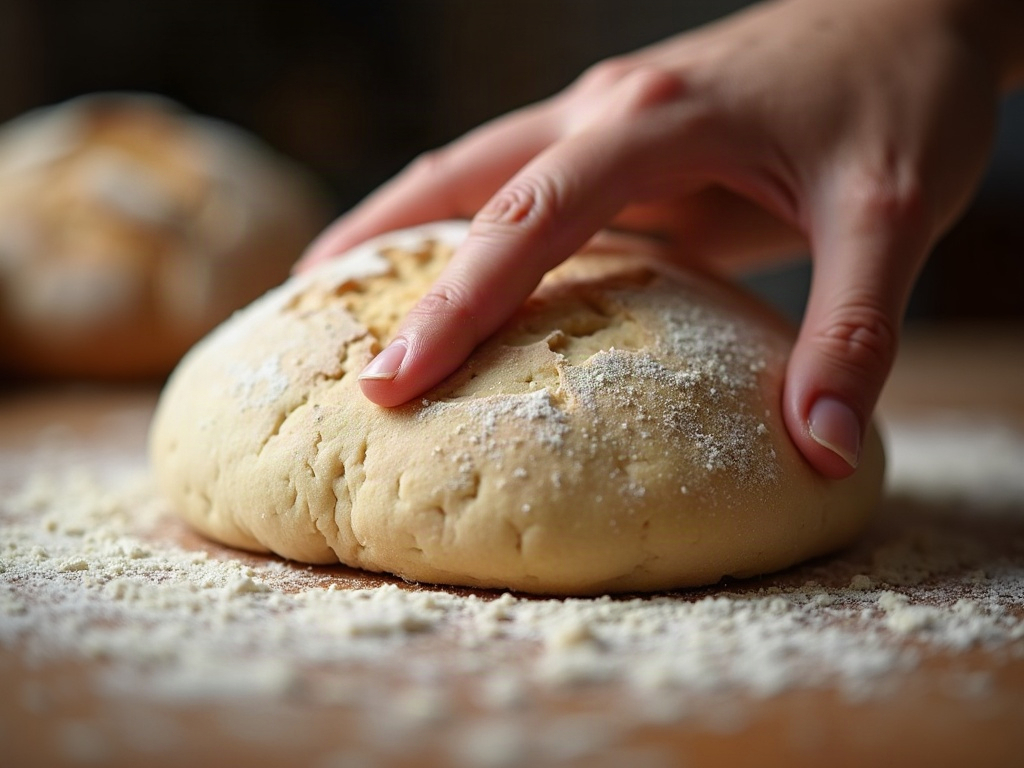
How to tell it’s overproofing: the dough felt very slack and almost soupy, showed lots of large surface bubbles, and gave off a sharply sour smell. The classic confirmation is the poke test — press a floured finger into the dough and the dimple stays put and doesn’t spring back at all. If that’s you, the fix is to shorten the proof.
- Pull the dough earlier. Especially in a warm kitchen, fermentation runs faster than most guides assume. Learn to read the dough rather than the clock — our guide to telling overproofed from underproofed walks through exactly what to look for.
- Use the poke test properly. When the dimple springs back slowly and only partway, it’s ready. When it doesn’t spring back at all, you’ve gone too far. See the full method in how to use the poke test.
- Cold-proof for control. Retarding the shaped loaf in the fridge slows things right down and gives you a much wider, more forgiving window to bake in.
Cause #2: The gluten was never strong enough to begin with
Sometimes the dough isn’t overproofed — it simply never developed the structure to hold its shape in the first place. Under-developed gluten produces a batter-like dough that can’t trap gas efficiently and sags the instant it loses the support of the bowl or banneton. This is a structure problem, not a timing one.
The usual reasons: not enough stretch-and-folds during bulk, too little strength-building for a high-hydration dough, or flour that’s simply too weak (low protein) for the job. The fixes:
- Build more strength during bulk. A few well-timed stretch-and-folds transform a slack dough into one that holds tension. Don’t skip them, especially on wetter doughs.
- Check your gluten before you shape. The windowpane test tells you whether the network is actually ready to hold gas — a quick way to catch weak dough before it ever reaches the banneton.
- Look at your flour. A low-protein flour struggles to build a strong network under a long, wet ferment. If your dough is chronically slack, a stronger bread flour is one of the highest-leverage changes you can make.
Cause #3: You knocked the gas out during transfer
Now the mechanical causes — the times the dough was fine but your handling popped the balloon. Turning a proofed loaf out of the banneton is a genuinely delicate moment, and rough handling here undoes hours of careful work.
- Invert, don’t squeeze. Turn the banneton over and let gravity release the dough. Don’t shake it violently, dig it out, or press on it — every squeeze crushes bubbles you can’t get back.
- Turn out onto parchment, then transfer. Tip the loaf directly onto a sheet of parchment so you can lift the whole thing into the pot without ever handling the soft dough again. Fumbling a bare loaf from hand to pot is a classic deflation moment.
- Fix sticking first. If the dough clings and you have to yank it free, it tears and deflates on the way out. Flour the banneton well — and if this keeps happening, see our fix for dough that sticks to the banneton.
Cause #4: Scoring went wrong
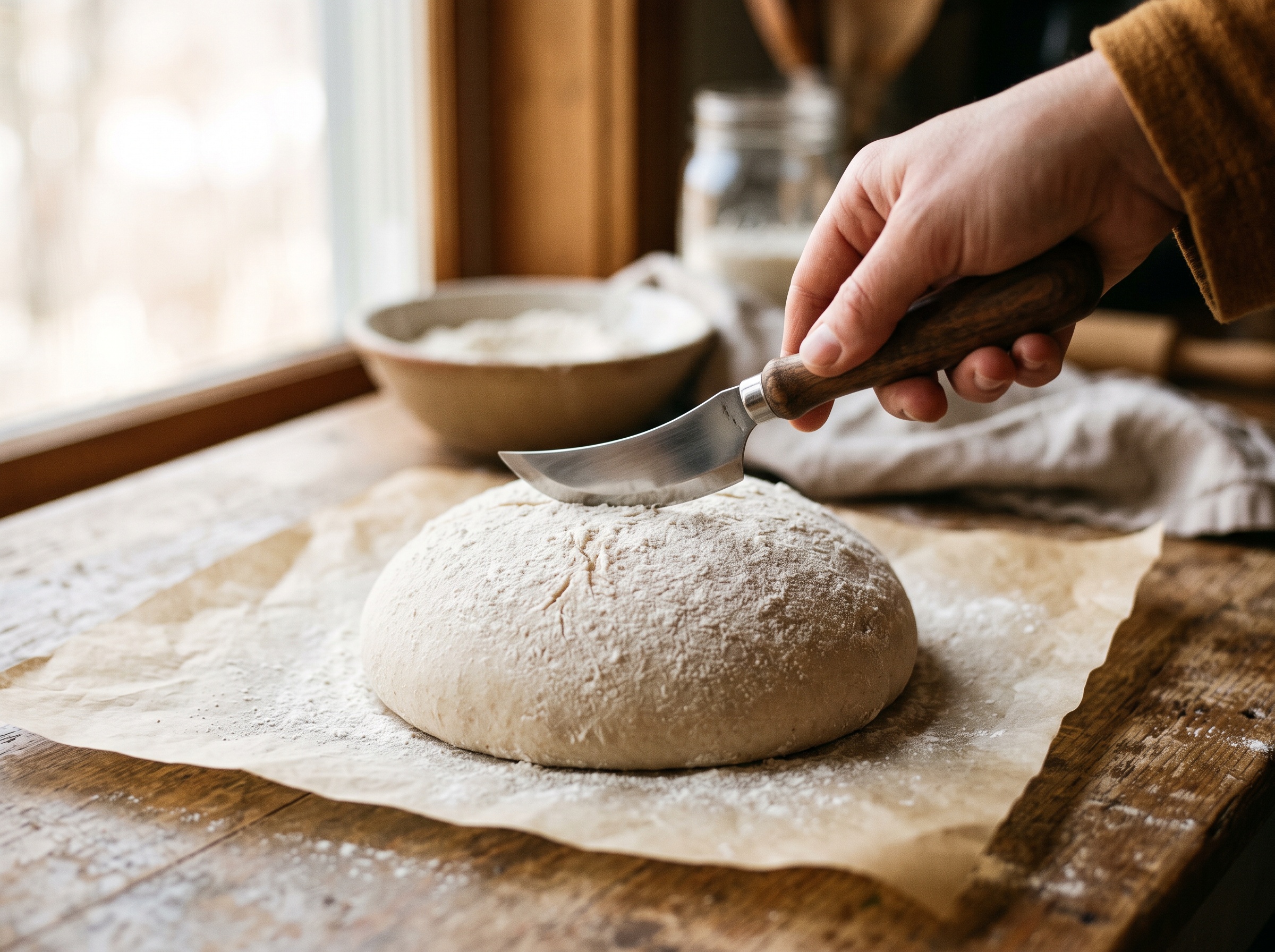
If the loaf holds up beautifully until the blade touches it, scoring is your suspect. A few things cause a score to deflate a loaf instead of decorating it:
- A dull or dragging blade. A sharp lame slices cleanly through the surface. A dull one drags and pulls at the skin, tearing the gluten and letting the gas escape in a rush. Use a fresh, sharp blade every time.
- Scoring too deep or hesitantly. Deep, sawing cuts sever too much of the structural skin. You want one confident, shallow-to-moderate stroke, not a slow, tentative gouge.
- Warm, slack dough at the blade. This is the big one. Room-temperature dough is soft and easily torn; cold dough straight from the fridge is firm, taut, and scores like a dream. Scoring cold is the single easiest way to stop deflation-on-scoring — and it also gives you a better ear and oven spring as a bonus.
Cause #5: Weak shaping left nothing to hold the gas
Shaping isn’t just about making the loaf look round — it builds the taut outer “skin” of tension that acts as a scaffold, holding the gas in and the loaf up. A slack, under-tensioned shape has no scaffold, so the loaf relaxes and spreads the moment it’s unsupported, even if the dough itself is perfectly proofed.
The fix is to shape with real intent: create surface tension by dragging the dough gently across an unfloured patch of counter until the top is taut and domed, then let it rest seam-side up in the banneton to set. If your rounds always seem to relax and flatten, our walkthrough on shaping a boule with real tension shows exactly how to build a skin that holds. Well-shaped dough forgives a lot of small sins elsewhere; slack shaping punishes everything.
Your quick deflation diagnosis
Put it all together and you can pinpoint the cause in seconds by asking when the collapse happened:
- Spread slowly into a puddle after turning out? Overproofing or weak gluten/shaping. Proof less, build more strength, shape tighter.
- Sank the instant the blade touched it? Scoring — use a sharp blade, cut confidently, and score cold dough straight from the fridge.
- Deflated while you were manhandling it out of the banneton? Transfer technique — invert gently onto parchment, no squeezing, and fix any sticking.
- Looked perfect but felt fragile the whole time? Almost certainly overproofed — catch it earlier next time.

The bottom line
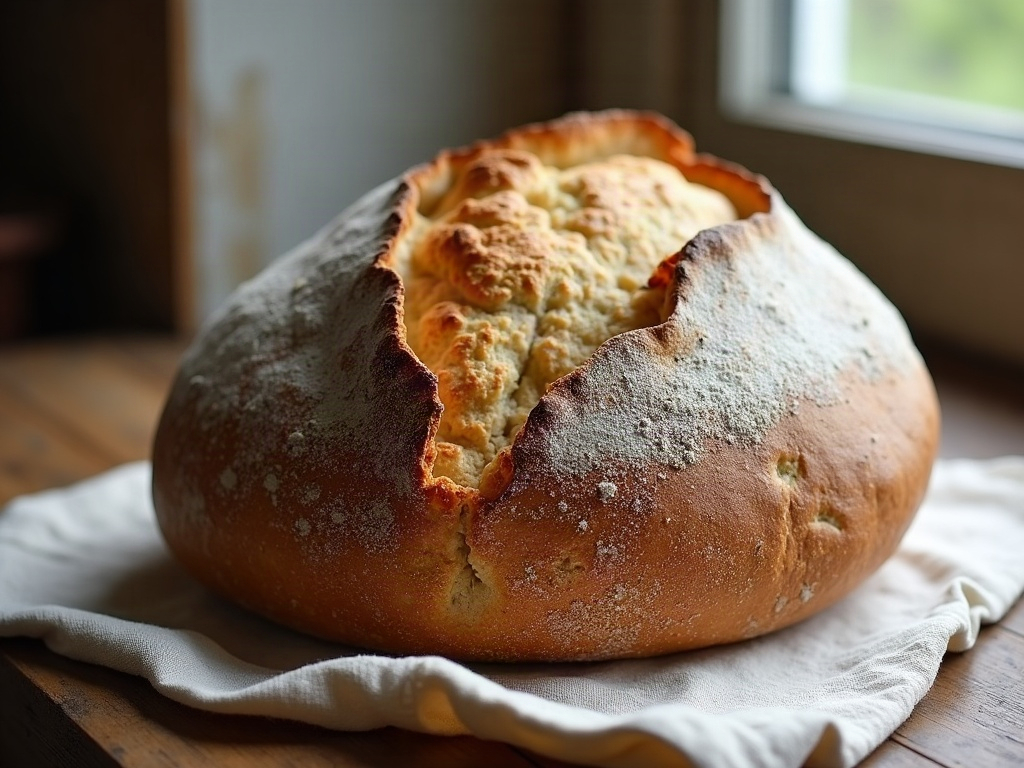
A deflating loaf isn’t bad luck — it’s a message. Either the structure was too fragile to hold its gas (overproofed, under-developed, or weakly shaped) or something physically popped it (rough transfer or a bad score). Work through the five causes in order, and the fixes are refreshingly simple: proof a little less, build strength during bulk, shape with real tension, handle the dough gently on the way out, and score cold with a sharp blade. Change one thing at a time so you can see what worked, and the next loaf will turn out of the banneton standing tall and hold its breath right through the oven.
Want to see a gentle turn-out and a clean, confident score in real time? The full visual walk-through — plus our free sourdough troubleshooting guide — lives on the LoafLovers YouTube channel. Come watch exactly where the deflation happens, and how to stop it.