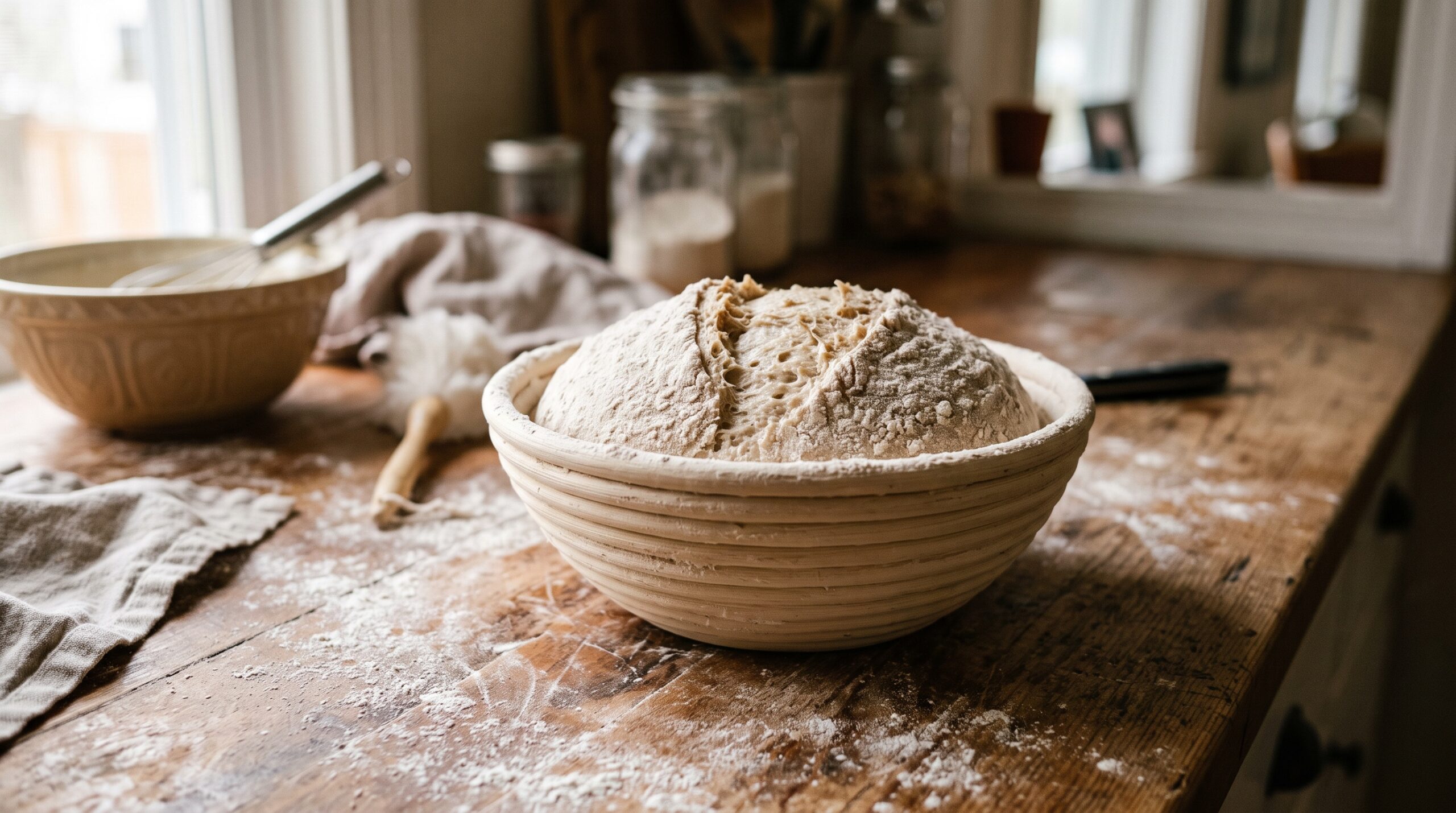
You are standing over the banneton with an oven that hit temperature ten minutes ago, and you have no idea whether to bake. Pull the loaf too soon and it bakes up tight, pale, and dense with a splitting side. Leave it too long and it slumps into a flat, gummy pancake the second you turn it out. The final proof is where a lot of good dough quietly goes wrong – not because the recipe failed, but because the timing was a guess.
The fix is not a better clock. It is a ten-second read you do with one floured finger. Here is how to run the poke test properly, how to read every result, and what to do when it tells you something you did not want to hear.
Why the clock lies to you
Most recipes give a final proof as a range – “1 to 3 hours at room temperature” or “overnight in the fridge.” Those numbers are a starting point, not a verdict. Fermentation speed depends on things that change from bake to bake: dough temperature, how strong and recently fed your starter was, hydration, the type of flour, and how warm your kitchen happens to be that day. A dough at 78F can be ready in half the time of the same dough at 68F.
So when you bake by the clock alone, you are really betting that today’s conditions match the day the recipe was written. They rarely do. The dough itself is the only reliable timer, and the poke test is how you ask it directly.
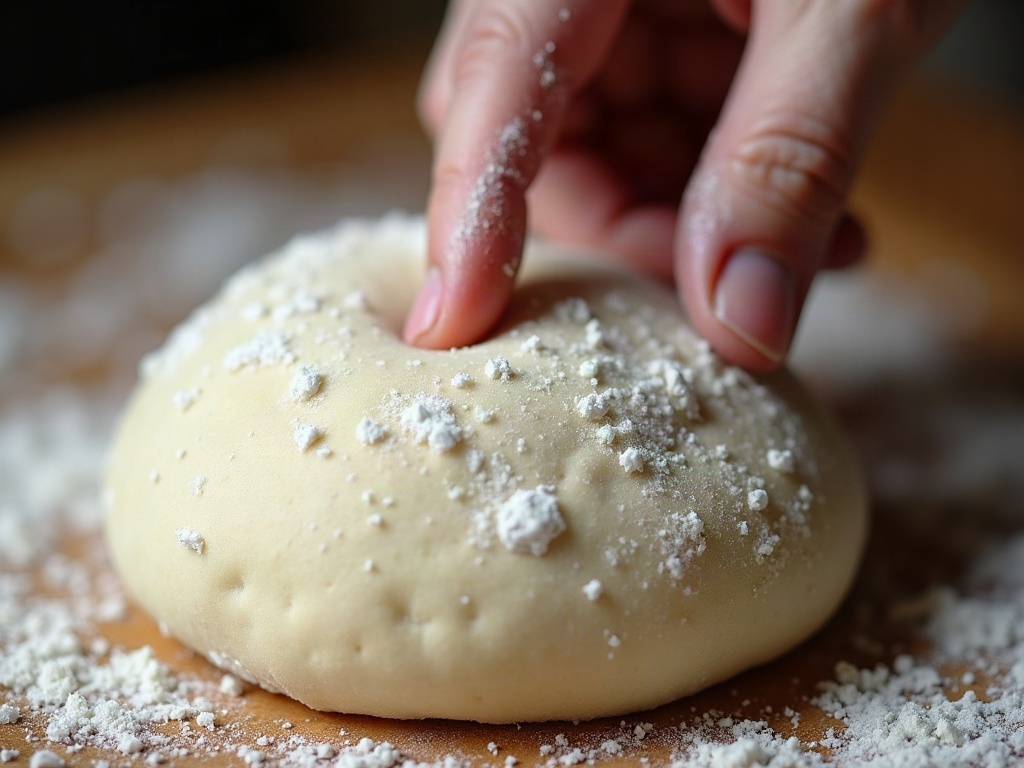
How to do the poke test correctly
The test is simple, but small mistakes make it lie. Do it like this:
- Flour your fingertip. Dip your index finger in flour so it does not stick and drag the surface. A sticky finger tears the skin of the dough and gives you a false read.
- Press about half an inch deep. Aim for the side of the dough or a spot near the edge, not dead center, so a small dent will not ruin your final loaf. Press gently and steadily – you are making a shallow well, not punching through.
- Pull your finger straight out and watch. The whole answer is in how the dent recovers over the next two or three seconds. Do not poke and immediately walk away; the recovery speed is the data.
That is the entire technique. The skill is in reading what happens next.
Reading the three results
There are three things the dent can do, and each one is a clear message.
Springs back quickly and fully – underproofed. If the indent bounces right back and nearly disappears, the dough still has fermentation left in it. The gluten is tight and the gas has not built up enough. Bake now and you will get a heavy, close crumb and often a dramatic burst up one side where the trapped pressure forces its way out.
Springs back slowly and leaves a slight dent – ready. This is your window. The dent fills in gradually over a couple of seconds but does not vanish completely, leaving a soft, shallow depression. The dough feels aerated and a little jiggly but still holds its shape. That slow, partial recovery means the gluten is relaxed and well aerated but still has structure to spring in the oven. Bake it.
Does not spring back at all – overproofed. If the dent just stays there, or the surface sighs and deflates around your finger, the dough has gone too far. The gluten has weakened and can no longer trap gas or hold a tall shape. It will spread flat and bake gummy. This is the result you most want to catch early.
Cold dough plays by different rules
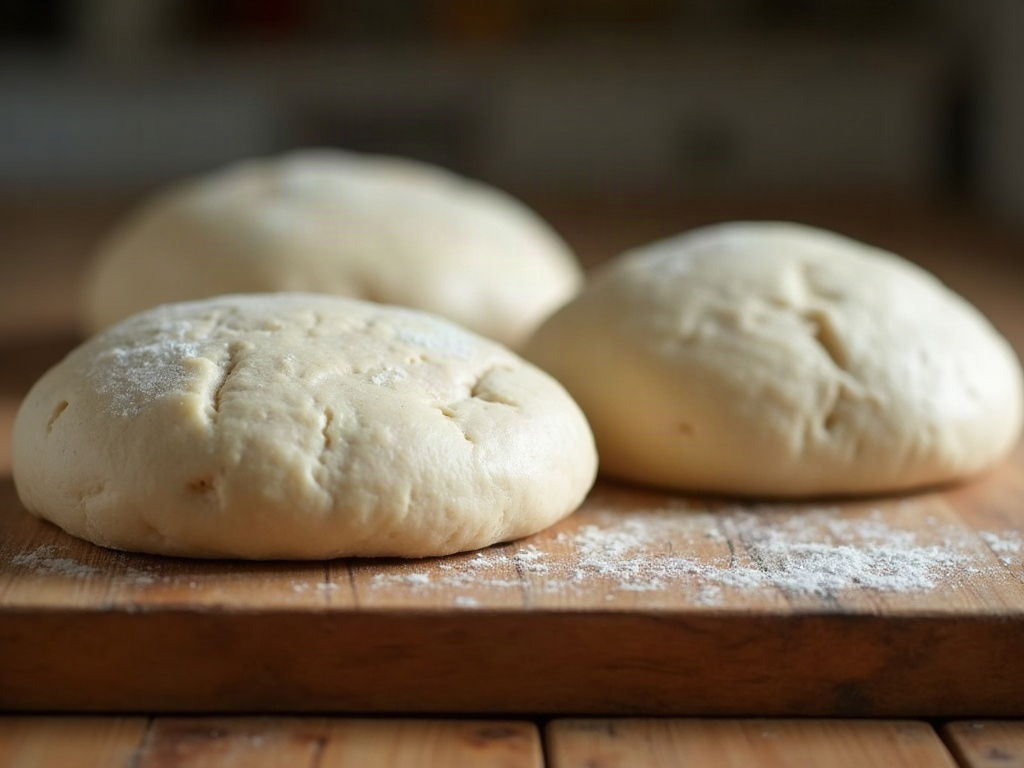
If you retard your shaped loaf in the fridge, do not expect the same lively spring. Cold dough is firm and slow, and a straight-from-the-fridge poke will always recover more sluggishly than room-temperature dough simply because it is stiff, not because it is overproofed.
The practical move is to judge the proof before the dough goes cold. Get the loaf to a good ready-or-nearly-ready point at room temperature, then move it to the fridge, where the cold slows fermentation to a crawl and buys you a wide baking window – often 8 to 16 hours. When you pull it out, you are baking cold dough that was already at the right stage, which also scores far more cleanly. If you must judge a cold loaf, look more at overall volume and doming than at spring speed.
Back it up with two more signs
The poke test is reliable, but the best bakers never lean on a single signal. Cross-check it with two others:
- Volume. A well-proofed shaped loaf has grown noticeably – roughly 30 to 50 percent larger, not doubled. Doubling at the shaped stage usually means it has gone too far.
- Shape and jiggle. A ready loaf looks softly domed and relaxed, with a smooth, slightly bubbly surface, and it jiggles gently when you nudge the banneton. A dough that has spread wide and flat, with bubbles breaking the surface, has overproofed.
When the poke, the volume, and the jiggle all agree, you can bake with confidence. When they disagree, trust the poke and the shape over the clock every time.
If you catch it wrong, do this
The test only helps if you act on it.
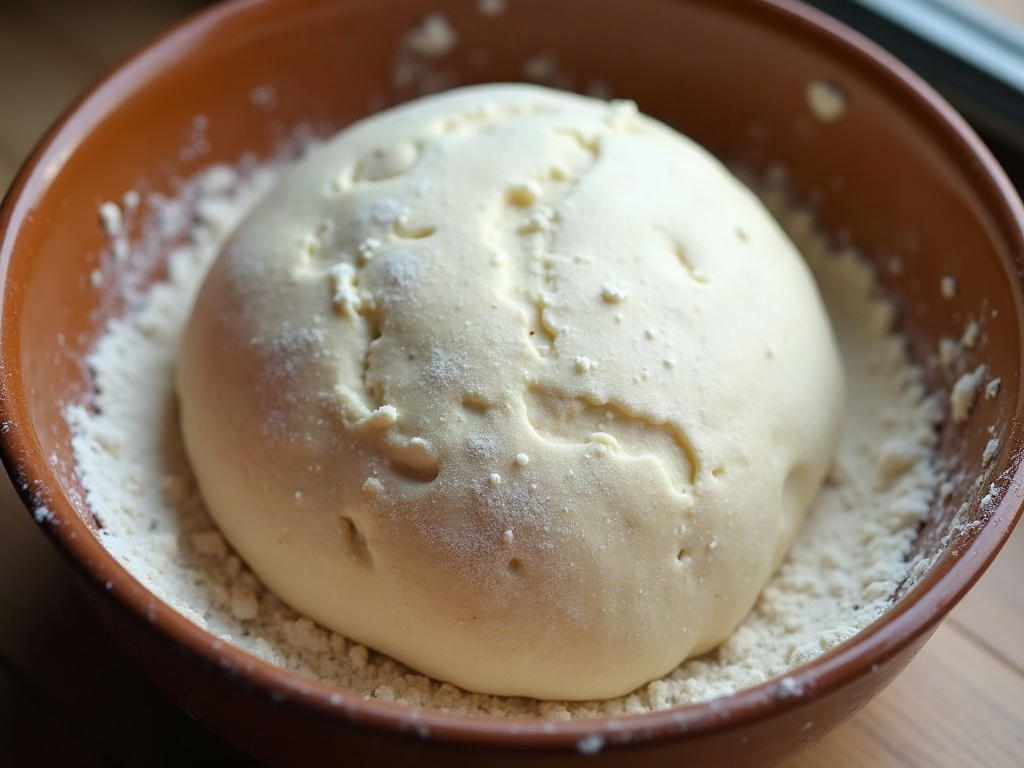
Underproofed? Give it more time. Leave the loaf somewhere warmer – the top of the fridge or near the oven – and re-poke every 20 to 30 minutes. There is no rush and no harm; you are just waiting for that slow, partial recovery to show up.
Overproofed? Do not wait – baking now beats waiting for it to get worse. For a loaf that is only slightly past, bake it a touch cooler and accept a flatter, more open result. For dough that is truly slack and lifeless, stop fighting it: gently press it into an oiled pan for a rustic sandwich loaf, or stretch it into a tray for focaccia, where a low, airy structure is a feature rather than a flaw.
Stop guessing for good
The poke test cures the panic in the moment. To stop the guessing entirely, take the judgment out of your fingertips and put it into a number. Pinch off a small piece of dough at the start of the final rise, drop it into a clean, straight-sided jar, mark the starting level, and watch it climb. When that sample has risen the amount your recipe wants, the main loaf has too. This aliquot-jar trick, plus keeping a rough log of your dough temperature and proof times, turns an intuition you have to relearn every day into a repeatable target.

None of this requires a thermometer-precise kitchen or years of practice – just the habit of asking the dough instead of the clock. Flour a finger, press half an inch, and watch how the dent comes back. Once you can read that slow, gentle spring, the anxiety over when to bake mostly disappears, and your loaves start showing up tall, open, and evenly baked. The dough always knows. The poke test is just how you listen.
Sources & further reading:
- How to Use the Dough Poke Test – The Perfect Loaf
- Identifying Proofing Levels in Dough – Challenger Breadware
Leave a Reply