You feed your starter on schedule, you keep it warm, and still it drags – a lazy half-rise, a few sad bubbles, nothing like the doubling, domed, ready-to-bake starter everyone else seems to have. Before you decide your starter is broken, look at what you’re feeding it. For a lot of home bakers, the quiet culprit isn’t the feeding routine or the temperature at all. It’s the flour. Plain white bread flour or all-purpose makes beautiful bread, but it’s stripped of exactly the parts of the grain that wild yeast and bacteria love most. Switch some or all of that flour to whole wheat or rye and a sluggish starter often wakes up within a day or two.
Here’s why whole-grain flour is such rocket fuel for a starter, how to tell whole wheat from rye for this job, and exactly how to make the switch without ending up with a wet, over-eager mess.
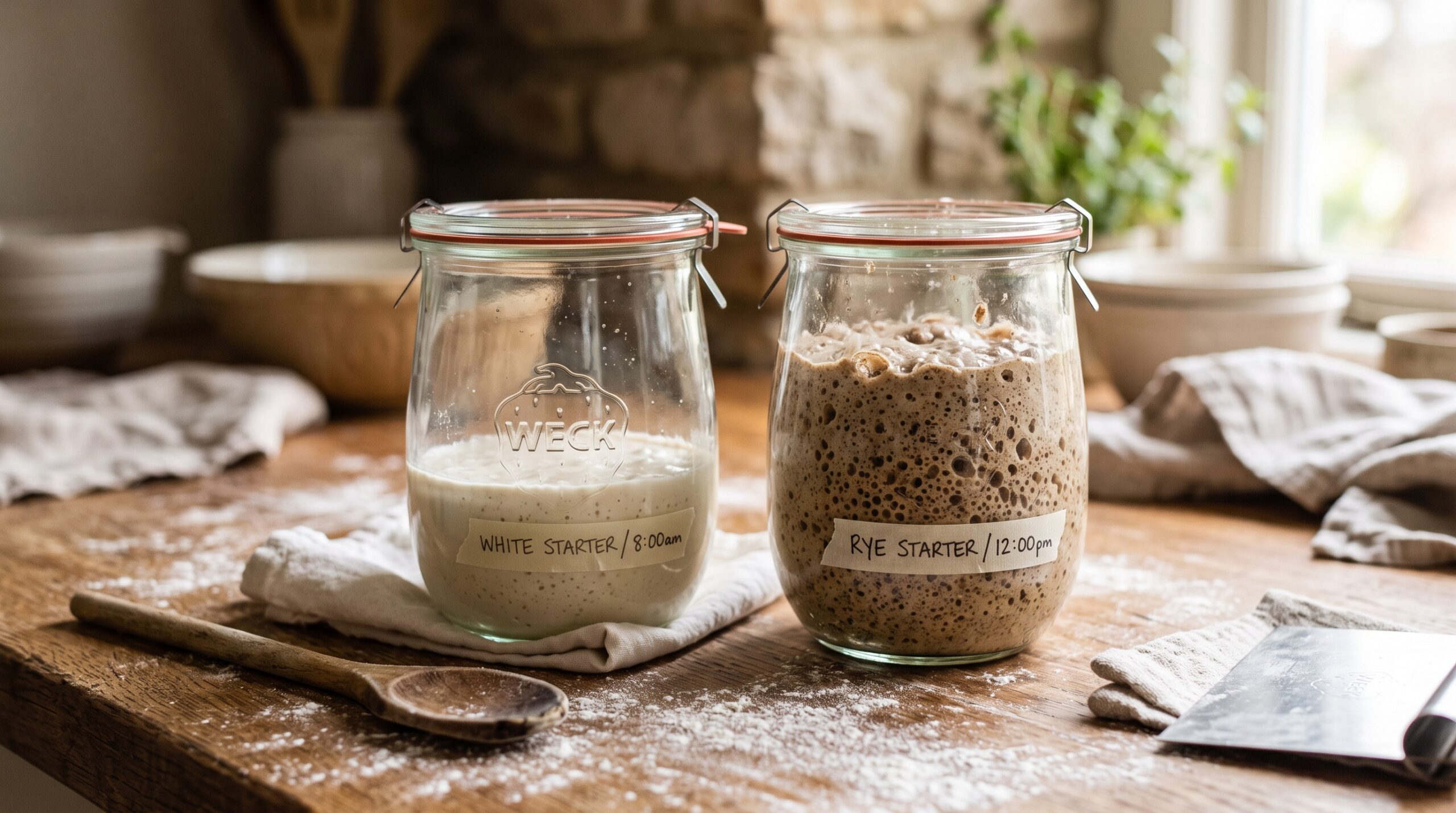
Why a white-flour starter can feel sluggish
White flour is milled from the starchy inner part of the wheat kernel – the endosperm – with the bran and germ sifted out. That’s what makes it white, and it’s great for a clean, airy crumb. But the bran and germ are where most of the grain’s wild yeast, mineral content, and fermentation enzymes live. Strip them away and you hand your starter a thinner diet: plenty of starch to eat, but fewer of the micronutrients that drive fast, vigorous fermentation.
A starter raised purely on white flour can absolutely thrive, but it tends to be slower to establish, slower to recover after a stint in the fridge, and quicker to go hungry between feeds. If yours rises weakly, takes forever to peak, or falls back almost as soon as it gets going, the flour is worth suspecting – especially if your feeding ratio and warmth are already in good shape. (If you haven’t ruled those out yet, our guide to a starter that rises then collapses covers the timing side of the problem.)
What whole wheat and rye actually change
Whole wheat and rye flours keep the whole grain – bran, germ, and all. That changes the picture in three concrete ways. First, they carry far more wild yeast and bacteria on the bran, so your starter has a larger, livelier microbial population to begin with. Second, they’re richer in minerals and in enzymes called amylases, which break starch down into the simple sugars yeast feeds on – so there’s more readily available food. Third, the bran particles physically aerate the mix and give microbes more surface to cling to.
The practical result is a starter that ferments faster, rises higher, and smells more assertively sour. You’re not changing the organisms – you’re feeding the same culture a much richer meal. Most bakers notice the difference in the very first whole-grain feed.
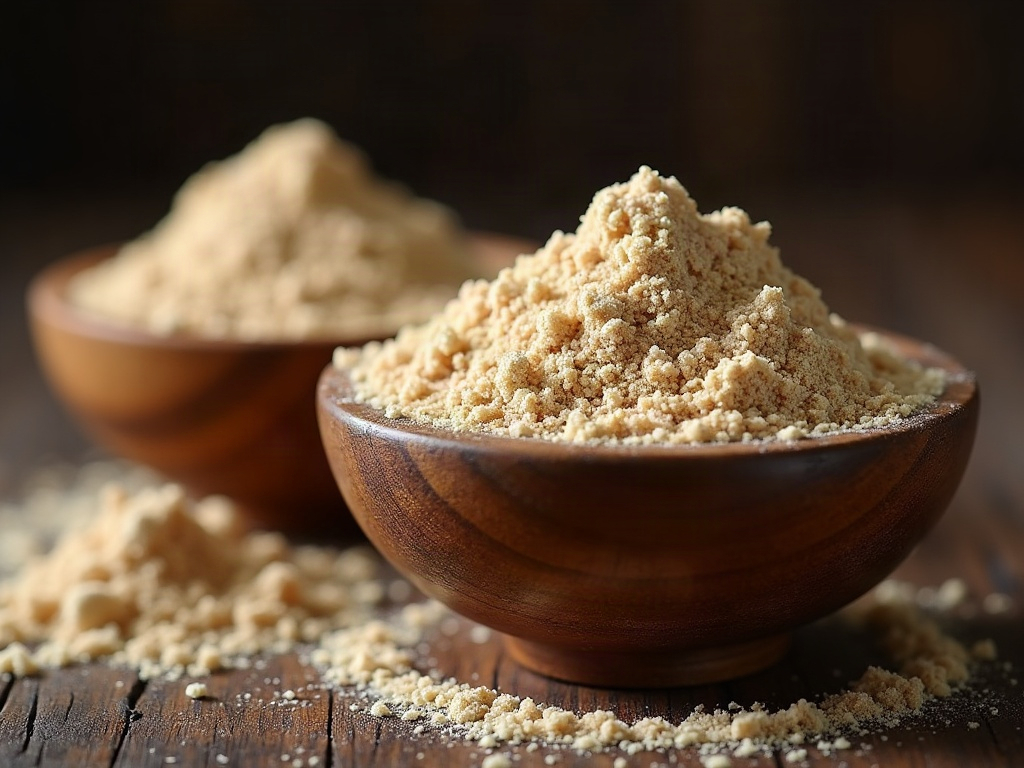
Whole wheat vs rye: which should you reach for?
Both work, but they have different personalities. Whole wheat is the gentler step up: noticeably more active than white, with a mellow, nutty, wheaty flavor. It’s the easy choice if you mostly bake wheat loaves and just want a healthier, faster starter without a dramatic change in behavior.
Rye is the powerhouse. Rye flour is the single most effective thing you can feed a struggling starter – it’s packed with enzymes and ferments so enthusiastically that bakers often keep a small rye starter specifically to jump-start or revive a weak culture. The trade-off is that rye is stickier and holds more water, so a rye-fed starter looks thicker, pastier, and climbs fast. If your starter is truly limp and you want maximum wake-up, rye is the move. If you want a steady everyday upgrade, whole wheat is friendlier.
How to switch your starter over, step by step
You don’t need to start a new culture – you just change what you feed the one you have, and it adapts over a few feeds. The gentlest route is a gradual transition, which avoids shocking a weak starter with a sudden all-new diet.
At your next feeding, discard down to a small amount of starter as usual, then feed it with a mix of about half your old white flour and half whole wheat or rye. Keep your normal ratio – a common, forgiving one is equal weights of starter, flour, and water (a 1:1:1 feed), though a hungrier 1:2:2 or 1:5:5 stretches the time between feeds. Let it rise and fall as normal. At the following feed, push the blend further toward whole grain, and by the third or fourth feed you can go fully whole wheat or rye if that’s your goal. If your starter is reasonably healthy, you can switch in a single feed – but easing in is kinder to a weak one. Not sure how much to keep and discard each time? Our primer on feeding ratios and schedules lays out the numbers.

What to expect in the first few days
Set your expectations so the changes don’t alarm you. A freshly switched starter will usually be faster – it may peak in half the time it used to, so a starter that took eight hours might crest in four. Watch it rather than the clock, because feeding a peaked, hungry starter on the old schedule is how you end up thinking it “died.” Mark the start line on the jar with a rubber band so you can actually read the rise.
It will also look and feel different. Whole-grain starters are wetter and stickier at the same hydration because the bran absorbs and then releases water, and they’re darker and speckled with bran. The smell gets stronger and tangier, sometimes sharper. None of that is a problem – it’s the culture doing more, not misbehaving. The one thing to stay alert to is the faster timeline, because a whole-grain starter goes hungry and throws hooch sooner than a white-flour one did.

The smart middle path: blend instead of fully switch
You don’t have to commit to a 100 percent whole-grain starter, and many experienced bakers deliberately don’t. A permanent blend – say 25 to 50 percent whole wheat or rye, with the rest white – gives you most of the extra vigor and flavor while keeping the starter easier to read and less prone to racing past its peak. It’s also cheaper and more convenient than keeping a whole bag of rye just for feeds.
A popular setup is a mostly-white starter with a spoonful of rye in each feed purely as a booster. You get the enzyme kick without the full stickiness. If you bake a range of breads, a whole wheat blend also plays nicely with both white and whole-grain recipes, so you’re not constantly adjusting. Think of the blend as a dial, not a switch: turn it up when the starter feels sluggish, back off when it’s racing.

Troubleshooting and going back to white
A couple of hiccups are common and easily handled. If the switched starter now ferments so fast it collapses before you can bake, it’s simply hungry sooner – feed it closer to its peak, use a larger feed ratio to stretch the timeline, or keep it a little cooler. If it looks soupy, add slightly less water at the next feed to account for the bran’s thirst. And if you ever want to go back to a milder, slower white-flour starter, just reverse the transition: feed with more white and less whole grain over a few feeds and it will settle down again.
One reassuring note: changing flour won’t harm a healthy culture. The same wild yeast and bacteria simply adjust to the new menu. If your starter still won’t come alive even on rye, the issue is probably elsewhere – temperature, chlorinated water, or a feeding schedule that’s off – and our walkthrough on building and maintaining a reliable starter is the place to start over with confidence.
Switching to whole wheat or rye is one of those small changes that quietly fixes a stubborn starter – and it’s much easier to see the difference in bubble, rise, and texture than to read it. We walk through the whole switch, side by side, on the LoafLovers YouTube channel, and our free sourdough troubleshooting guide takes the usual starter headaches – sluggish rises, hooch, a culture that won’t double – one symptom at a time, so your next loaf starts from a starter that’s genuinely ready.