Tag: sourdough starter mold

  • Pink or Orange Streaks on Your Sourdough Starter: The One Sign You Must Throw It Out

    Pink or Orange Streaks on Your Sourdough Starter: The One Sign You Must Throw It Out

    Sourdough starter is theatrical. It bubbles over, it smells like paint thinner one day and sweet beer the next, it grows a film and weeps a dark liquid, and ninety-nine times out of a hundred all of that drama is completely harmless. That is exactly why the one genuinely dangerous sign is so easy to miss: by the time most bakers have learned that hooch is fine and a sour smell is fine and a grey skin is fine, they have trained themselves to shrug off everything. So let’s be unusually blunt about the single exception. If you see pink or orange streaks in your starter, you do not troubleshoot it, you do not scrape it, you do not feed it back to health. You throw it out.

    This is the rare starter problem with no rescue step, and it is worth knowing cold — not to make you nervous about a hobby that is almost impossible to get dangerously wrong, but so that the one time it matters, you react instantly instead of talking yourself into saving a jar you should bin.
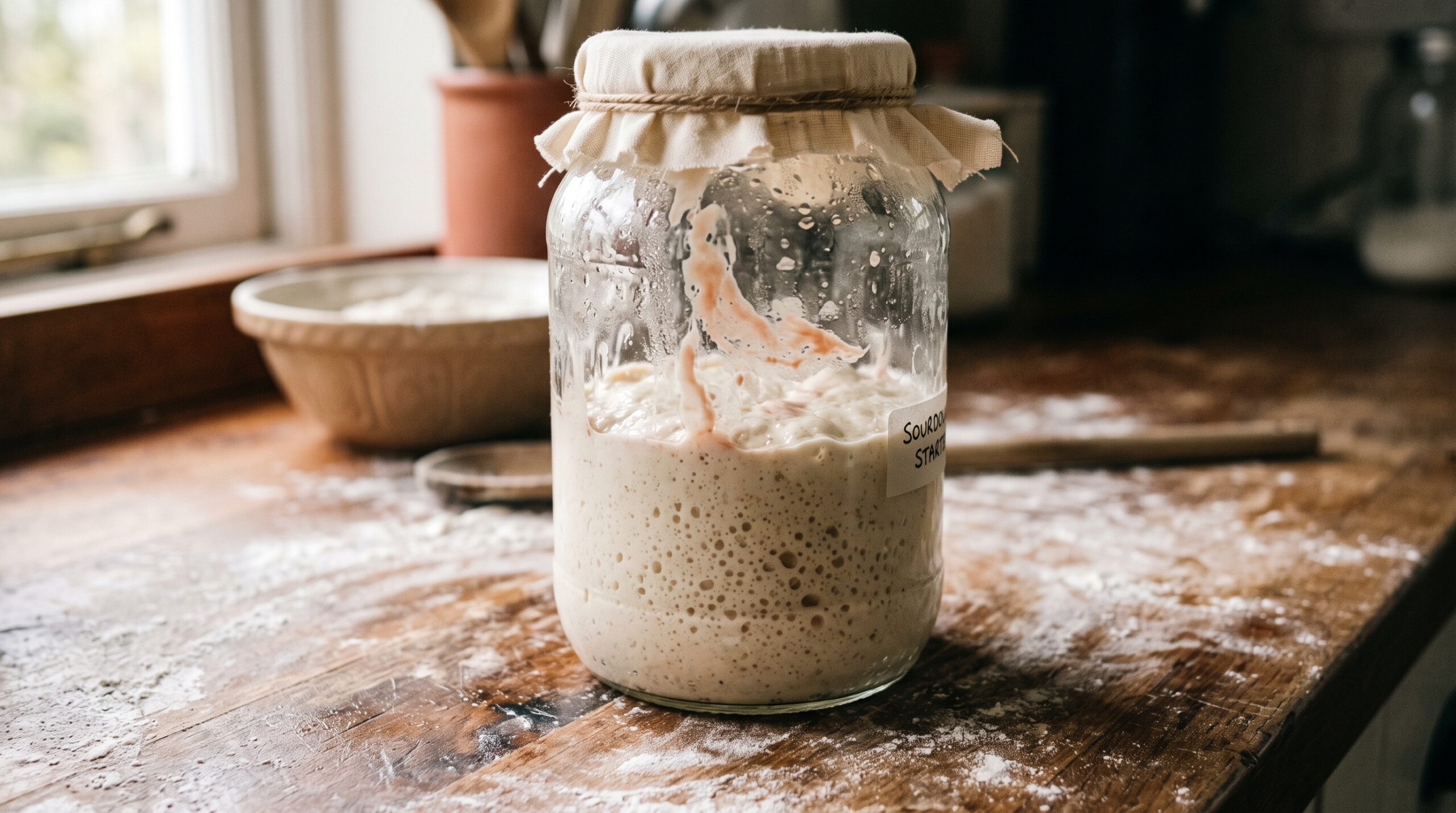
    A glass jar of sourdough starter showing faint pink and orange streaks on the surface
    Pink or orange streaks are not a cosmetic quirk. They are the one discoloration that means the jar goes in the bin.

    Why pink or orange means stop

    The living culture in a healthy starter is a stable partnership between wild yeast and lactic-acid bacteria. Those bacteria do something clever: they make the environment acidic, and that acidity is a wall that keeps unwelcome microbes out. A well-fed starter is, in effect, chemically defending itself all day long. That is why you can leave flour and water on a counter and end up with something safe to eat — the acidity wins.

    A pink or orange tinge is a sign that wall has been breached. Those colors are the classic signature of spoilage bacteria and certain molds that produce pigment — the kind of pink streaking you might recognize from the ring that forms in a neglected shower or around a drain. When that color shows up in your starter, it means the acidic environment that should have kept such organisms out has failed, and the culture has been colonized by something you have no way to identify at home and no business eating. There is no feeding schedule that fixes a contamination like this, because the problem is not that your starter is weak or hungry. The problem is that it is no longer only your starter.

    Unlike almost every other starter question, this one is not a judgment call. You cannot “scrape off the pink part” the way you might cut mold off a block of cheese, because what you can see is not the whole of what is there. Discard the entire thing.

    What this is NOT: the harmless signs that scare people

    Here is the reassuring half, and it is the larger half by far. Most of the alarming things a starter does are normal, and confusing them with real contamination is how people throw out perfectly good cultures. Learning the difference is most of the battle.

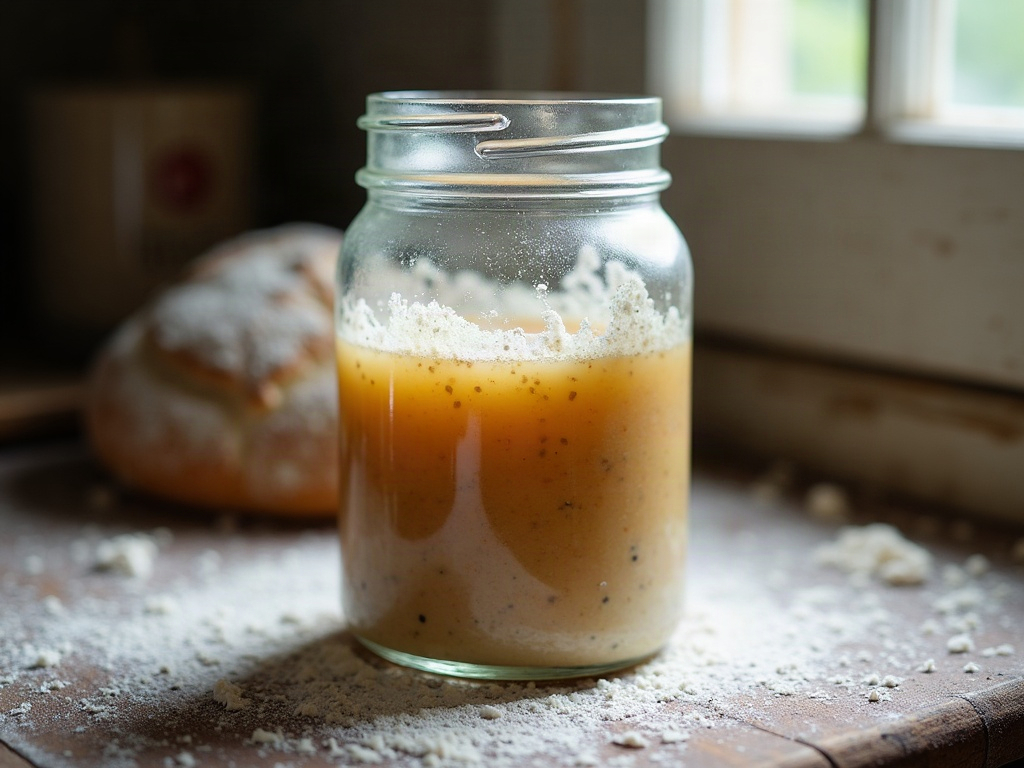
    Hooch — a layer of liquid on top, anywhere from clear to grey to brownish, sometimes almost black — is just a hungry starter telling you it has run out of food. It is alcohol and water, completely harmless; you can pour it off or stir it in and then feed. It is never pink. If you have been startled by it before, our explainer on what the liquid on your starter means and exactly what to do walks through it in full.

    A sharp, boozy, acetone or nail-polish smell is the same message in a different language: an underfed, over-hungry starter. It smells aggressive but it is not spoiled, and a few regular feedings bring it right back. We cover the full recovery in our guide to reviving a neglected starter even when it smells like nail polish.

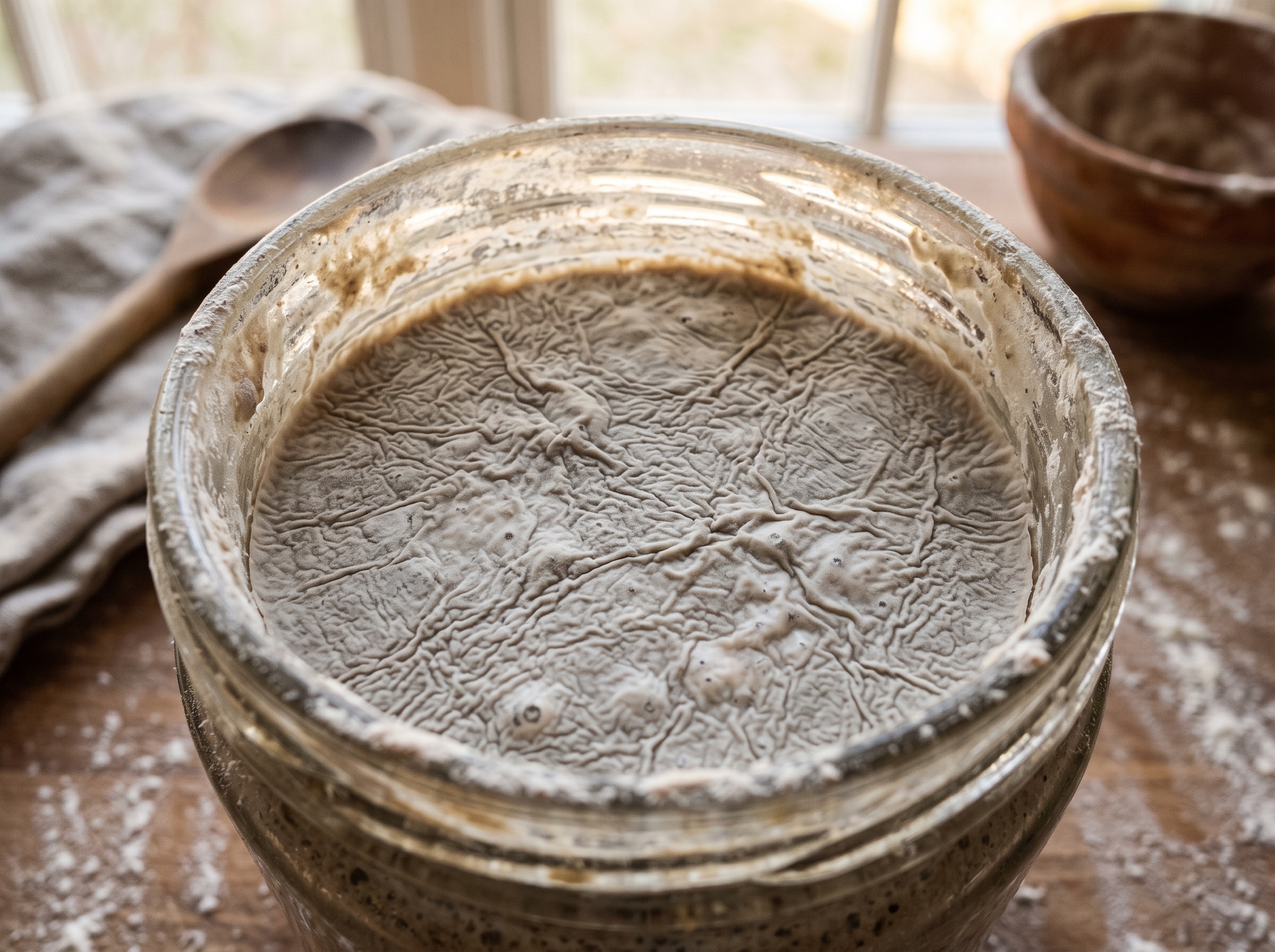
    Discoloration that is grey, tan, or beige on the surface is usually just oxidation or a dried skin, especially on a starter that has sat a while. Grey is not pink. A white or greyish filmy layer can be kahm yeast — unsightly, not dangerous — which is a different situation again from true fuzzy mold.

    The one that looks closest: mold and kahm yeast

    The genuine lookalikes for dangerous contamination are fuzzy mold and kahm yeast, and the two get mixed up constantly. Kahm is a flat, filmy, sometimes wrinkled white-to-grey layer that sits on the surface; mold is fuzzy and three-dimensional, growing in spots of white, blue-green, grey, or — relevant here — pink and orange. The quick rule: if it is flat and filmy it is probably harmless kahm, and if it is fuzzy, raised, or colored, it goes in the bin. Because that single distinction decides whether you keep baking or start over, it is worth reading our full side-by-side on telling mold from kahm yeast and knowing when to toss so you can call it confidently at a glance.

    Pink and orange belong firmly on the “toss it” side of that line whether the texture reads as fuzzy mold or as a strange slick streak. The color alone is enough. You do not need to identify the exact organism — you need to recognize that this is not one of the harmless signs, and act.
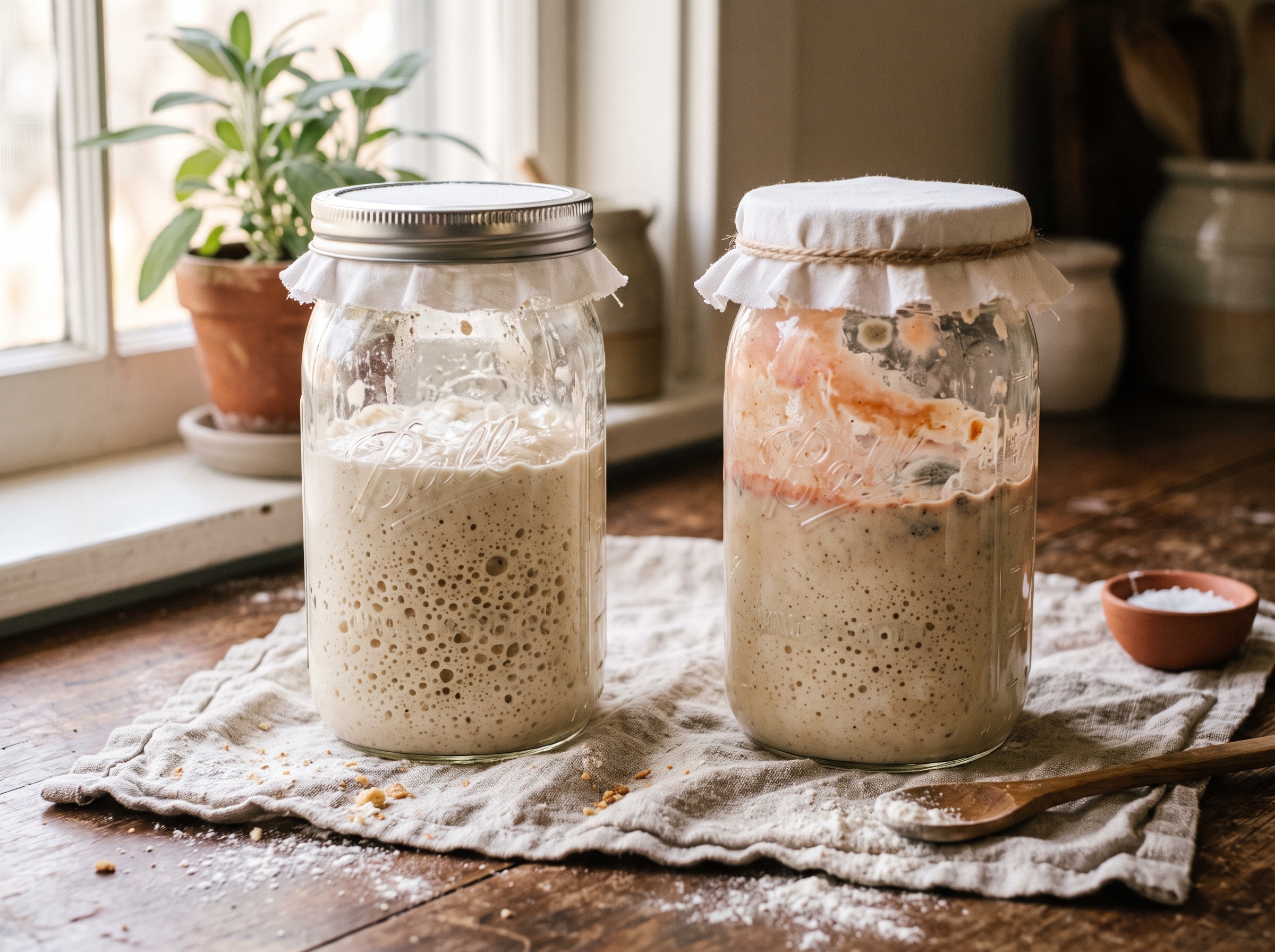
    Two jars of starter side by side, one healthy and cream colored, one tinged pink and orange
    Healthy on the left, contaminated on the right. Color is the fastest tell once you know what you are looking at.

    A thirty-second safety check for any suspicious jar

    When something looks off and you want a fast, honest read, run through four things in order. First, color: any pink, orange, or red — anywhere, in any amount — is an automatic discard, full stop. Second, texture: fuzzy, furry, or raised growth of any color means mold, so discard. Third, the liquid: a clear-to-dark liquid layer is just hooch and is fine; a pink or slimy liquid is not. Fourth, smell: tangy, sour, boozy, and yeasty are all normal, but genuinely rotten, putrid, or foul — a smell that makes you recoil rather than wince — is a reason to walk away.

    Notice that three of the four tests are reassuring most of the time. A starter that is merely sour-smelling, hooch-topped, and cream-colored passes easily, even if it looked frightening at first glance. It is really only that first test — color — that carries the hard stop.
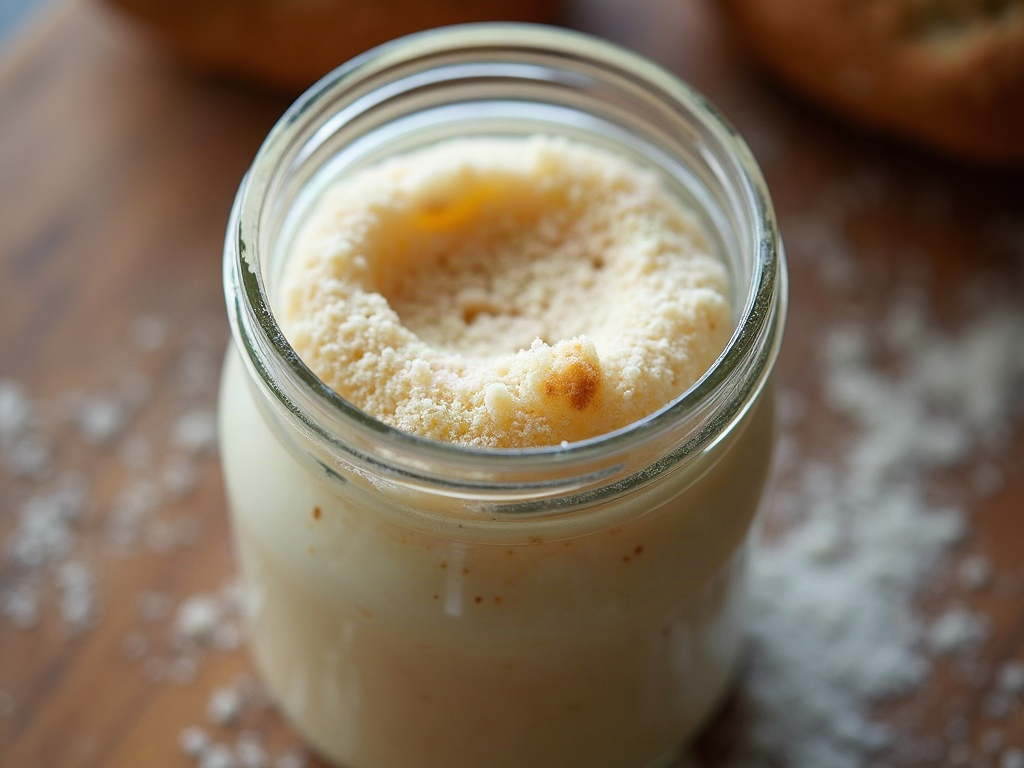
    A healthy sourdough starter with a harmless layer of grey-brown hooch liquid on top
    This is fine: hooch is just a hungry starter’s clear-to-grey liquid, nothing like the pink warning color.

    Exactly what to do when you see pink or orange

    Move decisively and do not try to salvage any portion of it. Scrape the entire starter into the trash — not the sink, where it can linger in the drain. Wash the jar and any utensils that touched it in hot, soapy water, and if you want the extra reassurance, run the jar through a dishwasher’s hot cycle or wash it and let it air-dry completely before it ever holds a starter again. Give the surrounding counter a wipe too, since pigment-producing organisms are happy to set up shop on a damp surface.

    Do not bake with any dough you had already mixed using that starter, and do not keep a “backup” scoop of it in the fridge hoping it is somehow cleaner. The whole culture is compromised. The good news — and it genuinely is good news — is that a sourdough starter is one of the cheapest things in your kitchen to replace. It is flour and water and a week of patience, nothing more.
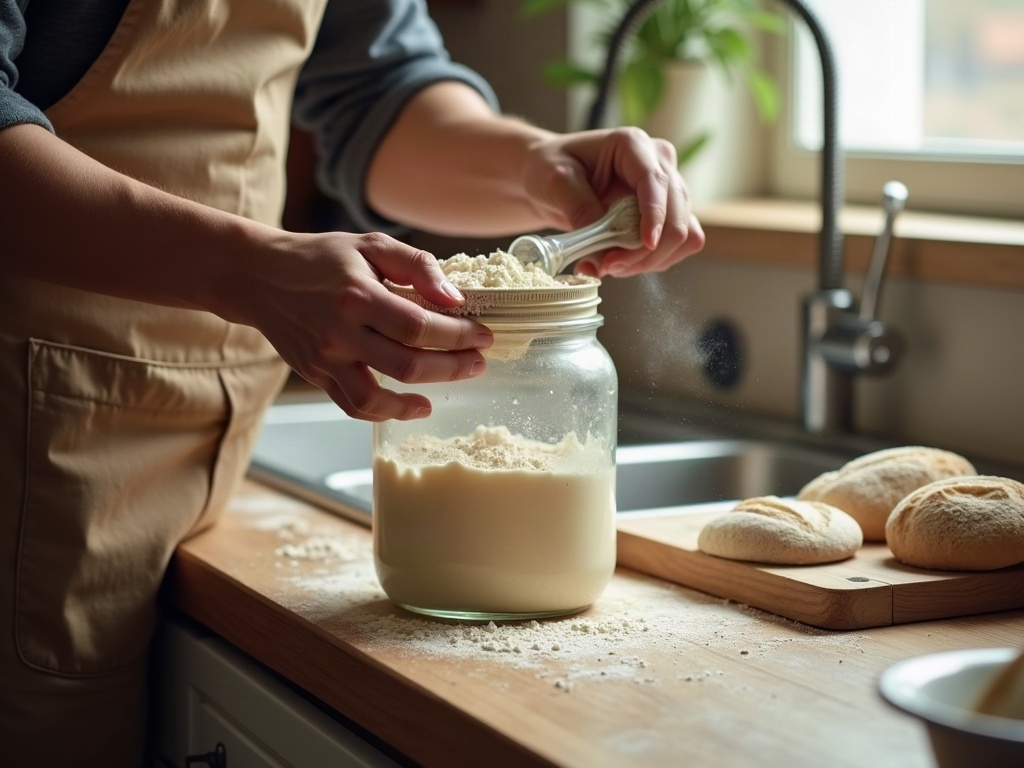
    Hands emptying a contaminated starter jar into the bin before washing the jar in hot soapy water
    When it is pink or orange, there is no rescue step. Discard the starter, then wash everything it touched in hot soapy water.

    Rebuilding, and keeping the pink away for good

    Starting over feels like a loss, but it is a short one. You can grow a brand-new culture from scratch in about a week with nothing but flour, water, and a clean jar; our day-by-day walkthrough of making a sourdough starter from scratch shows exactly what healthy progress looks like at each stage, so you will know the rebuild is on track.

    Prevention, happily, is mostly just good hygiene and regular feeding — the same habits that make a starter strong also make it defend itself. Use a clean jar and clean utensils, and give the jar a proper wash every week or two rather than endlessly topping up a crusty one. Feed on a consistent schedule so the culture stays acidic and dominant instead of weak and hungry, since a vigorous, well-acidified starter is exactly what crowds out the organisms that turn things pink. Keep the lid loose or vented, not sealed airtight. And if you bake only occasionally, consider drying a portion of a healthy starter as an insurance policy — a dried starter backup that lasts for years means that even a total loss is a minor inconvenience rather than a week-long setback.

    The takeaway is simple enough to keep in your back pocket: starter is dramatic, and almost none of that drama is dangerous — but pink and orange are the exception, and they are non-negotiable. Learn to shrug off hooch, sour smells, grey skins, and the rest, and you will save plenty of good cultures you might otherwise have binned. Learn to act instantly on that one warning color, and you will never once put something unsafe into your bread.

    We show what healthy, thriving, and genuinely off starters look like up close on the LoafLovers YouTube channel, and our free sourdough troubleshooting guide keeps this safety check and our other starter fixes in one place for the next time a jar makes you second-guess it. Drop your email and we will send it over, so you always know the difference between the signs that scare you and the one that should.
    Related Reading

  • Mold on Your Sourdough Starter vs Kahm Yeast: How to Tell and When to Toss It

    Mold on Your Sourdough Starter vs Kahm Yeast: How to Tell and When to Toss It

    You lift the lid on your sourdough starter and something looks off. A patch of fuzz. A strange skin across the top. A pool of dark liquid. Your stomach drops, because you’ve read enough kitchen horror stories to wonder whether the whole jar is now dangerous, or whether you just wasted weeks of feeding on something you have to pour down the drain.

    Take a breath, because most of the time what people panic about isn’t mold at all. Starters routinely grow harmless films and liquids that look alarming and are completely safe. But real mold does happen, and when it does the only correct move is to toss the jar. The whole skill is learning to tell the difference on sight and smell, and once you can, this stops being scary. Let’s diagnose exactly what you’re looking at.

    First, don’t panic, but do look closely

    Before you decide anything, get the jar into good light and really study the surface. Three very different things get lumped together under the word “mold,” and only one of them means the starter is done. What you’re trying to sort out is whether you’re seeing genuine mold (fuzzy, raised, colored spots), kahm yeast (a thin flat film), or plain hooch (a layer of liquid). Each looks distinct once you know the tells, and each has a completely different fix.

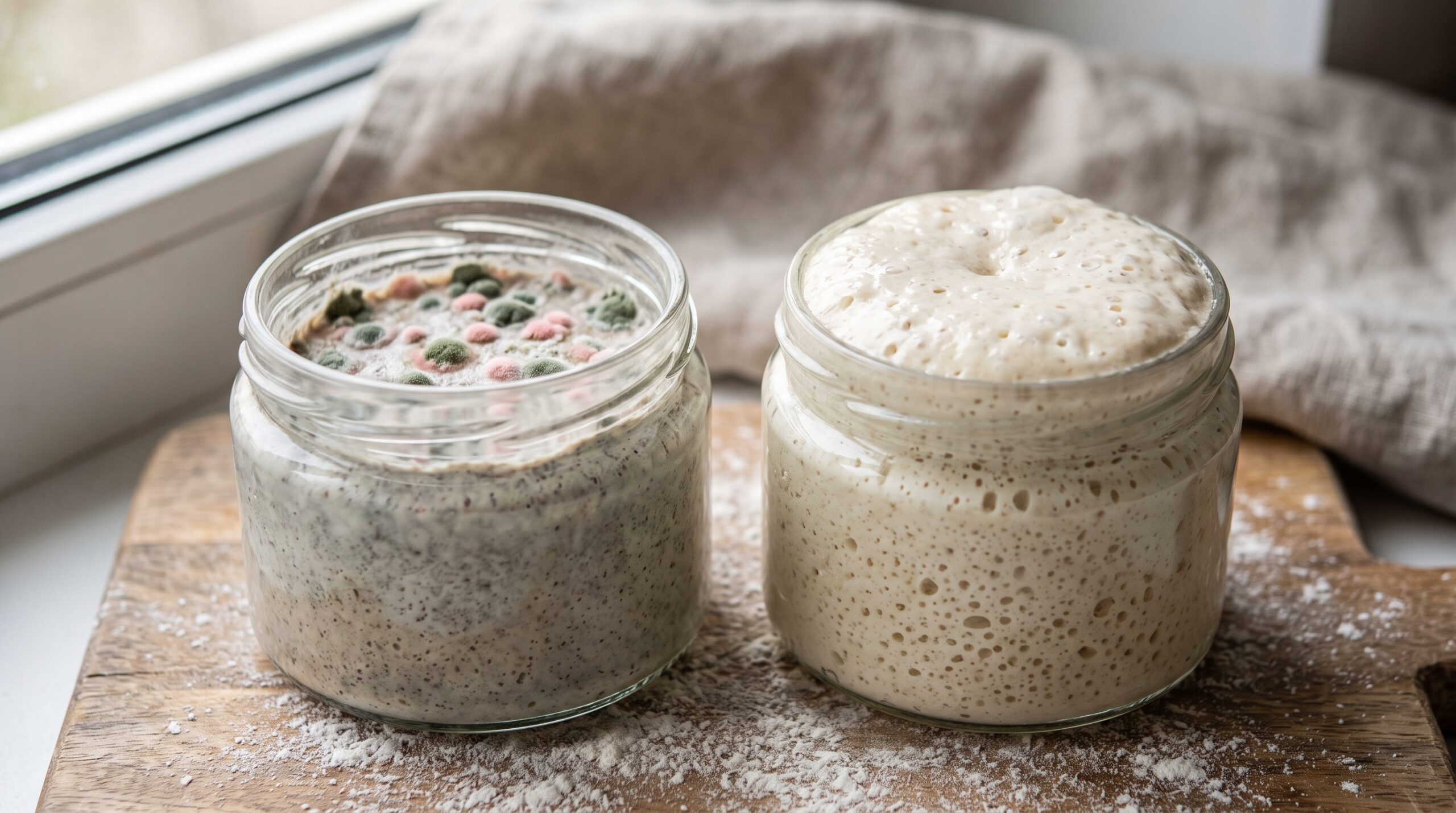
    Two starter jars side by side, one with fuzzy green and pink mold spots and one healthy and bubbly
    The difference at a glance: fuzzy raised colonies on the left mean toss it; a domed, bubbly, even surface on the right is a healthy starter.

    The single most useful question to ask is: is it flat, or is it fuzzy? Mold is three-dimensional. It grows up and out in fluffy, defined circles. The harmless look-alikes lie flat against the surface. That one distinction resolves the majority of panicked starter jars, so start there and then confirm with color and smell.

    What sourdough starter mold actually looks like

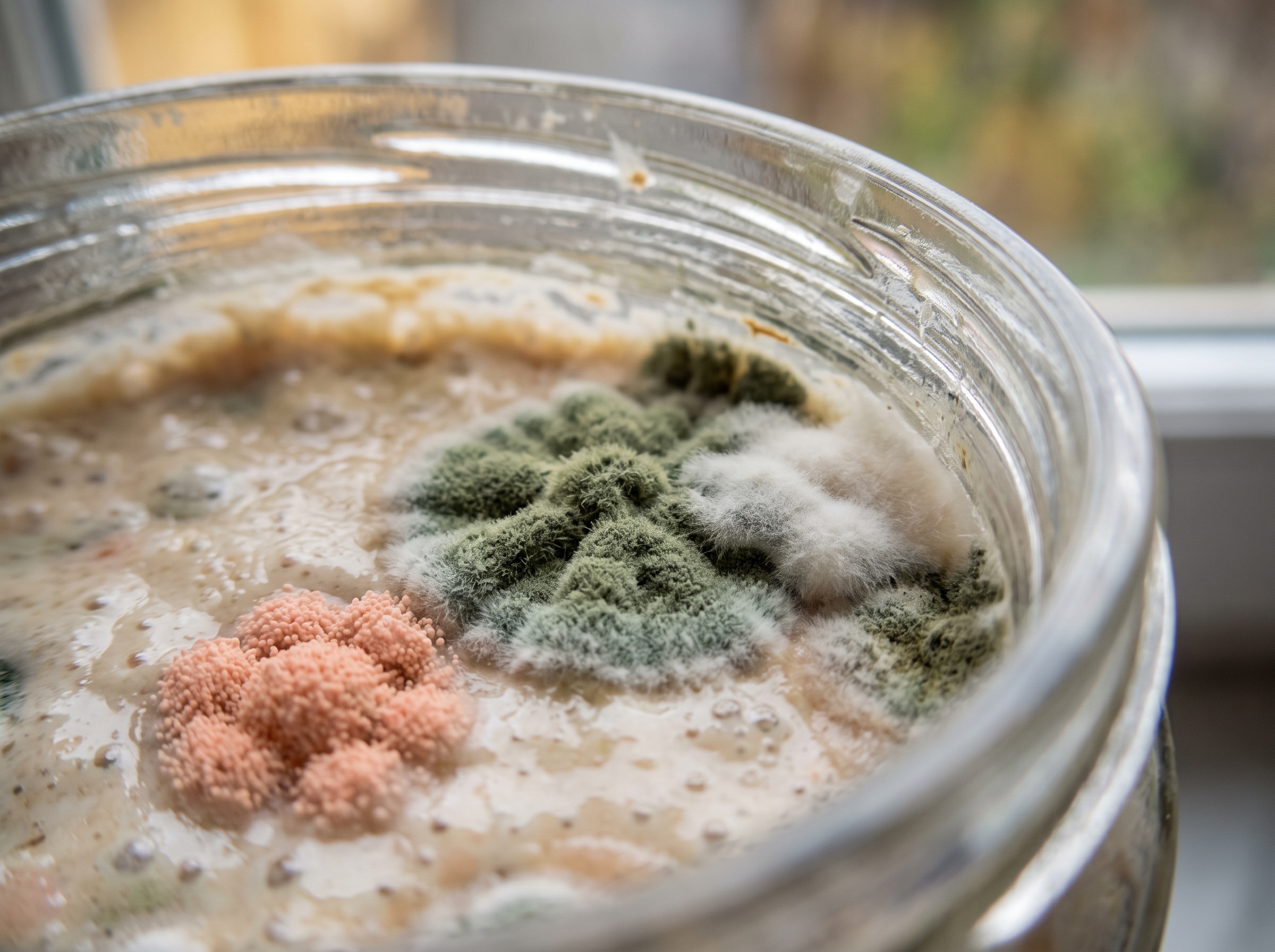
    Real mold is unmistakable once you’ve seen it clearly. It appears as fuzzy, raised colonies, usually in small round spots that spread outward, and it almost always carries color: shades of green, blue, black, or the especially unwelcome pink and orange. Those spots sit up off the surface like tiny bits of lint or cotton, and if you look closely you can often see the fuzzy texture that flat films never have.

    Close-up of fuzzy raised green, white and pink-orange mold colonies growing on a sourdough starter surface
    Real mold is fuzzy and raised, grows in defined round spots, and often shows color: green, black, pink, or orange. This is a toss-it sign.

    Mold typically takes hold on a starter that has been neglected, left too warm, exposed to open air for a long time, or contaminated by a dirty spoon or splashes of flour stuck high on the dry jar walls. Pink and orange growth in particular is a bacterial or mold contamination that is a hard stop. There is no scraping it off and carrying on. When you see fuzzy, colored, raised spots, the starter is compromised all the way through, even the paste that looks clean, because mold sends threads down into food you can’t see. That jar gets thrown out, which we’ll cover below.

    Kahm yeast: the harmless look-alike everyone fears

    Here is the growth that scares people the most and hurts them the least. Kahm yeast forms a thin, flat, wrinkly film across the surface, usually grayish-white or off-cream, sometimes with a faintly powdery or skin-like look. Crucially, it is flat. It does not fuzz up, it does not grow in raised circular colonies, and it does not show green, pink, or black color. It’s a wild yeast that thrives when a starter is a bit sluggish, sitting too warm, or going too long between feeds.

    A thin flat wrinkly white film of kahm yeast sitting flat on the surface of a sourdough starter
    Kahm yeast is the harmless look-alike: a thin, flat, wrinkly film with no fuzz and no color. It is unpleasant but not dangerous.

    Kahm is unpleasant and can throw a slightly funky, sometimes cheesy or nail-polish-adjacent smell, but it is not dangerous. You have two reasonable options. If the film is light, you can carefully skim it off the top, discard a generous portion of the starter beneath it, and begin feeding more frequently to outcompete it. If it keeps coming back, it’s usually a sign your starter is underfed or too warm, the same root cause behind a sluggish starter that won’t rise. Tightening up your feeding routine almost always clears it.

    Hooch and discoloration: usually just hunger

    The third thing people mistake for mold isn’t even solid. A layer of thin liquid pooling on top, clear, gray, amber, or occasionally darker, is hooch: alcohol and byproducts your starter produces when it has eaten through its food and gone hungry. It looks dramatic but it’s completely harmless. You simply stir it back in for a tangier result or pour it off for a milder one, then feed. We walk through exactly what the color of that liquid tells you in our guide to the hooch layer on your starter.

    A layer of clear amber hooch liquid sitting on top of a sourdough starter in a jar
    A layer of clear or gray liquid is hooch, not mold. It just means your starter is hungry, and you simply stir or pour it off.

    Discoloration on its own can also be benign. Hooch can tint the top of a starter gray or even brownish, and that darker paste underneath is usually fine once stirred. What you’re watching for is not a uniform color shift but those raised, fuzzy, spotty growths. A flat surface that’s simply gone a shade darker is a hungry starter, not a moldy one. When in doubt, this is where the nose earns its keep.

    The smell test, and when to just toss it

    Your nose is a genuinely reliable backup instrument. A healthy starter smells sharp, tangy, yeasty, sometimes beery or faintly like ripe fruit or vinegar. All of that is normal and good. What should stop you is a smell that reads as genuinely rotten, putrid, or foul in a garbage-y way, rather than sour. That kind of stench, especially paired with any pink or orange tint, means the jar has gone off. Trust it.

    So here’s the clean decision rule. Toss the entire starter and start over if you see any fuzzy raised mold, any green, black, pink, or orange growth, or if it smells truly rotten rather than sour. Don’t try to scoop mold off and save the rest; the contamination runs deeper than the visible spots, and a starter is cheap to rebuild while a foodborne illness is not. You can save it if what you have is flat kahm yeast, a layer of hooch, or simple discoloration on a starter that still smells sour. In those cases, discard down to a small amount of the cleanest paste, move it to a clean jar, and feed on a tight schedule. A neglected but mold-free starter is remarkably resilient, and our walkthrough on reviving a neglected starter covers exactly how to nurse a sad one back to strength.

    How to stop mold coming back

    Prevention is mostly hygiene and rhythm. Always feed with a clean spoon and wipe the inside walls of the jar so stray dried flour and paste up high can’t grow anything. Move your starter to a fresh, clean jar every week or so rather than letting crust build up around the rim. Keep the lid resting on or loosely closed, not screwed down airtight, so gases escape without inviting a long open-air exposure.

    A healthy freshly fed sourdough starter domed and bubbly in a clean glass jar by a window
    The goal after a clean restart: a fresh jar, a smooth even surface, and a vigorous rise with no film and no fuzz.

    Feed on a consistent schedule and don’t let the jar sit hungry and warm for days, which is exactly the condition kahm and mold love. If you’re going to be away or baking less often, the safest home for a starter is the fridge, where the cold dramatically slows everything down; our guide to storing your starter through breaks and vacations lays out how to park it safely and wake it back up. A well-fed starter kept clean and cool is a genuinely difficult place for mold to gain a foothold.

    The reassuring truth is that a fuzzy, colored, foul jar is rare, and nearly everything else you’ll see, films, liquids, funky sour smells, is normal starter behavior you can fix in a feed or two. Learn the flat-versus-fuzzy tell and you’ll never lose a good starter to a false alarm again.

    Want to see a moldy jar next to kahm yeast and hooch side by side so you’ll always recognize them? The full visual walkthrough lives on the LoafLovers YouTube channel, and our free sourdough troubleshooting guide covers the rest of the starter rescues for when you’re staring at a jar and need the answer right now. No hard sell, just the fix.

    Related Reading