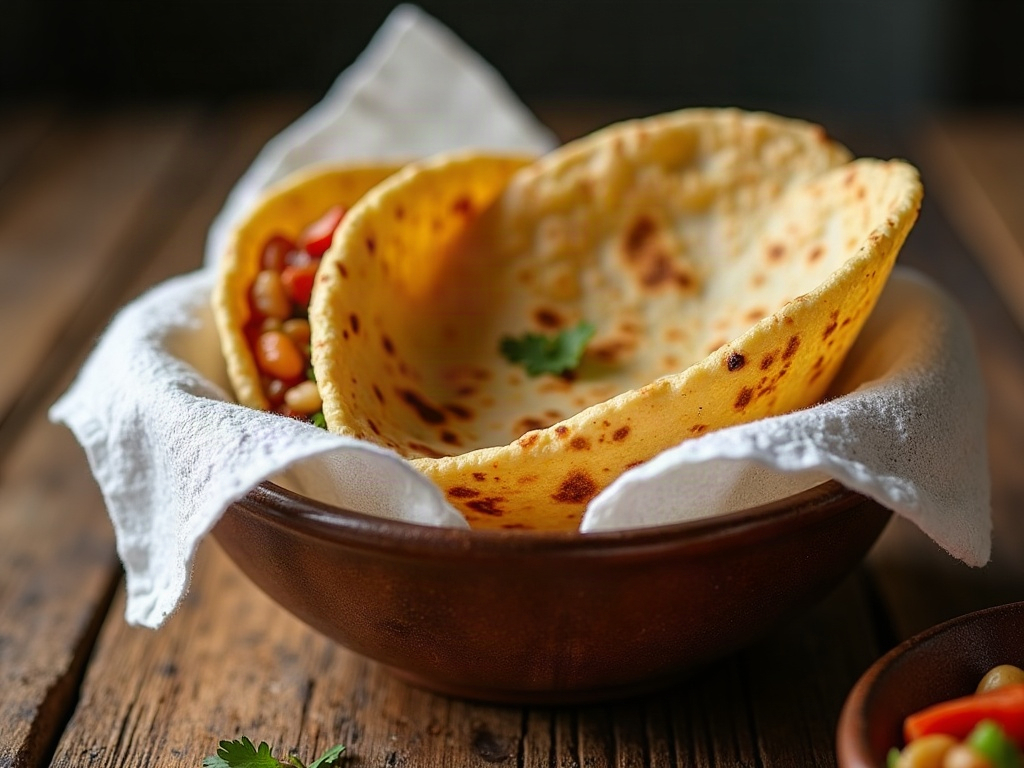
If you keep a sourdough starter, you know the guilt of the discard jar: that growing pot of flour and water in the fridge that feels wrong to pour down the drain but never quite gets used. Pancakes and crackers are the usual rescue — but here’s one that might become your weeknight default. Tortillas. Soft, foldable, faintly tangy flour tortillas, from discard to table in about half an hour, no yeast and no waiting for a rise.
They’re genuinely better than most store-bought ones: pliable enough to wrap without cracking, with a subtle sourdough depth that makes a simple taco or wrap taste like you tried harder than you did. And because there’s no fermentation step, they’re a true same-day, make-right-now recipe. Here’s how to nail them.
Why discard is perfect for tortillas
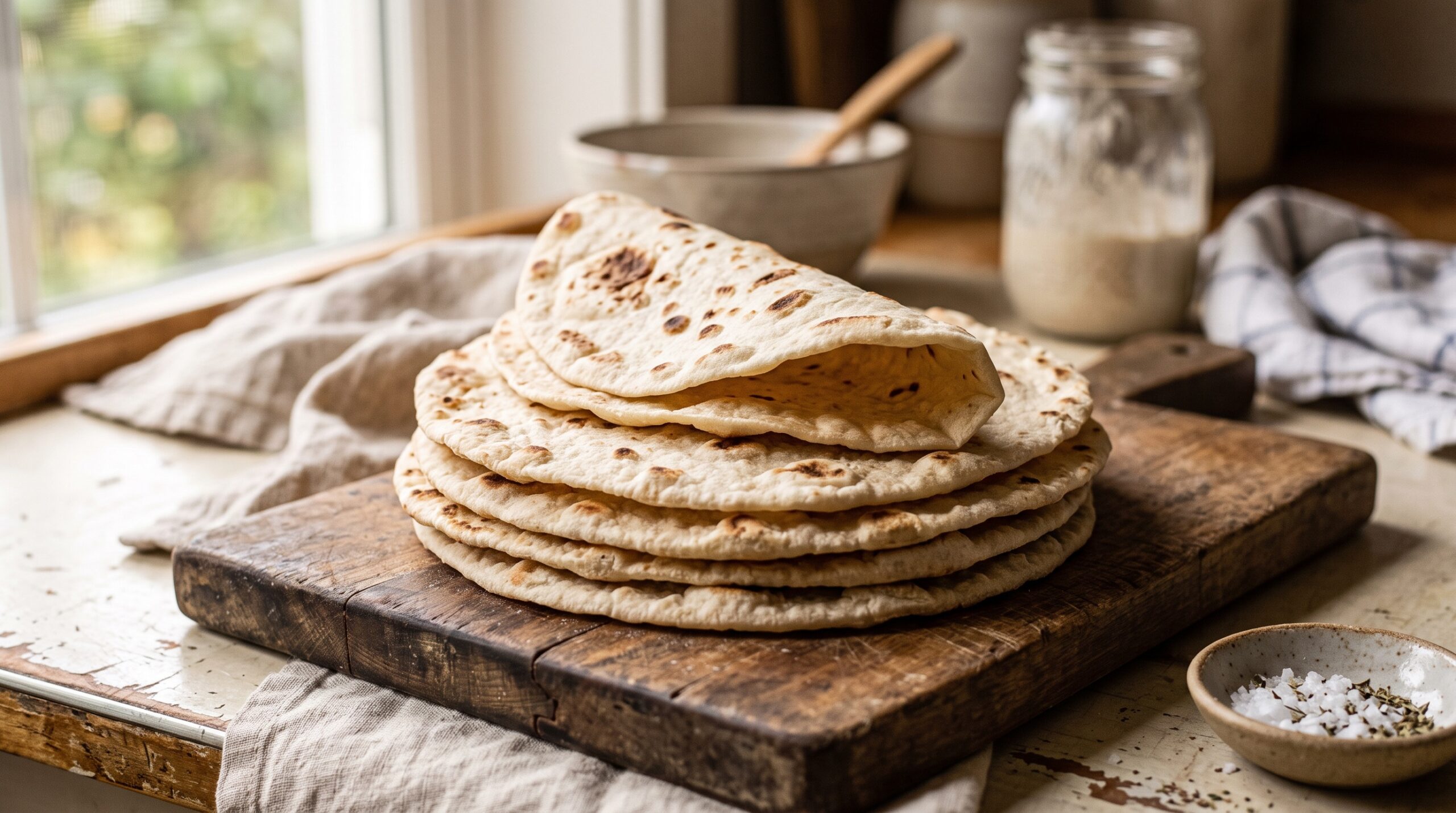
Tortillas don’t want a big, airy rise — they want to stay flat, soft and foldable. That’s exactly what makes discard such a good fit. You’re not relying on the starter for leavening here; you’re using it for flavor and moisture. The acidity that built up in your neglected jar adds a gentle tang, and the hydration means you need less water, so the dough comes together fast.
Even better, discard tortillas don’t care how healthy your starter is. Sluggish, hungry, hasn’t been fed in a week? Doesn’t matter — there’s no proofing to depend on. This is one of the few recipes where truly tired discard works just as well as fresh, which is precisely why it’s such a satisfying way to empty the jar.
The simple recipe
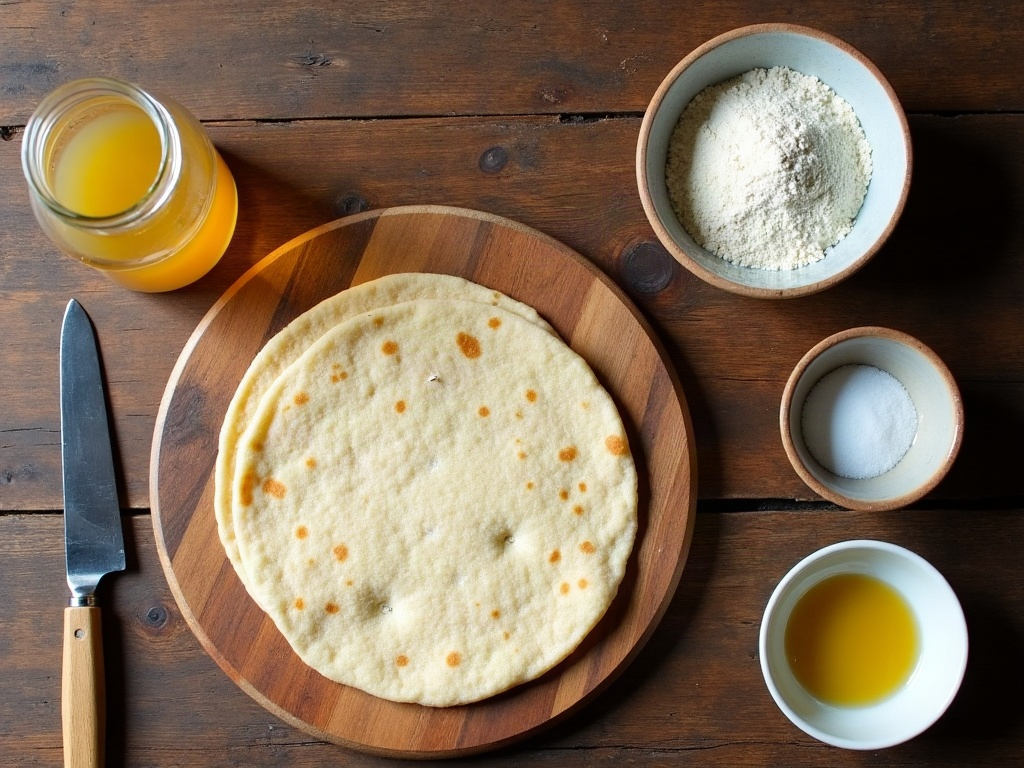
This makes about eight small tortillas and needs just four things you already have:
- 1 cup (about 240g) sourdough discard, straight from the fridge
- 1½ cups (about 190g) all-purpose flour, plus a little for rolling
- 1 teaspoon salt
- 2 tablespoons olive oil (or melted butter, for a richer tortilla)
That’s the base. If the dough feels dry and won’t come together, add warm water a tablespoon at a time; if it’s sticky, add a little more flour. Hydration of discard varies from jar to jar, so trust the feel over the exact numbers — you want a soft, smooth dough that’s tacky but not gluey.
The method, step by step
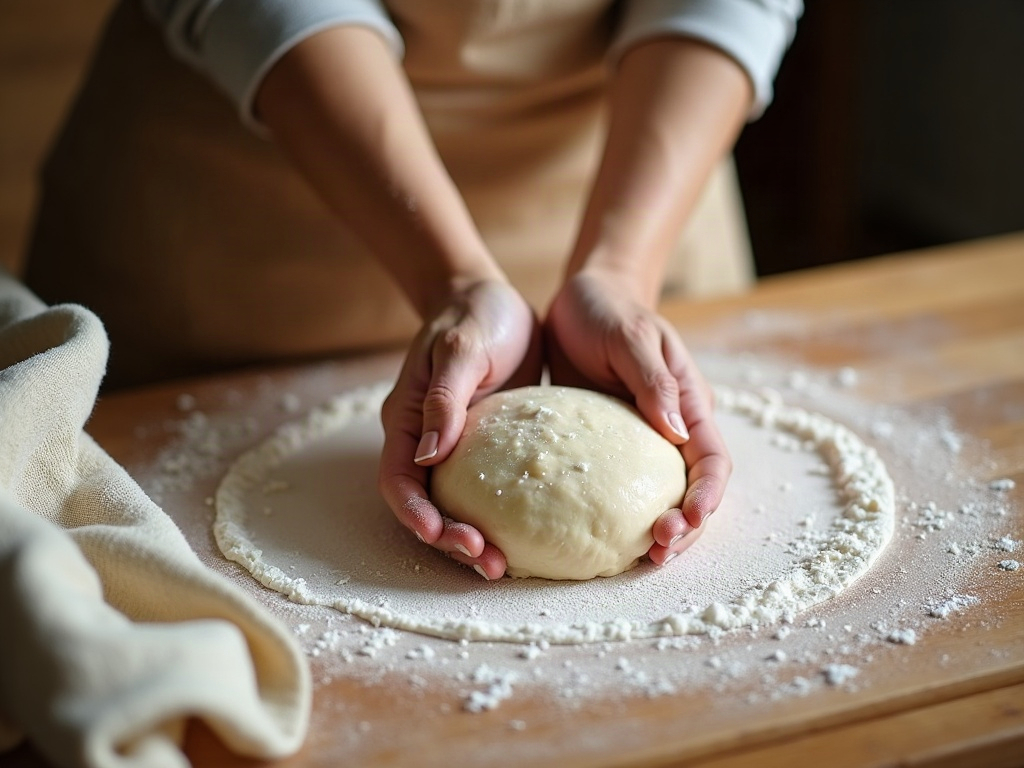
Mix the discard, flour, salt and oil in a bowl until it clumps into a shaggy dough. Turn it onto a lightly floured counter and knead for just two to three minutes — you’re not building huge structure, just bringing it together into a smooth, soft ball.
Divide it into eight equal pieces and roll each into a ball. Now comes the step most people skip and then wonder why their tortillas crack: let the dough rest, covered, for at least 15 to 20 minutes. On a busy night that feels like forever, but it’s non-negotiable — this is where pliability comes from. Keep reading, because it’s worth understanding why.
After the rest, roll each ball out thin on a floured surface — aim for a rough circle a couple of millimetres thick. Don’t fuss over perfect rounds; rustic is charming and tastes identical.
The one trick: let the dough rest
If you take one thing from this recipe, take this. When you mix and knead dough, the gluten tightens up and the dough fights back — try to roll it immediately and it springs back, tears, and bakes up tough and crack-prone. Resting lets that gluten relax. The dough becomes slack and cooperative, rolls out thin without snapping back, and cooks into a tortilla that folds instead of fractures.
Skip the rest and you’ll feel it instantly: the dough resists the rolling pin and the finished tortillas crack the moment you bend them around a filling. Those 15 minutes are the single difference between a stiff disc and a soft, foldable wrap. If you’ve got time for a longer rest, even better — up to an hour makes them even more supple.
Cooking them right
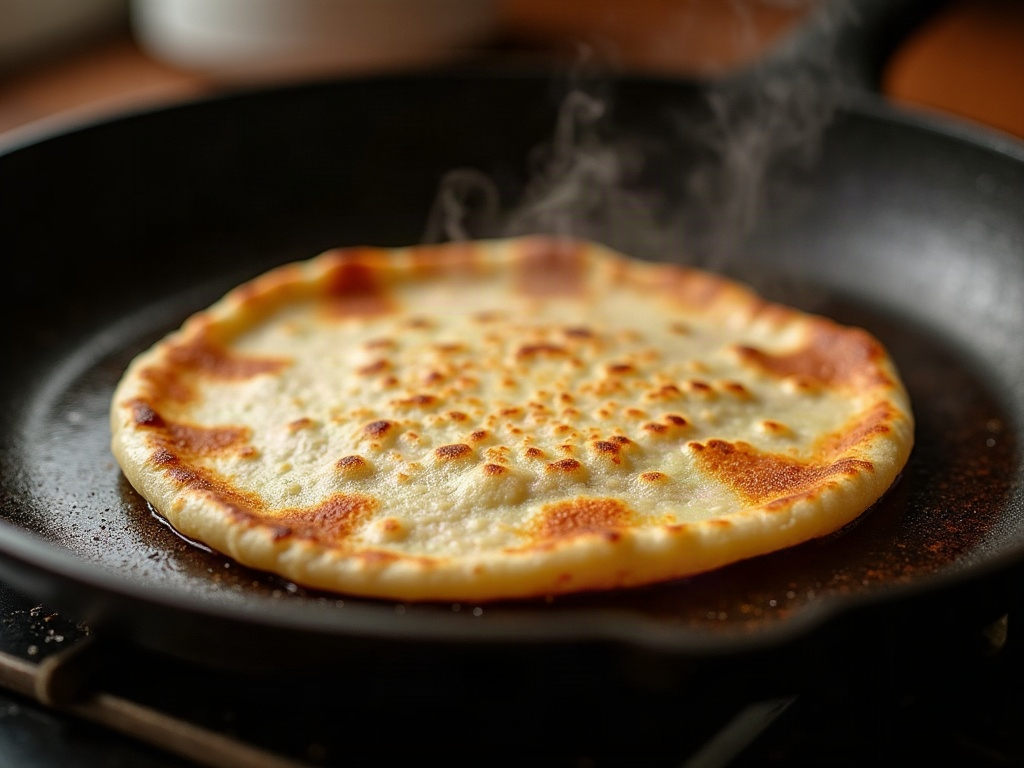
Heat a cast-iron skillet or heavy dry pan over medium-high until it’s properly hot — no oil needed. Lay a rolled tortilla in and leave it alone for 45 seconds to a minute, until the underside shows golden-brown freckles and the top starts to bubble. Flip, give it another 30 to 45 seconds, and it’s done. You want quick, hot contact: cook them too slowly or too long and they dry out and stiffen.
As each one comes off the pan, stack it under a clean kitchen towel. This is the second secret to softness — the trapped steam keeps the whole stack pliable while you finish the rest. A tortilla left out bare on the counter goes leathery fast; wrapped in a towel, it stays bendy.
Fixing the usual problems
If your tortillas come out cracking or tough, the culprit is almost always one of two things: you didn’t rest the dough long enough, or you rolled them too thick. Give the dough its full rest and roll a touch thinner next time. A splash more oil in the dough also buys extra softness.
If they’re dry and crispy rather than soft, you likely cooked them too long or your pan wasn’t hot enough — a cooler pan means more time on the heat and more moisture driven off. Get the skillet properly hot so each side cooks fast. And always stack them under that towel; half the “my tortillas went stiff” complaints are just tortillas that were left to cool in the open air.
Storing and reheating
These keep beautifully. Once fully cooled, stack them with a little parchment between each and seal in a bag or container — they’ll stay soft in the fridge for four or five days, and freeze well for a couple of months. To bring them back to life, a few seconds on each side in a hot dry pan, or a quick 10-second zap in the microwave under a damp paper towel, and they’re as good as fresh.
That’s the whole thing: one tired jar of discard, four pantry staples, and about 30 minutes stands between you and a stack of soft, tangy tortillas that beat anything in a plastic sleeve. The rest step is the secret, the towel keeps them soft, and your discard guilt is officially cured — at least until the jar fills up again.