It’s a specific kind of disappointment. The loaf looks great from the outside — good rise, decent ear, deep color. The top two-thirds of the crumb is open and airy, exactly what you were hoping for. And then, right at the bottom, there’s a thin band of dense, tight, slightly gummy bread pressed against the base crust, like a different loaf snuck in underneath.
That compressed layer at the base has a few distinct causes, and the good news is that none of them are mysterious or unfixable. Let’s work through them like a diagnosis: figure out which one is happening to your loaf, then fix exactly that. Most bakers are making just one or two of these mistakes, and correcting them gets you an even crumb from crust to crust.
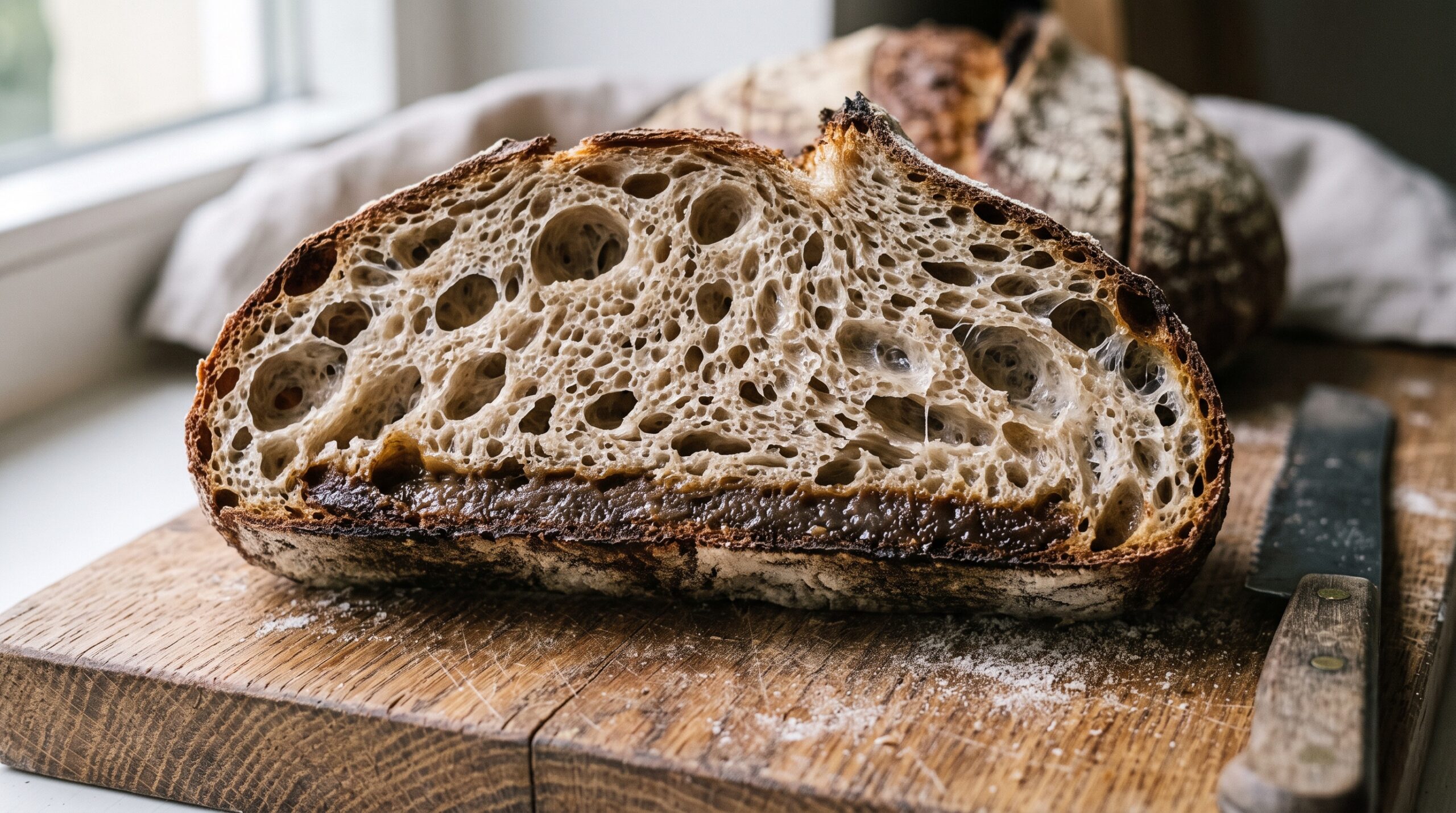
First, what that gum line actually is
The dense band at the bottom is bread that never fully expanded and set the way the rest of the loaf did. Instead of trapping gas and staying light, that section stayed compact and moisture-heavy. It often feels slightly sticky or gummy because it’s denser and holds more water than the open crumb above it.
Crucially, this is a localized version of gumminess — confined to the base — which points you toward causes tied to the bottom of the loaf specifically: the heat under it, the strength of the dough there, and what happens as it cools. That’s different from a whole loaf coming out gummy, which is usually a broader fermentation or bake-time problem. If your entire crumb is dense and wet rather than just the base, start with the wider causes of a loaf that went into the oven at the wrong stage of proof.
Cause #1: You cut it too soon (the most common culprit)
If you take only one thing from this article, take this: a warm loaf is still baking. When bread comes out of the oven, the interior is full of hot steam and the starches are still setting. Cutting into it before it has fully cooled releases that steam, and the crumb around the cut — especially the dense, heavy base where moisture collects — collapses and turns gummy.
Bakers do this constantly because warm sourdough is irresistible. But that gum line at the bottom is very often not a baking fault at all — it’s a cooling fault. The fix costs nothing but patience:
- Cool the loaf on a wire rack, never flat on a solid surface where the base sits in its own trapped steam.
- Wait until it is completely cool to the touch before slicing — a minimum of a couple of hours for a standard loaf, longer for a large or high-hydration one.
- If you suspect this is your problem, run a test: bake as usual, then cut one loaf warm and leave an identical one to cool fully. If the cooled one has no gum line, you’ve found your answer.
Before you change your recipe, your schedule, or your starter, rule this out first. It’s the single most common cause and the easiest to fix.
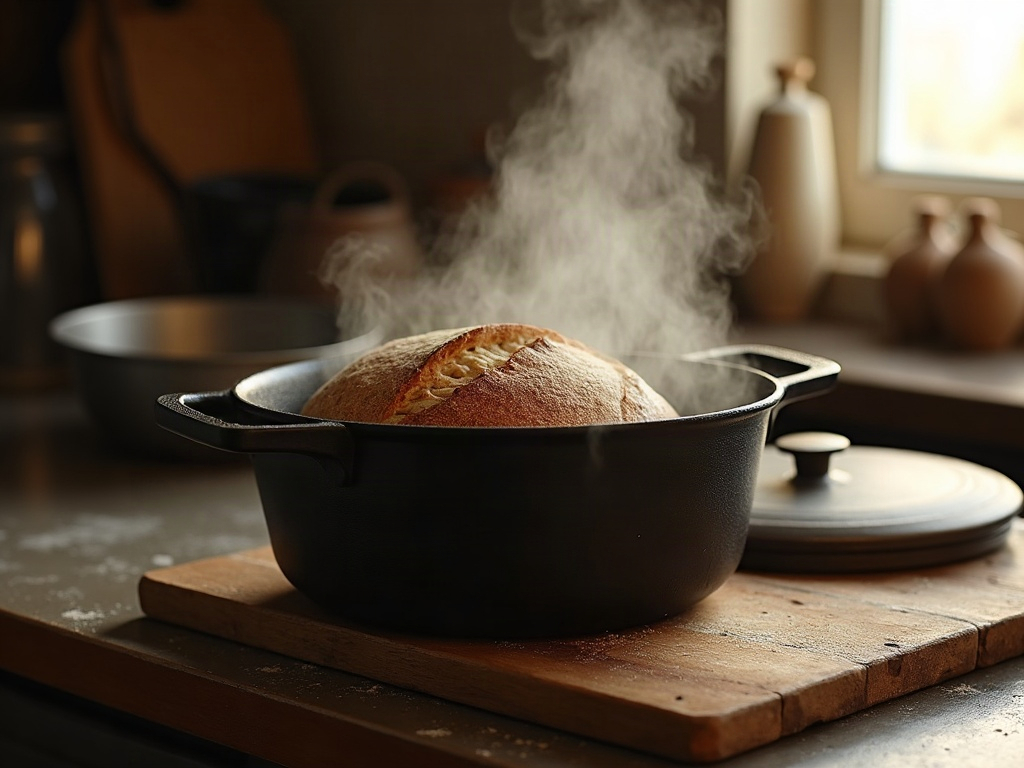
Cause #2: Not enough heat under the loaf
The base of your loaf needs a strong blast of heat early to spring up and set before it can compress under the weight of the dough above it. If the bottom is getting less heat than the top, it stays dense while the upper crumb rises freely — producing exactly that layered look.
This happens when:
- The oven or Dutch oven wasn’t preheated long enough. A vessel needs a good, thorough preheat so it’s genuinely hot when the dough lands. A lukewarm base is a gummy base.
- The loaf is baking too high in the oven, far from the bottom heat source, or on a thin tray that doesn’t hold and transfer heat well.
- There’s too much insulation under the dough — thick doubled parchment, or a cold stone that never came up to temperature.
Fixes: preheat your Dutch oven or baking stone fully (give it a solid 45 minutes to an hour at temperature), position your bake in the lower-middle of the oven, and if your bottoms run consistently pale and dense, try a preheated stone or steel beneath the vessel to drive heat into the base. Getting strong bottom heat is the same reason a well-preheated setup matters so much for oven spring in general — the loaf rises before it sets, not after.
Cause #3: A weak or wet base from shaping and proofing
Sometimes the compressed layer starts before the oven. If the dough lacks structure at the bottom, or if extra moisture pools there during proofing, that section goes in already predisposed to stay dense.
A few things feed this:
- Under-developed gluten or slack shaping means the dough can’t hold its gas well, and the weight of the loaf settles and compresses the base. Building real surface tension when you shape gives the loaf the backbone to rise evenly — the same skill behind shaping a boule that rises up, not out.
- Very high hydration without enough strength lets water migrate down and sit at the base, especially during a long proof, leaving that zone wetter and denser.
- Seam-side handling — if the seam ends up on the bottom and isn’t sealed, or the base is where slack dough gathers, that spot bakes up tighter.
If your gum line comes with an overall slack, hard-to-handle dough, the root fix is dough strength: a bit more gluten development, better shaping tension, and making sure your dough isn’t over-hydrated for your flour’s ability to hold it.

Cause #4: Underbaked overall (check this if the base is truly wet)
If the base isn’t just dense but genuinely wet, the loaf may simply be underbaked. The bottom is the last part to finish, and it’s where undercooking shows up first. An internal temperature check is the honest test here: a fully baked lean sourdough reads around 205–210°F (96–99°C) in the center. If yours is coming out well below that, extend the bake.
A useful trick for a stubbornly dense base: for the last 5–10 minutes, take the loaf out of the Dutch oven and set it directly on the oven rack or a hot stone. That exposes the bottom to direct heat and drives off the last of the moisture, firming up the base crust and finishing that lower crumb.
Your quick diagnostic checklist
Run through these in order — they’re arranged from most to least common:
- Did you cut it warm? Cool completely on a rack and re-test. Fixes most gum lines by itself.
- Was the base fully preheated? Give your Dutch oven or stone a longer, hotter preheat and bake lower in the oven.
- Is the whole dough slack and weak? Build more shaping tension and gluten strength; reconsider your hydration.
- Is the base genuinely wet, not just dense? Check internal temp and extend the bake, finishing the loaf out of the vessel for a few minutes.
Change one thing at a time so you actually learn what your loaf needed. Most bakers find it’s the cooling, then the bottom heat — and once those two are handled, that dense band at the base disappears for good.
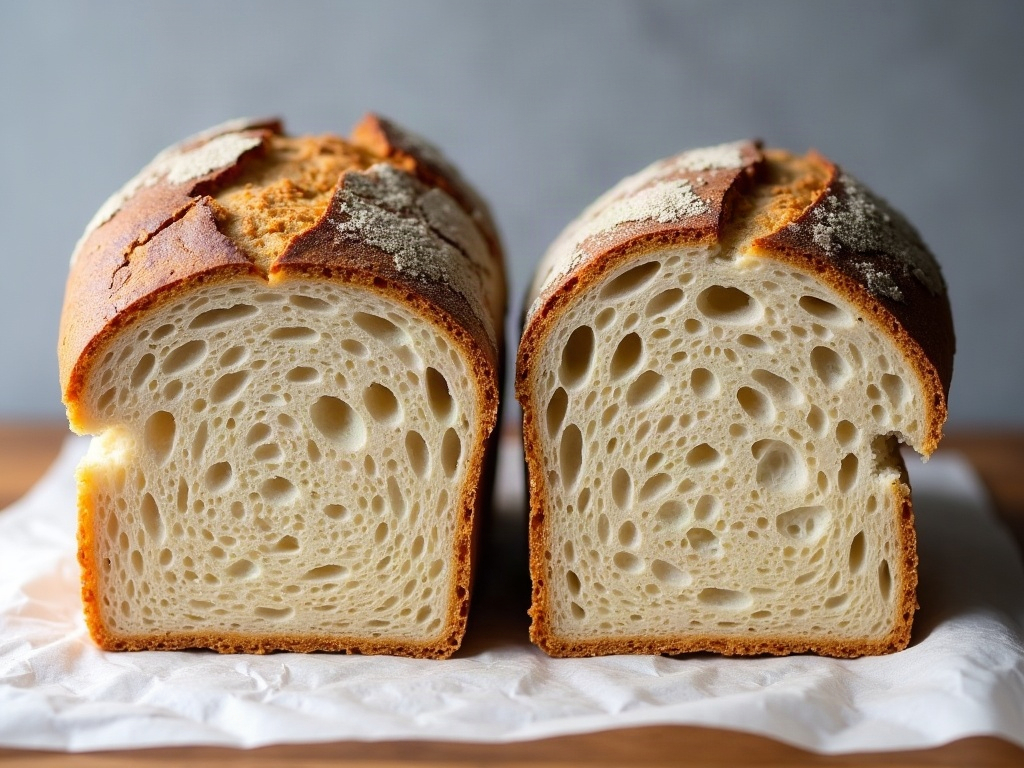
An even crumb, all the way down
A gum line at the base of the loaf feels like a mysterious flaw, but it’s really just the bottom of your loaf telling you it didn’t get one of three things: enough patience while cooling, enough heat while baking, or enough strength while proofing. Give it those, and the reward is a crumb that stays open and tender right down to a thin, crisp bottom crust.
Want to see exactly what a properly cooled base and a fully preheated bake look like in real time? The full walkthrough — including a side-by-side of a gummy base versus a clean one — lives on the LoafLovers YouTube channel, and our free sourdough troubleshooting guide has the whole bake-and-cool checklist you can keep by the oven. Grab it, and let your next loaf be even from crust to crust.