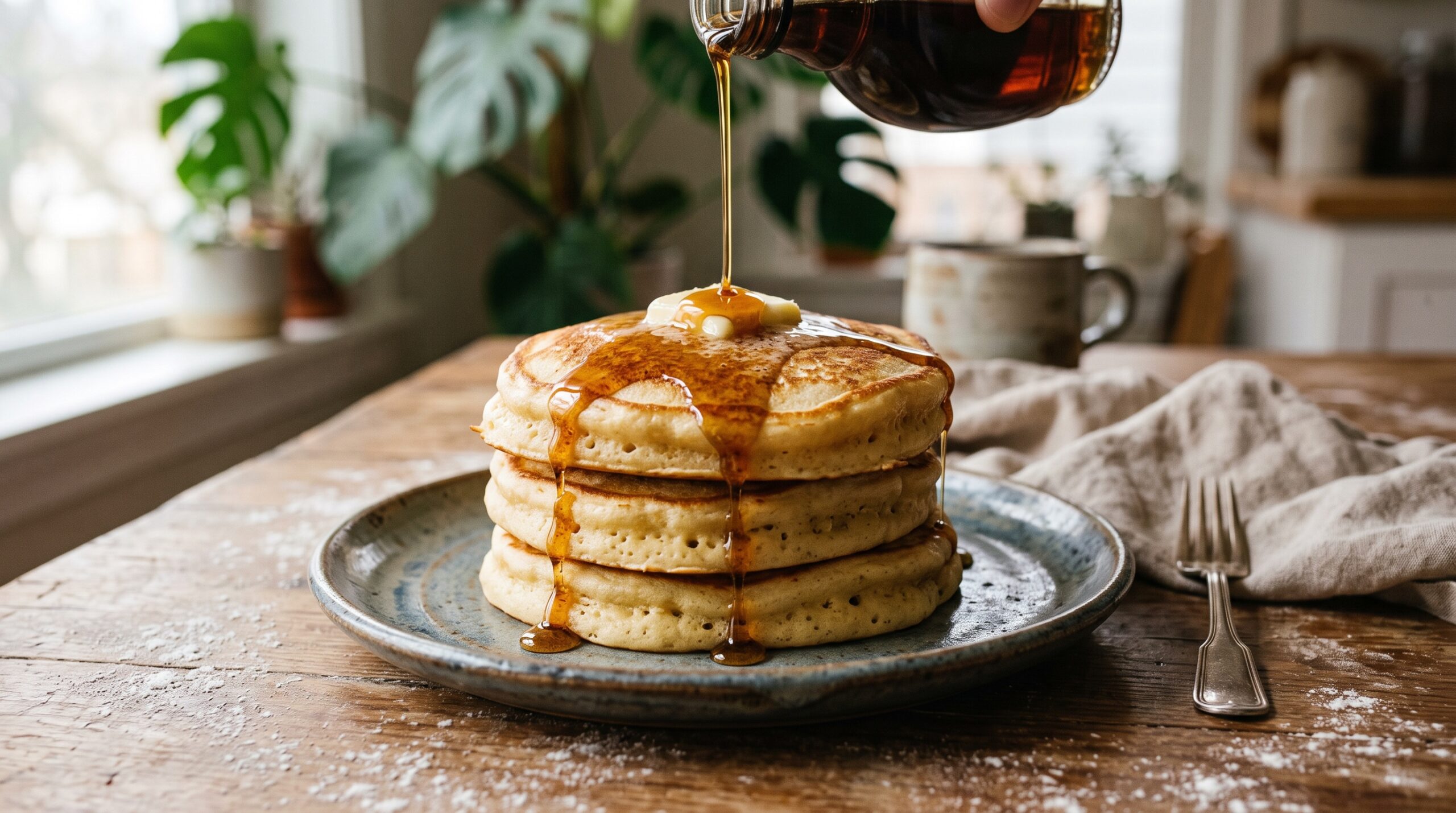
There is a specific kind of guilt that lives in the sourdough baker’s fridge, and it looks like a jar of discard slowly filling up week after week. You know you should use it. You also know it feels like a chore. So here is the recipe that quietly solves both problems at once: sourdough discard pancakes — fluffy, faintly tangy, genuinely better than the pancakes you would make from scratch, and ready in about the time it takes the griddle to heat.
This is the recipe that turns discard from a guilt trip into the reason you keep a starter at all. No special technique, no perfect timing, no wasted flour. Just breakfast, and one fewer thing in the fridge to feel bad about.
Why discard makes better pancakes, not just less waste
It would be enough if discard pancakes were simply a way to avoid throwing food away. But they genuinely taste better than a standard from-scratch batter, and there are real reasons why.
The first is flavor. All those days of fermentation leave the discard mildly acidic and complex — that gentle sourdough tang cuts the sweetness of syrup beautifully and gives an ordinary pancake a bakery-like depth. The second is texture. The acidity in the discard reacts with baking soda to create a burst of lift, and the flour that has been sitting hydrated in your starter is fully softened, which makes the finished pancake unusually tender. You are not fighting your discard’s sourness — you are putting it to work. (If your starter runs sharp enough that even the pancakes taste too sour, our guide to taming an overly sour sourdough explains where that acidity comes from.)
Know your discard before you start
Discard is not a fixed ingredient the way flour is. It changes depending on how you keep your starter, and thirty seconds of paying attention will save you a flat batch.
Stir it first. If a layer of thin, dark liquid has gathered on top — that is hooch, and it is harmless — just mix it back in; it carries flavor. Then notice the consistency. A discard fed with equal weights of flour and water pours like thick cream, and this recipe is built around that. If yours is stiff and paste-like, plan to loosen the batter with an extra splash of milk. If it is very thin and watery, you will need a touch more flour. There is no single correct discard, only the one in your jar, so read it before you commit.
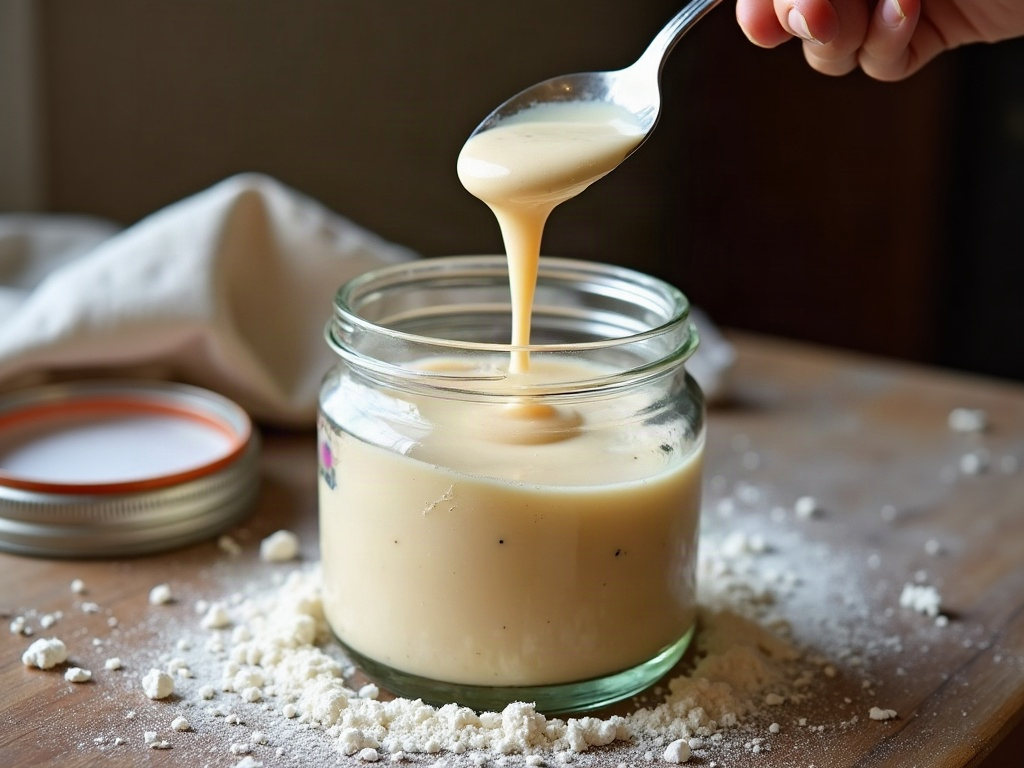
One more thing: cold discard straight from the fridge is fine here. Unlike baking a loaf, you do not need it active or bubbling. Discard that has been ignored for a week or two will still make excellent pancakes — and if you want to bank a bigger jar for a weekend batch, see how to store your starter and its discard without it going off.
The recipe: fluffy sourdough discard pancakes
This makes about eight to ten pancakes and scales up cleanly. The quantities are forgiving, so treat them as a starting point rather than a law.
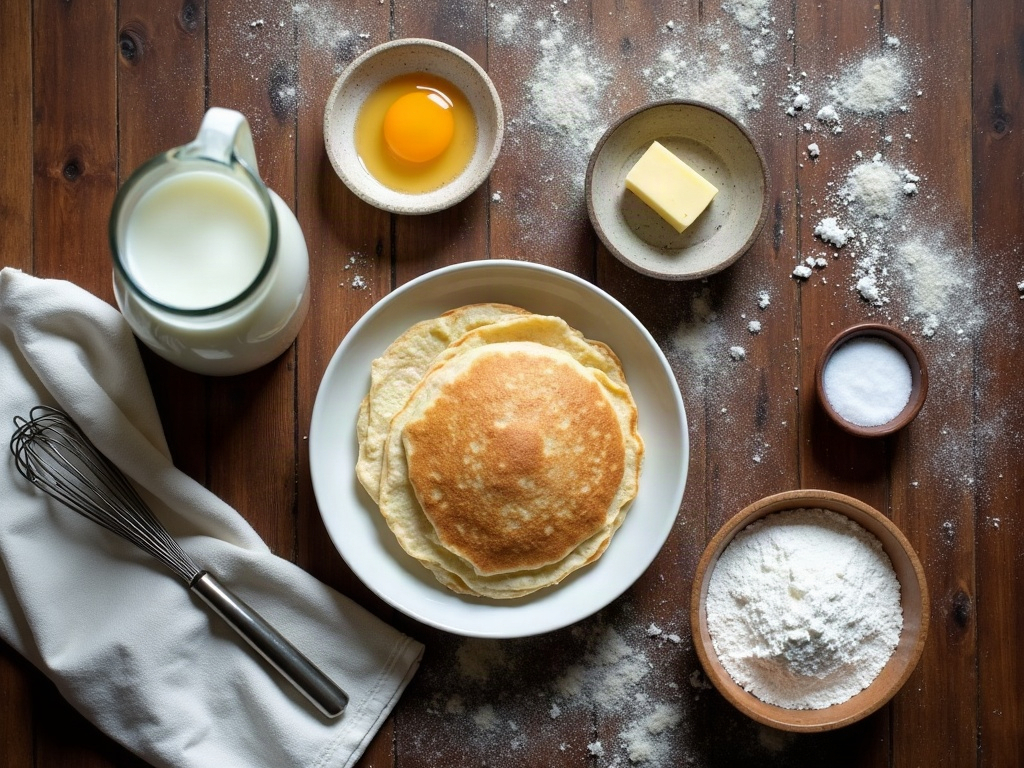
You will need:
- 1 cup (about 240g) sourdough discard, stirred
- 1 large egg
- 2 tablespoons (30g) melted butter, plus more for the pan
- 1/2 cup (120ml) milk, plus more to adjust
- 1 tablespoon sugar (or honey)
- 1/2 cup (60g) all-purpose flour
- 1/2 teaspoon salt
- 1 teaspoon baking soda
Method:
- In a bowl, whisk together the discard, egg, melted butter, milk and sugar until smooth.
- Add the flour and salt and stir just until combined. A few lumps are good — do not beat it smooth.
- Add the baking soda last and fold it in gently. The batter will foam and puff almost immediately. This is the moment the magic happens, so do not skip ahead and add it early.
- Let the batter rest for 5 to 10 minutes while a griddle or heavy pan heats over medium. Butter it lightly.
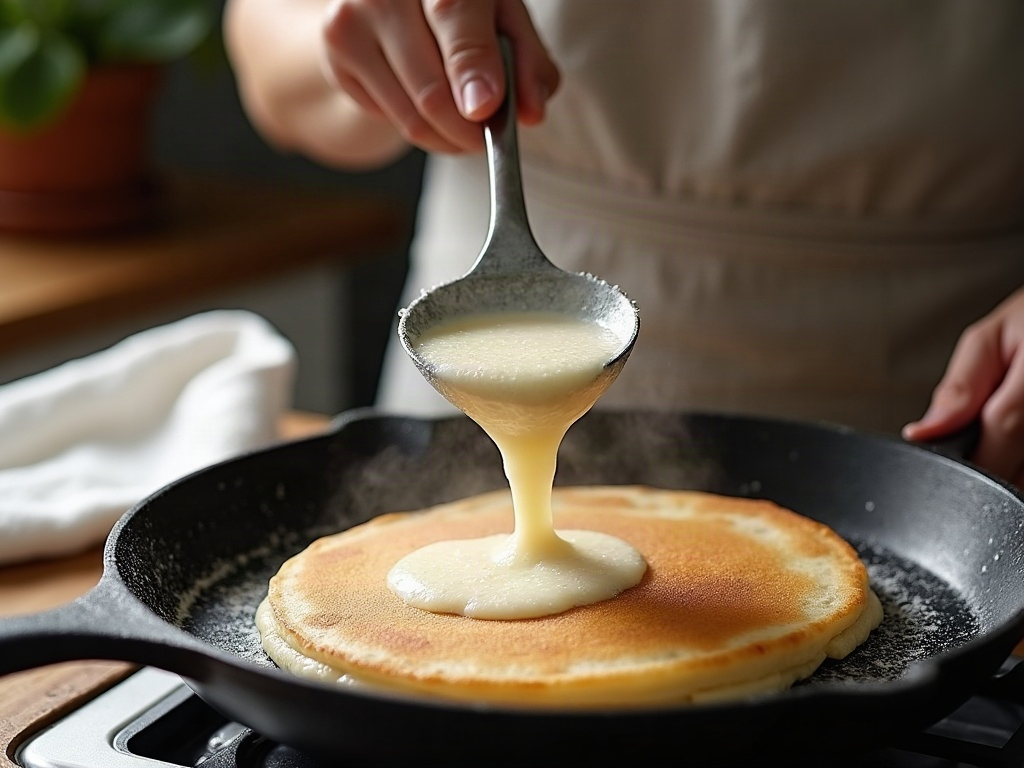
- Pour about a quarter cup per pancake. Cook until the surface is covered in bubbles and the edges look set, 2 to 3 minutes, then flip once and cook another 1 to 2 minutes until golden.
Resist pressing them flat with the spatula — that squeezes out exactly the air you just created.
The overnight version (barely any morning effort)
If mornings are chaos, do almost everything the night before. Whisk together the discard, egg, butter, milk, sugar and flour, cover the bowl, and leave it on the counter overnight. By morning it will be looser, bubblier, and even tangier from the extra fermentation.
The only rule: add the baking soda in the morning, right before you cook. Baking soda reacts on contact with the acidic batter, so if you add it the night before it will spend its lift overnight and leave you with flat, dense pancakes. Stir it in fresh, watch the batter foam, and cook straight away. That single habit is the difference between overnight pancakes that soar and ones that sit there.
Why yours came out flat or rubbery (and how to fix it)
Discard pancakes are simple, but two disappointments come up again and again. Both have clear causes.
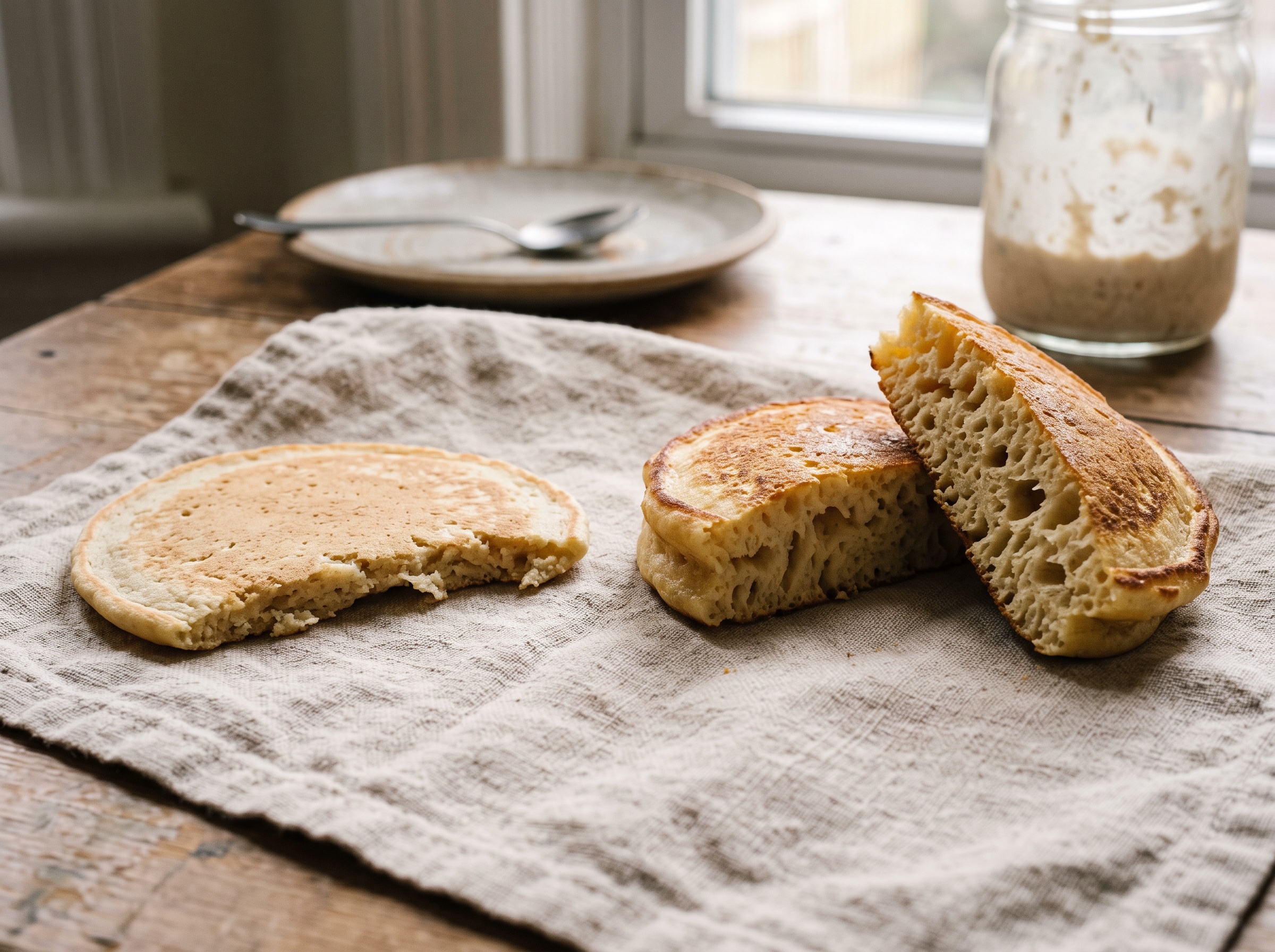
Flat and dense. The symptom is a thin, heavy pancake with no rise. The cause is almost always the baking soda — either it was old and had lost its punch, or it was added too early and fizzled out before the batter hit the pan. The fix: use fresh baking soda, add it last, and cook within a few minutes of stirring it in. A too-thin batter from watery discard will also spread and flatten, so thicken it with a spoonful of flour.
Tough and rubbery. The symptom is a chewy, dense pancake that fights back. The cause is overmixing, which develops the gluten in the flour — great for a chewy loaf, wrong for a tender pancake. The fix: stir only until the flour disappears, lumps and all, and let the batter rest so the flour hydrates and the gluten relaxes. Gentle hands make soft pancakes.
Make it yours: variations and storing the batter
Once the base works, it becomes a canvas. Fold blueberries or chocolate chips onto the pancakes just after you ladle the batter (rather than into the bowl, so they distribute evenly). Add a little cinnamon and vanilla for a warmer breakfast, or pour the same batter into a waffle iron — the higher heat makes the tang and the crisp edges even better.
Leftover batter without the baking soda keeps in the fridge for a day or two; stir in fresh soda when you are ready to cook. Cooked pancakes freeze beautifully in a stack with parchment between them — reheat straight from frozen in a toaster. And if the discard-recipe habit takes hold, your next easy win is a batch of crispy sourdough discard crackers, or a look at all the other ways to use sourdough discard so that jar never guilt-trips you again.
The takeaway
Sourdough discard pancakes are the rare recipe that is faster, cheaper, and tastier than the alternative while also solving a problem you already had. Stir your discard, keep the mixing gentle, add the baking soda last, and cook them fluffy. Do that and the jar in your fridge stops being a source of guilt and becomes the best reason to make breakfast.
Want to see the batter foam and the perfect flip in real time? The full walkthrough lives on the LoafLovers YouTube channel, and you can grab our free sourdough troubleshooting guide — quick fixes for the loaf, starter, and discard problems that come up most — when you join the email list. No hard sell, just the answers waiting for the next time your jar fills up.