Most sourdough recipes just tell you to add a set amount of starter and move on. But that number isn’t fixed — it’s a dial, and it’s one of the most useful ones you have. The amount of starter you mix into your dough, relative to the flour, is called the inoculation percentage, and it largely controls how fast your dough ferments. More starter, faster. Less starter, slower. Once you understand it, you stop being at the mercy of a recipe’s timeline and start bending the timeline to fit your day.
What inoculation percentage actually means
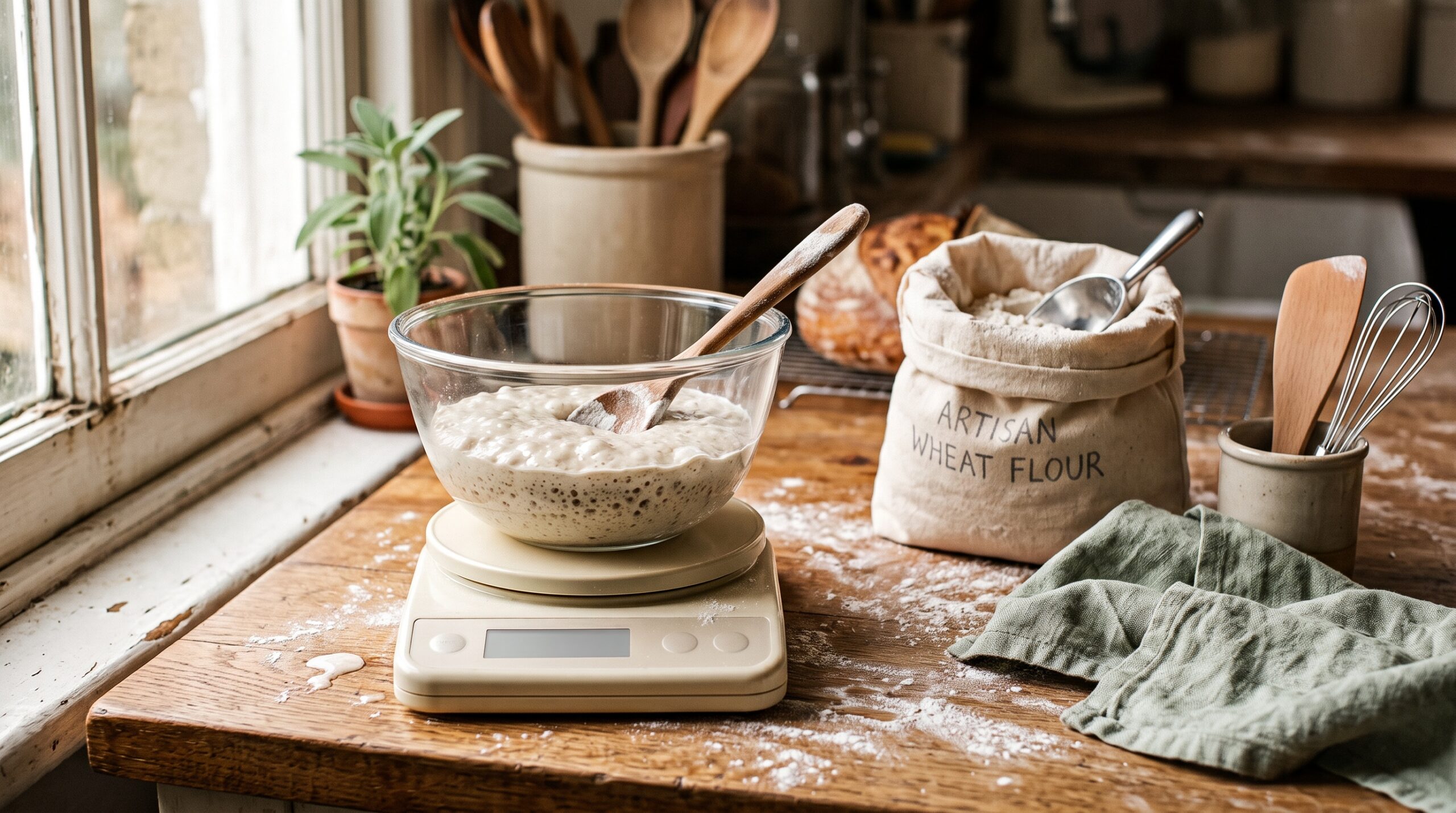
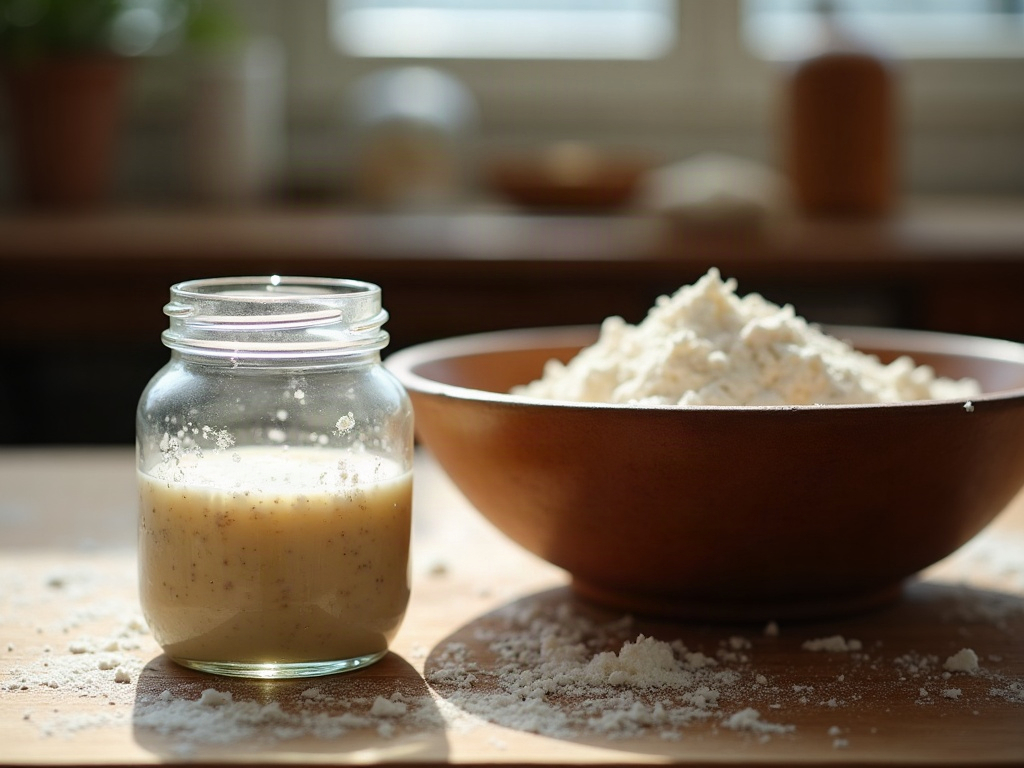
It’s simpler than it sounds. Inoculation percentage is the weight of starter you use compared to the weight of flour in your dough. If your recipe has 500g of flour and you add 100g of starter, that’s a 20% inoculation. Add 50g instead and you’re at 10%. That’s the whole calculation: starter weight ÷ flour weight × 100.
Why measure it against the flour? Because the flour is the food. The wild yeast and bacteria in your starter go to work on the flour and water, and the amount of that culture you drop in decides how many microbes are starting the job. A big dose gets a head start; a small dose has to multiply first. Everything else about fermentation flows from that.
The core trade-off: speed versus schedule
Here’s the rule to burn into memory: a higher inoculation ferments faster, a lower inoculation ferments slower.
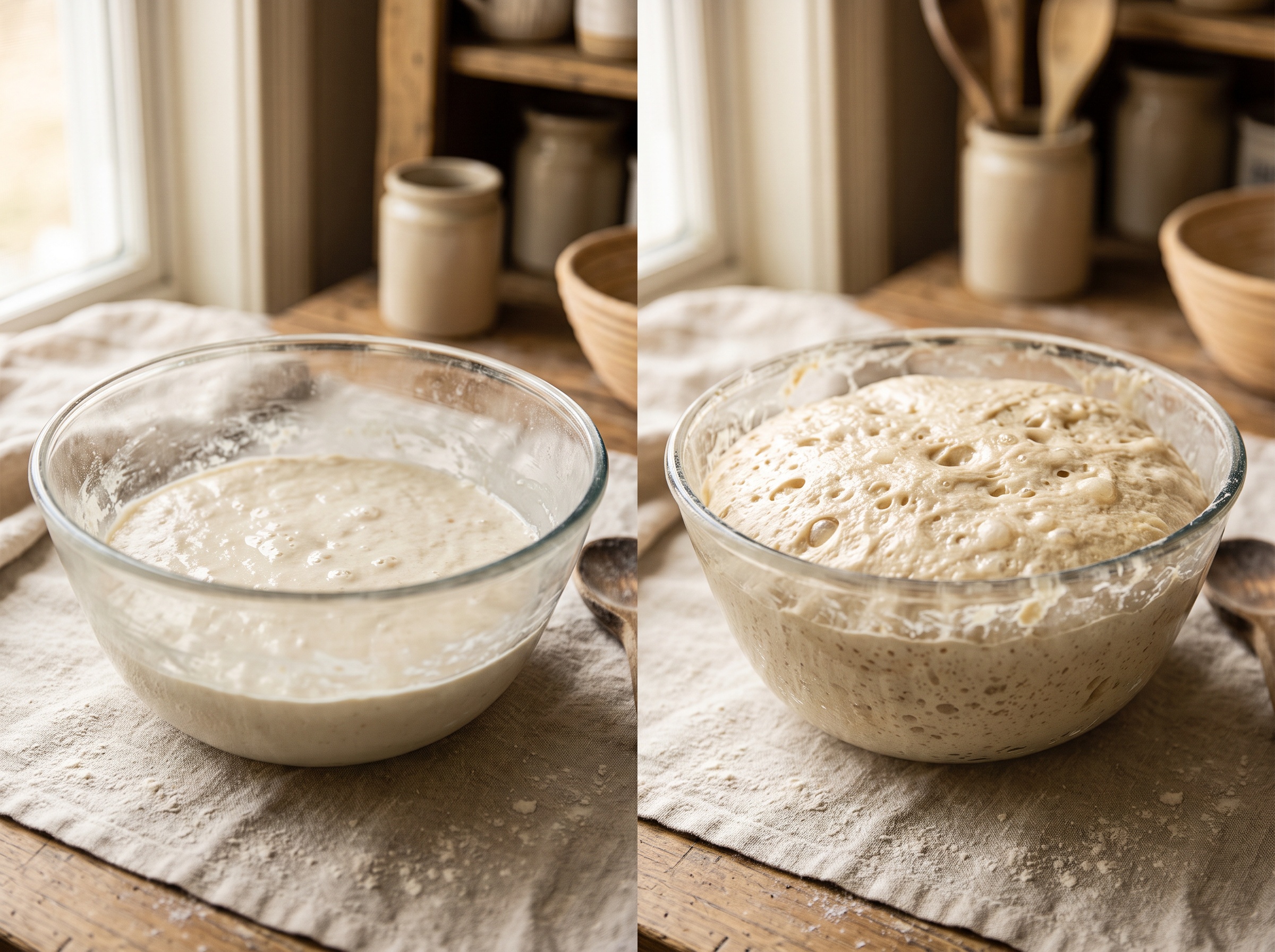
Drop in a lot of starter — say 20-30% — and you’ve seeded the dough with a large, hungry population. Bulk fermentation moves quickly, sometimes in just a few hours. That’s great when you want a same-day loaf and you’re home to watch it.
Use a little — 5-10% — and the culture has to build up before it can raise the dough. Fermentation stretches out over many more hours. That sounds like a downside until you realize it’s exactly what you want for an overnight rise, or when you’ll be at work all day and can’t babysit a bowl. A low inoculation lets the dough take its time and be ready when you are.
There’s a flavor angle too. A longer, slower ferment gives the bacteria more time to develop acids, which generally means a more pronounced sour tang. A fast ferment tends to be milder. Neither is “better” — it depends on the loaf you’re chasing.
Where to start: sensible numbers
If you’re not sure, these are reliable starting points for a standard room-temperature dough:
- 15-20% — the everyday default. A same-day loaf that goes through bulk fermentation in roughly 4-8 hours at comfortable room temperature. This is where most recipes land.
- 5-10% — the slow, hands-off route. A long, gentle ferment ideal for overnight on the counter or fitting around a workday. More patience, more tang, less watching.
- 25-30% — the fast track. When you’re short on time and want the dough ready in a hurry. Watch it closely; it can gallop past its peak before you expect.
These are ranges, not laws. Your kitchen, your flour, and your starter’s vigor all shift the timing. Treat the number as your opening bid and adjust from there.
It works together with temperature
Inoculation isn’t the only dial — it partners with temperature, and the two are easy to confuse. Warmth speeds fermentation; cold slows it, exactly the way more or less starter does. That means you can trade them off each other.
In a hot summer kitchen, a normal 20% inoculation can overproof faster than you’d believe, so dropping to 10-12% keeps things manageable. In a cold winter kitchen, the reverse: you might bump the starter up to compensate for the sluggish, chilly dough. If you want to master the other half of this equation, our guide to sourdough dough temperature shows how the finished dough temp quietly steers your whole bake. The pros think in terms of both dials at once — and now you can too.
Read the dough, not the clock
Here’s the crucial catch: changing your inoculation changes your timing, so the clock in your old recipe no longer applies. If you cut your starter in half, that “bulk ferment for 5 hours” instruction is now wrong — it’ll take considerably longer. This is exactly where bakers get burned, following a time that no longer matches the amount of starter they used.
The fix is to stop trusting the clock and learn to read the dough. You’re watching for the signs of a finished bulk ferment: noticeably risen (though not necessarily doubled), domed and jiggly, dotted with bubbles, and airy when you nudge it. Our walkthrough on how to tell when bulk fermentation is done covers the tells home bakers miss. Get comfortable with those cues and you can change your inoculation freely without fear — the dough will always tell you where it is.
Common mistakes to sidestep
A few traps catch people when they start playing with this:
- Using too much starter and overproofing. Piling in extra starter to “be safe” backfires — the dough races ahead, and if you’re not watching, it sails past its peak into a slack, gassy overproofed mess. If you’re unsure which way yours went, here’s how to tell overproofed from underproofed sourdough and rescue the loaf.
- Forgetting to count the starter’s flour and water. For precise bakers: the starter itself contains flour and water, which affects your true hydration. For everyday home baking you can usually ignore this, but know it’s there if your numbers feel off.
- Changing inoculation and temperature at the same time. Adjust one variable at a time when you’re learning, or you won’t know which change did what.
The takeaway
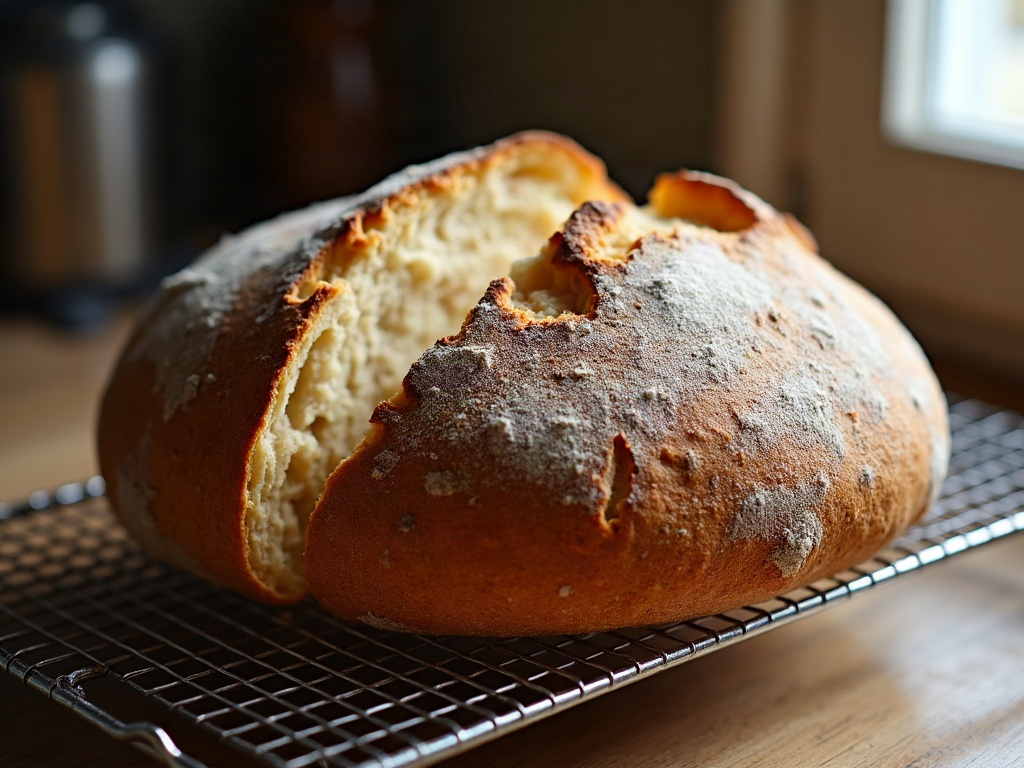
Inoculation percentage is the dial that decides whether your dough is ready in three hours or twelve. Once you see it that way, sourdough stops running your schedule and starts fitting into it: less starter for a hands-off overnight rise, more for a quick same-day loaf, and a nudge in either direction to counter a hot or cold kitchen. Set the number on purpose, then read the dough instead of the clock, and you’ll never again have a loaf peak while you’re asleep or stuck at work.
Want to see what different inoculations actually look like hour by hour? We walk through side-by-side doughs on the LoafLovers YouTube channel, and you can grab our free sourdough troubleshooting guide to keep the timing cues within reach of your bowl. Trust the dough, adjust one dial at a time, and let the bread work around your life.