You followed the recipe to the letter. Same flour, same starter, same schedule you used last week when the loaf turned out beautifully. Yet today the dough is either lifeless and slack or racing away before you can shape it. Nothing changed — except the one thing you almost certainly did not measure.
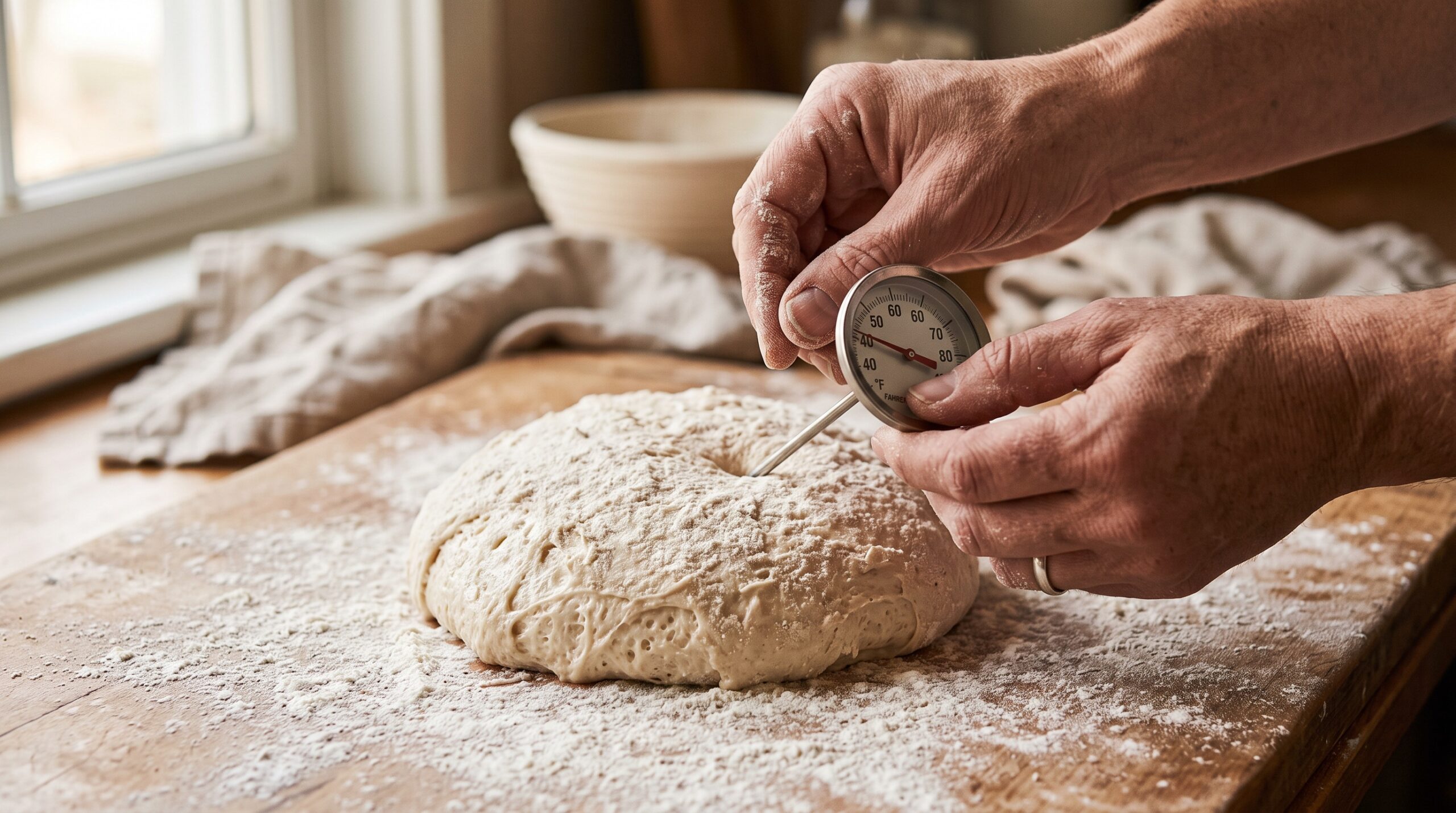
That thing is sourdough dough temperature: the actual warmth of the dough in the bowl. It is the quiet variable behind most “but I did everything the same” mysteries, and once you learn to read it and steer it, your bakes stop being a roll of the dice. Here is what the number means, why it matters more than the clock, and how to control it with nothing fancier than your kitchen tap.
Why the clock lies and the thermometer tells the truth
Recipes give you times — “bulk ferment for four hours,” “proof for two.” Those times are shorthand for a temperature the recipe writer assumed you would be baking at, usually a comfortable 75°F (24°C) kitchen. But fermentation is a chemical reaction, and like all chemistry it speeds up when it is warm and slows down when it is cool.
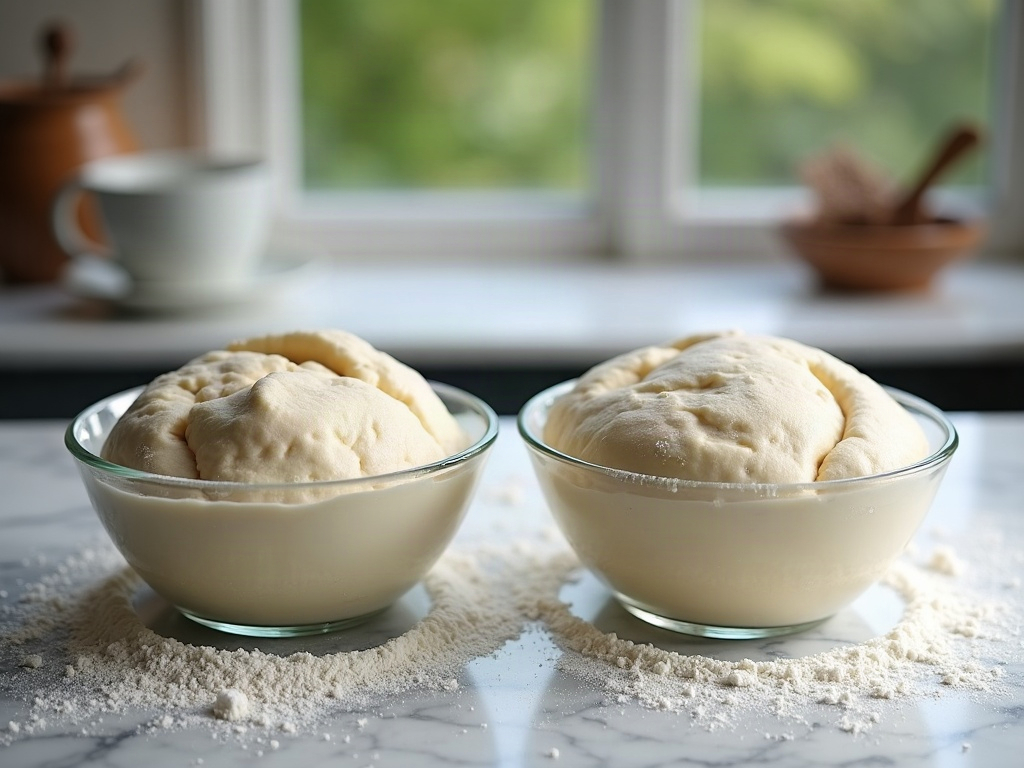
The rough rule bakers use: for every increase of about 15°F (8°C), fermentation roughly doubles in speed. Drop the same amount and it roughly halves. So a dough sitting at 70°F is fermenting at a completely different pace than the identical dough at 80°F — even though your recipe hands both the same four-hour window. Follow the clock in a cold kitchen and you underproof; follow it in a warm one and you sail straight past the finish line. If you have ever been unsure which side of that line you landed on, our guide to telling overproofed versus underproofed dough shows you exactly what each one looks and feels like.
Meet DDT: the one number to aim for
Professional bakers do not leave dough temperature to chance. They pick a target called the Desired Dough Temperature (DDT) — the temperature they want the dough to be right after mixing. For most sourdough, a DDT somewhere between 75°F and 78°F (24–26°C) is the sweet spot: warm enough for lively, predictable fermentation, cool enough that you still have control and flavor.
Why does the temperature right after mixing matter so much? Because it sets the starting pace for the entire bulk ferment. Start the dough at 78°F and it hits the gas immediately. Start it at 68°F and it crawls out of the gate, then you spend the whole day wondering why nothing is happening. Picking a DDT turns a vague hope into a target you can actually hit.
How to hit your target: the water-temperature formula
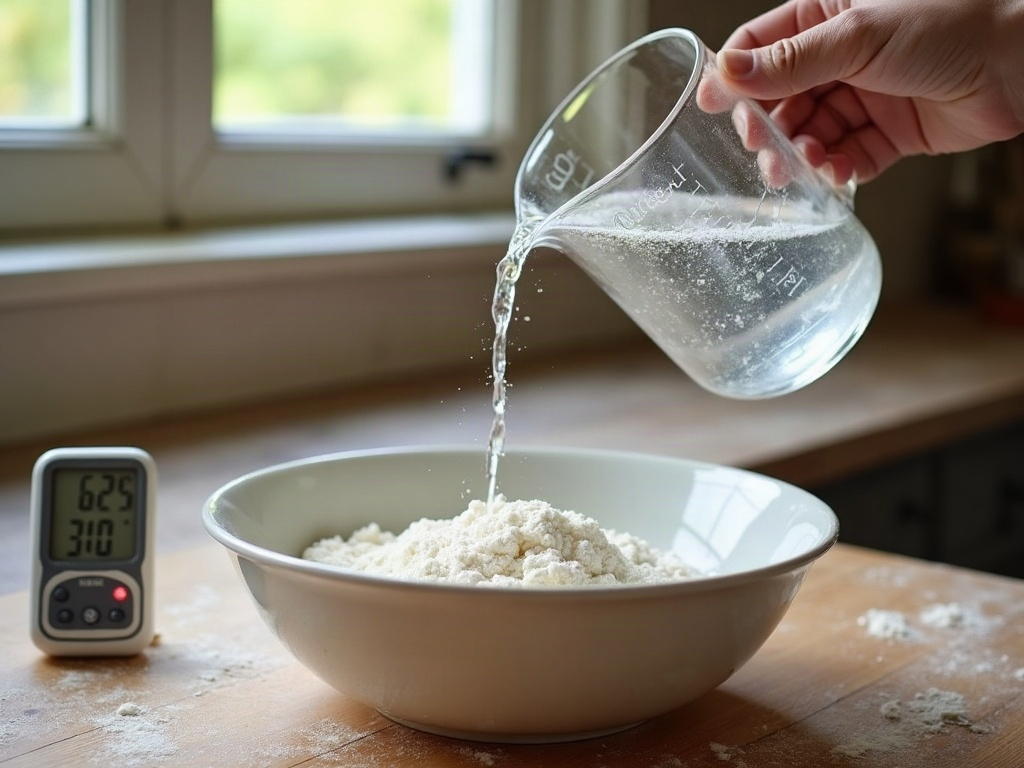
Here is the good news. You do not control the flour temperature (it is whatever your cupboard is) and you barely control the room. But you have complete, instant control over one ingredient: the water. Adjust the water temperature and you drag the finished dough toward your DDT.
The simple home-baker version of the formula is:
Water temperature = (DDT × 3) − flour temperature − room temperature − starter temperature
Say your DDT is 77°F, your flour and room are both 70°F, and your starter (straight from a cool spot) is 72°F. That is (77 × 3) − 70 − 70 − 72 = 231 − 212 = 19… which tells you the water needs to be about 19°F warmer than the rest, so roughly 89°F. Warm tap water, in other words. In a cold kitchen you will reach for warmer water; in a summer kitchen you may need it straight from the cold tap or even chilled.
Do not overthink the arithmetic. The lesson underneath the formula is the part that matters: when the room is cool, warm the water; when the room is warm, cool the water. Even a rough correction beats ignoring temperature entirely.
Reading the room reshapes your whole timeline
Once the dough is mixed at the right temperature, the room takes over — and this is where the clock really falls apart. A dough that finishes bulk fermentation in four hours at 76°F might need six or seven hours at 68°F, or be dangerously close to overproofed in three at 82°F.
This is exactly why you should judge the dough, not the timer. Watch for the real signals — a 30–50% rise, a domed and jiggly surface, bubbles along the edges of the container. If you are not yet confident spotting them, our walkthrough on how to tell when bulk fermentation is done covers the signs most home bakers miss. Temperature decides when those signs appear; your eyes decide when to move on.
Symptom, cause, and fix: the two temperature traps
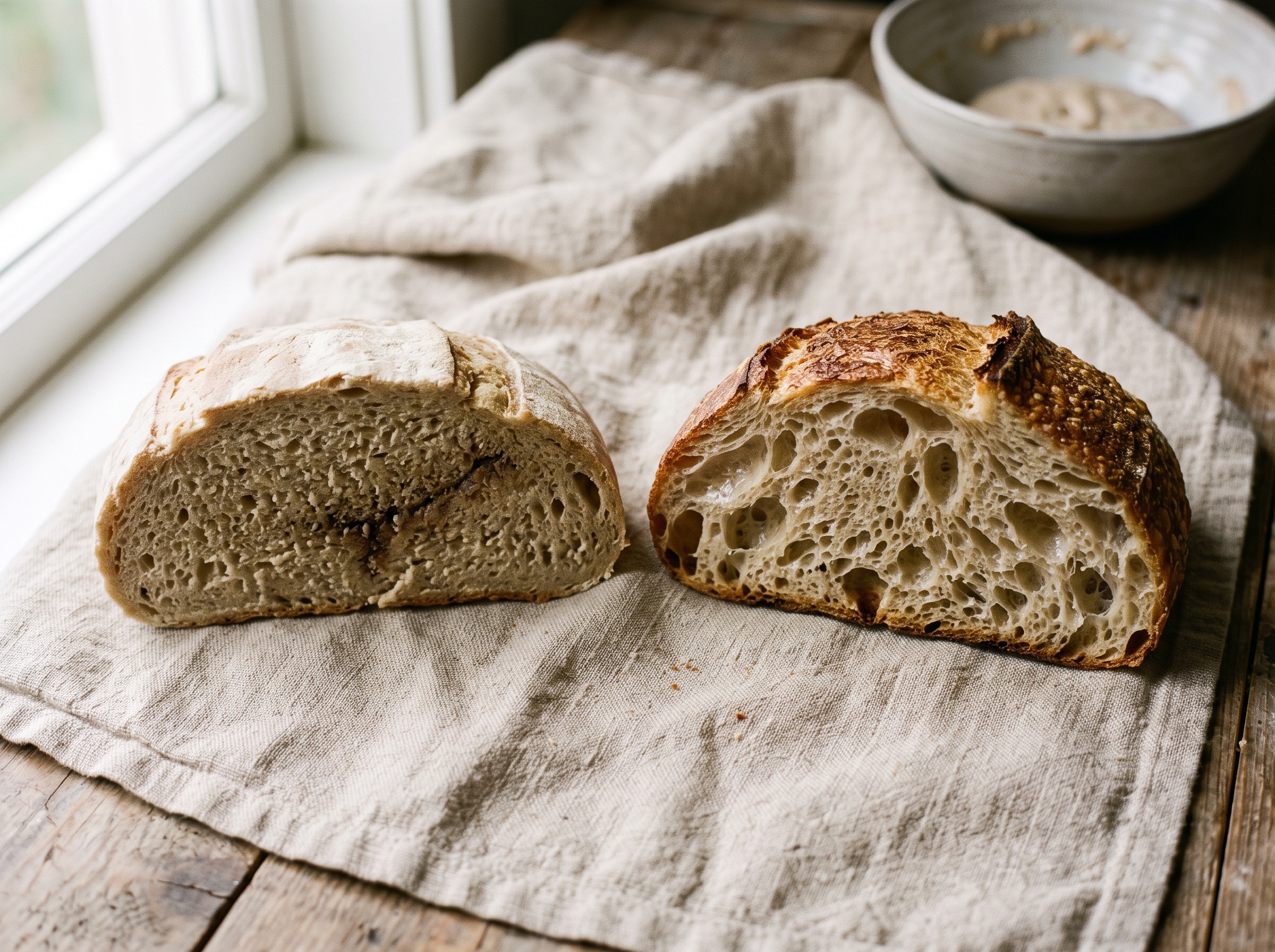
Trap one — the sluggish cold dough. The symptom: hours pass and the dough looks almost exactly as it did when you mixed it. The cause is nearly always a cold dough and a cold room dragging fermentation to a near-standstill. The fix: give it a genuinely warm spot (more on that below) and, crucially, extend your time — a cold dough is not broken, it is just slow. If your starter itself is barely bubbling before you even mix, the same cold logic applies; our fixes for a sourdough starter that will not rise almost always start with warmth.
Trap two — the runaway warm dough. The symptom: you turn your back for an hour and the dough has ballooned, gone slack, and lost its structure. The cause is a dough that started too warm or proofed somewhere hot, so fermentation overshot. The fix: mix cooler next time (colder water), shorten your windows, and in high summer let the fridge slow things down. A warm dough is not “faster and better” — past a point it is just overproofed.
Simple tools and habits that put you in control
You do not need a laboratory. Three small habits cover almost everything:
- Buy an instant-read thermometer. A cheap digital probe is the single most useful sourdough tool after a scale. Take the dough’s temperature right after mixing so you know your real starting point — guessing is what got you here.
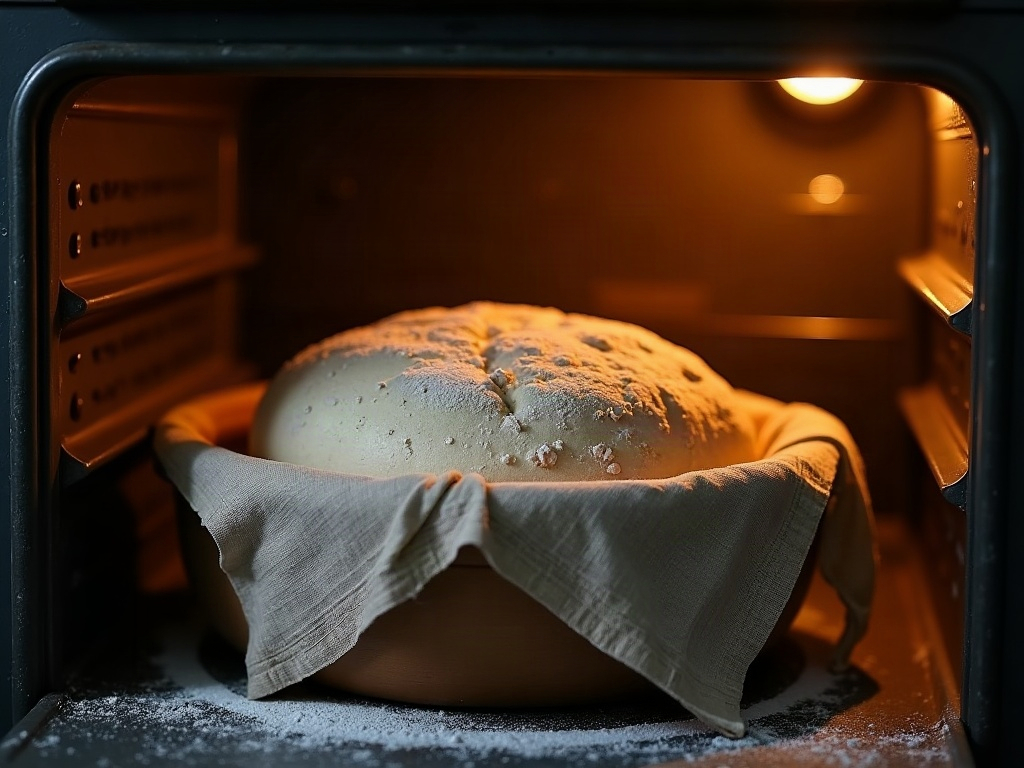
- Create a steady warm spot. A turned-off oven with just the interior light on, the top of the fridge, or a cooler with a jar of warm water all hold a gentle, draft-free warmth. Consistency beats heat: a stable 76°F spot is worth more than a hot windowsill that swings 15 degrees.
- Adjust water first, everything else second. Before you change your recipe, change your water temperature. It is the fastest, most reliable dial you have.
And if your kitchen simply runs cold and slow, do not fight it — work with it. A cooler, longer ferment builds gorgeous flavor, and you can shape your bake around real life. Our approach to baking sourdough around a full-time work schedule leans on exactly this: using temperature to stretch or compress the timeline to fit your day.
The takeaway
Sourdough is not fussy or magical — it is responsive. Nearly every “I did everything the same” loaf comes down to a dough that was warmer or cooler than last time, quietly running at a different speed. Measure the dough, pick a DDT around 76°F, steer it with your water, and then trust your eyes over the clock. Do that, and the mystery drains out of your baking and predictability takes its place.
Want to see the water-temperature trick and the “is it done?” dough checks in real time? The full walkthrough lives on the LoafLovers YouTube channel, and you can grab our free sourdough troubleshooting guide — a quick-reference for the symptoms, causes, and fixes that come up most — when you join the email list. No hard sell, just the answers waiting for the next time your dough surprises you.
Leave a Reply