You pulled a beautiful loaf out of the oven yesterday – crackly crust, open crumb, that deep tangy smell filling the kitchen. This morning it is drier, the crust has gone leathery, and the slices feel firmer than they should. It is a quietly deflating moment, because the baking went right; only the storing went wrong.
Homemade sourdough has no preservatives and no soft-crust conditioners, so it behaves differently from a supermarket loaf in a plastic sleeve. Store it the way that loaf was designed to be stored and it will reward you for days. Here is exactly how to keep sourdough fresh on the counter, how to freeze it so it tastes almost new, and how to bring a firm loaf back to life.
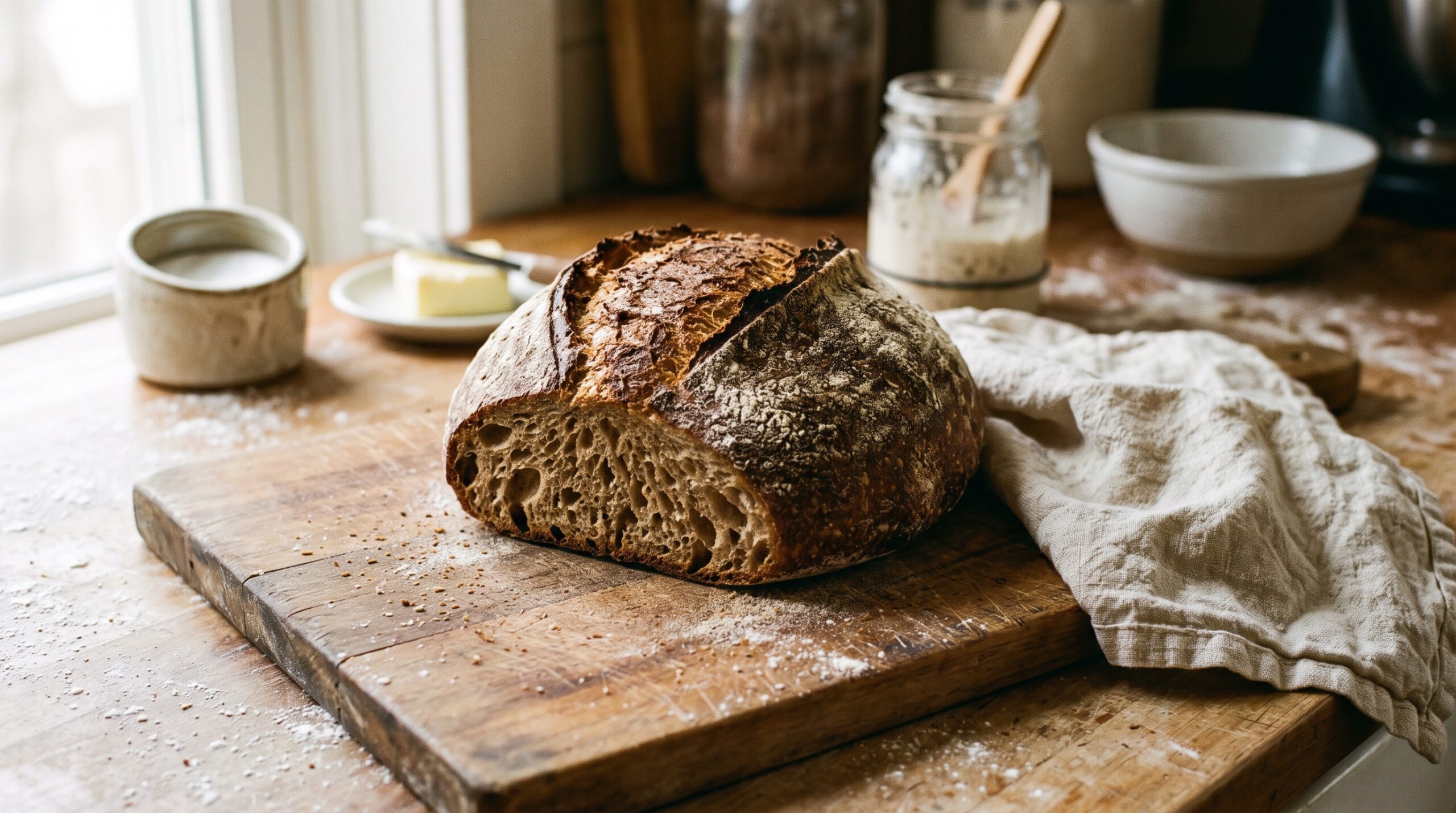
Why sourdough goes stale (it is not just drying out)
Most people assume stale bread is simply dry bread, but there are two different things happening, and they pull in opposite directions.
The first is moisture loss. The soft interior slowly gives up water to the air, and the crust – which started crisp – draws that moisture up and turns tough and chewy. The second, and the bigger culprit, is starch retrogradation: as the bread cools and sits, the gelatinized starches that made the crumb soft begin to recrystallize and firm up. That is why a day-old loaf can feel hard even when it is not truly dried out.
This distinction matters because it explains everything that follows. Good storage slows moisture loss without trapping so much of it that the crust goes soggy – and, crucially, it keeps the loaf out of the exact temperature range where starch firms up fastest.
The counter method: your first few days
For the two or three days most loaves actually last, the counter is the right home. The goal is to protect the cut face while letting the crust breathe.
- Cool completely first. Never store a warm loaf. Let it cool for at least a couple of hours after baking so the crumb finishes setting; wrapping a warm loaf traps steam and softens the crust into something gummy.
- Store it cut-side down. The single most useful trick: once you slice into a loaf, stand it on its cut face on a wooden board. The crust becomes its own lid, sealing the crumb against the board so it does not dry out, while the rest of the crust stays exposed and crisp.
- Use cloth, paper, or a bread box – not plastic. A linen bread bag, a paper bag, or a bread box lets a little air move so the crust keeps its crackle. A sealed plastic bag does the opposite: it traps moisture against the crust and turns it soft and leathery within hours. Plastic is only worthwhile for a soft-crust sandwich loaf, where you want a tender crust.
Stored this way, a well-baked sourdough holds up beautifully for two to three days, sometimes longer for a higher-hydration loaf with a thick crust.
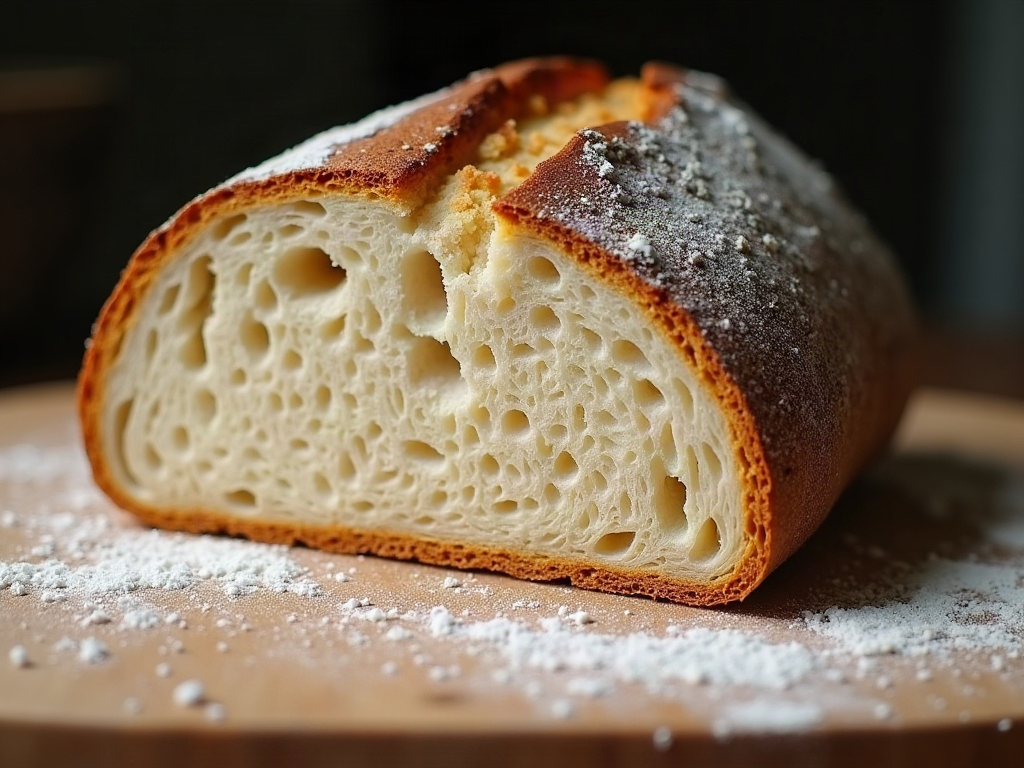
Why the fridge is the worst place for it
It feels logical – the fridge keeps everything else fresh, so surely it helps bread. It does the opposite. Refrigerator temperatures, right around 4C or 40F, sit squarely in the range where starch retrogradation happens fastest. A loaf in the fridge goes stale several times quicker than the same loaf left on the counter.
The confusion comes from cold dough, where the fridge genuinely is your friend – slowing fermentation to a crawl. If you want the details on that stage, see our guide to how the fridge slows a shaped sourdough during proofing. But that is raw dough. For baked bread, the rule is simple: counter for the short term, freezer for the long term, and skip the fridge entirely.
Freezing sourdough the right way
Freezing is the honest answer to keeping sourdough for more than a few days, and done properly the results are excellent – the freezer stops staling in its tracks rather than accelerating it. The key is to freeze while the bread is still fresh, not after it has already started to turn.
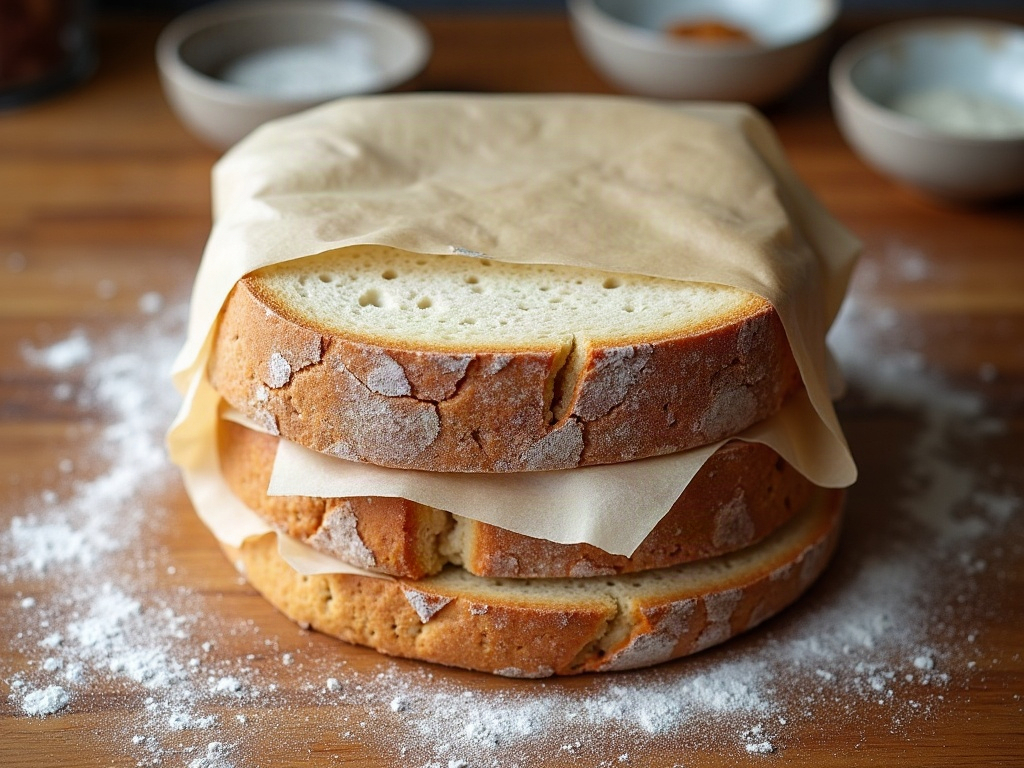
Slice first, almost always. Unless you are freezing a whole loaf for a specific occasion, slice it before freezing. You can then pull out one or two pieces at a time instead of thawing the entire loaf and refreezing the rest, which degrades the texture. Lay a small square of parchment between slices so they do not fuse into a solid block.
Wrap tightly, then bag. Air is the enemy in the freezer. Wrap the loaf or the stack of slices snugly in plastic wrap or foil, then seal that inside a freezer bag with as much air pressed out as you can manage. The double layer guards against freezer burn and off-flavors.
Label and use within about three months. Frozen sourdough stays good for roughly three months. Beyond that it is still safe, but the flavor and texture slowly fade, so a date on the bag saves you guessing.
Baking a smaller loaf in the first place can sidestep the storage question entirely – if you often struggle to finish a full boule, our approach to baking a single small loaf without a giant starter means less bread to store and less to waste.
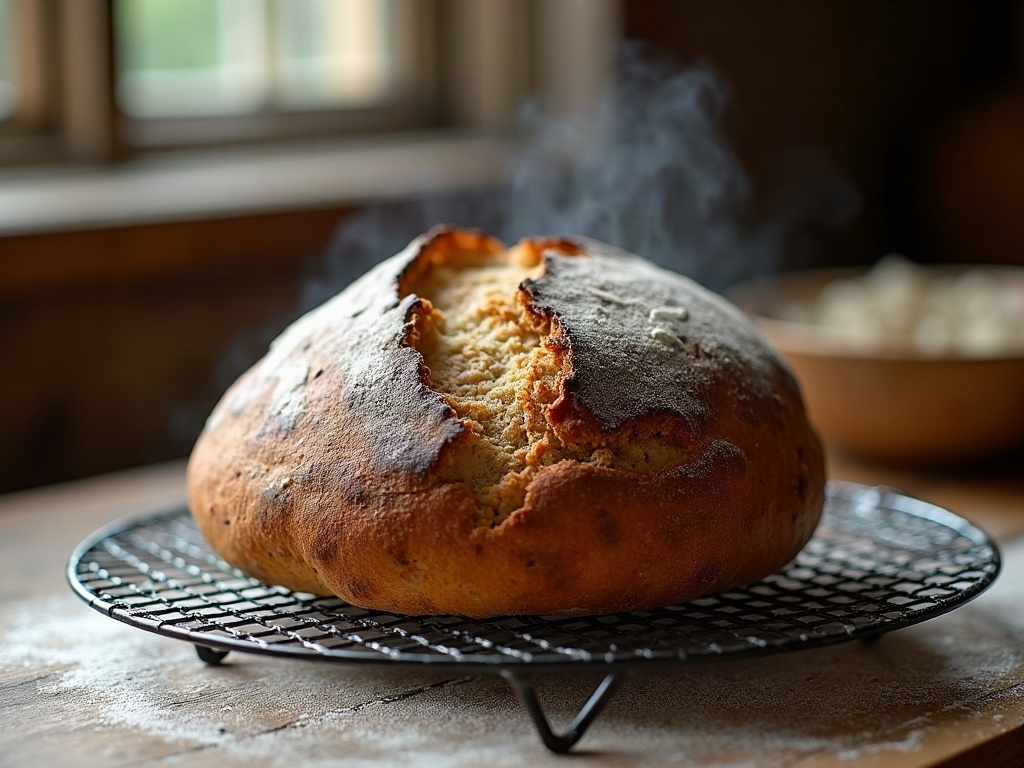
How to revive stale or frozen sourdough
Here is the genuinely satisfying part: because staling is largely starch recrystallizing, gentle heat can partly reverse it. A firm, day-old loaf is not a lost cause – it just needs a short, hot refresh.
To revive a whole stale loaf: run the crust briefly under the tap or mist it lightly with water, then place it in a 180C or 350F oven for about 8 to 10 minutes. The moisture turns to steam inside, softening the crumb, while the direct heat re-crisps the crust. It comes out remarkably close to fresh – best eaten within a few hours, since it will stale again faster the second time.
To thaw frozen bread: individual slices can go straight from the freezer into the toaster – no thawing needed, and they toast up beautifully. For a whole frozen loaf, let it come to room temperature still wrapped so condensation forms on the outside rather than in the crumb, then refresh it in a hot oven for 10 to 15 minutes to bring back the crust.
When a loaf is truly past its best
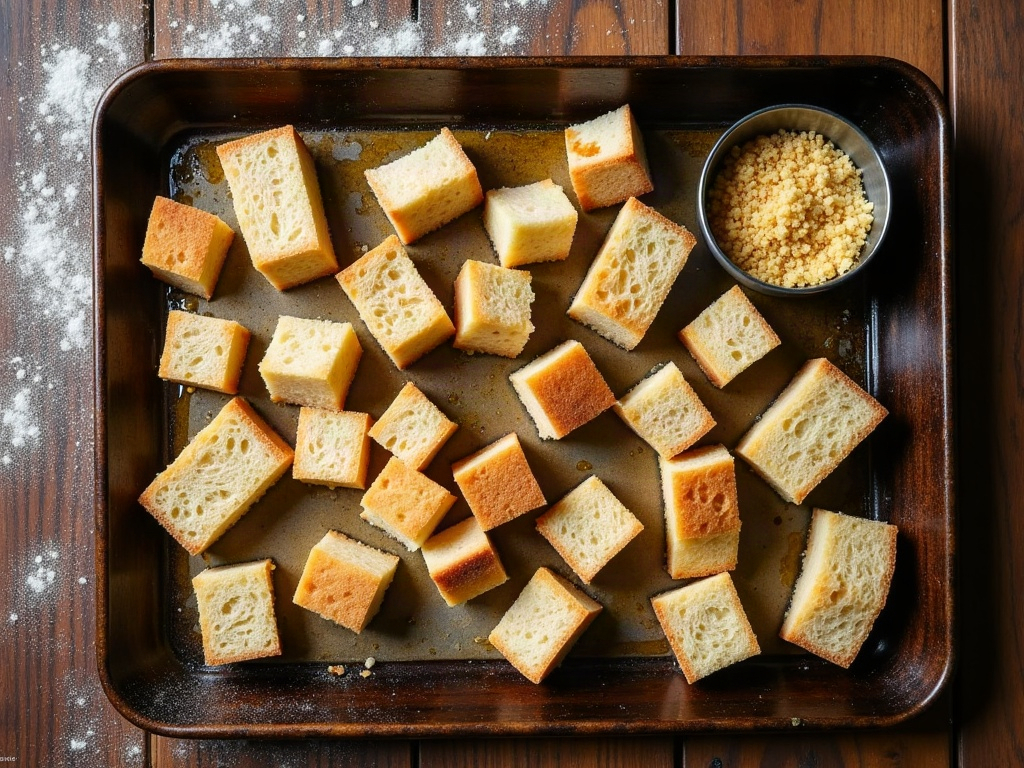
Sometimes you find a heel of bread that has gone too far to refresh – firm all the way through, or simply forgotten at the back of the counter. Before you toss it, remember that stale sourdough is arguably better than fresh for a whole category of uses, because it holds its shape and soaks up flavor.
- Croutons: cube it, toss with olive oil and salt, and bake until golden and crunchy.
- Breadcrumbs: blitz dried pieces in a food processor and store the crumbs in the freezer for coating and topping.
- Panzanella, ribollita, or French toast: all classic dishes that specifically call for bread with some age and structure to it.
The one thing to watch for is mold. If you see any fuzzy spots or off smells, discard the whole loaf rather than cutting around it – mold sends threads through soft bread well beyond the visible patch. This is different from the harmless film that can appear on a neglected starter; if you are ever unsure which is which, our guide to telling mold from harmless kahm yeast walks through the difference.
A simple storage routine to remember
You do not need special equipment or a system – just a few habits that match how sourdough actually behaves:
- Cool the loaf completely before storing anything.
- For the next two to three days: cut-side down on a board, wrapped in cloth or paper or kept in a bread box – never a sealed plastic bag on a crusty loaf.
- Never refrigerate baked sourdough; the cold stales it faster.
- For anything longer: slice, wrap tightly, and freeze within three months.
- Refresh stale or frozen bread with a splash of water and a few minutes in a hot oven.
- Turn the truly-past-it heels into croutons or breadcrumbs instead of the bin.
Storing sourdough well is not fussy once you understand the why behind it – you are simply keeping moisture where it belongs and staying out of the fridge’s staling zone. Get these habits down and the loaf you were proud of on baking day is still worth eating three days later, or three weeks later out of the freezer. If you want the full walkthrough, including a demo of the water-and-oven refresh that makes a stale loaf taste new again, it lives on the LoafLovers YouTube channel alongside our free sourdough troubleshooting guide.
Sources & further reading:
Leave a Reply