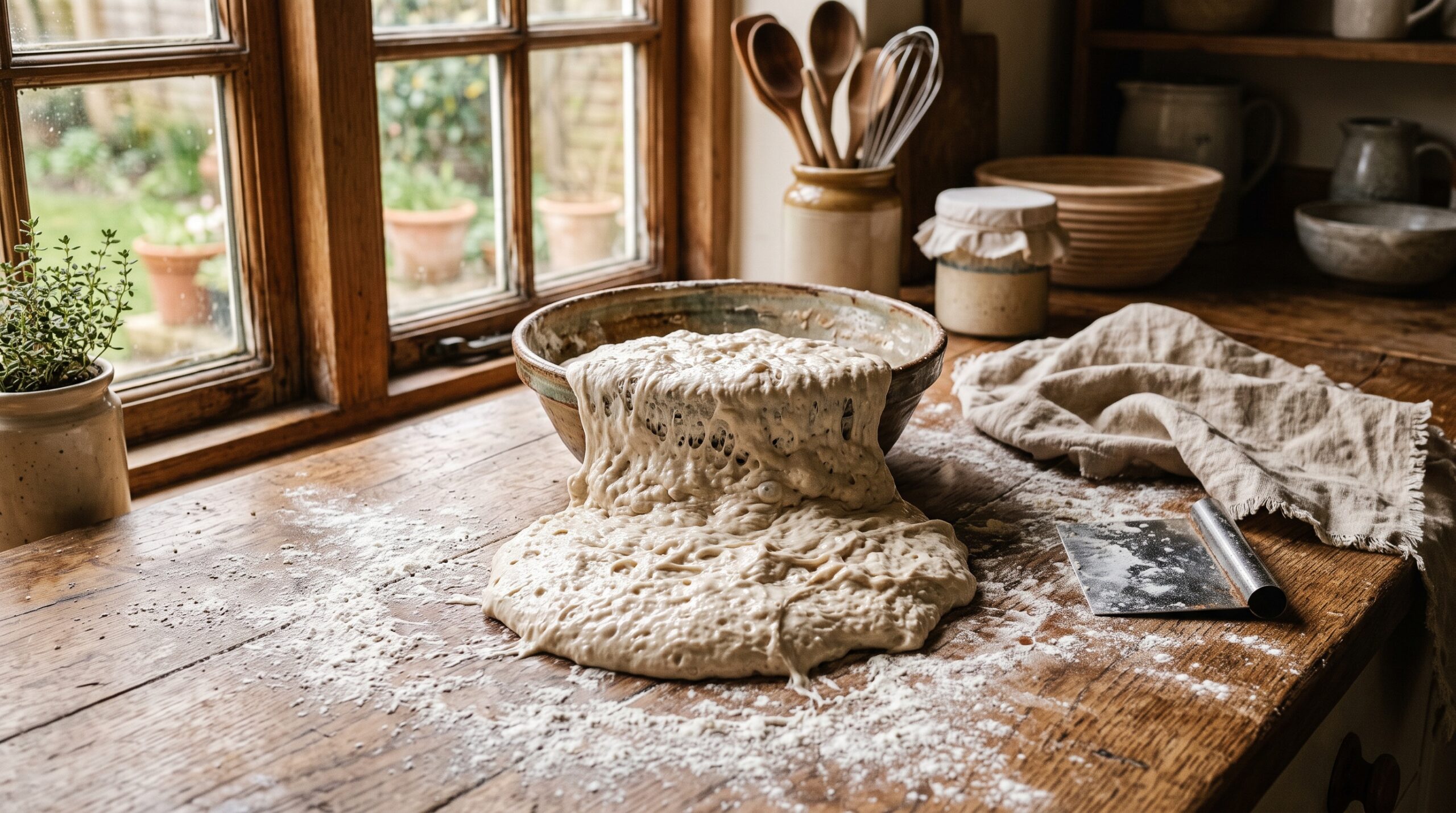
You followed the same recipe that gave you a gorgeous loaf in the spring. Same flour, same starter, same folds. But now it’s July, your kitchen is warm, and the dough is a slack, bubbly puddle that spreads into a sad frisbee the moment you turn it out.
You didn’t do anything wrong. Your kitchen just got hot — and heat is the single biggest accelerator in sourdough. Baking sourdough in a hot kitchen means everything happens faster than the recipe expects, and if you don’t adjust, your dough overproofs before you ever get it to the oven. Here’s what’s really going on, and exactly how to pump the brakes.
Why heat wrecks your timeline
Sourdough is alive, and like most living things, it speeds up when it’s warm. The wild yeast and bacteria in your starter ferment faster as temperature rises. A rough rule bakers lean on: for every 8 to 9°F (about 5°C) warmer, fermentation activity roughly doubles.
That’s enormous. A bulk ferment that took a comfortable 5 to 6 hours in a 70°F kitchen can be done and over in 3 hours — or less — when the room hits the mid-80s. If your recipe says “bulk for 5 hours” and you follow the clock, you’ll walk back to a dough that peaked two hours ago and is now collapsing.
The symptoms of a hot-kitchen overproof are classic: dough that’s gassy and slack, tears easily, won’t hold shape, spreads flat when turned out, and bakes into a dense, pale loaf with a gummy crumb and little oven spring. It’s not a shaping problem or a starter problem. It’s a timing problem caused by heat.
Your starter is racing too
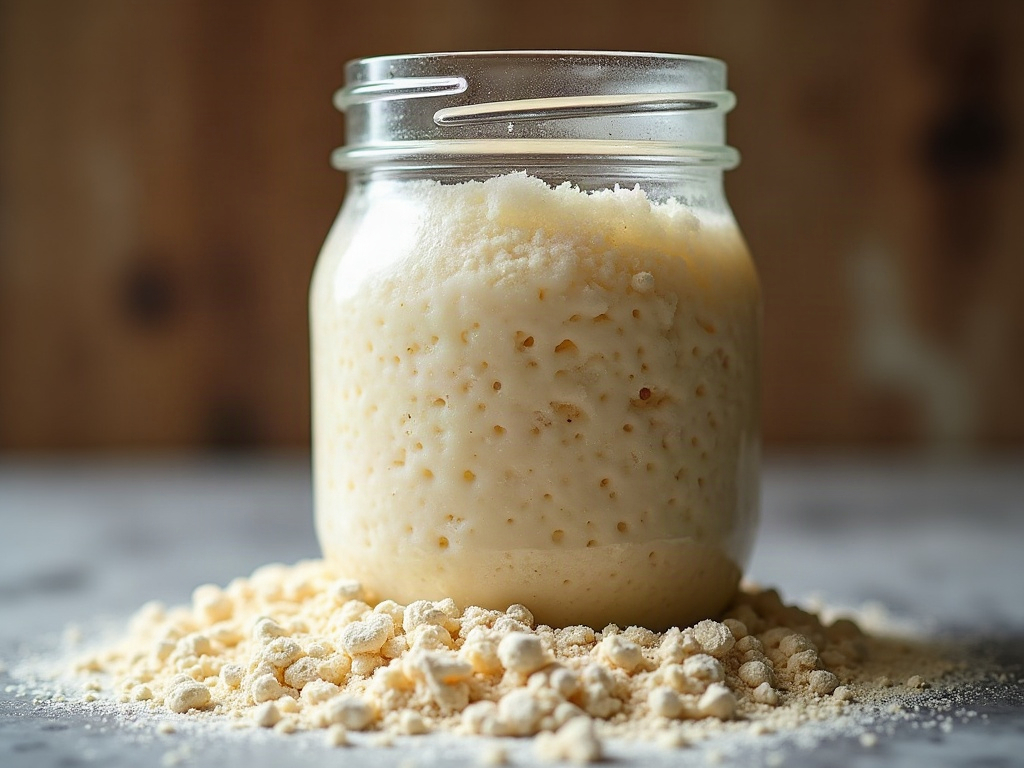
The heat doesn’t just speed up the dough — it speeds up your starter before the dough even exists.
In summer, a starter can hit its peak in 3 to 4 hours instead of the usual 6 to 8, then deflate and turn sour and boozy while you’re waiting for the “right” time. If you feed on your winter schedule, you may be building your dough with a starter that’s already past peak and running low on power.
Two fixes: watch the jar, not the clock — use your starter right as it domes and is bubbly and active, whenever that happens. And consider a smaller or cooler feeding, or feeding with cooler water, so it doesn’t sprint past peak before you’re ready to mix.
The most powerful lever: dough temperature
The single most effective thing you can do in a hot kitchen is control the temperature of the dough itself, and the easiest way to do that is your water.

Water is the ingredient you can chill on demand. On a hot day, use cold water — even refrigerated water — when you mix. Serious bakers aim for a final dough temperature (the temp of the dough right after mixing) of around 75 to 78°F. In a warm kitchen, cool water is how you hit that instead of starting at 82°F and climbing from there.
A few practical moves:
- Use cold water straight from the fridge for your mix. On truly hot days, replace a little of the water with a few ice cubes and let them melt in.
- Chill your flour if your kitchen is genuinely hot — an hour in the fridge or freezer takes the edge off.
- Take the dough’s temperature with an instant-read thermometer after mixing. Once you know your starting number, you can predict how fast things will move.
Start cooler, and the whole ferment slows to a pace you can actually manage.
Shorten the bulk and read the dough
The other half of the fix is letting go of the recipe’s clock entirely.
In a hot kitchen, forget “bulk for 5 hours.” Instead, watch the dough. Bulk fermentation is done when the dough has risen by roughly 30 to 75% (depending on your style), looks domed and jiggly, shows some bubbles on the surface and sides, and feels alive and airy rather than dense. In summer that state can arrive dramatically sooner than you expect — so check early and check often.
Set a timer to remind you to look, not to tell you it’s finished. Do your stretch-and-folds in the first hour or two, then start watching closely. The moment the dough is billowy and airy but still has some structure and tension, move on to shaping. Waiting “because the recipe said so” is exactly how hot-kitchen loaves die.
Let the fridge do the heavy lifting
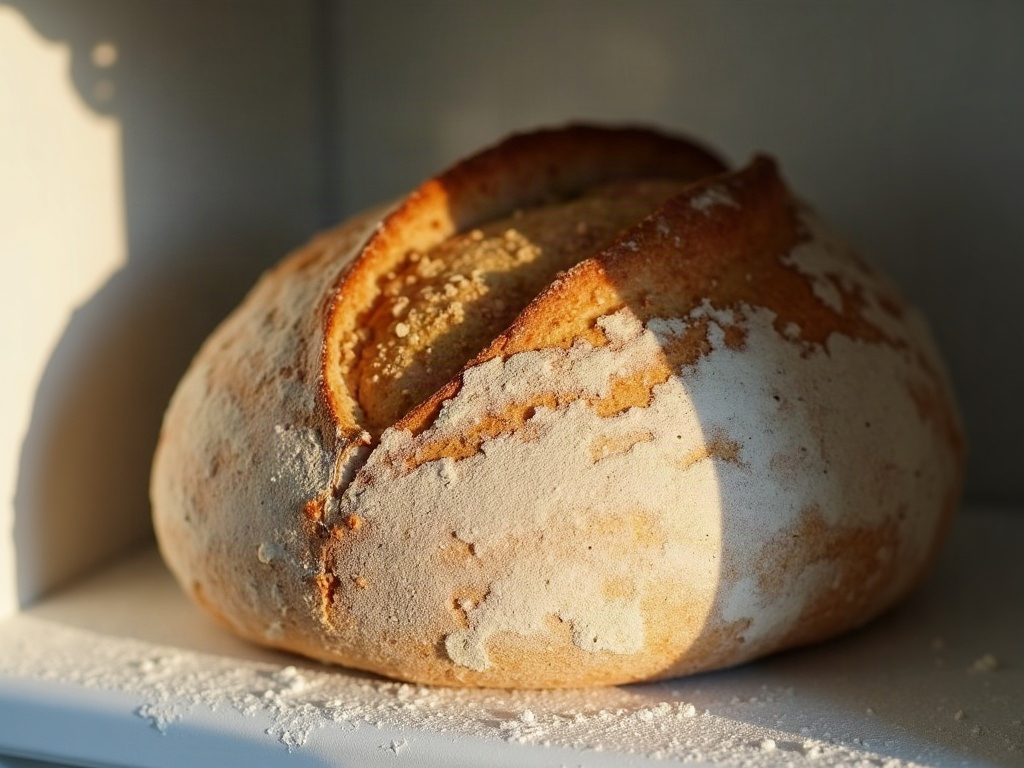
When your room simply won’t cooperate, borrow a cooler one: your refrigerator.
A cold retard — shaping your loaf and then resting it in the fridge — is the ultimate hot-weather rescue. The cold dramatically slows fermentation, which gives you flexibility, better flavor, and easier scoring. In summer this is your control valve:
- Retard after shaping. Get through bulk (watching the dough), shape, then put the banneton straight into the fridge overnight. Bake cold, straight from the fridge, the next morning.
- Use the fridge mid-bulk if you get ambushed. If life pulls you away and you’re worried the dough will overproof on the counter, pop the whole bulk container into the fridge to slam the brakes on, then resume when you’re back.
- Consider a shorter, cooler bulk plus a cold proof rather than a long warm bulk that runs away from you.
The fridge turns “my kitchen is 85°F and I have no control” into a manageable, unhurried bake.
Your hot-kitchen game plan

Put it together and a heatwave stops being the enemy. When the kitchen is warm: use your starter right at peak, mix with cold (or iced) water to hit a cooler dough temperature, expect bulk to finish much faster and watch the dough instead of the clock, shape as soon as it’s billowy, and lean on the fridge to slow things down whenever you need breathing room.
None of this changes your recipe’s ingredients — it just changes the pace, so your dough rises tall instead of spreading flat. Heat is a variable, not a verdict.
Want to see the difference between an on-time summer bake and an overproofed one, side by side? The full visual walkthrough lives on the LoafLovers YouTube channel, and our free sourdough troubleshooting guide breaks down exactly what a well-timed dough should look like at every stage — so the next hot-day loaf is your best one yet.
Sources & further reading:
- The Perfect Loaf – Dough Temperature and Fermentation
- King Arthur Baking – Baking Sourdough in Warm Weather
Leave a Reply