Here’s a quiet truth most sourdough bakers discover by accident: the crispiest waffle you will ever make doesn’t start with a fresh, bubbly, peak starter. It starts with the sad, slack jar of discard you were about to pour down the sink. That castoff – too flat to leaven a loaf, too acidic to feel useful – turns out to be the secret ingredient that gives a waffle a shatter-crisp shell and a tender, faintly tangy middle. If you’ve been feeling guilty about the discard jar, breakfast just solved your problem.
Waffles are also the most forgiving thing you can do with discard. Unlike a loaf, there’s no structure to hold up, no oven spring to chase, no scoring to botch. The batter doesn’t care whether your starter is active. It just wants to get crisp. Let’s walk through exactly how, and how to fix the usual failures.
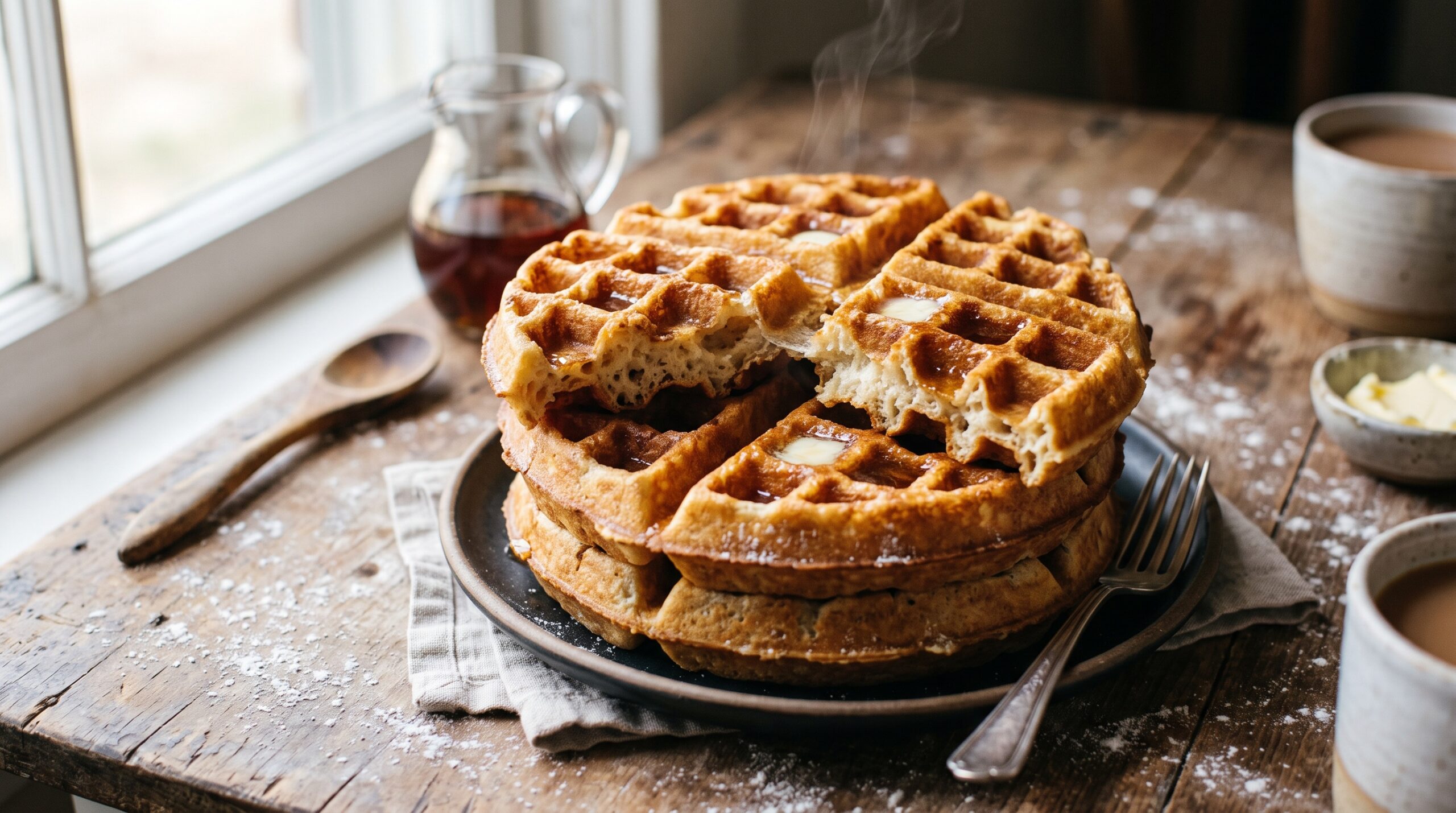
Why discard makes a better waffle
Three things are happening, and all of them are good. First, the discard is essentially fermented flour-and-water, so it brings a gentle sourness that cuts the richness of butter and syrup – that grown-up tang is the reason sourdough waffles taste like more than the sum of their parts. Second, the acidity tenderizes the gluten, which is why the inside stays soft and custardy instead of chewy or bready. Third, and most importantly for texture, discard is loose and pourable, and a slacker batter spreads thin into the iron and crisps hard.
This is also the single best high-volume use for a jar that’s been piling up. A couple of batches will empty weeks of accumulated discard, and leftover waffles freeze beautifully (more on that below). If you’ve been wondering whether all that saved starter is worth keeping, this is your answer – and it pairs naturally with the other no-waste options in our guide to what to do with sourdough discard instead of throwing it away.
The batter: aim for pourable, not thick
Here is the one principle that separates a crisp waffle from a limp one: a thinner batter crisps, a thick batter steams. A heavy, pancake-thick batter traps moisture inside the waffle and leaves you with something pale and bendy. You want a batter that pours in a smooth ribbon and spreads easily across the iron.
A reliable ratio looks like this: roughly a cup of sourdough discard, a cup of flour, a cup of milk or buttermilk, one or two eggs, a few tablespoons of melted butter or oil, a tablespoon of sugar, and a half-teaspoon of salt. Whisk it until just combined – lumps are fine, overmixing is not. If it looks too thick to pour, loosen it with a splash more milk until it ribbons off the whisk.
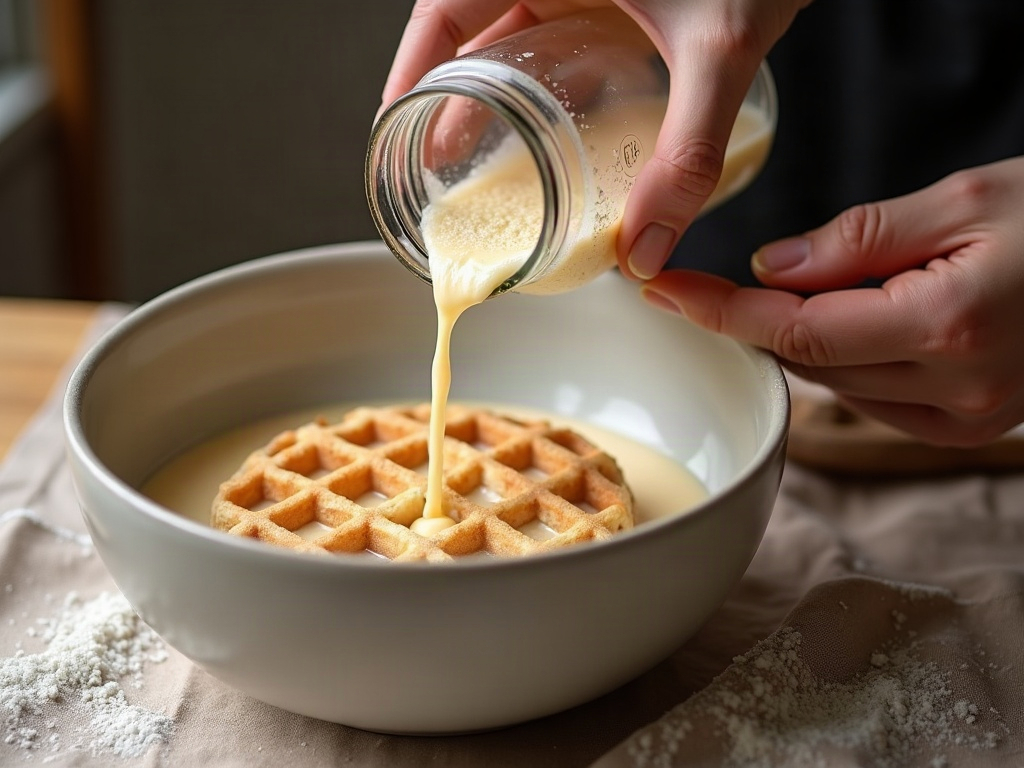
The overnight trick (optional, but transformative)
You can mix and cook these in ten minutes flat. But if you want the deepest flavor and the lightest texture, make the base the night before. Whisk the discard, flour, and milk together, cover the bowl, and leave it on the counter overnight. By morning it will be bubbly, risen, and pleasantly sour – the wild yeast and bacteria have had hours to work.
In the morning, whisk in the eggs, melted butter, sugar, salt, and – this is the magic finish – a half-teaspoon of baking soda. The soda reacts instantly with all that overnight acidity, and the batter foams up before your eyes. That burst of lift is what gives an overnight sourdough waffle its airy, almost soufflé-like interior under the crunch. Cook the batter soon after adding the soda, while the foam is still active.
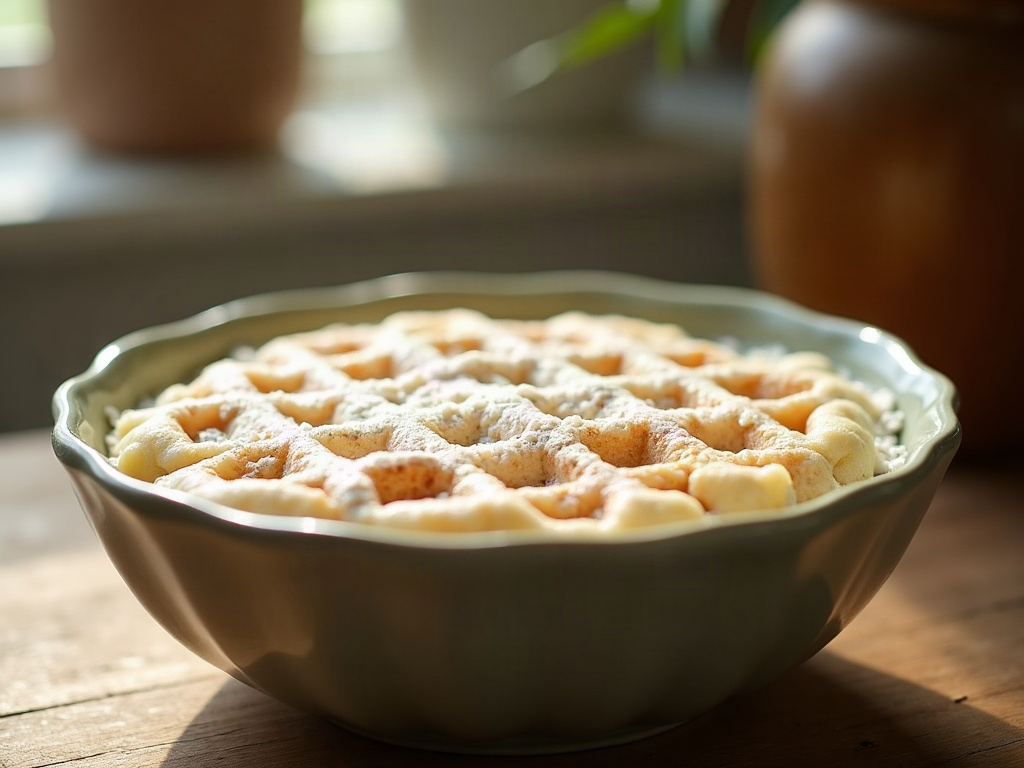
Cooking for maximum crunch
Get the iron properly hot before the first waffle – a cool iron is a soggy-waffle machine. Brush it lightly with oil or melted butter even on a nonstick surface; fat conducts heat into the batter and is a big part of what crisps the outside.
Pour enough batter to nearly fill the iron, close it, and then – here’s the discipline part – leave it alone. Resist peeking. Opening the lid early tears the waffle and lets it collapse before the structure sets. Watch the steam instead: when the iron is billowing steam, the waffle is still releasing moisture and will be limp. When the steam slows to a thin wisp, the surface has dried and crisped. That’s your cue. For most irons that’s a minute or two longer than you’d instinctively wait.
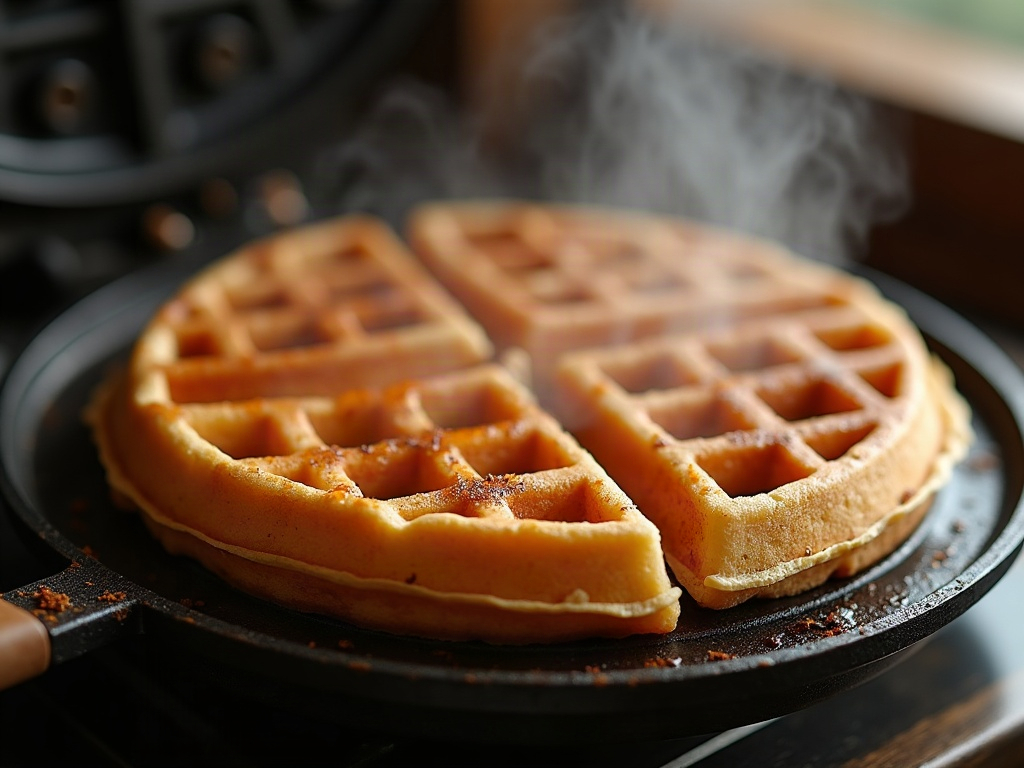
Keep them crisp until serving
Stacking hot waffles on a plate is how you steam the crunch right back out of them. The trapped heat and moisture turn the bottom one to leather. Instead, lay finished waffles in a single layer directly on the rack of a low oven, around 200°F, while you cook the rest. The dry heat holds them crisp and warm, and they’ll actually improve slightly as excess moisture bakes off.
Leftovers freeze like a dream. Cool them completely, freeze flat on a tray, then bag them. Straight from the freezer they go into a toaster or hot oven and come out crisp again – genuinely better than a store-bought frozen waffle, and made from something you were about to discard.

Quick troubleshooting
- Limp and bendy, not crisp? Batter too thick, iron not hot enough, or you pulled it while it was still steaming hard. Thin the batter, preheat fully, and wait for the steam to die down.
- Pale and dense? Not enough fat on the iron, or no leavening lift. Brush the iron with butter and, for an overnight batter, don’t skip the baking soda.
- Gummy inside? Undercooked – give it another minute, and loosen the batter next time so the center sets before the outside burns.
- Too sour? Older discard is tangier. Use fresher discard, cut the overnight rest, or add a pinch more sugar to balance it.
- Sticking to the iron? Underseasoned or under-oiled plates, or you opened it too soon before the crust released. Oil well and wait for the steam to slow.
That’s the whole trick: a loose batter, a hot well-oiled iron, and the patience to wait for the steam to thin. The jar you felt guilty about becomes the best breakfast in the house. And if that discard jar is still overflowing, the same principle powers our fluffy sourdough discard pancakes, crisp sourdough discard crackers, and moist discard banana bread – a whole week of breakfasts from the thing you used to throw away.
Want to see the batter consistency, the overnight foam, and the steam-dies-down cue in real time? The full step-by-step is on the LoafLovers YouTube channel, and our free sourdough troubleshooting guide walks you through fixing the usual suspects – limp waffles, flat loaves, dead starters – one symptom at a time.
Leave a Reply