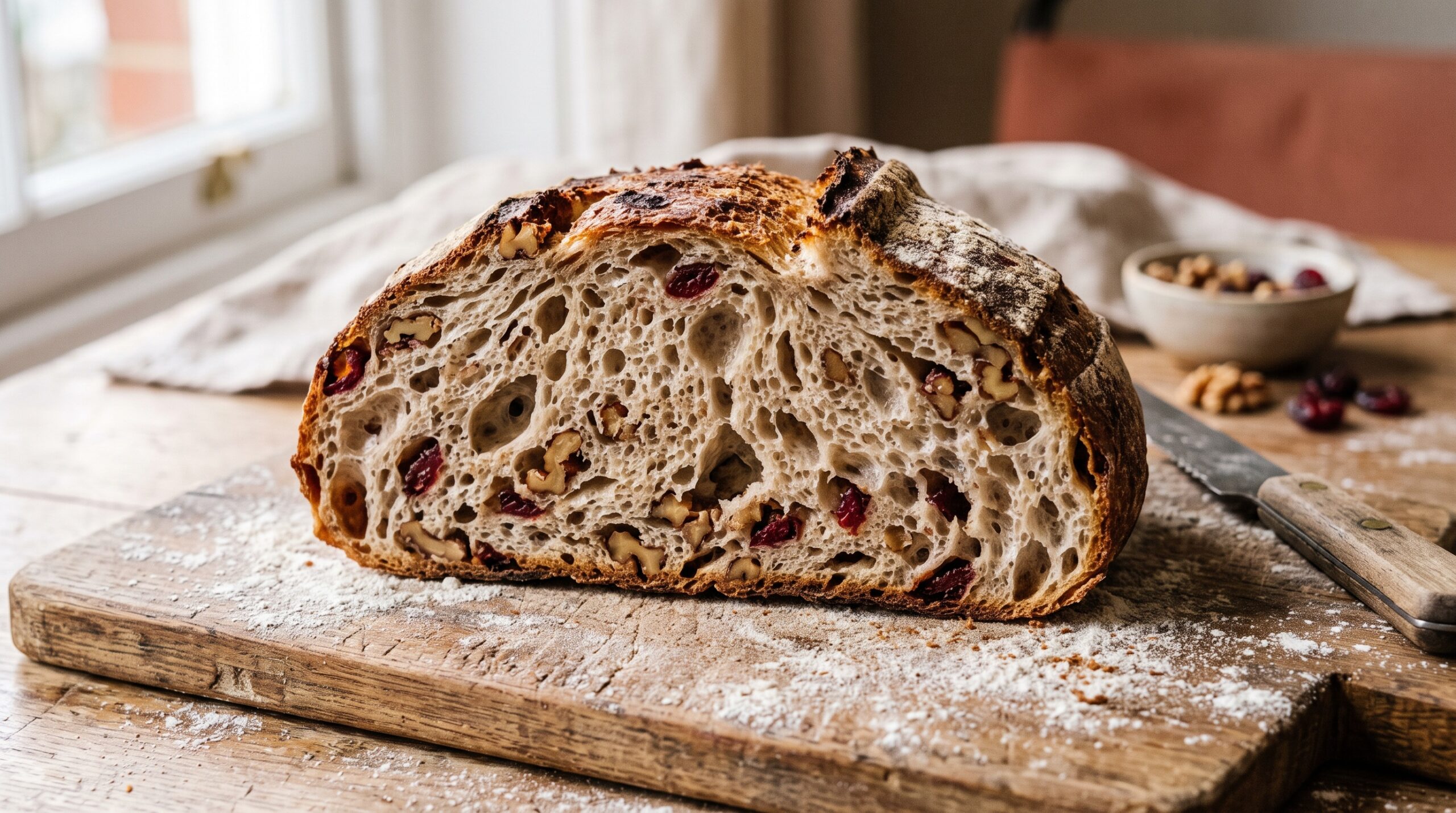
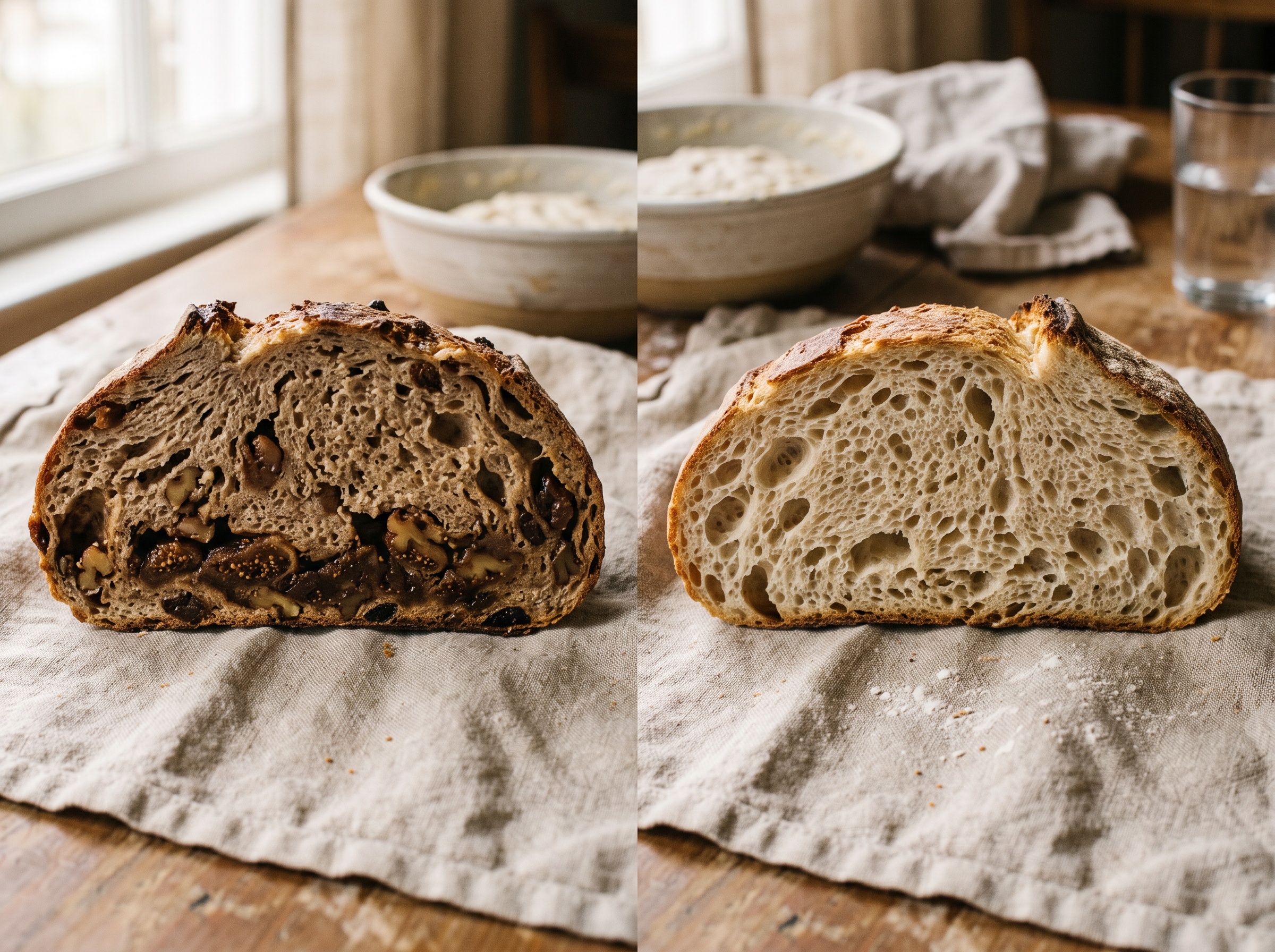
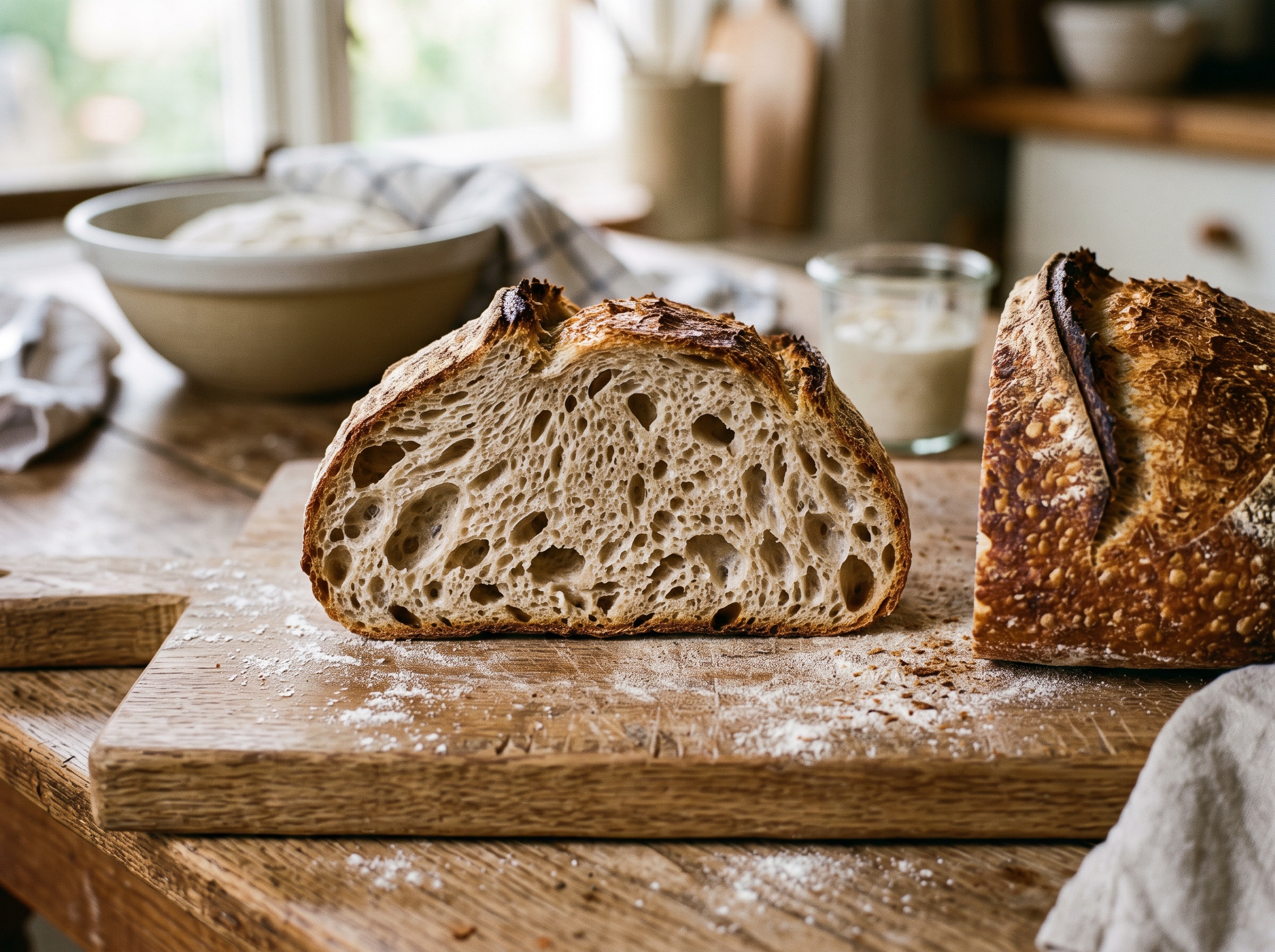
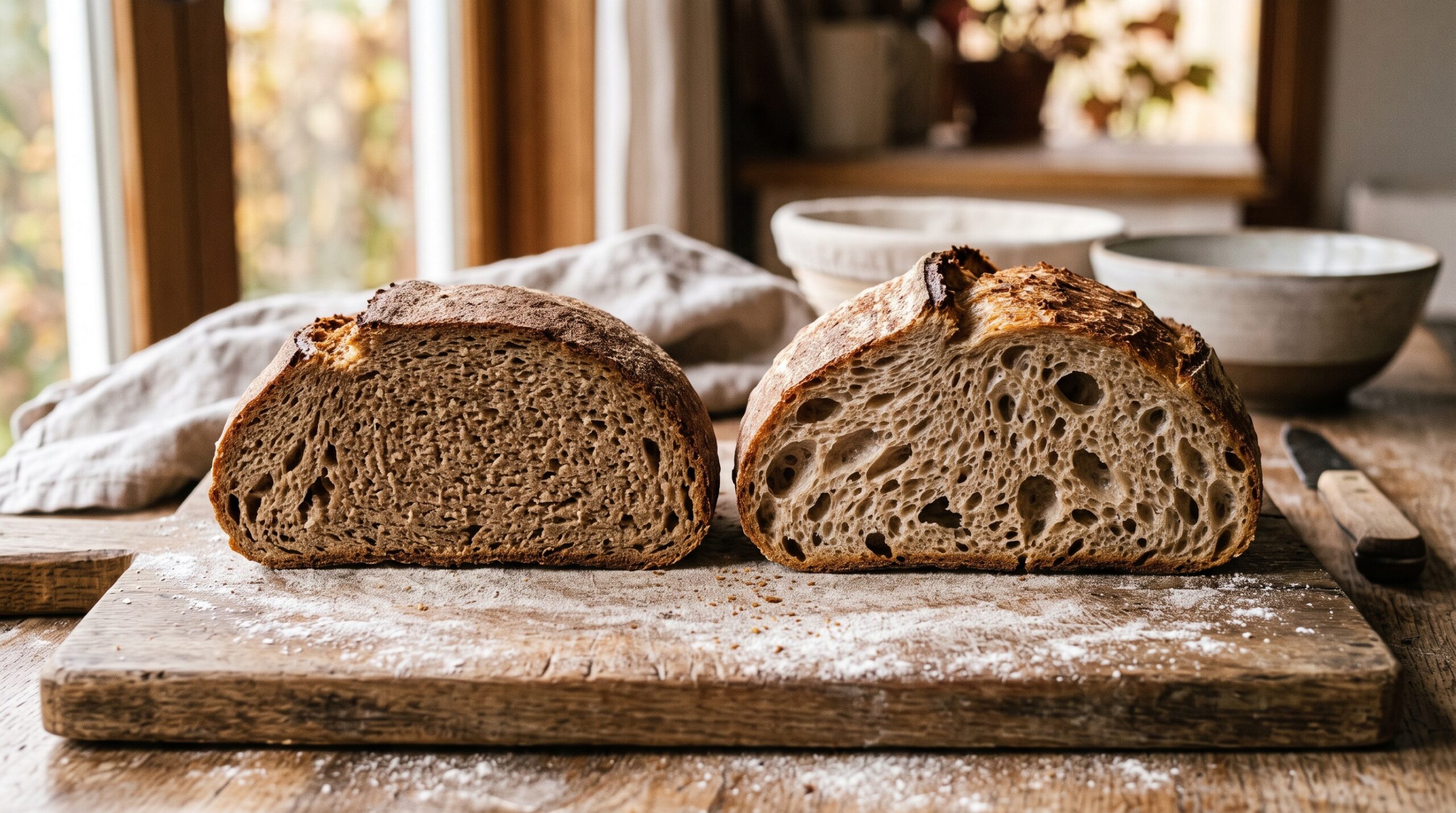
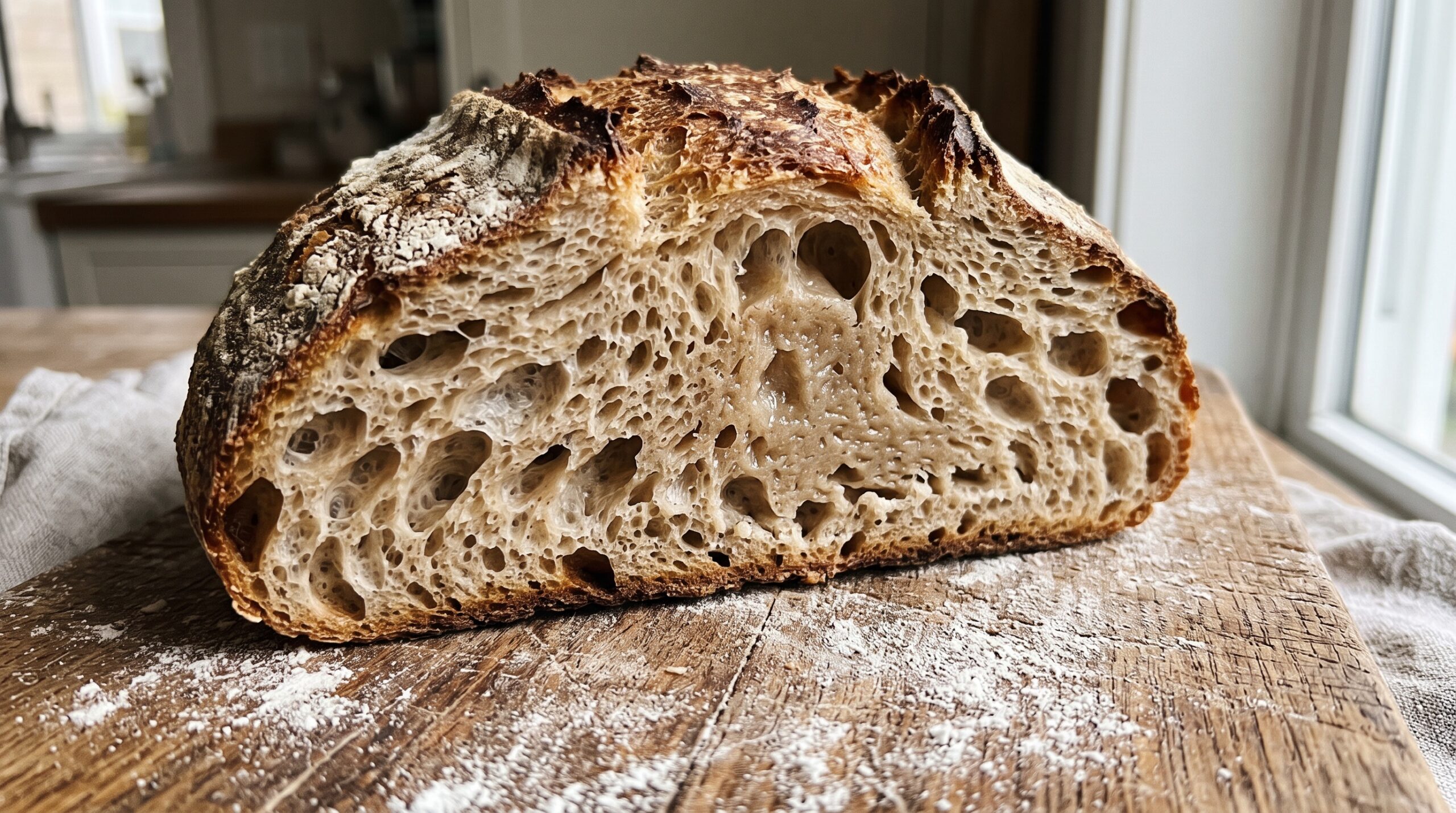
You did everything the open-crumb videos told you. High hydration. Gentle shaping. A long bulk. And when you cut in, there it is – a gorgeous ring of big, glossy holes near the crust wrapped around a damp, heavy, almost translucent center that smears on the knife. Somehow you chased a beautiful open crumb and landed on a gummy one instead.
Frustrating, but not mysterious. A gummy center on an otherwise-open loaf is one of the most common traps for the baker who’s leveled up past “flat and dense” and is now pushing for airy. The good news: it’s almost always three specific things, and they’re all fixable. Let’s diagnose.
First, know what a gummy center is telling you
Gumminess is a moisture problem. The starch in that center never fully set – either because the loaf came out of the oven before the middle was done, because fermentation went too far and the starch structure broke down, or because the dough simply carried more water than your process could handle. Open holes near the crust plus a gummy middle is the signature of pushing hydration and fermentation hard without the bake or the structure to back it up.
Importantly, this is different from a generally dense, underbaked crumb where the whole loaf is tight and damp. Here the edges are open – so your gas production is fine. The problem is that all that openness collapsed inward and never got cooked and dried out in the core. Three causes, in order of how often they’re the culprit.
Cause 1: The bake stopped too soon
This is the number-one offender, and the easiest to fix. A high-hydration dough holds a lot of water, and the center is the last place to hit temperature. Pull it when the crust “looks done” and the middle is still a wet paste that firms into gum as it cools.
The fix:
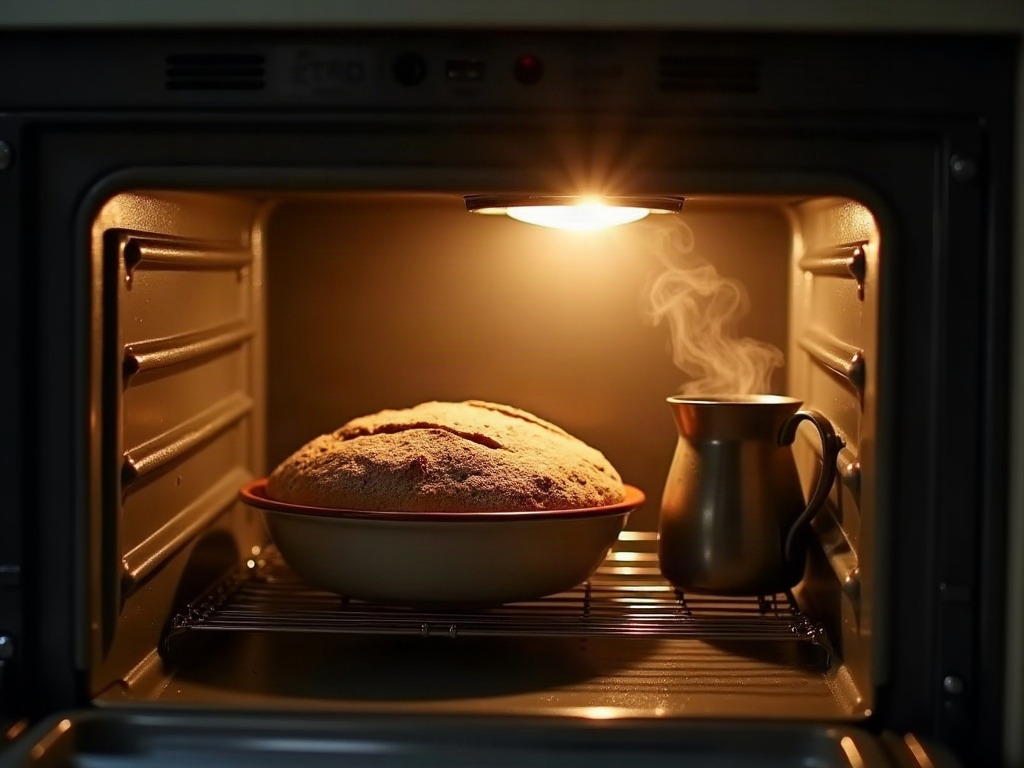
- Bake bolder and longer. That nervous-making dark crust is usually a sign the inside finally finished. Add 5-10 minutes with the lid off and let the crust go a deep golden-brown.
- Check the internal temperature. Stop guessing – an instant-read thermometer in the center should read about 205-210°F (96-99°C) for a well-set crumb.
- Wait to slice. The loaf is still cooking and setting as it cools. Cutting a warm loaf drags the knife through un-set starch and creates gumminess that would have vanished. Give it a full two hours, minimum.
Cause 2: You over-fermented chasing those big holes
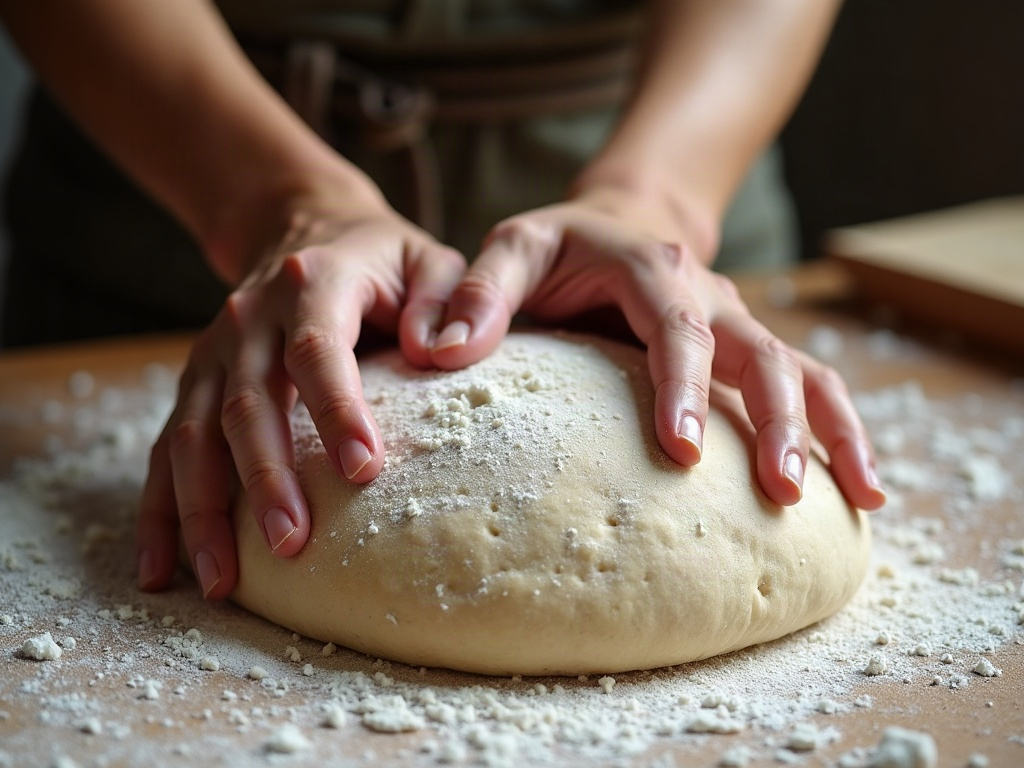
In the hunt for an open crumb, it’s tempting to let bulk run long and feed the dough an aggressive amount of ripe starter. Push it too far and the acids and enzymes degrade the gluten and starch. The dough can still trap gas – hence the big holes – but the structure is too weak to hold its shape, so the crumb collapses into a wet, gummy wall through the middle.
The fix:
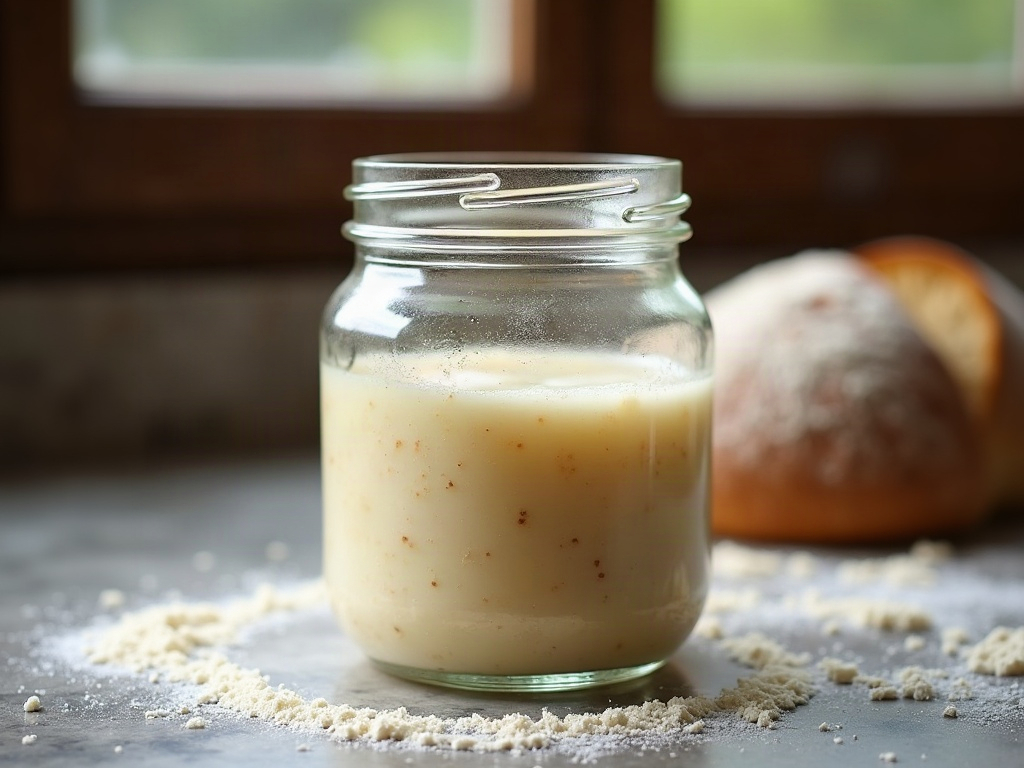
- Use your starter at peak, not past it. A starter that’s already falling is over-acidified and will over-ferment your dough. Catch it at the top of its rise, bubbly and domed.
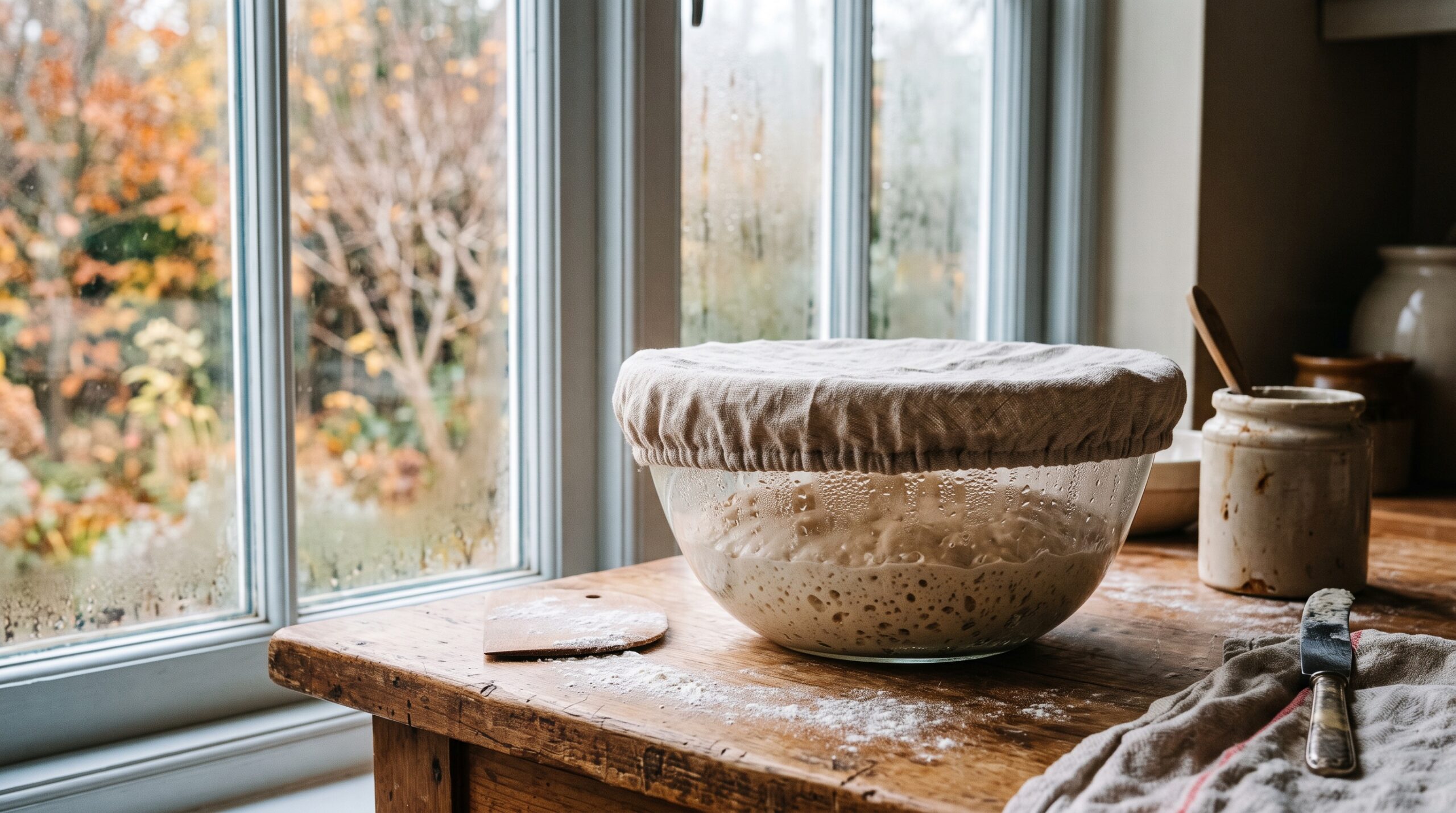
- End bulk a touch earlier. Look for roughly 30-50% volume increase, a domed and jiggly surface, and some bubbles – not a doubled, slack, puddle-prone mass. When in doubt, under-ferment slightly; a tight crumb beats a gummy one.
- Do the poke test. A well-proofed dough springs back slowly and leaves a shallow dent. If your finger leaves a crater that doesn’t recover, it’s overproofed.
Cause 3: Your hydration outran your skill (for now)
High hydration is how you get a dramatically open crumb – and it’s also how you get a gummy one, because more water means a weaker, harder-to-handle dough and a wetter center that’s slower to set. There’s nothing wrong with your flour or your hands; the dough is just writing a cheque your current process can’t cash yet.
The fix:
- Drop the hydration 5%. If you’re fighting 80% water, come back to 73-75%. You’ll lose a little hole-drama and gain a crumb that’s open and fully baked. Climb back up as your handling improves.
- Build more structure. Add a round or two of stretch-and-folds during bulk. A stronger gluten network holds the crumb open instead of letting it slump into the middle.
- Match your flour to your ambition. A higher-protein bread flour tolerates more water than an all-purpose. If you’re chasing a wet, open crumb, give the dough the flour that can carry it.

Put it together
Next bake, change one variable at a time so you learn what fixed it. Start with the bake – go bolder and longer, confirm 205°F+ in the center, and wait a full two hours before slicing. If the gummy patch survives even that, pull your hydration back 5% and tighten your bulk by catching the starter at peak and ending fermentation a shade earlier. Most of the time, a longer bake and a little patience on the cutting board solve it outright.
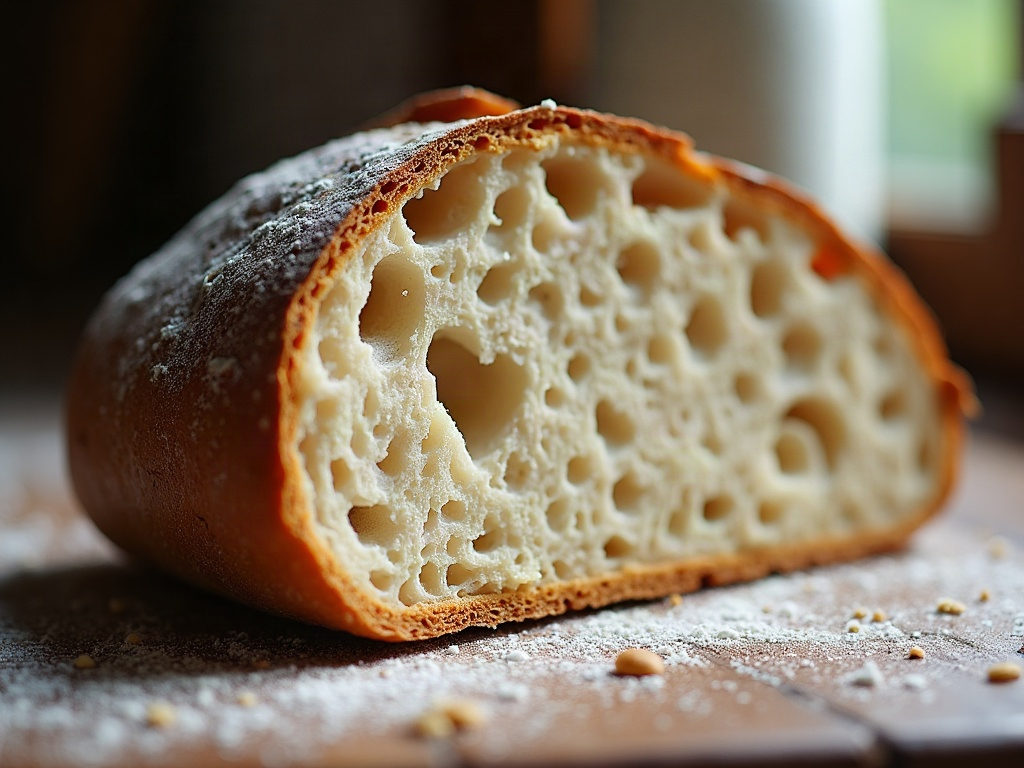
An open crumb and a fully set, dry crumb aren’t at war – plenty of bakers get both every week. The gummy center just means one of three dials is turned a notch too far. Adjust, bake again, and you’ll get the holes and the clean slice.
Want to see the poke test, the bulk-fermentation cues, and a bold bake side by side? The full visual walkthrough lives on the LoafLovers YouTube channel, and our free sourdough troubleshooting guide covers each of these fixes step by step. Bake it, cut it, and let us know which dial was yours.