You’re following a starter guide and it tells you to feed “1:1:1.” The next recipe says “1:5:5.” A third swears by “1:2:2 in the morning.” Nobody stops to explain what the numbers mean, so you nod along and quietly panic.
Here’s the good news: feeding ratios are the simplest math in all of sourdough, and once they click, you stop feeding your starter on blind faith and start steering it. You can make it peak faster, taste milder, last longer in the fridge, or wake up stronger – all by changing three numbers. Let’s demystify it.
What the Three Numbers Actually Mean
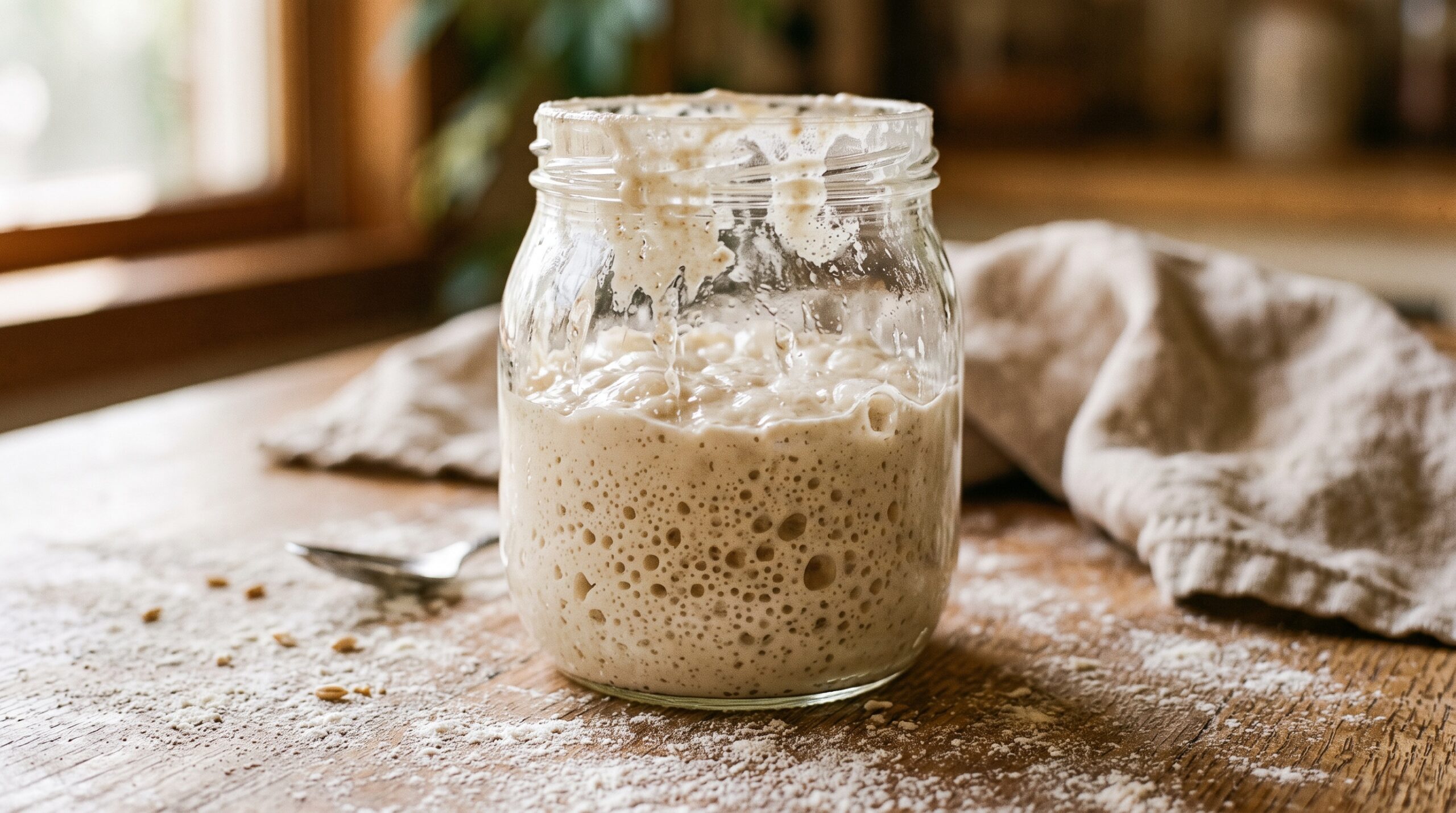
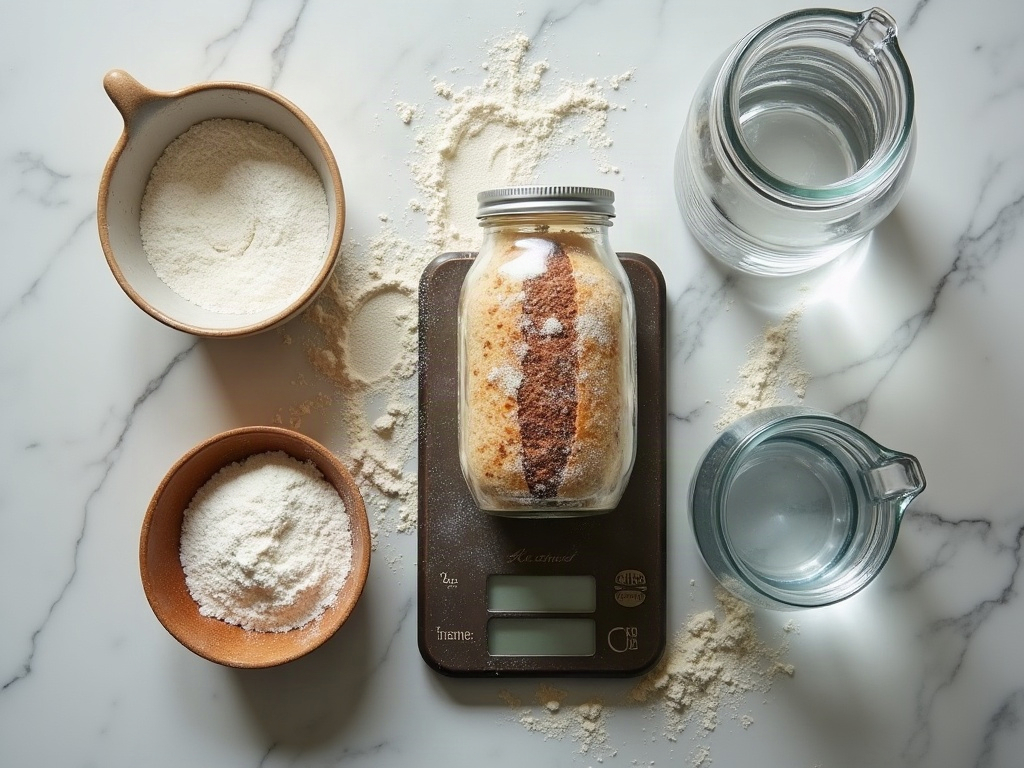
A feeding ratio is written as starter : flour : water, and it’s measured by weight, not volume. That’s the whole secret. Forget cups – get a kitchen scale.
So 1:1:1 means one part old starter, one part fresh flour, one part water. In real numbers, that could be 20g starter, 20g flour, 20g water. 1:5:5 means one part starter to five parts flour to five parts water – say 20g starter, 100g flour, 100g water.
The first number is how much of your existing, hungry starter you keep. The second and third are the fresh food you give it. Notice that the flour and water numbers almost always match – that keeps your starter at 100% hydration, the standard most recipes assume.
The One Idea That Makes It All Click
Think of the ratio as how much food each bit of starter gets. A small ratio like 1:1:1 is a light snack – not much fresh flour per unit of hungry culture. A big ratio like 1:5:5 is a feast.
And here’s the counterintuitive part that trips everyone up: more food means it peaks slower, not faster. With 1:1:1, the yeast and bacteria are crowded and barely fed, so they tear through that small amount of flour and peak fast – often in 3 to 5 hours in a warm kitchen. With 1:5:5, a tiny bit of culture has a mountain of flour to work through, so it climbs slowly and peaks much later – 8 to 12 hours or more.
So the ratio is really a timer. Small ratio, quick peak. Big ratio, slow peak.
When to Use a Small Ratio (1:1:1 or 1:2:2)
Reach for a small ratio when you need your starter ready soon and you’re feeding it often.
- You bake today. You fed this morning and want ripe starter by early afternoon – 1:1:1 gets you there fast.
- You’re reviving or strengthening a sluggish starter. Frequent small feedings keep the culture consistently fed and active, which is exactly what a weak starter needs to bounce back.
- Your kitchen is cold. Low temperatures slow everything down, so a smaller ratio helps the starter still peak in a reasonable window.
The trade-off: a small ratio ferments quickly and can turn sour and collapse faster if you forget about it. It also means feeding more often, because it runs out of food sooner.
When to Use a Big Ratio (1:5:5 or 1:10:10)
Reach for a big ratio when you want to stretch the time between feedings or tame sourness.
- You feed overnight. Feed 1:5:5 before bed and it peaks around breakfast – perfect timing to mix a dough, with no 3 a.m. alarm.
- You want a milder loaf. A big ratio dilutes the accumulated acids, so your bread tastes less aggressively sour. If people complain your sourdough is too tangy, bigger feedings are your fix.
- You bake on a work schedule. Matching a large ratio to the hours you’re actually home lets the starter peak when you’re free, not when you’re stuck at your desk.
The trade-off: with very big ratios you’re keeping so little mature starter that a weak or young culture can struggle to get going. Big ratios are for healthy, established starters.
Reading the Peak, Not the Clock
Ratios give you an estimate, but your starter doesn’t own a watch. Temperature, flour type, and the strength of your culture all shift the timing. So use the ratio to aim, then watch the jar.
A starter is at peak when it has roughly doubled, domed on top, and is covered in bubbles – right before it starts to flatten or sink in the middle. That’s the moment it has the most lift to give your dough. A rubber band or a mark on the jar makes it easy to see. Over a few feedings you’ll learn how your specific ratio behaves in your specific kitchen, and the guesswork disappears.
Ratios and the Fridge
Storage is where ratios quietly earn their keep. Before a long fridge rest, feed a bigger ratio – something like 1:5:5. That fresh mountain of food takes far longer to exhaust, so your starter can nap in the fridge for a week or two without starving and throwing a thick layer of hooch.
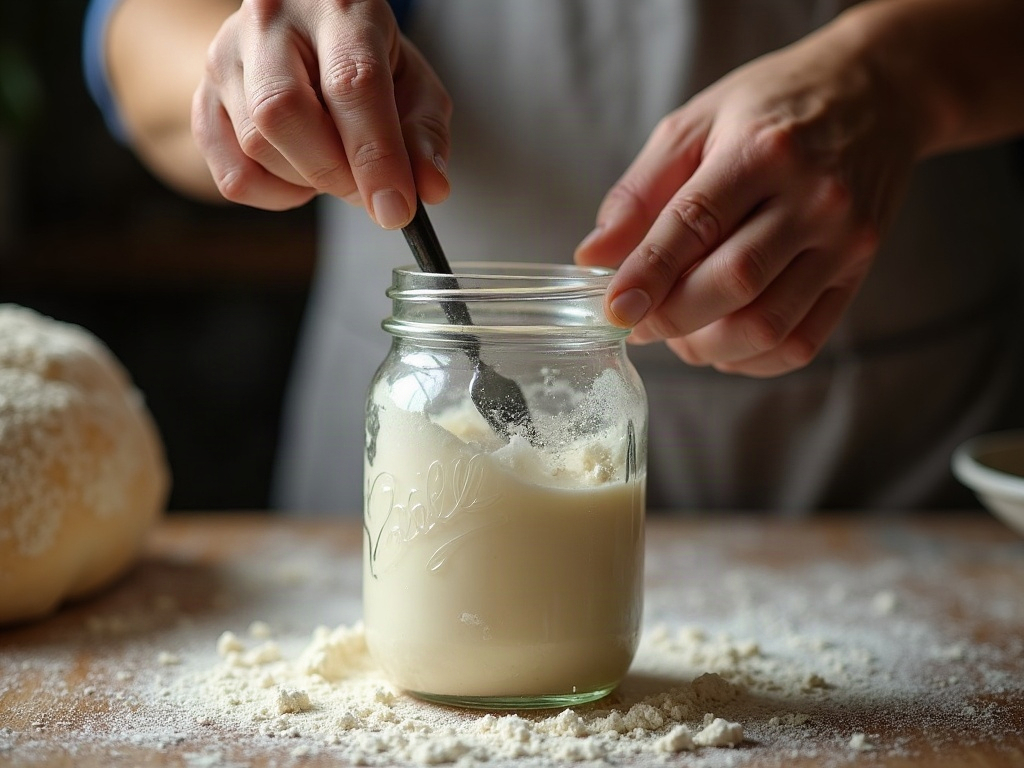
When you pull it out to bake again, give it one or two smaller feedings at room temperature – 1:1:1 or 1:2:2 – to wake it up and get it bubbling strong before you build your levain. Big ratio to store, small ratio to revive. That single habit prevents most “my starter died in the fridge” panic.
Your Takeaway
You don’t need to memorize a chart. Just hold onto the core idea: the ratio is a timer and a flavor dial. Small ratio for a fast peak, frequent feeding, and a stronger tang. Big ratio for a slow peak, longer gaps, and a milder loaf. Match the ratio to when you want ripe starter and how sour you like your bread, then watch the jar to confirm.
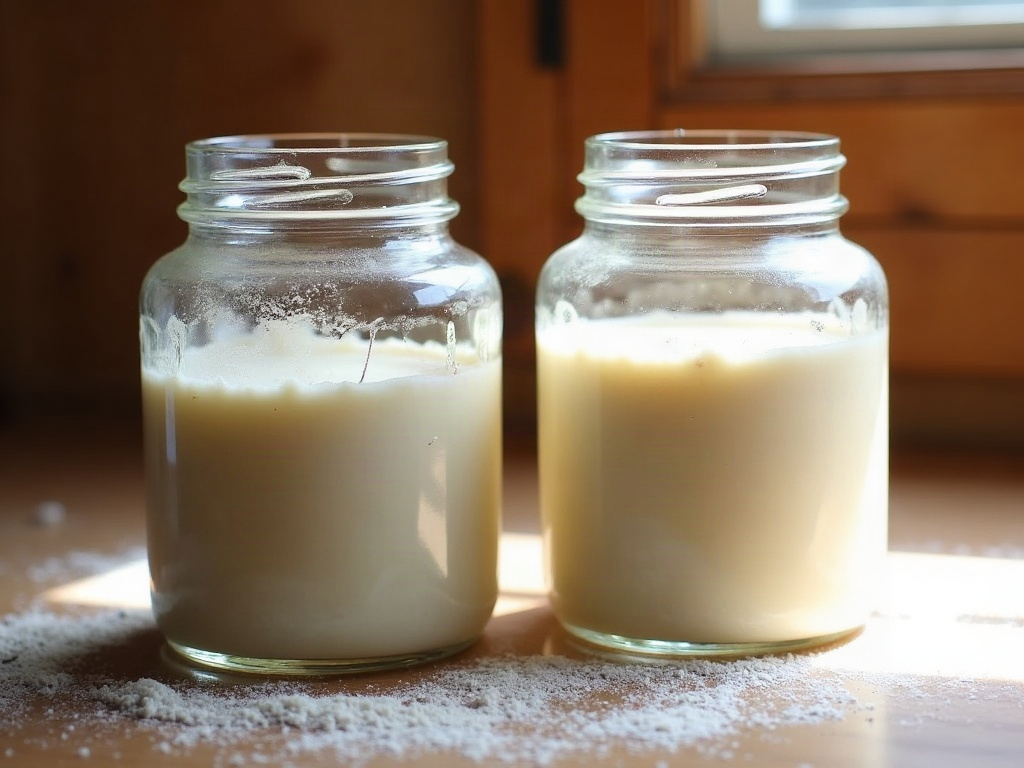
Play with it. Feed one jar 1:1:1 and another 1:5:5 on the same morning and watch them peak hours apart – it’s the fastest way to make this click for good. If you want the visual version, the full walkthrough of reading peak and timing your feeds lives on the LoafLovers YouTube channel, and our free sourdough troubleshooting guide covers the fixes for a starter that still won’t cooperate.
Leave a Reply