There is a stubborn myth that sourdough belongs to people with empty weekends and unlimited patience – that a real loaf demands two days of hovering over the counter. If you work full time, that story quietly tells you not to bother. Ignore it. You do not need a free weekend to bake good sourdough. You need a plan that bends around your day instead of the other way around.
There are really two workable approaches for a busy baker: a genuine same-day loaf when you happen to be home, and a split schedule that leans on your fridge so the actual baking lands whenever suits you. Let’s walk through both, and the one thing that makes either one succeed.
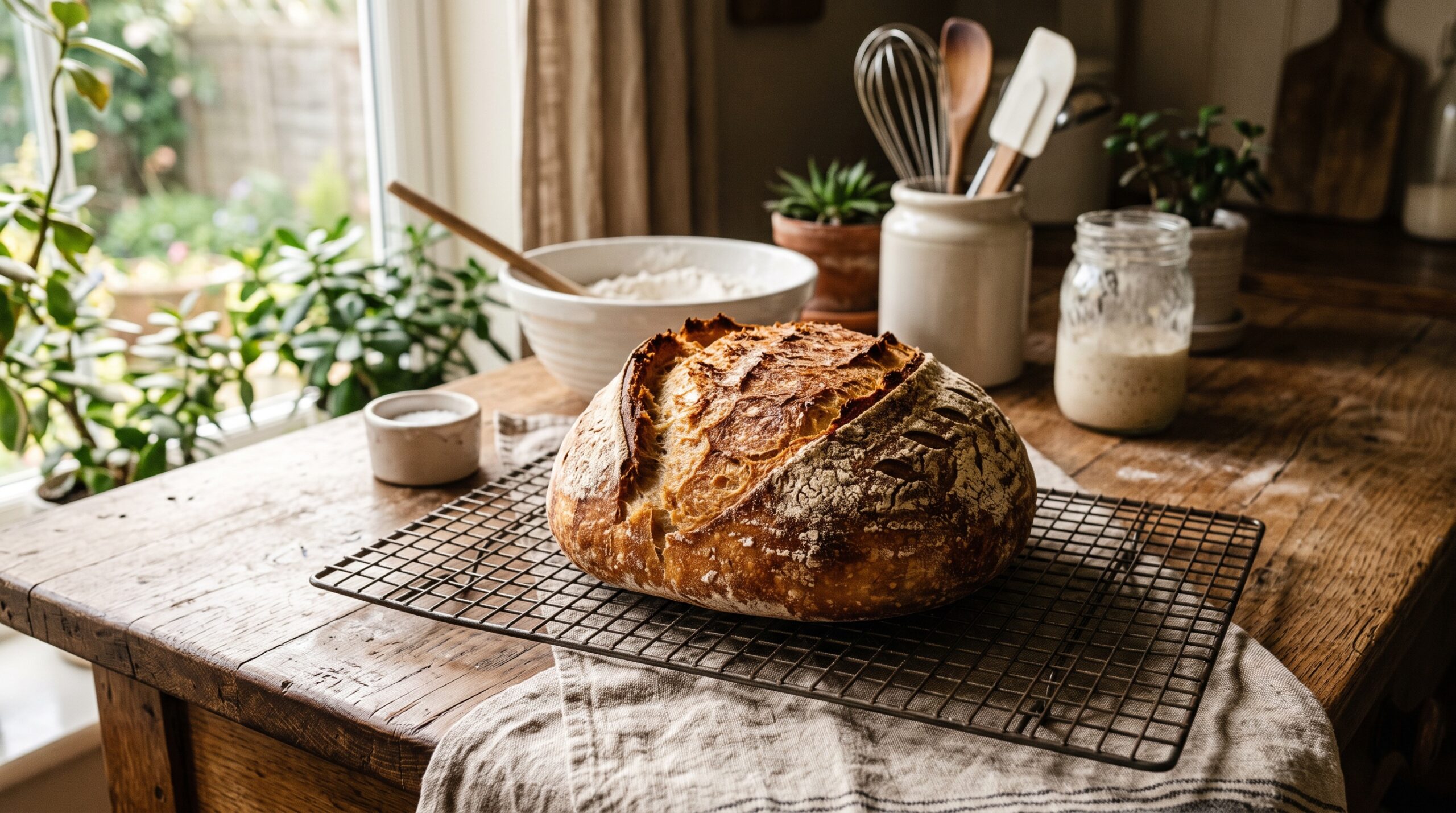
Same-day is realistic – warmth is the trick
The reason sourdough usually takes so long is temperature. A cool kitchen slows the yeast and bacteria in your dough to a crawl, stretching every stage into hours. Warm that same dough up and it moves briskly. A dough proofing at a snug 78 to 82 degrees Fahrenheit can be ready in a fraction of the time it takes in a chilly room.
So a same-day loaf is not about rushing or cutting corners. It is about keeping the dough warm and cooperative – a turned-off oven with the light on, a spot near a sunny window, or the top of the fridge all work. Get the temperature right and a start-to-finish bake in a single day is completely normal, not a stunt.
First, the non-negotiable: a lively starter
Here is the part that decides everything before you mix a thing. A same-day loaf leaves no slack for a sluggish starter. If yours crawls up over 12 hours and never quite domes, a fast bake will give you a flat, dense brick and you will blame the timeline.
You want a starter that doubles within four to six hours of feeding, dome and all. Feed it in the morning, and when it is bubbly and at its peak – not collapsing – that is your green light to mix. If it is not there yet, this is a day for the split schedule below, not the sprint.

The same-day timeline, in plain terms
Say you are home for the day. Here is the rhythm, no fancy equipment required.
Morning: feed your starter and let it peak (4 to 6 hours). While you wait, get on with your morning.
Midday: mix flour, water, starter and salt, then let it rest 30 minutes. Over the next couple of hours, do three or four sets of stretch-and-folds, spaced maybe 30 minutes apart. Each set takes under a minute, so you can slot them between other tasks.
Afternoon: let the dough rise in the warm somewhere until it is puffy and jiggly and grown by roughly half – usually three to five hours in a warm kitchen. Shape it, let it rest a short final proof of 30 to 60 minutes.
Evening: bake in a hot Dutch oven, and you are pulling a real loaf out before bed. One day, start to finish.
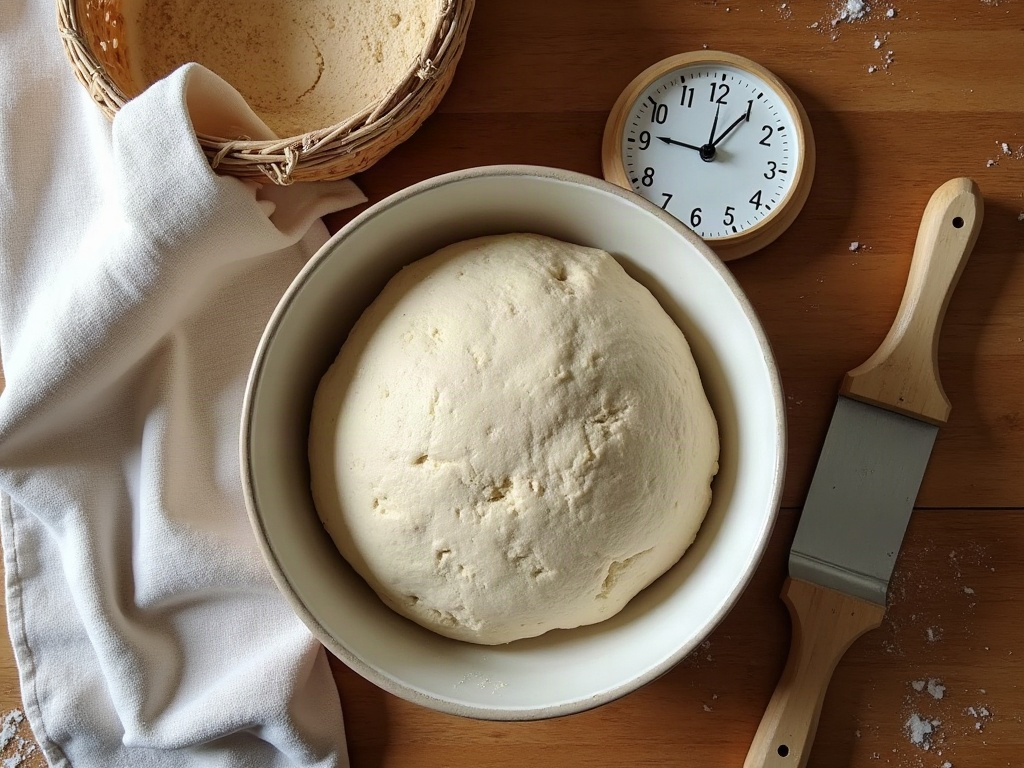
The after-work version: let the fridge do the waiting
Most of us cannot babysit dough all day. This is where the fridge earns its keep, and honestly it makes better bread anyway.
The evening-and-morning split: feed your starter before work so it peaks by the time you get home. Mix the dough in the evening, do your folds while dinner cooks, and let it rise on the counter for a couple of hours. Shape it, then slide it into the fridge overnight. In the morning – or even the next evening – you bake it straight from cold. No warming up, no waiting.
That cold overnight rest, called a retard, does two favors at once: it fits the dough around your sleep, and it deepens the flavor into something tangier and more complex. The fridge does not just delay the dough. It improves it.

Where the busy bake goes wrong – and the quick fix
Two problems account for most failures on a compressed schedule, and both are easy to catch.
A flat, dense loaf almost always means an underpowered starter or an under-risen dough – you rushed a stage that was not actually ready. The fix is patience at the one point it matters: wait for the starter to peak, and judge the dough by how it looks and feels (puffy, jiggly, grown), not by the clock.
A gummy crumb usually means it went into the oven before the bulk rise was truly done, or came out a touch early. Give the bulk rise its full time in the warmth, bake until the crust is deeply golden, and let the loaf cool completely before you cut it – that last hour is when the inside finishes setting.
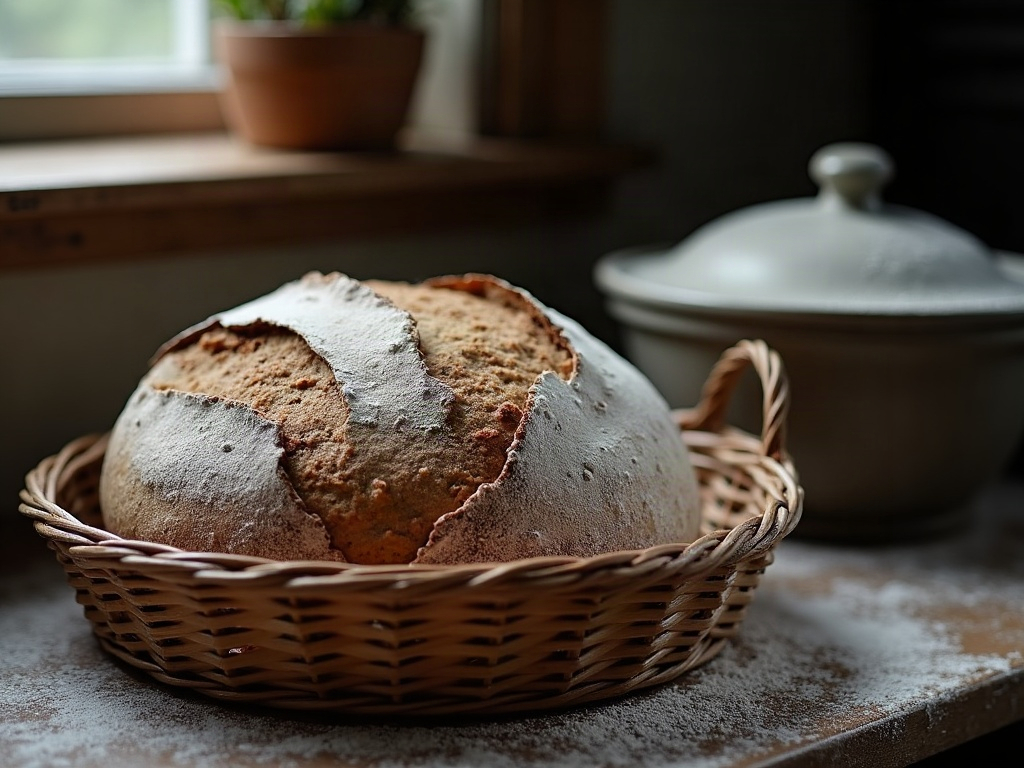
Bake on your terms
Sourdough does not require a cleared calendar. It requires a starter you trust and a plan that respects your day – warm and fast when you are home, cold and patient when you are not. Pick the version that fits this week, and let the fridge cover the gaps.
If you want to see the same-day timeline and the fold-and-shape steps in real time, the full walkthrough lives on the LoafLovers YouTube channel – it is far easier to copy the feel of the dough when you can watch it. Your work schedule was never the thing standing between you and good bread.
Leave a Reply