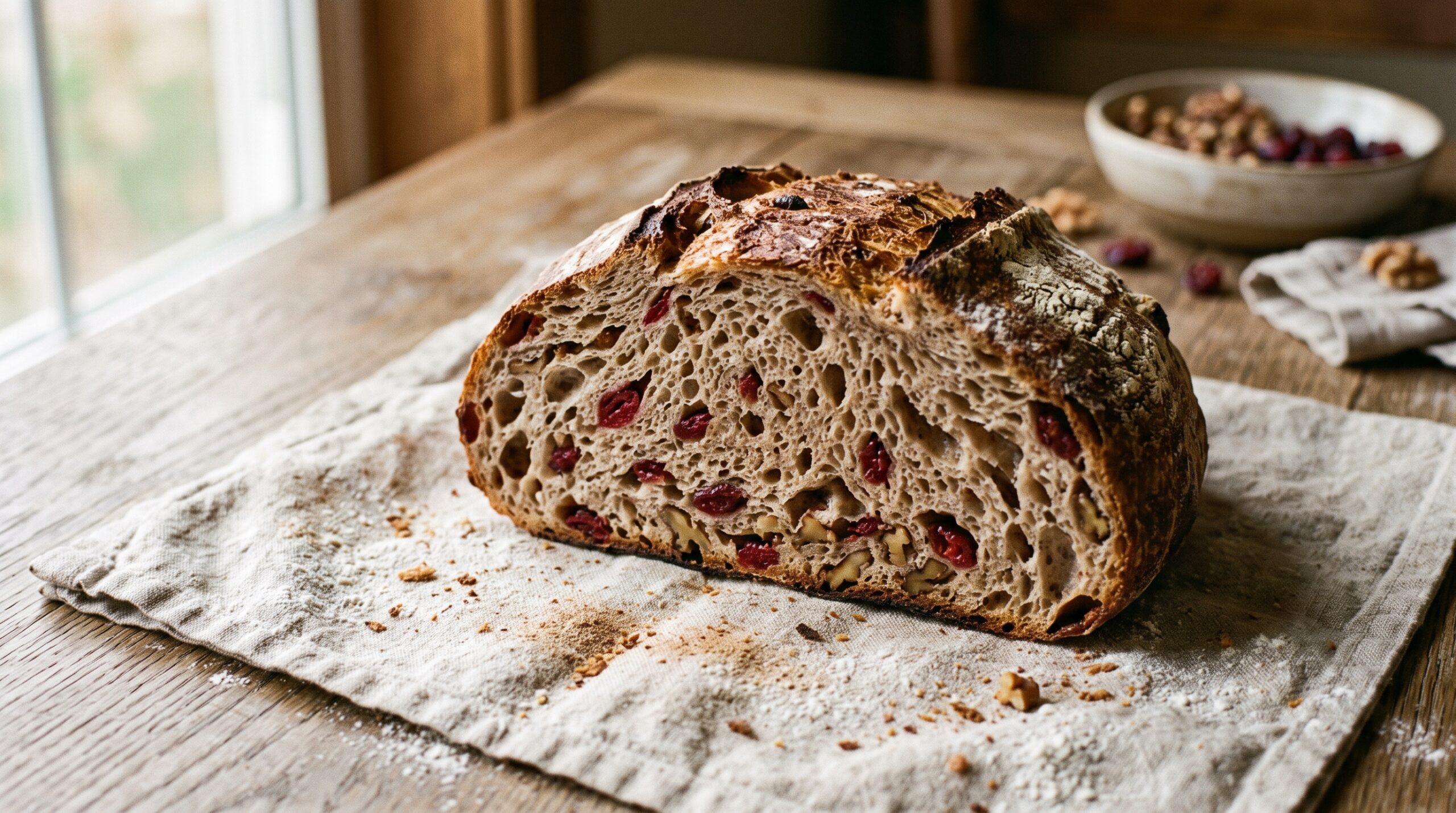
There’s a loaf that shows up every holiday season and quietly steals the table: a round of tangy sourdough shot through with ruby-red cranberries and toasted walnuts, the crumb open and the crust blistered deep gold. Toasted and buttered on a cold morning, it’s the kind of bread people remember. And it photographs like a magazine cover.
It’s also one of the easiest loaves to accidentally wreck. Pile dried fruit and nuts into a dough that was rising beautifully and you can end up with a squat, dense, slightly gummy brick — all the festive looks, none of the lift. The good news: a cranberry walnut sourdough that still rises isn’t luck. It comes down to how you prep the add-ins and when you fold them in. Let’s build one that bakes tall.
Why cranberries and walnuts fight your rise
Add-ins don’t just sit there politely. Dried cranberries are little sugar sponges: drop them in dry and they pull moisture straight out of your dough, leaving the crumb around them tight and the fruit itself hard and chewy. Many are also sweetened, and a sudden rush of sugar can nudge your fermentation along faster than you expect.
Walnuts bring their own problem. Their sharp edges and natural tannins physically cut through the gluten strands you worked to build, weakening the very structure that traps gas. Load too many in, or fold them in roughly, and you shred the dough’s web so the bubbles leak out. Add the sheer weight of a couple cups of fruit and nuts and it’s no wonder a loaded loaf can slump. None of this means you should use less — it means you prep smart and handle gently. For the broader principles here, our guide to adding nuts, seeds, and fruit without killing the rise is the companion piece to this recipe.
The festive formula, built to bake well
Start from a dough you already trust and keep the add-ins proportional so they flavor the loaf without overwhelming it. For a single standard boule:
Dough: 400g bread flour, 50g whole wheat flour (it adds a nutty backbone that loves cranberries), 325g water, 90g active starter at peak, 9g salt. That’s a comfortable, workable hydration — if you’re unsure what those numbers mean, our walkthrough on baker’s percentage and hydration breaks it down.
Add-ins: 90g dried cranberries and 70g walnuts — roughly a third of the flour weight combined, which is generous without being reckless.
A spoon of honey or a little orange zest is optional but gorgeous here, leaning the loaf gently toward the enriched, holiday end of the spectrum without turning it into a cake. Keep the add-ins at or below a third of the flour weight; push past that and you’re asking the gluten to hold more than it comfortably can.
Prep the add-ins so they help, not hurt
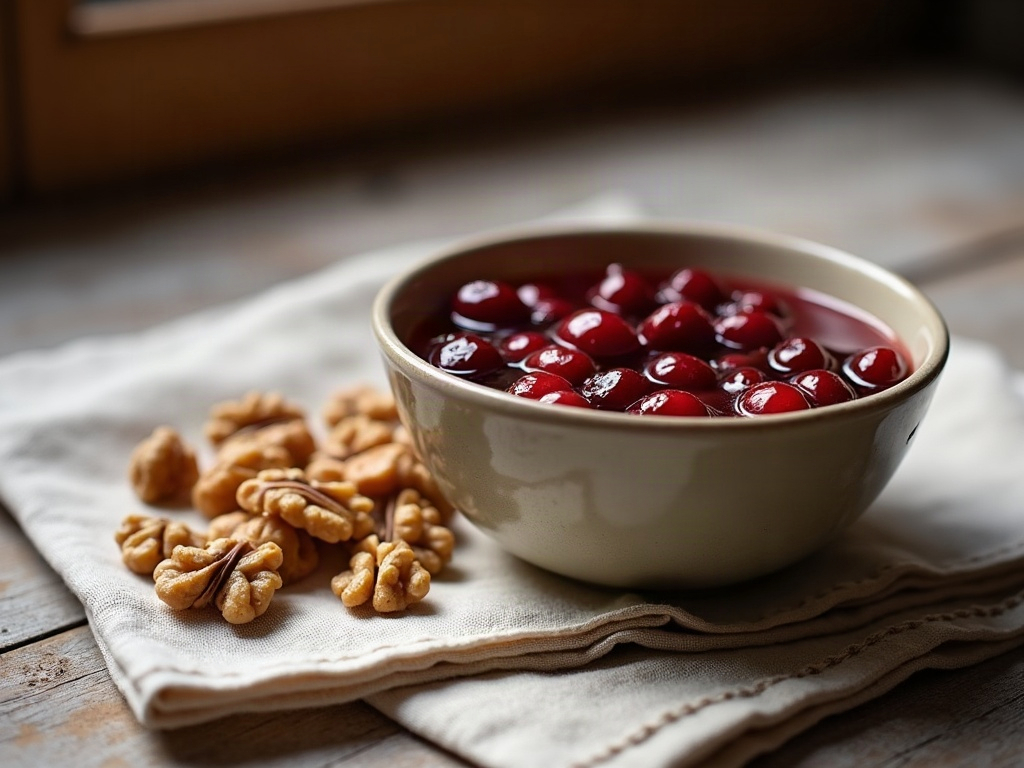
This is the step most bakers skip, and it’s the one that saves the loaf. Soak the cranberries. Cover them in warm water (or warm orange juice, if you’re feeling festive) for ten to fifteen minutes, then drain well and pat dry. Plumped fruit stops stealing water from your crumb and stays soft and jammy after baking instead of turning to little pebbles. Drain them thoroughly, though — dripping-wet fruit throws off your hydration in the other direction.
Toast the walnuts. A few minutes in a dry pan or a low oven until they smell fragrant deepens their flavor enormously and drives off some of the raw bitterness. Let them cool, then break them into rough pieces rather than leaving big halves — smaller chunks distribute better and do less damage to the gluten. Cool is important: warm nuts folded into dough can overheat a patch of it.
When and how to fold them in
Timing is everything. Mix your dough and let it start bulk fermentation naked — no add-ins yet. You want to build real gluten strength first with a set or two of stretch-and-folds before anything sharp goes near it. Add the cranberries and walnuts too early and you’re working them for hours, grinding them against the gluten the whole time.
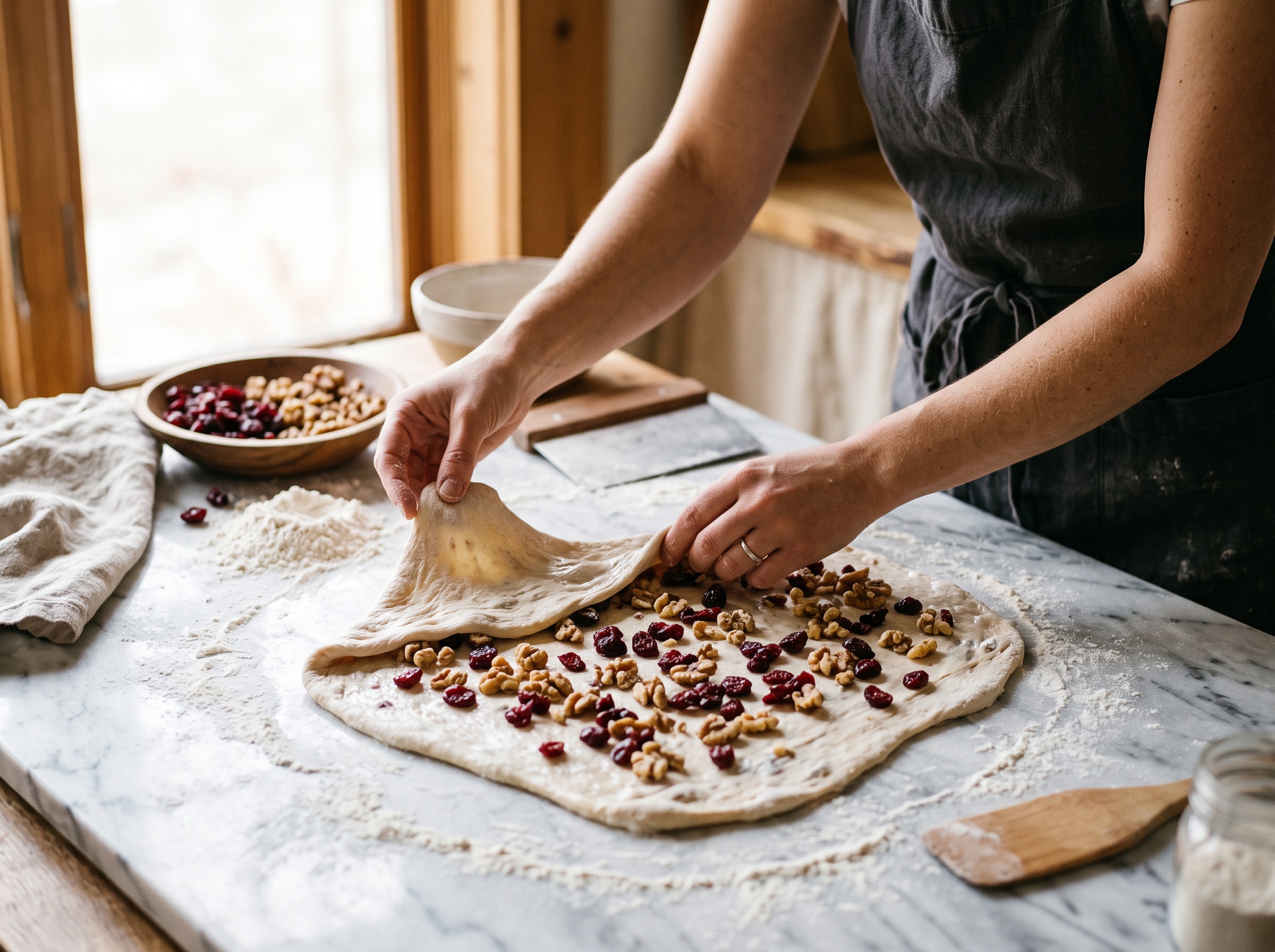
The cleanest method is a gentle lamination. Partway through the first hour of bulk, wet your hands, lift the whole dough out, and stretch it into a thin sheet on a damp counter. Scatter the drained cranberries and cooled walnuts evenly across it, then fold the dough over itself like a letter, roll it up, and return it to the bowl. This layers the add-ins throughout with almost no deflation. If lamination feels fiddly, simply add them during your first stretch-and-fold instead, dimpling them in gently across a couple of folds so they spread out without you having to crush the dough.
Whichever route you take, treat the dough kindly from here. It’s carrying cargo now, and rough handling is what tears the structure and flattens the loaf.
Shaping, scoring, and baking a loaded loaf
Finish bulk fermentation as usual — judge it by the dough rising 30 to 50 percent and looking alive with bubbles, not by the clock. A loaded dough can feel a touch heavier, so lean on those visual cues. Pre-shape, rest, then shape with firm tension into a taut boule.
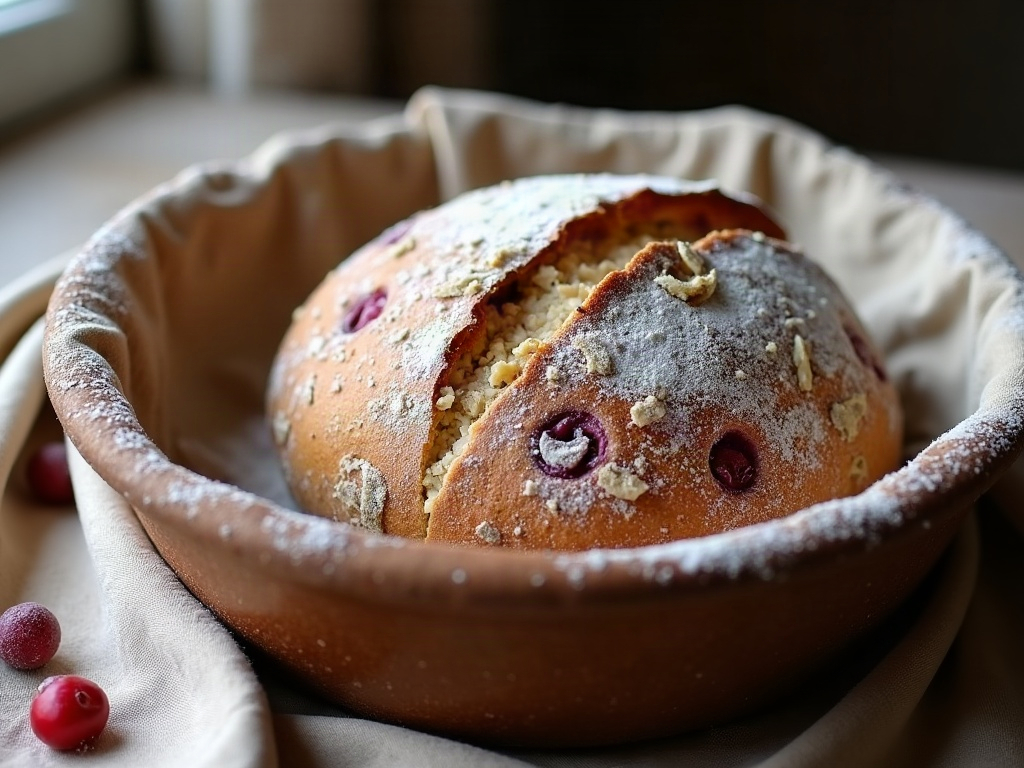
Two small moves matter with inclusions. First, tuck in any cranberries or walnuts poking out of the surface — exposed fruit burns bitter and nuts can scorch in the oven’s heat. Second, score with conviction. A loaded loaf resists the blade, and your lame may catch a cranberry; a single confident, slightly deeper slash gives the loaf a clean place to open. Then bake the way you always do, covered first for steam and then uncovered to color. Expect a slightly less dramatic ear than a plain loaf — that’s the trade for all that flavor, not a failure.
Troubleshooting a loaf that went wrong
If your cranberry walnut loaf came out dense and heavy, the usual culprit is too many add-ins or folding them in too hard — scale back to a third of the flour weight and handle more gently next time. A gummy ring around the fruit means you skipped the soak; dry cranberries pulled water from the crumb. Hard, chewy cranberries are the same story — soak and drain. If the loaf spread flat instead of rising tall, the dough was likely under-strengthened before the add-ins went in, or over-loaded; build more gluten first, and see our deeper dive on flat loaves that spread instead of rising. And bitter dark flecks on the crust are exposed walnuts — tuck them in before the final proof.
Make it the centerpiece
Once it’s out and fully cooled — and with a fruited loaf, really do wait, because the crumb finishes setting as it rests — this bread does almost everything well. Toasted with salted butter for breakfast, it’s a quiet holiday luxury. It makes a leftover turkey sandwich feel intentional, turns into a showstopping base for holiday French toast, and sliced thin alongside a sharp cheese and a few more walnuts, it belongs on any festive board. It also makes one of the best edible gifts you can hand a neighbor.
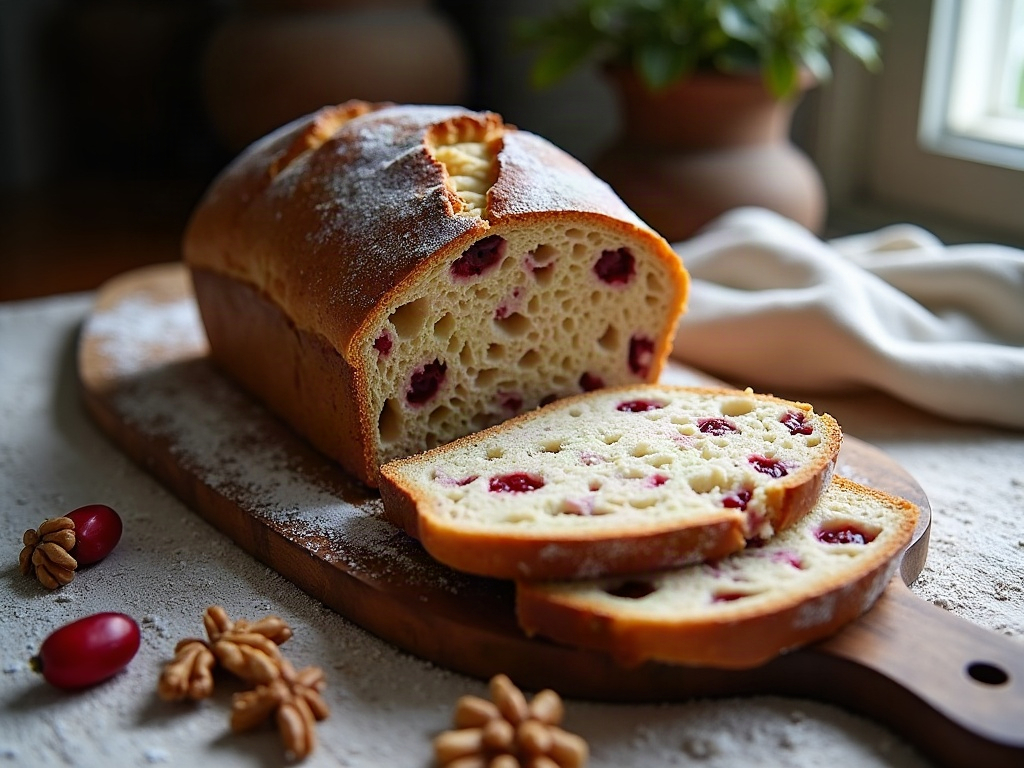
A festive loaf like this is really just your everyday sourdough with two thoughtful additions handled with a little care — and it’s a natural partner to the soft sourdough dinner rolls on the same holiday table. Soak the fruit, toast the nuts, keep the add-ins proportional, and fold them in gently and late. Do that, and you get the loaf that looks like a magazine cover and rises like your best plain boule.
Want to see the lamination and the fold-in happen in real time? The full hands-on walkthrough lives on the LoafLovers YouTube channel, and our free sourdough troubleshooting guide is there whenever an add-in loaf doesn’t cooperate. Happy holiday baking.
Leave a Reply