If you’ve spent any time in sourdough forums, you’ve seen the debate: some bakers swear by a firm, dough-like stiff starter, while most of the internet keeps a loose, pancake-batter liquid starter. It’s easy to assume one must be right and the other a mistake. It isn’t. They’re the same culture kept at different hydrations, and each one behaves in a way that solves a specific set of problems.
The question isn’t which is better. It’s which one fits your kitchen, your schedule, and the bread you want. Let’s break down exactly how each behaves so you can choose on purpose instead of by default.
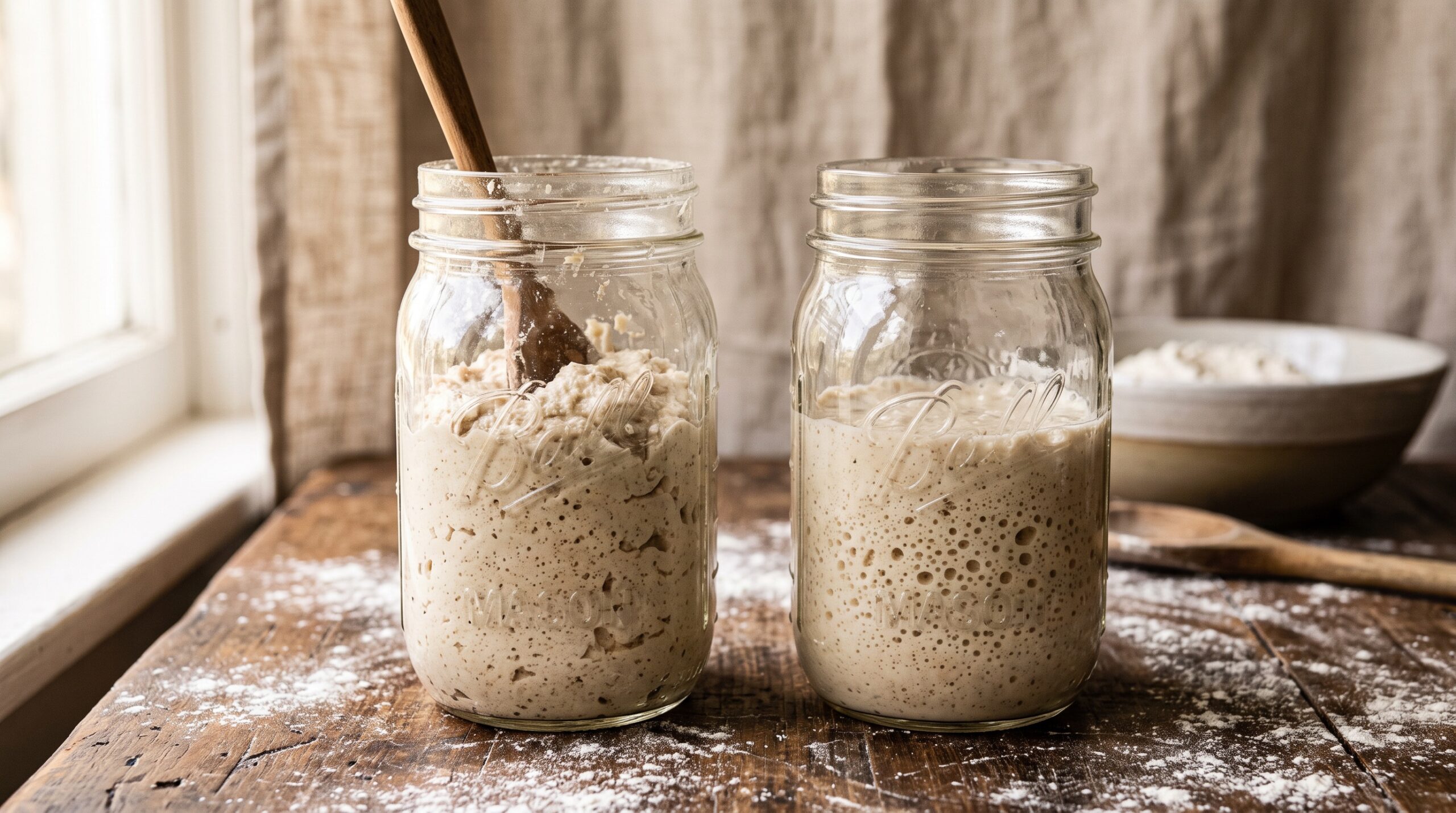
The Only Real Difference: Water
Hydration is just the ratio of water to flour, by weight. A liquid starter is almost always kept at 100% hydration, meaning equal weights of flour and water. Feed it 50g flour and 50g water and you get that familiar thick-batter consistency you can stir and pour.
A stiff starter is kept much drier, usually somewhere between 50% and 60% hydration. That means for every 100g of flour you add only 50 to 60g of water. The result isn’t a batter at all. It’s a firm, kneadable little ball of dough.
Same flour, same wild yeast and bacteria, same jar. The only thing you’ve changed is how much water is in the mix. But that one change ripples out into flavor, speed, storage, and how forgiving the starter is, which is where the real decision lives.
How a Liquid Starter Behaves
A 100% hydration starter is the default for good reason. It’s easy to stir, easy to mix into dough, and above all, easy to read. In a wetter environment the yeast is very active, so the starter rises fast, bubbles enthusiastically, and gives you an unmistakable peak. That readability is a genuine advantage when you’re still learning to time your bake, and if you’ve ever struggled with a starter that just won’t rise, the fast, visible action of a liquid starter makes diagnosing the problem far simpler.
The trade-offs are real, though. More water means the bacteria that produce acid are more active too, so a liquid starter tends toward a sharper, tangier, more acetic flavor, especially if you let it go a little too long. It also moves quickly, which means it runs out of food faster and can slip past its peak and collapse if you’re not watching. It’s fast and expressive, but it’s also a bit demanding.
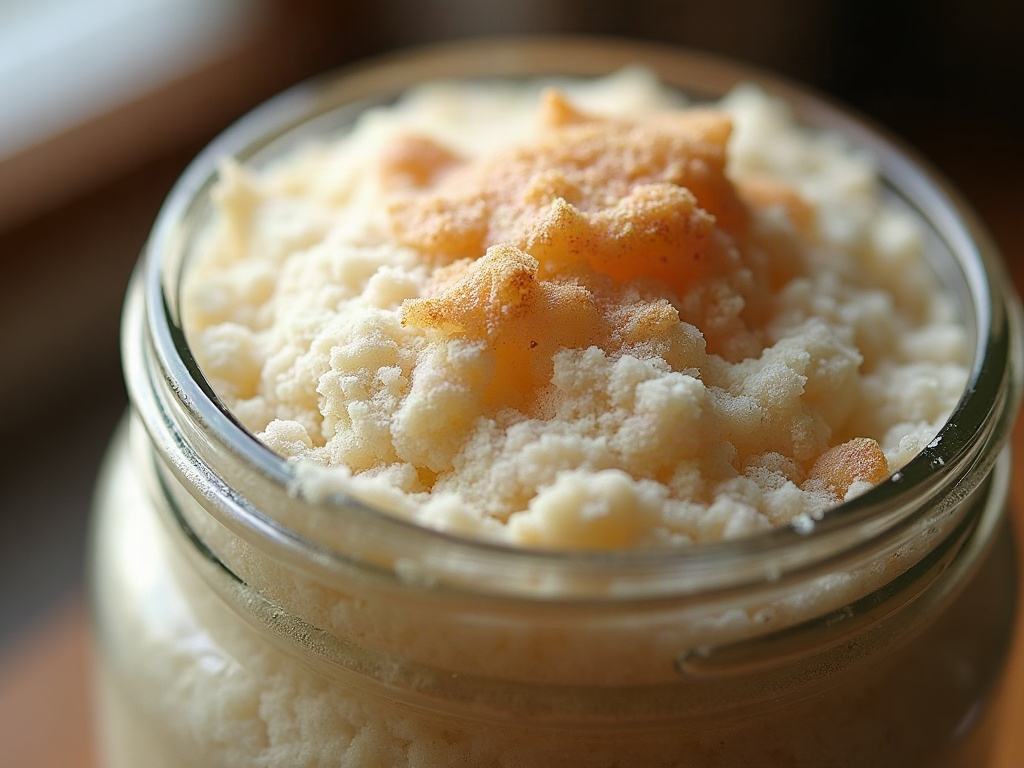
How a Stiff Starter Behaves
Take the water down and everything slows and calms. In a firm, low-hydration environment the acid-producing bacteria are held back more than the yeast, so a stiff starter ferments toward a milder, sweeter, more mellow flavor. If you’ve ever pulled a loaf from the oven and found it too sharp or aggressively sour, switching to a stiff starter is one of the most reliable ways to tame that tang at the source.
It’s also far more patient. Because it moves slowly and holds its structure, a stiff starter is much more forgiving of an inconsistent feeding schedule. It doesn’t race to its peak and crash; it rises gently and holds there longer, giving you a wider window to actually use it. That same slowness makes it store beautifully, which we’ll come back to.
The catch is that a stiff starter is harder to read. It won’t slosh with bubbles or dramatically double in a see-through way. You learn to judge it by a gentle dome and by tearing a piece open to check for a fine, webby honeycomb inside, rather than by watching a waterline climb a jar. And because it’s a firm dough, you have to knead your feeds together rather than stir them, which is a small extra bit of hands-on work each time.
Side by Side: Which Solves Your Problem?
Strip away the folklore and it comes down to what you actually need.
- Choose a liquid starter if: you’re still learning to time your bakes and want an easy-to-read culture, you like a pronounced sour tang, you bake often enough to feed it regularly, and you want the simplest possible mix-in when building dough.
- Choose a stiff starter if: you find your bread too sour and want a milder, sweeter crumb, your schedule is irregular and you need a culture that tolerates being neglected, you bake less frequently, or you want a starter that survives long gaps in the fridge without fuss.
Notice that neither list is about quality. Both make outstanding bread. The lists are about your temperament and your timetable.
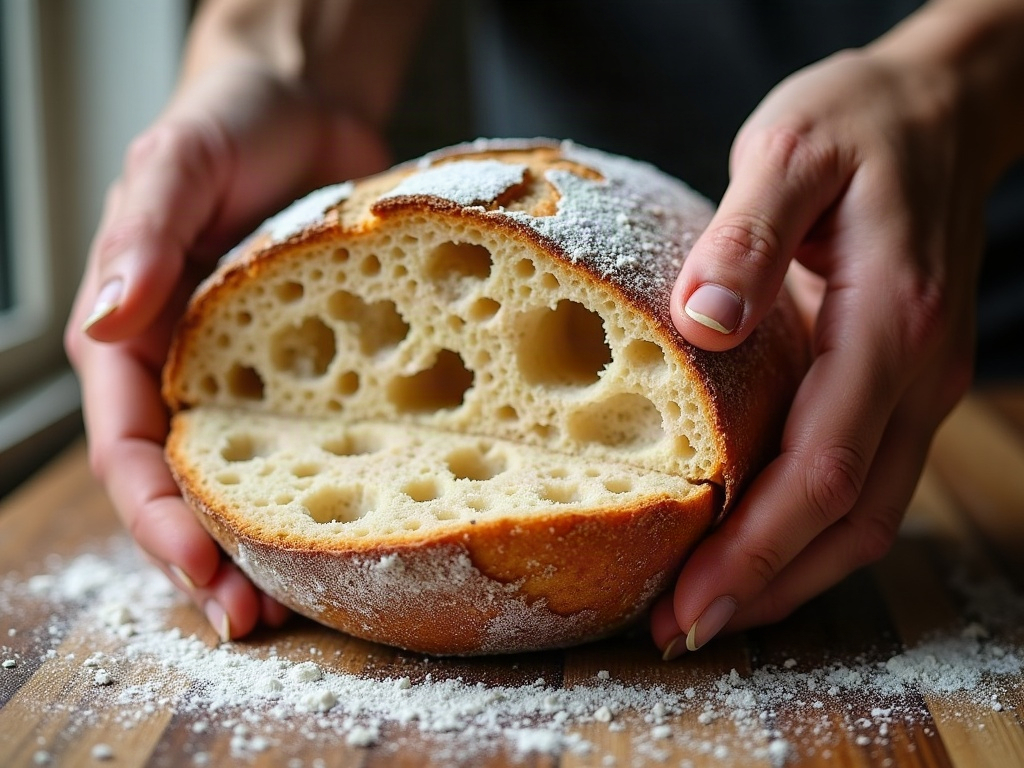
The Storage Advantage Nobody Mentions
Here’s the practical reason many experienced and less-frequent bakers keep a stiff starter: it stores like a champion. Because there’s less water and the fermentation is slower, a stiff starter goes dormant gracefully in the fridge and can sit for a week or two, sometimes longer, without collapsing into a puddle of hooch or turning punishingly acidic.
A liquid starter can be refrigerated too, but it tends to exhaust its food and separate faster, so it usually needs more frequent attention. If you’d like the full rundown on keeping either type alive through breaks, our guide to storing your starter through fridge stints and vacations walks through it step by step. For a baker who fires up the oven every other weekend rather than daily, a stiff starter simply asks less of you between bakes.
Can You Switch Between Them? Yes, Easily
The best news is that you’re never locked in. Because it’s all one culture, you can convert a starter from one hydration to the other over just a couple of feedings.
To go from liquid to stiff, simply feed with less water. Take a spoonful of your existing starter and feed it, say, 100g flour to 55g water, kneading it into a firm ball. To go the other way, feed a piece of your stiff starter with equal parts flour and water and stir it into a batter. Give it two or three feeds at the new hydration to fully settle in and you’re done. Many bakers even keep both: a stiff starter as the resilient, low-maintenance mother in the fridge, and a small liquid offshoot built up when they want fast, readable action before a bake.
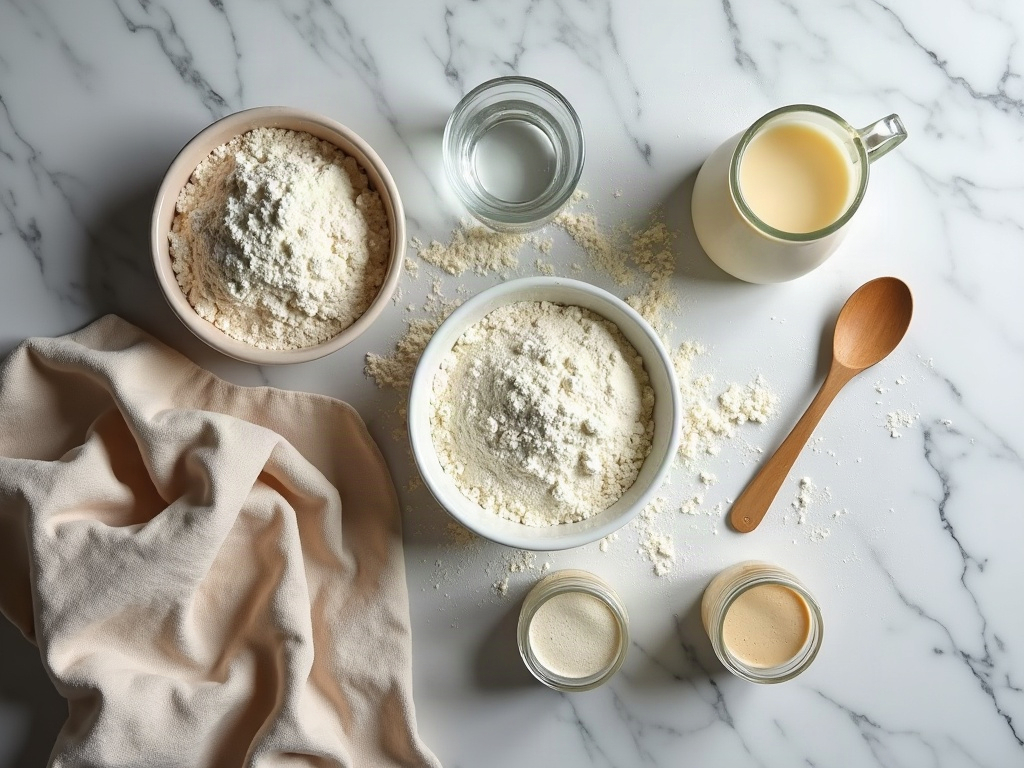
How to Tell When Either One Is Ready
Whichever you choose, the skill that matters most is knowing when it’s at peak and ready to build into dough. For a liquid starter the classic signs are a domed, bubbly surface at maximum rise just before it starts to recede. For a stiff starter you’re watching for a gentle swell and that honeycomb interior when you tear it. In both cases, the popular float test is a rough guide at best, not gospel; our breakdown of whether the float test really works covers the more reliable cues to trust instead.
The Bottom Line
Stiff versus liquid isn’t a contest with a winner. A liquid starter is fast, expressive, easy to read, and a little demanding. A stiff starter is slow, mild, forgiving, and built to be left alone. Match the one you keep to the baker you actually are, not the one you think you should be, and starter maintenance stops feeling like a chore.
If you want to see the difference in action, the full side-by-side, including how each one looks at peak and how to convert between them, lives on the LoafLovers YouTube channel. And if you’re still fighting your starter more than baking with it, grab our free sourdough troubleshooting guide, and we’ll walk you from a temperamental jar to a culture you can count on.
Leave a Reply